
6-Day Tanzania Safari Combined With Kenya Tour: Serengeti and Maasai Mara
This 6-day Tanzania and Kenya safari is a focused cross-border wildlife itinerary linking Serengeti National Park with Maasai Mara National Reserve. It is designed for travelers who want meaningful game-drive time in both countries without turning a short holiday into a sequence of long road transfers.
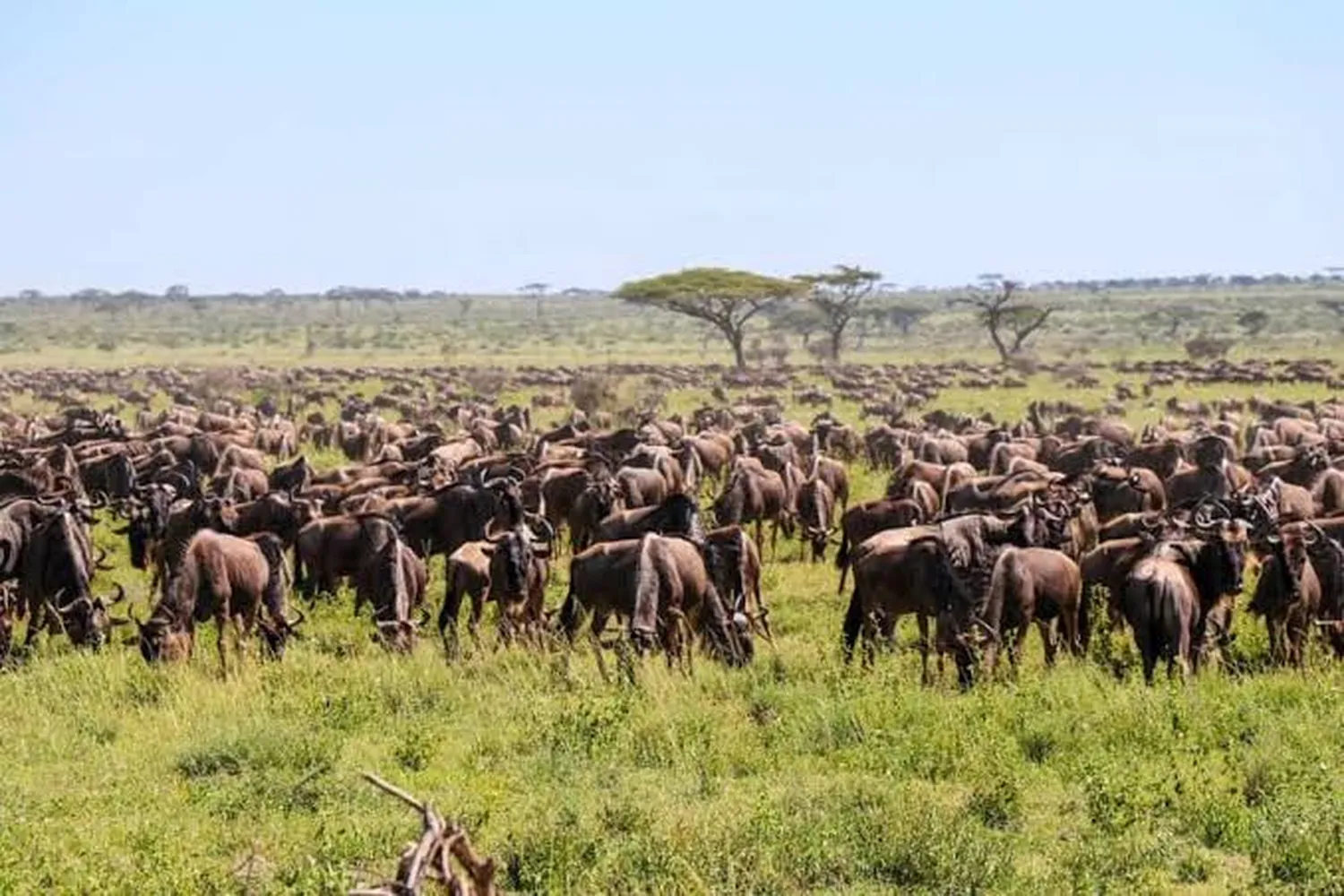
Quick Answer: Can You Combine Tanzania and Kenya in a 6-Day Safari?
Yes, but the six days should focus on Serengeti National Park and Maasai Mara National Reserve rather than trying to collect many parks. A practical route gives three safari days in Serengeti, uses Day 4 for the coordinated Tarime-Migori cross-border connection, gives Day 5 to Maasai Mara, and finishes in Nairobi on Day 6. An arrival night in Arusha before Day 1 is strongly recommended and should not be counted as a safari day.
The main planning mistake is assuming Serengeti and Maasai Mara join like two adjacent sections of one national park. Ecologically they are part of the same wider Serengeti-Mara system, but politically they are in different countries. You must clear immigration and change transport arrangements across the Tanzania-Kenya border.
If you want Ngorongoro Crater, Tarangire, Amboseli or Lake Nakuru as well, a longer itinerary gives better value. Our Kenya vs Tanzania safari comparison and East Africa safari packages help you compare a focused six-day trip with longer regional routes.
6-Day Tanzania and Kenya Safari at a Glance
| Day | Route | Main purpose | Overnight |
|---|---|---|---|
| 1 | Arusha to Serengeti | Bush flight + afternoon game drive | Serengeti |
| 2 | Serengeti | Full-day wildlife viewing | Serengeti |
| 3 | Serengeti | Second full game-drive day or seasonal migration zone | Serengeti |
| 4 | Serengeti to Maasai Mara | Tarime-Migori cross-border transfer + onward flight | Maasai Mara |
| 5 | Maasai Mara | Full-day safari | Maasai Mara |
| 6 | Maasai Mara to Nairobi | Morning wildlife time if schedule allows + flight/road to Nairobi | Departure or Nairobi |
Best use of six days: protect wildlife time, minimize long road transfers and make the border movement a planned transport day rather than pretending it is another full game-drive day.
Is 6 Days Enough for a Tanzania and Kenya Safari?
Six days is enough for a concentrated Serengeti and Maasai Mara safari; it is not enough for a complete “highlights of Tanzania and Kenya” circuit. The two-reserve format works because Serengeti and Maasai Mara are the ecological core of the cross-border migration system and because a scheduled air-and-road connection can move travelers between them without returning to Arusha or Nairobi first.
A longer route becomes better when your wish list includes Ngorongoro, Tarangire, Amboseli, Samburu or Lake Nakuru. Jaynevy Tours already publishes a 9-day Kenya Maasai Mara and Tanzania Serengeti tour for travelers who want more depth and additional Tanzania safari time.
| Trip length | What fits comfortably | Main trade-off |
|---|---|---|
| 6 days | Serengeti + Maasai Mara | Very little room for another major park |
| 8–9 days | Serengeti + Maasai Mara + one major add-on such as Ngorongoro | Still needs careful arrival/departure planning |
| 10–14 days | Broader Kenya-Tanzania circuit | Higher total trip cost, but much less rushing |
If your priority is “see both countries” rather than “see many parks,” six days works. If your priority is a complete first-time East Africa circuit, choose more days.
Recommended 6-Day Tanzania and Kenya Safari Itinerary
This route assumes you sleep in Arusha before Day 1. That pre-safari night matters because an early bush flight is far more reliable than trying to arrive internationally, clear immigration, collect baggage and immediately start a six-day cross-border safari.
Day 1: Arusha to Serengeti National Park
Transfer to Arusha Airport and fly to a Serengeti airstrip that suits the season and your lodge. After meeting the Tanzania driver-guide, begin an afternoon game drive. For a general year-round safari, central Serengeti around Seronera is the simplest base; for migration-focused travel, the camp zone can shift with seasonal herd movement.
Flying on Day 1 protects the short itinerary from a long Arusha-to-Serengeti road transfer. Travelers who prefer a fully road-based safari should add days rather than compress the same route.
Day 2: Full-Day Serengeti Safari
Use the first uninterrupted wildlife day to explore beyond the lodge area. The Serengeti is valuable even when the main migration herds are elsewhere: resident lion, cheetah, leopard, hyena, elephant, giraffe and plains game support year-round safari viewing. Exact sightings can never be guaranteed.
Read our Serengeti National Park guide before choosing a lodge zone, because central, northern, western and southern Serengeti serve different seasonal priorities.
Day 3: Second Serengeti Day or Seasonal Migration Zone
Keep a second full day in Serengeti rather than adding a distant park. Two full game-drive days allow the guide to respond to current wildlife reports, weather and road conditions instead of forcing every sighting into one rushed day.
If migration is your main reason for travel, use the Great Wildebeest Migration map as a planning guide, then confirm the actual camp zone from current field conditions. River crossings are natural events and cannot be scheduled or guaranteed.
Day 4: Serengeti to Maasai Mara via Tarime and Migori
This is the technical heart of the itinerary. A published 2026 AirKenya connection links Serengeti airstrips with Maasai Mara through Tarime in Tanzania and Migori in Kenya, with road transfer and ground handling between the two airports. The 2026 timetable lists Seronera to Maasai Mara at approximately 08:00 to 11:45 on the coordinated service, while noting that timing can vary by airstrip routing.
That schedule is operationally useful because it can preserve part of the afternoon for Maasai Mara, but it should never be treated as a guaranteed permanent timetable. AirKenya states that the service is subject to passenger minimums, seasonal operating periods, aircraft routing, weather and operational changes. Reconfirm the exact 2027 schedule once the relevant timetable is published.
Day 5: Full-Day Maasai Mara National Reserve
Spend the full day in the Mara rather than planning another transfer. Early morning and late afternoon are valuable wildlife periods, while the middle of the day can be used for a picnic or lodge break depending on your game-drive style and accommodation location.
The reserve is compact compared with the wider Serengeti, but wildlife density and access to river systems make one full day meaningful. See our Maasai Mara National Reserve tour guide for destination-specific planning.
Day 6: Maasai Mara to Nairobi
Choose a morning flight to Wilson Airport when you want to protect time and avoid the long road transfer to Nairobi. If your international flight leaves from Jomo Kenyatta International Airport, allow a realistic surface transfer between Wilson and JKIA and do not book a tight same-day international connection.
If you travel by road instead, treat most of Day 6 as a transfer day. A Nairobi post-night is the safer choice when flight schedules are tight or when your long-haul departure is early the next morning.
How the Serengeti to Maasai Mara Cross-Border Transfer Works
The efficient six-day option is not a single direct flight and not a simple drive through the park boundary. The scheduled connection is a coordinated chain: Serengeti airstrip → Tarime → road transfer through immigration → Migori → Maasai Mara airstrip. Each country has separate immigration controls, and the Kenya-side and Tanzania-side aviation sectors are handled as connected services.
| Transfer element | What happens | Planning implication |
|---|---|---|
| Serengeti flight | Depart from Seronera, Kogatende or another supported Serengeti airstrip | Camp location must match the operating airstrip |
| Tarime | Land near Tanzania's Kenya border | Keep passport and immigration documents accessible |
| Border road sector | Ground transfer between Tarime and Migori through an authorized crossing | Immigration time can vary |
| Migori | Board the Kenya-side flight | Baggage limits and check-in rules still apply |
| Maasai Mara | Land at the airstrip serving your camp area | Final timing depends on multiple airstrip stops |
Important: do not design a self-made shortcut through Sand River Gate. Kenya's immigration authorities publish gazetted ports of entry and exit, and cross-border safari logistics should use the authorized route confirmed for the day of travel. Your written itinerary should name the transfer method and identify who is responsible for each handover.
Fly-Drive vs Road-Only: Which Is Better for a 6-Day Kenya-Tanzania Safari?
For only six days, the fly-drive cross-border option is usually the better use of time. A road-only itinerary can be cheaper in some group configurations, but the geography and border formalities consume a much larger share of the trip.
| Option | Time use | Advantages | Trade-offs |
|---|---|---|---|
| Scheduled fly-drive via Tarime/Migori | Published 2026 Seronera-Mara connection is roughly 3h45m | Protects wildlife time; avoids returning to Arusha/Nairobi | Higher cost; luggage limits; schedule/minimum-passenger conditions |
| Road-only cross-border | Most or all of a day depending on start/end points and border conditions | More flexible luggage; can suit larger private groups | Longer sitting time; more road exposure; less game-drive time |
| Return via Nairobi or Arusha | Often wastes a full extra day | Simple airline inventory | Backtracking makes little sense in a six-day safari |
When time is the scarce resource, spend money on reducing dead travel time rather than adding another park name to the itinerary.
Verified Data: Why Serengeti and Maasai Mara Deserve Most of the 6 Days
These numbers are useful because they explain the scale of the ecosystem rather than decorating the page with random statistics.
| Fact | Verified figure | Why it matters |
|---|---|---|
| Serengeti National Park | About 1.5 million hectares of savannah (UNESCO) | One rushed afternoon cannot represent the park's scale |
| Annual migration | More than 1 million wildebeest plus hundreds of thousands of other ungulates on an approximately 1,000 km circular movement (UNESCO) | The animals move across Tanzania and Kenya; camp location should follow season |
| Serengeti birdlife | More than 500 bird species are recorded by UNESCO | The park has strong value beyond Big Five checklists |
| Maasai Mara National Reserve | About 1,510 km² (Narok County) | More compact geography makes a focused full day productive |
| Mara biodiversity | 95 mammal/amphibian/reptile species and more than 400 bird species reported by Narok County | Supports year-round wildlife interest, not only migration season |
| Mara visitation | More than 158,000 tourists per year reported in Narok County's 2025/26 development plan | Peak periods need early lodge and airstrip planning |
UNESCO describes the Serengeti-Mara migration as a transboundary ecological phenomenon. That is the strongest reason to combine the two countries in a short safari: the itinerary follows one connected ecosystem while still giving you two different reserves, tourism systems and landscapes.
Best Time for a 6-Day Tanzania Safari Combined With Kenya
July to October is the easiest period for a six-day Serengeti-Mara combination when migration is the priority, because the northern Serengeti and Maasai Mara are geographically closer within the wider ecosystem. However, there is no month that guarantees a river crossing, a specific herd location or a particular predator sighting.
| Period | Serengeti focus | Maasai Mara fit | 6-day route advice |
|---|---|---|---|
| January–March | Southern Serengeti/Ndutu calving ecosystem | Mara is not the main migration focus | Excellent Tanzania wildlife season, but two-country transfer is less efficient |
| April–May | Green season; changing herd movement | Lower visitor pressure | Check flight seasonality carefully; some scheduled cross-border services pause |
| June | Migration moving north/west depending on rain | Mara activity begins building | Good transition month; current herd reports matter |
| July–October | Northern Serengeti can be a major migration focus | Peak migration season in the Mara | Strongest geographic fit for a six-day two-country migration safari |
| November–December | Short rains and southward movement | Green season | Check airline passenger minimums and seasonal schedules before booking |
AirKenya's published 2026 timetable states that the Mara-Serengeti via Migori/Tarime service is non-operational from 1 April to 20 May and requires a higher minimum passenger load from 1 November to 15 December. That is exactly the kind of operational detail a six-day itinerary must check before lodges are locked in.
Can You See the Great Migration in Both Tanzania and Kenya in 6 Days?
You can target the migration in both countries, but you cannot guarantee that the herds will perform a crossing on your dates. Rainfall and grazing determine movement, and river crossings happen when animals choose to move—not when vehicles arrive at a viewpoint.
For July–October travel, a northern Serengeti camp plus a Maasai Mara camp can be a logical pairing. For January–March, the most important migration action is usually much farther south around the Ndutu/southern Serengeti ecosystem, so forcing Kenya into the same six days can reduce total wildlife time.
Choose the route around the wildlife objective, not around the number of border stamps you want to collect.
Can You Do the Route in Reverse: Kenya First, Then Tanzania?
Yes. Nairobi → Maasai Mara → Serengeti → Arusha can be equally good. The better direction depends on your long-haul flights, the Serengeti camp zone and the cross-border service operating on your dates.
- Start in Nairobi when you have a strong international fare into Kenya, want a Mara first experience, or plan to finish with Kilimanjaro/Zanzibar after the safari.
- Start in Arusha when Kilimanjaro International Airport is the easier arrival point, when Serengeti is the main priority, or when Nairobi is your preferred departure hub.
- Avoid open-jaw confusion: book the safari direction only after checking the international ticket logic and airport transfer times.
Should You Add Ngorongoro, Tarangire or Amboseli?
Not inside the same six days unless you are willing to shorten Serengeti or Maasai Mara. Each extra destination adds a transfer, check-in, check-out and new park logistics. That can turn a strong two-country safari into a sequence of road days.
If Ngorongoro Crater is non-negotiable, move to at least an 8–9 day plan. If Amboseli and Mount Kilimanjaro views are important, build the Kenya side around Amboseli rather than trying to add it as a last-minute detour. Travelers focused only on Tanzania can compare the Tanzania safari packages instead of paying for a cross-border transfer that does not serve their main goal.
How Much Does a 6-Day Tanzania and Kenya Safari Cost?
There is no reliable universal price for this itinerary without dates, group size, accommodation level and the exact cross-border flight arrangement. A two-country safari combines costs that a single-country quote does not: separate conservation systems, two sets of ground operations, bush flights or long road transfers, immigration logistics and lodge pricing in both Tanzania and Kenya.
| Cost driver | Why it changes the price | What to confirm in writing |
|---|---|---|
| Travel month | Migration-season lodges and flights can be in highest demand | Exact travel dates and seasonal supplements |
| Group size | Private vehicle and transfer costs are shared across passengers | Price per person at your actual group size |
| Lodge category | Midrange, upper-midrange and luxury camps vary widely | Named properties or confirmed equivalent standard |
| Serengeti airstrip | Northern, central and southern routing can change air sectors | Departure airstrip and baggage allowance |
| Cross-border service | Air/road/air logistics cost more than a simple domestic drive | All transfer sectors and ground handling |
| Park/conservation charges | Kenya and Tanzania charge under different systems | Whether current statutory fees and taxes are included |
For price comparison, do not compare only the headline number. Compare the same dates, the same lodge level, private vs shared vehicle, included bush flights, park fees, airport transfers and whether the Tarime-Migori connection is inside the quote.
Where Should You Stay in Serengeti and Maasai Mara?
Choose accommodation by geography first and room style second. On a six-day safari, a beautiful lodge in the wrong zone can cost more wildlife time than a simpler camp located near the airstrip and game-drive area you actually need.
- Central Serengeti: practical for year-round wildlife and Seronera flight connections.
- Northern Serengeti: useful during the northern migration season and can reduce repositioning when Kenya is next.
- Maasai Mara: choose between reserve/conservancy locations according to game-drive rules, airstrip access and the exact experience you want.
Ask for the camp names before paying a deposit. “Serengeti lodge” or “Mara camp” is not enough information to judge transfer time.
Luggage, Flights and Border Documents
Light aircraft often have stricter baggage rules than international airlines, and soft-sided bags may be required. The exact allowance varies by carrier and aircraft, so design the whole trip around the strictest sector rather than assuming the long-haul allowance applies on bush flights.
- Carry your passport and required entry documents in hand luggage on Day 4.
- Keep essential medication, camera batteries and valuables with you.
- Confirm baggage weight and bag dimensions with the operating airline before departure.
- Check visa/entry requirements directly with Tanzania and Kenya authorities for your nationality.
- Allow extra time when international flights depend on a same-day bush-air connection.
Wildlife You May See — Without False Guarantees
Serengeti and Maasai Mara support exceptional predator and plains-game viewing, but no ethical safari can guarantee a lion hunt, leopard, rhino, river crossing or all of the Big Five in six days. Sightings depend on season, weather, habitat, animal movement and the guide's field decisions.
Common safari priorities include lion, elephant, buffalo, giraffe, zebra, wildebeest, hippo, crocodile, hyena and many antelope species. Leopard, cheetah and black rhino are possible but should never be sold as scheduled outcomes.
Who This 6-Day Tanzania and Kenya Safari Suits
This route is best for travelers who value two iconic ecosystems more than a long list of parks. It is especially strong for repeat African travelers with limited leave, migration-focused visitors in the northern season, photographers who want more time per reserve, and couples or small private groups comfortable with bush flights.
Choose a longer itinerary if you dislike small aircraft, want slow road travel, need several rest afternoons, travel with very young children who require flexible pacing, or consider Ngorongoro, Tarangire or Amboseli essential.
Common Planning Mistakes to Avoid
- Trying to visit four or five parks in six days. You lose the benefit of crossing into a second country.
- Counting arrival day as a full safari day. International delays can break the whole itinerary.
- Assuming Serengeti and Maasai Mara have a simple park-to-park gate. The international border requires proper immigration routing.
- Guaranteeing migration crossings. Use seasonal probabilities, not promises.
- Booking lodges before the cross-border air connection. The transfer schedule should shape Day 4 accommodation geography.
- Comparing quotes without checking flights and statutory fees. A cheaper headline may exclude expensive cross-border components.
- Booking a tight international departure after a bush flight. Weather and routing changes can create missed-connection risk.
Related Kenya and Tanzania Safari Planning Guides
Continue planning with our East Africa safari tour packages, Kenya vs Tanzania safari guide, Serengeti National Park guide, Maasai Mara National Reserve guide, Great Migration map, 9-day Kenya and Tanzania safari, and Tanzania safari packages.
Frequently Asked Questions About a 6-Day Tanzania and Kenya Safari
Is six days enough for a Tanzania and Kenya safari?
Yes, but only for a focused two-reserve itinerary. A realistic six-day combination gives most of the wildlife time to Serengeti National Park and Maasai Mara National Reserve, uses a coordinated cross-border transfer on Day 4, and finishes in Nairobi on Day 6. If you also want Ngorongoro, Tarangire or Amboseli, add more days.
What is the best 6-day Tanzania and Kenya safari route?
For a short cross-border safari, the most efficient route is Arusha to Serengeti, two full Serengeti game-drive days, Serengeti to Maasai Mara via Tarime and Migori, a full Maasai Mara day, then Maasai Mara to Nairobi. The reverse direction also works when international flights make Nairobi the better starting point.
How do you travel from Serengeti to Maasai Mara?
A practical scheduled option combines a bush flight with a road border transfer. AirKenya's published 2026 timetable connects Serengeti airstrips and Maasai Mara through Tarime and Migori, with ground handling between the two airfields. Schedules, minimum passenger requirements and airstrip times must be reconfirmed for the exact travel date.
Can you drive directly from Serengeti into Maasai Mara through Sand River Gate?
Do not build a safari around a direct Sand River tourist crossing. Cross-border itineraries are normally routed through an authorized immigration crossing such as the Isebania/Sirari area, or through a coordinated Tarime-Migori air-and-road connection. Border procedures should be confirmed before booking non-refundable services.
Is the Great Migration guaranteed on a 6-day Tanzania and Kenya safari?
No. The migration is a moving natural system, not a scheduled event. UNESCO describes an annual circular movement of more than one million wildebeest plus hundreds of thousands of other ungulates across the Serengeti-Mara ecosystem, but exact herd locations and river crossings depend on rainfall, grazing and animal movement.
What months are best for combining Serengeti and Maasai Mara?
July to October is popular when many migration herds are in the northern Serengeti-Mara ecosystem, although crossings are never guaranteed. January to March can be excellent for the southern Serengeti and Ndutu calving season, but that location is farther from the Kenya border, so a six-day two-country route becomes less efficient.
Should I add Ngorongoro Crater to this six-day itinerary?
Usually not if six days is a hard limit. Adding Ngorongoro means taking time away from Serengeti or Maasai Mara and adding another long transfer. Choose a longer Kenya-Tanzania itinerary when Ngorongoro is a priority.
Should the safari start in Tanzania or Kenya?
Either direction can work. Start in Tanzania when Kilimanjaro International Airport or Arusha fits your inbound flight and you want Serengeti first. Start in Kenya when Nairobi is the easier international gateway or when you want Maasai Mara first. The best direction is the one that reduces backtracking and protects international connections.
How much does a 6-day Tanzania and Kenya safari cost?
There is no responsible one-price answer without travel dates, group size, accommodation category and the cross-border air arrangement. Two-country safaris combine conservation charges, vehicle and guide services, accommodation in both countries, and a cross-border transfer. Ask for one written quotation that separates included flights, park fees, transfers and optional activities.
Do I need separate visas for Tanzania and Kenya?
Entry requirements depend on nationality, passport and itinerary. Tanzania and Kenya operate separate immigration systems, so check the official requirements for both countries before paying non-refundable travel costs. A tour operator can coordinate logistics, but immigration approval remains with the relevant authorities.
Research Sources Used for Numerical and Operational Facts
Numerical and operational claims above were checked against primary or official sources available on 30 August 2026. Airline schedules and border procedures are time-sensitive and should be rechecked for each departure.
Final Verdict: Is a 6-Day Tanzania and Kenya Safari Worth It?
Yes—when the trip is deliberately narrow. Serengeti and Maasai Mara give a six-day safari a clear ecological story, strong wildlife depth and a logical cross-border purpose. The itinerary becomes weak when it tries to add every famous park on both sides of the border.
The strongest version is simple: pre-night in Arusha, three nights in Serengeti, a planned Tarime-Migori transfer, two nights in Maasai Mara, then Nairobi. If Ngorongoro, Tarangire or Amboseli is essential, extend the trip instead of sacrificing the very game-drive time you travelled to East Africa to enjoy.