
What You Need to Know: Ol Doinyo Lengai (about 9,700 ft / 2,962 m) is climbed overnight, starting at around 11:00 pm to midnight, to reach the crater rim at sunrise and avoid the daytime heat on the ash slopes. Local guiding and village fees are about US$100 per person, or about US$70 each for 2 or more, plus government (TAWA) fees. It is open all year, but each climb depends on the local guides' safety decision on the day.
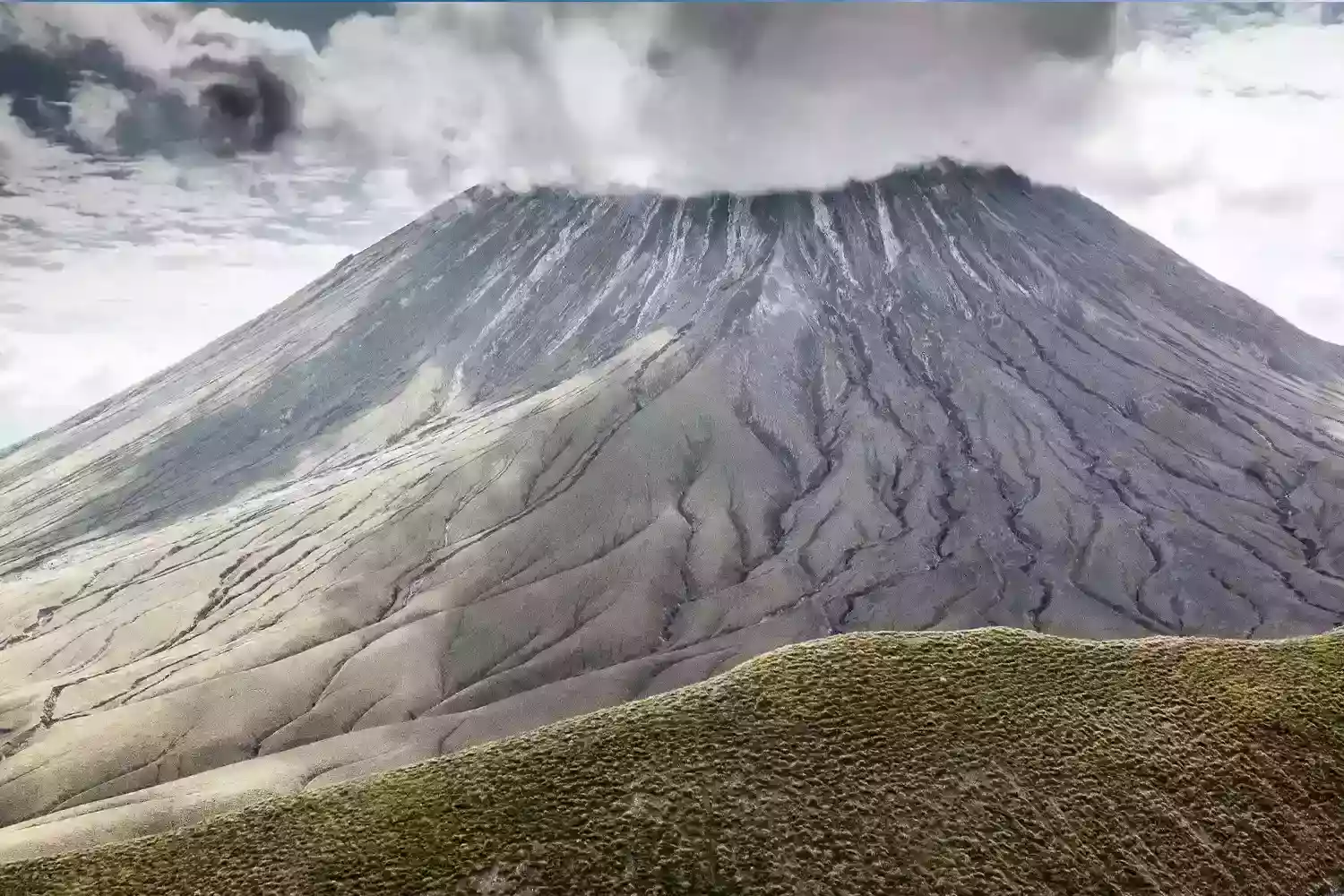
Ol Doinyo Lengai: An Active Volcano
Lengai is the only active volcano known to erupt natrocarbonatite lava, which flows black and turns white as it cools, so the summit looks snow-capped from a distance. It has ongoing eruptive episodes, and the crater, vents and trail change over time.
The climb is open year-round, but every ascent depends on a real-time decision by the local guides, who check gas emissions, changes in the vents and rockfall immediately before departure. If conditions are unsafe, the climb is shortened or called off, and we plan the rest of your time at Lake Natron instead.
How Does the Overnight Ol Doinyo Lengai Climb Work?
Ascents are made strictly at night. You leave camp at around 11:00 pm to midnight, drive to the base, and climb for about 5–6 hours to reach the crater rim at sunrise; the descent takes 3–4 hours, finishing before the heat of the day.
- Difficulty: one of the hardest non-technical climbs in Tanzania: very steep, with loose ash and rock, and about 5,600 ft (1,700 m) of ascent
- Fitness: good fitness and strong knees are essential; the descent is hard on the legs
- Gear: sturdy boots, gaiters, walking poles, gloves, a headlamp, 3 liters of water and a warm layer for the rim at dawn
- Guides: local guides lead every ascent and decide on the day whether it is safe to go
How Much Does It Cost to Climb Ol Doinyo Lengai?
| Fee | Approximate cost |
|---|---|
| Local guiding and village fees | About US$100 per person, or about US$70 per person for groups of 2 or more |
| Government fees (such as TAWA) | Charged per person; shown in your quotation |
| Lake Natron activities (Ngare Sero waterfall walk, flamingo walk) | Village fees, shown in your quotation |
The full trip, with transport from Arusha, accommodation at Lake Natron and the climb, is quoted for your dates and group. Some camps at Lake Natron, such as Lake Natron Camp, include the climb free for guests who stay a set number of nights; ask us and we compare the options.
Lake Natron and Ngare Sero
Lake Natron is a shallow soda lake on the Kenyan border, so salty and hot that few animals live in it, but it is the main breeding ground for East Africa's lesser flamingos. Around the lake you can:
- Walk to the lake shore to see the flamingos feeding
- Follow the Ngare Sero river up a gorge to a waterfall you can swim under
- Visit Maasai villages
- See footprints of early humans preserved in volcanic mud near Engaresero
The area is hot, dry and remote, with simple camps and lodges near Engaresero.
How to Get to Ol Doinyo Lengai and Lake Natron
| From | How | Time |
|---|---|---|
| Arusha | By road via Mto wa Mbu, partly rough | About 4–5 hours |
| The Serengeti (north-east) | By road via Loliondo | About 4–5 hours |
| Arusha | Charter flight to Lake Natron airstrip | About 1 hour |
Ol Doinyo Lengai Trip Options
| Length | Plan |
|---|---|
| 2 days | Drive to Natron, rest, night climb, return to Arusha |
| 3–4 days | Natron, the waterfall walk, the climb and a rest day |
| 7 days | Tarangire, the Serengeti, Natron and the climb, Ngorongoro |
Natron fits well between the Serengeti and Arusha, so the climb is easy to add to a safari; see our northern Tanzania safaris.
When Is the Best Time to Climb Ol Doinyo Lengai?
June to October and December to February are the driest months and best for the climb. It is hot at Natron all year, which is why every ascent is made at night.
Safety on Ol Doinyo Lengai
Follow your guide's decisions without argument: they know the mountain's current state. Stay away from the crater edge and active vents, don't touch fresh lava, and turn back if you feel unwell. Your travel insurance should cover hiking and evacuation.
What to Pack for the Lengai Climb
- Headlamp with spare batteries
- Sturdy boots and gaiters
- Walking poles
- Gloves for the rocky descent
- 3 liters of water and snacks
- A warm layer for the rim at dawn
Planning Your Ol Doinyo Lengai Climb
Rest well before the climb, start slowly, and take the descent carefully with poles. Combine the climb with a northern safari.
Book a few weeks ahead so we can arrange the local guides, your camp at Lake Natron and transport from Arusha. Plan at least one rest night at Natron before the climb, and remember that the final decision to climb is made by the local guides on the day.
Common Questions About Climbing Ol Doinyo Lengai
Is Ol Doinyo Lengai still active?
Yes. It has ongoing eruptive episodes, so trail and crater conditions are checked with the local guides immediately before every climb.
How hard is the Ol Doinyo Lengai climb?
Very hard for a non-technical climb: steep, loose ash for 5–6 hours up and 3–4 down, at night. Good fitness is essential.
Why do you climb at night?
To reach the rim at sunrise and avoid the extreme daytime heat on the ash slopes.
How much does the climb cost?
Local guiding and village fees are about US$100 per person, or about US$70 each for groups of 2 or more, plus government fees. The full trip from Arusha is quoted for your dates.
Can I climb Lengai and Kilimanjaro on one trip?
Yes, but leave rest days: Lengai is hard on the legs. Many climbers do it after a safari instead.
Can beginners climb Ol Doinyo Lengai?
Only very fit beginners: it is steep and hard, with loose ash.
The Bottom Line
Ol Doinyo Lengai is a tough, unforgettable night climb on an active volcano, with Lake Natron's flamingos and waterfalls at its foot. Go with local guides, respect their decision on the day, and combine it with a northern safari.
Send us your dates and the number of climbers through the booking form, on WhatsApp +255 678 992 599 or by email to jaynevytours@gmail.com, and our team in Moshi will reply with a written quotation.