
What You Need to Know: A coffee tour in Moshi or Arusha takes about 3–4 hours on a family farm on the slopes of Kilimanjaro or Mount Meru: a walk through the coffee bushes, picking and processing the beans by hand, roasting over a fire, grinding in a wooden mortar and tasting the coffee. It costs US$123 per person, with transport, guide and lunch included. The Materuni tour combines coffee with a waterfall hike.
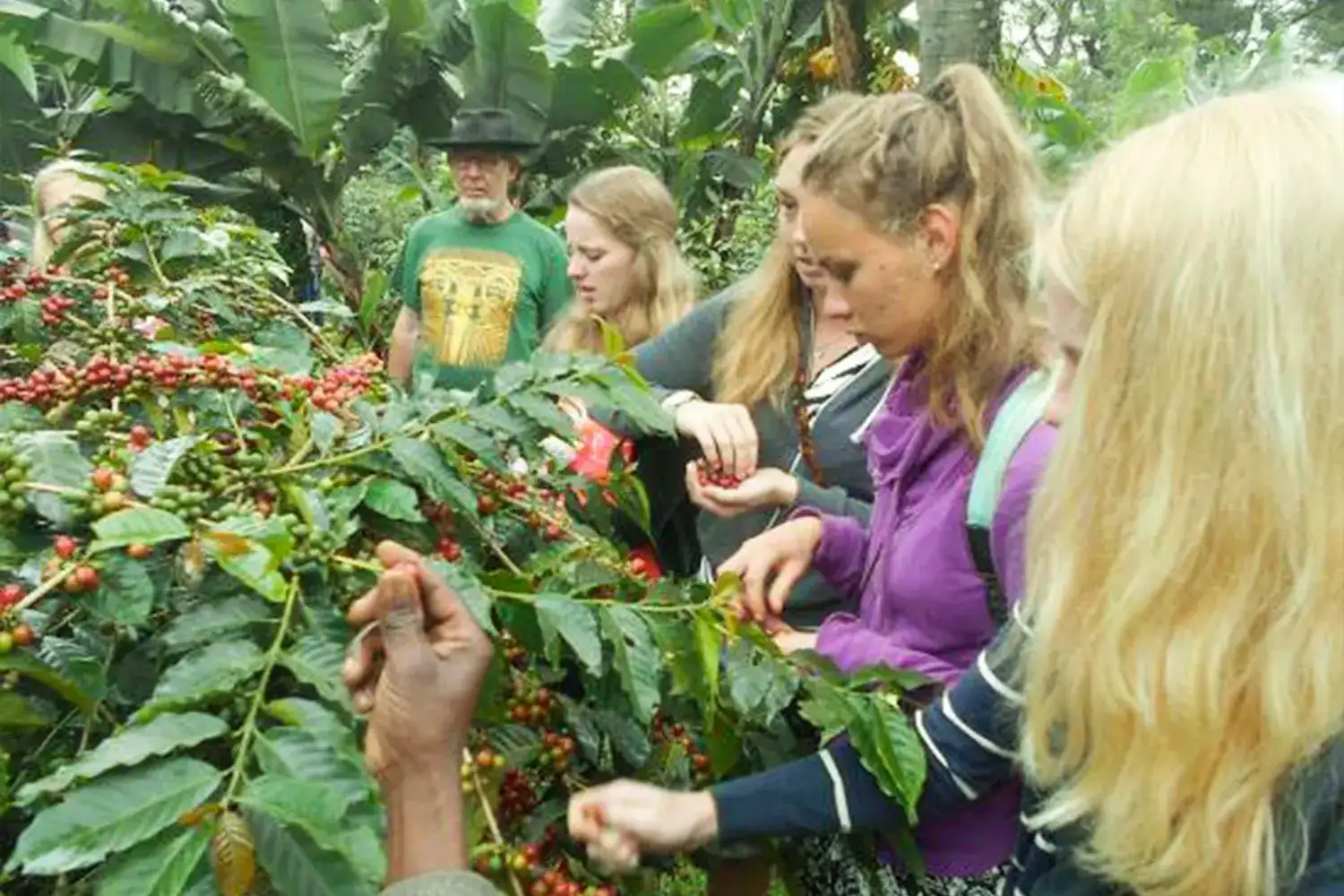
What Does a Moshi Coffee Tour Involve?
| Step | What you do |
|---|---|
| Farm walk | Coffee bushes under banana and shade trees |
| Picking | Ripe red cherries, by hand |
| Processing | Pulping, washing and drying the beans |
| Roasting | Over a wood fire, stirring until dark |
| Grinding | In a wooden mortar, often with a song |
| Tasting | Freshly brewed coffee |
Larger estates near Arusha also show machine processing and cupping. You can buy freshly roasted coffee to take home.
Where Tanzanian Coffee Grows on Kilimanjaro's Slopes
| Region | Main type |
|---|---|
| Kilimanjaro and Arusha | Arabica |
| Mbeya, Songwe and Ruvuma | Arabica |
| Kagera, near Lake Victoria | Robusta |
Kilimanjaro coffee grows on volcanic soil at 3,900–5,900 ft (1,200–1,800 m), mostly on small family farms mixed with bananas, the Chagga kihamba system.
Tours from Moshi and from Arusha
From Moshi, coffee tours run in the Chagga villages on Kilimanjaro's slopes, such as Materuni and Marangu, 30–60 minutes away. From Arusha, farms and estates on the slopes of Mount Meru are 30–60 minutes away. For a full day, combine coffee with the Materuni waterfall or the Marangu caves.
How Much Does the Moshi Coffee Tour Cost?
US$123 per person, with transport, guide and lunch included.
- Transport from your hotel
- Your guide and the farm visit
- Coffee tasting
- Lunch
From Cherry to Cup: The Steps You Take Part In
| Step | What you do |
|---|---|
| Picking | Pick ripe red coffee cherries from the bushes on the family farm (in season) |
| Pulping and drying | See how the beans are pulped, washed and sun-dried |
| Roasting | Roast the beans in a pan over an open fire, stirring until they crack |
| Pounding | Pound the roasted beans in a wooden mortar, often to a work song |
| Brewing | Brew and drink the coffee you made, with the family |
The coffee grown on Kilimanjaro's slopes is Arabica, planted among banana trees by Chagga families on small farms; it is one of the best-known coffees from Tanzania.
Who Is the Coffee Tour For?
- Coffee lovers who want to see where their cup comes from
- Families: children enjoy the roasting and pounding
- A rest day before or after a Kilimanjaro climb
- Travelers who want to meet a local family rather than only see a sight
Combining the Coffee Tour with the Materuni Waterfall
The coffee tour fits easily with a waterfall walk on the same slopes: our Materuni waterfall and coffee day trip combines both. See all our day trips and things to do in Moshi.
The coffee tour fits easily into a half day, so many guests combine it with something else. The most popular combination is the Materuni waterfall, on the same slopes, which turns it into a full day of walking, swimming and coffee. Others add a visit to the Marangu caves or a relaxed afternoon at the Chemka hot springs.
If you are in Moshi before a climb, the coffee tour is a gentle way to spend your rest day without tiring your legs. After a climb or a safari, it is a calm, friendly last day before your flight. See all our day trips.
How the Moshi Coffee Tour Runs
| Time | Plan |
|---|---|
| Morning | Pickup in Moshi, drive up the slopes to a Chagga village |
| Late morning | Walk through the coffee and banana farm with your host |
| Midday | Roast, pound and brew coffee, then drink it together |
| Afternoon | Lunch, and back to Moshi |
The Chagga People and Kilimanjaro Coffee
The Chagga people have farmed Kilimanjaro's fertile slopes for centuries, growing bananas, beans and, since the colonial era, Arabica coffee. Many families still keep a small coffee plot beside their home garden, and coffee remains an important cash crop. On the tour you learn how the whole process, from picking to the cup, is done by hand.
Why Take a Coffee Tour on Kilimanjaro?
Most visitors drink coffee every day without ever seeing a coffee plant. On Kilimanjaro's slopes you walk through a family farm, pick ripe cherries, and follow the beans all the way to a fresh cup, prepared by hand in the way local families have done for generations. It is a simple, friendly experience, and your hosts are happy to answer questions about farming, family life and the village.
The tour is also a good way to support small farmers directly: the fee and any coffee you buy go to the family, not to a middleman. It fits easily on a rest day before or after a Kilimanjaro climb or a safari, and combines well with a waterfall walk; see things to do in Moshi.
Common Questions About the Moshi Coffee Tour
How long is a coffee tour?
About 3–4 hours on the farm, plus the drive.
Is Kilimanjaro coffee Arabica?
Yes, mostly Arabica, grown on small family farms.
Can children join?
Yes; they enjoy the roasting and grinding.
When is coffee harvest season on Kilimanjaro?
The main harvest is in the second half of the year. Outside the harvest you still roast, pound and brew beans from the farm's stores.
Can I buy coffee to take home?
Yes. Families usually sell their own roasted coffee, and buying some supports them directly.
Is the coffee tour suitable for children?
Yes: children enjoy roasting and pounding the beans.
Do I need to book the coffee tour in advance?
A day's notice is usually enough, but booking ahead with your climb or safari makes sure the family and guide are ready for you.
The Bottom Line
Pick, roast and grind your own cup on a Chagga farm: the most memorable coffee you'll drink in Tanzania.
Send us your date, where you are staying and the number of travelers (with children's ages) through the form, on WhatsApp +255 678 992 599 or by email to jaynevytours@gmail.com, and our team will confirm the pickup time and send your quotation.