
By Sharifa Lema, Manager and Chief of Staff, Jaynevy Tours, Moshi · Updated October 2026
What You Need to Know: The Northern Circuit is the longest route on Kilimanjaro and the quietest: it starts in the western forest like Lemosho, crosses the Shira Plateau, then circles the remote northern slopes of Kibo, which almost no other climbers visit, before the summit from School Hut. With eight nights on the mountain it has the most gradual ascent of any route. We run it in 9 days, from US$2,580 per person, and recommend it to climbers who want every advantage on summit night.
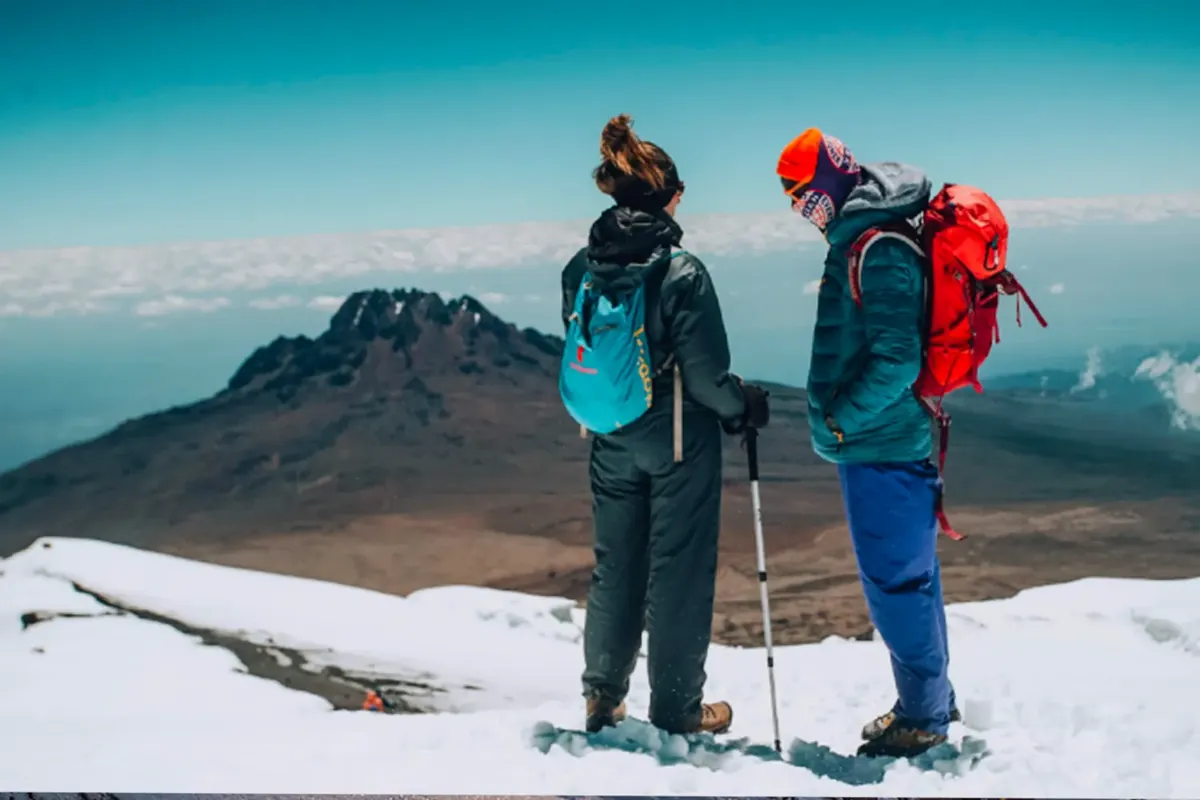
What Is the Northern Circuit Route?
The Northern Circuit is one of the newest of Kilimanjaro's main routes and the only one that goes almost all the way round the mountain. For the first four days it follows the Lemosho line: the western forest, the Shira Plateau and a climb-high day to Lava Tower. Then, where every other western route turns south-east towards the Barranco Valley, it turns north to Moir Hut and spends three days traversing the northern slopes of Kibo, high above the plains that stretch towards Kenya, to the high camp at School Hut on the north-east side.
From School Hut you climb to Gilman's Point on the crater rim and walk along the rim to Uhuru Peak, then come down the south side via Stella Point, Barafu and the Mweka trail. By the end you have seen the mountain from the west, the north and the south.
Northern Circuit Route Map: Camps and Altitudes
| Night | Camp | Altitude | Walking that day |
|---|---|---|---|
| 1 | Mti Mkubwa | About 8,700 ft (2,650 m) | About 4 miles (6 km), 3–4 hours |
| 2 | Shira 1 | About 11,500 ft (3,500 m) | About 5 miles (8 km), 5–6 hours |
| 3 | Shira 2 | About 12,600 ft (3,850 m) | Across the plateau |
| 4 | Moir Hut, via Lava Tower | About 13,800 ft (4,200 m) | The climb-high, sleep-low day |
| 5 | Buffalo Camp | About 13,600 ft (4,150 m) | About 5 miles (8 km), 5–7 hours |
| 6 | Third Cave | About 12,800 ft (3,900 m) | About 6 miles (10 km), 6–8 hours |
| 7 | School Hut | About 15,600 ft (4,750 m) | About 4 miles (6 km), 4–6 hours |
| 8 | Mweka Camp, via Uhuru Peak | About 10,100 ft (3,090 m) | The longest day: summit and descent |
Look at the shape of the line: after Moir Hut the route stays at about the same height for two days and even drops to Third Cave before the final climb to School Hut. That long, level stretch above 12,800 ft (3,900 m) is what makes the Northern Circuit the gentlest acclimatization profile on Kilimanjaro.
What the Northern Slopes Are Like
- Remote: between Moir Hut and School Hut you meet few other groups; Buffalo Camp and Third Cave are used almost only by Northern Circuit climbers.
- Drier: the north side lies in the mountain's rain shadow and gets less rain than the southern routes.
- Wide views: the plains to the north run towards Kenya, and on clear evenings the view from camp stretches for miles.
- Undulating: the trail rises and falls across ridges and valleys rather than climbing steadily, which rests your body before the high camp.
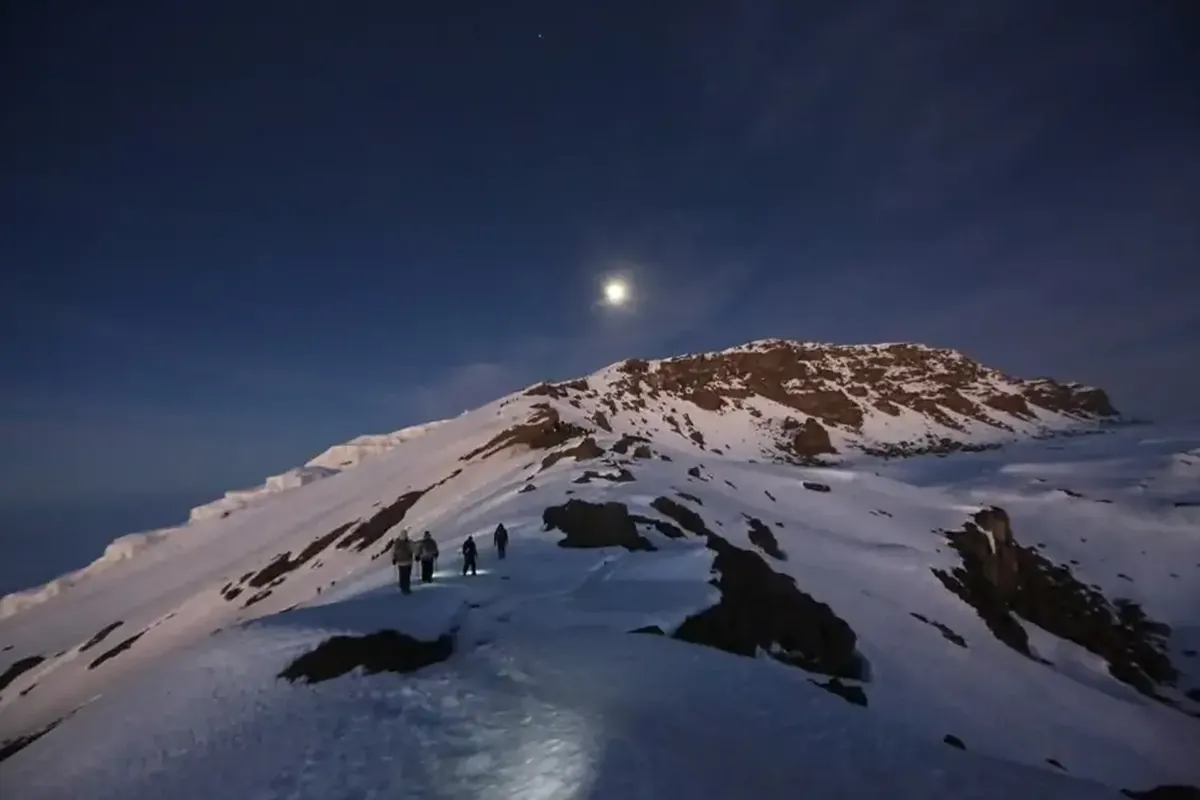
Summit Night from School Hut
You leave School Hut, at about 15,600 ft (4,750 m), around midnight and climb to Gilman's Point (18,652 ft / 5,685 m) on the crater rim, then walk along the rim to Uhuru Peak (19,341 ft / 5,895 m). Instead of retracing your steps, you come down the south side past Stella Point and Barafu Camp to Mweka Camp, the longest day of the climb. By then you have had a week above 11,500 ft (3,500 m), which is why most climbers on this route feel stronger on summit night than on shorter climbs.
How Hard Is the Northern Circuit?
It is the longest route but not the hardest. The daily walks are moderate, there is no Barranco Wall, and the altitude is spread over more days than on any other route. What makes it demanding is its length: nine days and eight nights in a tent, more cold nights, and a long summit day that crosses the summit and descends a different side. If you are comfortable with a long trek, it is the route that gives you the best chance of enjoying summit night.
Acclimatization and Summit Success
No Kilimanjaro route gives your body more time. Kilimanjaro National Park records from the early 2000s, across all routes, showed 85% of climbers reaching the summit on 8-day climbs, against 64% on 7-day climbs; the Northern Circuit adds one more night on top of that. The figures are old and success rates are higher today on every route, but more days at altitude remains the single biggest factor in reaching the top.
Best Time to Climb the Northern Circuit in 2027 and 2028
Late May to October and January to March. The north side is drier than the south, but the route starts in the western forest, which is wet in the long rains of April and early May and in November. Because it is so quiet, the Northern Circuit is also our suggestion for climbers who want to avoid the July-to-September crowds on Machame and Lemosho.
Northern Circuit Pros and Cons
| Pros | Cons |
|---|---|
| The most gradual ascent on the mountain | The longest and most expensive of our routes |
| The quietest trails and camps | Nine days and eight nights in a tent |
| See the west, north and south of the mountain | A long drive to the start in the west |
| Drier northern slopes | A long summit day across the crater and down the south side |
Northern Circuit Compared with Lemosho and Rongai
| Northern Circuit | Lemosho | Rongai | |
|---|---|---|---|
| Route guide | This page | Lemosho guide | Rongai guide |
| Start | West | West | North |
| Nights on the mountain | 8 | 6–7 | 5–6 |
| High camp | School Hut | Barafu | Kibo Hut |
| Crowds | Quietest | Quiet start, busy south | Quiet |
| From, per person | US$2,580 | US$2,090 | US$1,845 |
Our Northern Circuit Climb
9-Day Northern Circuit
Eight nights on the mountain, round the quiet north side
8-Day Lemosho Route
The same western start, one day shorter, via the south
Prices are per person, 2 climbers, mid-range hotels before and after the climb.
Our Northern Circuit climbs are private, on your own dates, with a crew of seven per climber, a private toilet tent, daily pulse-oximeter checks and emergency oxygen.
Getting to the Start
Like Lemosho, the Northern Circuit starts on the far western side of the mountain. We collect you in Moshi after breakfast and drive round to Londorossi Gate, where your guide registers the climb, then on to the forest trailhead. It is the longest transfer of any route, so the first walk to Mti Mkubwa is short.
Common Questions About the Northern Circuit
How long is the Northern Circuit route?
We run it in 9 days, with 8 nights on the mountain: the longest itinerary on Kilimanjaro.
Is the Northern Circuit the best route on Kilimanjaro?
For acclimatization and quiet trails, yes. It costs more and takes longer, so with less time the 8-day Lemosho is the next best choice.
Is the Northern Circuit crowded?
No. It is the quietest route; between Moir Hut and School Hut you meet very few other groups.
Where do you start the summit attempt on the Northern Circuit?
From School Hut, at about 15,600 ft (4,750 m), on the north-east side of Kibo, reaching the crater rim at Gilman's Point.
Does the Northern Circuit come down the same way?
No. You descend the south side via Stella Point, Barafu and the Mweka trail.
Is the Northern Circuit harder than other routes?
It is longer, not harder: there is no scrambling like the Barranco Wall, and the altitude is spread over more days.
How much does the Northern Circuit cost?
From US$2,580 per person for 9 days, for 2 climbers with mid-range hotels.
When is the best time for the Northern Circuit?
Late May to October and January to March; it is also the best way to avoid the dry-season crowds on the southern routes.
The Bottom Line
The Northern Circuit is the route for climbers who want the best chance at the summit and the quietest experience: nine days, the most gradual ascent on Kilimanjaro, and three days on the remote north side. See the 9-day Northern Circuit climb for the day-by-day plan and prices, or the Lemosho route guide if you have a day less.