
What You Need to Know: A camping safari in Tanzania puts you in public campsites inside or near the parks, such as Simba Campsite on the Ngorongoro crater rim and Nyani Campsite in the central Serengeti, with the same private Land Cruiser and guide as our lodge safaris. It is the lowest-priced way to sleep inside the parks, from about US$795 per person. It suits travelers who want to hear the bush at night and don't mind simple facilities.
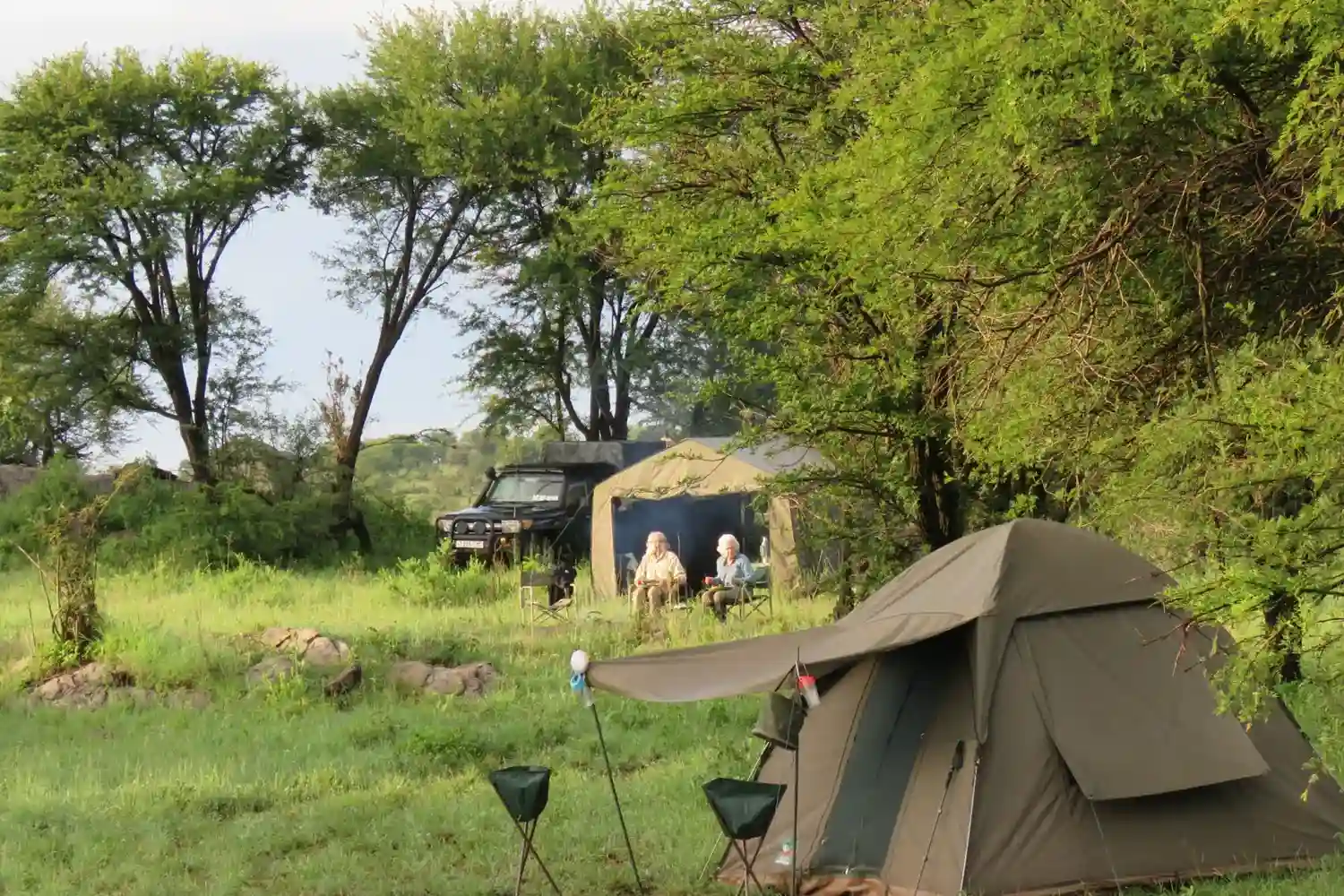
Campsites We Use on Our Camping Safaris
| Area | Campsites |
|---|---|
| Ngorongoro crater rim | Simba Campsite |
| Central Serengeti | Nyani Campsite, Engiterata Adventure Campsite |
| Mto wa Mbu, near Lake Manyara | Fanaka Campsite, Lake Manyara Lodge and Campsite |
Public campsites inside the parks are unfenced, so animals can walk through at night. Simba Campsite sits on the rim at about 7,500 ft (2,300 m), with views into the crater and cold nights all year.
Who Is a Camping Safari For?
Travelers on a budget, younger travelers and anyone who wants to be close to the bush at night: lions calling, hyenas whooping, the sound of grazing animals around the tents. It suits fewer travelers who need comfort after long days in the vehicle, or families with very young children.
Choose camping if you want the lowest price and the sounds of the bush at night, and don't mind simple facilities. Bring a headlamp, warm layers and earplugs, and consider mixing camping nights with a lodge night or two for a hot shower.
What to Expect at a Serengeti or Ngorongoro Campsite
Public campsites have basic shared toilets and showers, which vary from site to site, and a simple shelter for cooking and eating. Stay in your tent after dark, keep it zipped, and follow your guide's instructions; never leave food in the tent. Nights on the crater rim are cold, so a warm sleeping bag matters.
Ask us what is provided for your trip, such as tents, mattresses and meals, and what you need to bring; we confirm it in your quotation.
You reach the campsite in the late afternoon after a game drive. Dinner is simple and early, the stars are extraordinary, and the sounds start after dark: lions calling across the plains, hyenas, zebras grazing near the tents. You sleep in your tent, and your guide is close by. Morning starts early, with coffee before the first drive. For many guests it is the night they remember most.
What Stays the Same on a Camping Safari
- Your own vehicle: a private 4x4 Land Cruiser with a pop-up roof, a window seat for every guest (at most 6), Wi-Fi (patchy in remote areas), charging points and a fridge for drinks
- Our driver-guides graduated from the College of African Wildlife Management at Mweka and have five years of safari guiding. They speak English, and we can arrange French, Spanish, German or Chinese-speaking guides.
- All park fees and the crater fee
- AMREF Flying Doctors evacuation cover
Camping or Lodges, or a Mix of Both?
Many guests camp for one or two nights, often in the Serengeti, and stay in lodges the rest of the time. It is a good way to try camping without committing to a whole trip. Compare with our budget safaris, which use simple lodges.
| Camping | Lodges | |
|---|---|---|
| Price | Lowest | Higher |
| Location | Public campsites inside or near the parks | Lodges and camps, inside or outside |
| Comfort | Tents, shared campsite facilities | Beds, private bathrooms |
| Atmosphere | Close to the bush, sounds at night | Comfort and service |
See all levels on our safari packages.
What to Pack for a Camping Safari
- A warm sleeping bag (cold nights on the crater rim and in the Serengeti)
- A headlamp
- Flip-flops for shared showers
- A quick-dry towel
- Layers for cold evenings
- Earplugs if you are a light sleeper
How to Book a Camping Safari
Send your dates, the number of travelers (with children's ages) and your lodge level, and we reply with a written quotation naming every lodge. A 30% deposit confirms your safari and the balance is paid on arrival, by Pesapal (card or mobile money) or bank transfer in US dollars.
| When you cancel | Refund |
|---|---|
| 60 days or more before arrival | 100% |
| 30–59 days | 90% |
| 15–29 days | 60% |
| 10–14 days | 25% |
| Less than 10 days, or a no-show | No refund |
Food on a Camping Safari
On a camping safari, a cook travels with you or meals are prepared at the campsite kitchens: hot breakfasts, packed or picnic lunches, and three-course dinners with soup, a main course and fruit. Vegetarian, vegan and allergy needs are followed. Eating under the stars, with the sounds of the bush around you, is part of the experience.
Common Questions About Camping Safaris in Tanzania
Are the campsites fenced?
No. Public campsites in the parks are unfenced, which is part of the experience. Stay in your tent at night and follow your guide.
Is camping safe?
Yes, when you follow the rules: stay in the tent after dark, keep it zipped and keep food out of it.
How cold is it at Simba Campsite?
The crater rim is at about 7,500 ft (2,300 m), and nights are cold all year. Bring a warm sleeping bag and layers.
Can we camp for only part of the safari?
Yes. Mixing camping nights with lodges is common.
What does a camping safari cost?
From about US$795 per person, depending on the route and group size.
Is camping on safari safe?
Yes. Public campsites are used by many travelers every night; stay in your tent at night and follow your guide's advice.
Do campsites have showers?
Most public campsites have basic shared showers and toilets; hot water is not guaranteed.
The Bottom Line
Camp if you want to sleep close to the wildlife for the lowest price, and mix in lodges if you want some comfort. Either way you have your own vehicle and guide.
Send us your dates, the number of travelers (with children's ages) and your lodge level through the form, on WhatsApp +255 678 992 599 or by email to jaynevytours@gmail.com, and our sales team in Moshi will reply with a written quotation.