
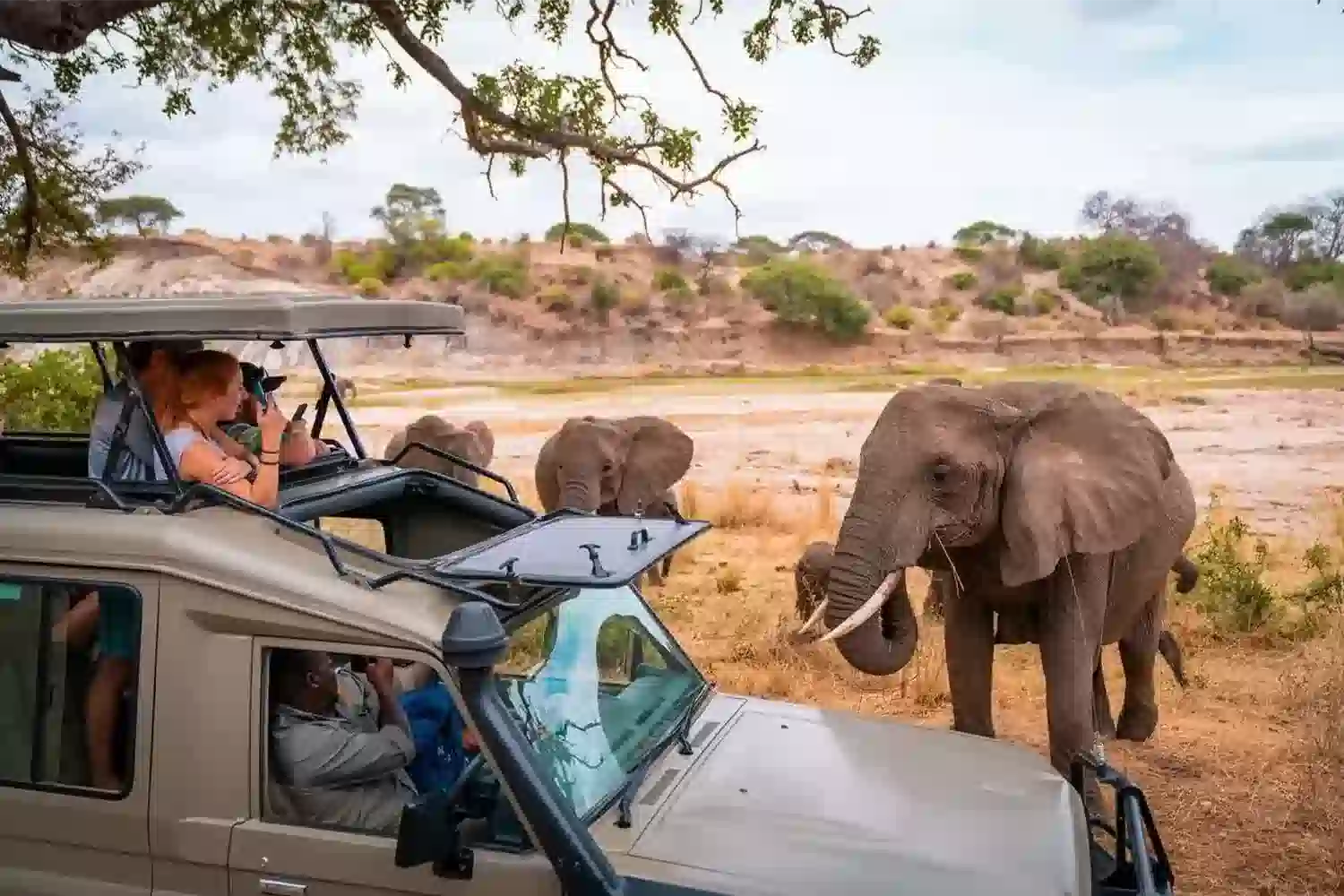
Why Choose a 2-Day Ngorongoro-Tarangire Combo Safari?
This compact itinerary combines the Ngorongoro Crater, a UNESCO World Heritage Site with dense wildlife, and Tarangire National Park, renowned for its elephant herds and baobab trees. Ideal for families (ages 5+), first-time visitors, and short-term travelers, it’s described as “a diverse, action-packed safari showcasing Tanzania’s top wildlife destinations.”
2-Day Ngorongoro-Tarangire Combo Safari Price Breakdown
Costs range from $550 to $850 per person, depending on accommodation and group size:
| Category | Per Person Price (USD) | Accommodation Type | Key Features | Best For |
|---|---|---|---|---|
| Standard | $550 - $700 | Budget lodges/camps | Private safaris, en-suite rooms | Budget travelers, small groups |
| Comfort | $700 - $850 | Mid-range lodges | Private safaris, enhanced dining | Families, couples |
Prices include private 4x4 transport, accommodation, meals, park fees ($60/day for Ngorongoro, $45/day for Tarangire), and guided game drives. Extras like tips ($10-15/day) and optional activities add 5-10%.
Sample 2-Day Ngorongoro-Tarangire Combo Safari Itinerary
This itinerary by Jaynevy Tours maximizes wildlife viewing across two iconic parks:
- Day 1: Arusha to Ngorongoro Crater - Early morning drive from Arusha to Ngorongoro Conservation Area (180km, 3.5 hours). Full-day private game drive in Ngorongoro Crater, targeting lions, rhinos, and elephants ($60 park fee). Picnic lunch in the crater ($20). Overnight: Ngorongoro Farm House ($200/night) or Ngorongoro Sopa Lodge ($250/night). (B, L, D) (6 hours safari)
- Day 2: Tarangire National Park to Arusha - Morning drive to Tarangire National Park (120km, 2 hours). Full-day private game drive, focusing on elephant herds and baobab landscapes ($45 park fee). Picnic lunch ($20). Return to Arusha by evening (150km, 2.5 hours). (B, L) (6 hours safari)
Total travel: ~450km by road. 60% safari time, 35% travel, 5% relaxation.
Key Attractions in Your 2-Day Ngorongoro-Tarangire Combo Safari
- Ngorongoro Crater: 260 km², a UNESCO World Heritage Site with 90% Big Five sighting success.
- Tarangire National Park: 2,850 km², famous for large elephant herds (2,000+), baobab trees, and diverse wildlife.
- Wildlife Diversity: Lions, leopards, elephants, rhinos, buffalo, and over 550 bird species across both parks.
85% of travelers report spotting at least three of the Big Five on this itinerary.
What's Included and Excluded
Included:
- Private 4x4 transport (Arusha-Ngorongoro-Tarangire-Arusha)
- Comfortable accommodation (1 night, budget or mid-range lodges)
- Meals (breakfast, lunch, dinner on Day 1; breakfast, lunch on Day 2)
- Park fees ($60/day for Ngorongoro, $45/day for Tarangire)
- Bottled water during game drives
- Expert guide
Excluded:
- International flights ($800-$1,200 round-trip)
- Visa ($50 single-entry)
- Tips ($10-15/day for guide/driver)
- Optional activities: Maasai village visit ($30)
- Drinks (soft drinks, alcohol: $5-15/day)
Jaynevy Tours offers customizable Ngorongoro-Tarangire combo safaris.
Best Time to Book a 2-Day Ngorongoro-Tarangire Combo Safari
June to October offers prime wildlife viewing and dry weather (20-30°C), ideal for game drives in both parks. November to March provides lush landscapes and fewer crowds, but avoid April-May for heavy rains. Dry season ensures optimal conditions for Big Five and elephant sightings.
| Season | Months | Weather | Experience | Price Impact |
|---|---|---|---|---|
| Dry | Jun-Oct | Sunny, 20-30°C | Best for wildlife viewing, high demand | Peak (+10-20%) |
| Green | Nov-Mar | Rainy spells, 25-35°C | Lush scenery, fewer crowds | Low (-10-15%) |
Quantitative Data: Ngorongoro-Tarangire Safari Stats
Tanzania’s $1.8 billion tourism industry attracts 1.5M visitors annually. Key figures:
- Ngorongoro Crater visitors: 500,000/year
- Tarangire visitors: 200,000/year
- Big Five sightings: 85% success rate across both parks
- Combo safari bookings: 12% annual growth
Qualitative Insights: Traveler Experiences
“The Ngorongoro-Tarangire combo was perfect—saw rhinos in the crater and massive elephant herds in Tarangire!” shares a Jaynevy client. Expert guides (10+ years experience) ensure a 95% satisfaction rate.
Tips to Optimize Your 2-Day Ngorongoro-Tarangire Combo Safari
- Book 1-2 months in advance for preferred lodge availability
- Pack binoculars, sunscreen, and neutral-colored clothing
- Request early morning game drives for peak wildlife activity
- Consider a Maasai village visit ($30) for cultural enrichment
- Bring a good camera for capturing wildlife and landscapes
- Bring reusable water bottles to reduce drink costs ($1-2 each)
Why Choose Jaynevy Tours for Your Ngorongoro-Tarangire Combo Safari?
With over a decade of expertise, Jaynevy Tours delivers seamless safaris with expert guides, comfortable accommodations, and a 95% satisfaction rate, ensuring an unforgettable Ngorongoro-Tarangire experience.
Explore More with Jaynevy Tours
Extend your adventure with Kilimanjaro climbs, Mount Meru treks, or a Zanzibar beach holiday. Contact us for personalized quotes!
Frequently Asked Questions
What is the cost of a 2-day Ngorongoro-Tarangire combo safari?
Costs range from $550 to $850 per person, including private transport, accommodation, meals, park fees, and guided game drives.
What is included in the 2-day Ngorongoro-Tarangire combo safari?
Includes private 4x4 transport, comfortable accommodation, meals, park fees, and guided game drives in Ngorongoro Crater and Tarangire National Park. Excludes international flights, visas, and tips.
When is the best time for a 2-day Ngorongoro-Tarangire combo safari?
June to October for prime wildlife viewing and dry weather, or November to March for lush landscapes and fewer crowds, avoiding April-May for heavy rains.
Is this safari suitable for families or first-time visitors?
Yes, it’s ideal for families (ages 5+), first-time visitors, and short-term travelers, offering a diverse wildlife experience with comfortable accommodations.
What makes this 2-day Ngorongoro-Tarangire combo safari unique?
It combines private game drives in Ngorongoro Crater, a UNESCO World Heritage Site, with Tarangire’s elephant herds and baobab landscapes for a varied, compact safari.