
What You Need to Know: The 5-day Marangu is our lowest-priced climb, from US$1,600 per person (2 climbers, mid-range hotels), with 4 nights in the park huts at Mandara, Horombo and Kibo. It is the fastest ascent we run, so we recommend it only to fit hikers with recent experience above 14,800 ft (4,500 m). Most first-timers should choose the 6-day Marangu, which adds an acclimatization day at Horombo for US$245 more.
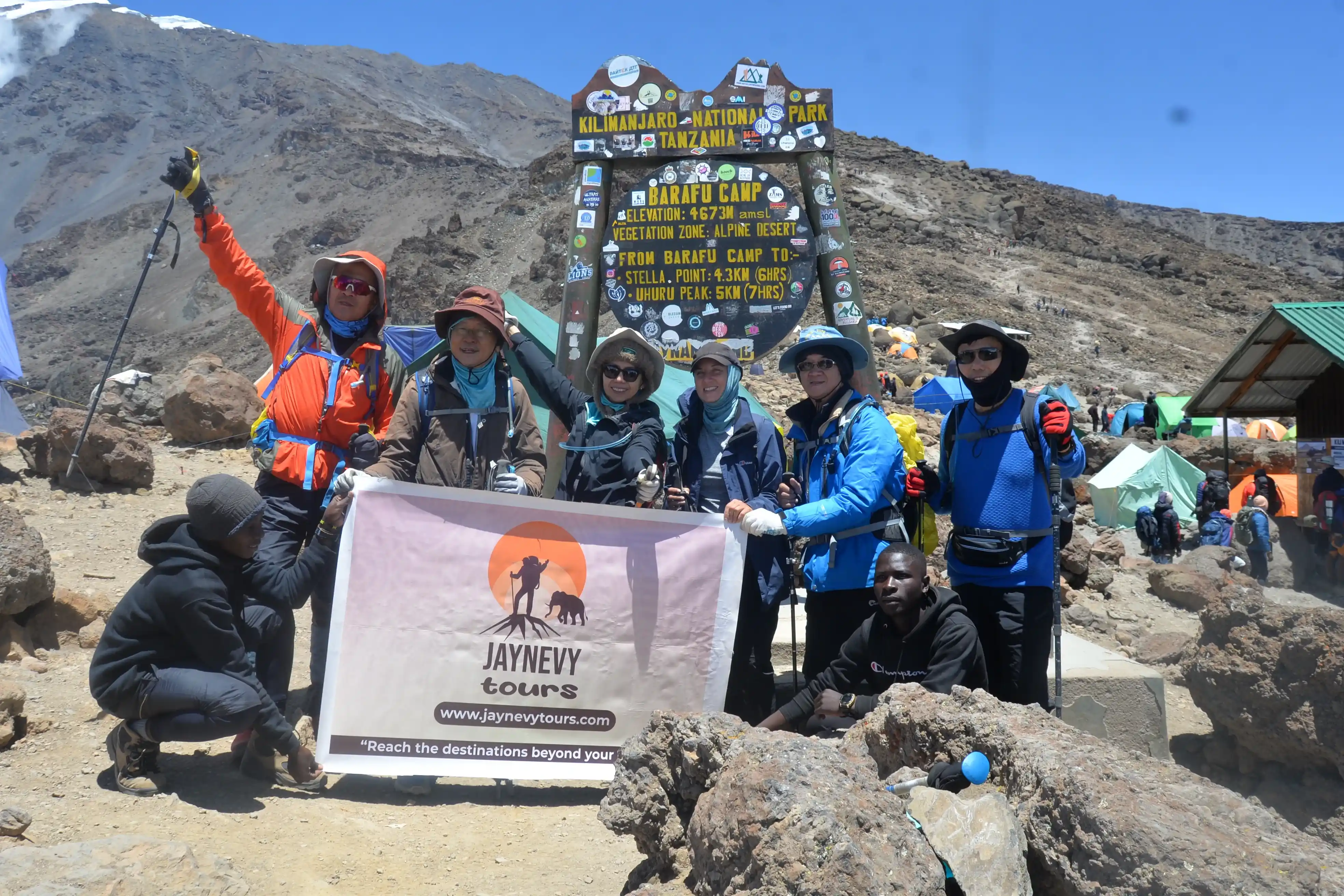
Is the 5-Day Marangu Climb Right for You?
It is the right climb if you are fit, have been above 14,800 ft (4,500 m) recently and felt well, are short of time, and would rather sleep in a hut than a tent. It is not the right climb for a first high mountain: more climbers struggle with the altitude on this schedule than on any other we run.
Marangu is the oldest route on Kilimanjaro. The huts are shared bunk rooms with mattresses, a real comfort in wet or cold weather, and the trail is the gentlest underfoot. You go up and down the same corridor, so the scenery repeats on the way down.
| The 5-day Marangu suits you if… | Consider another climb if… |
|---|---|
| You have recent high-altitude experience | This is your first high mountain: the 6-day Marangu |
| You want huts, not tents | You want a camping route with more varied scenery: the 7-day Machame |
| You are short of time and budget | You want the best summit chances: the 8-day Lemosho |
| You prefer a steady trail with no scrambling | You are climbing in the rainy months: the Rongai route |
Should You Take Five Days or Six on Marangu?
Choose six days unless you have recent experience at high altitude. The extra day at Horombo is the cheapest way we know to improve your chance of reaching the summit.
On the 5-day schedule you go from Horombo (12,205 ft / 3,720 m) to Kibo Hut (15,430 ft / 4,703 m) on Day 3 and start for the summit a few hours later, with no rest day in between. Kilimanjaro National Park records from the early 2000s showed only 27% of climbers reaching the summit on 5-day climbs, against 44% on 6 days. A 2009 study of 181 climbers on 4- and 5-day Marangu climbs, in Wilderness & Environmental Medicine, found that 77% developed acute mountain sickness.
Today's rates are higher, and fit climbers who have acclimatized recently do reach the top on five days. But for most people the 6-day Marangu, at US$245 more, is the better buy.
The 5-Day Marangu Route at a Glance
Marangu Gate – Mandara Hut – Horombo Hut – Kibo Hut – Gilman's Point – Uhuru Peak – Horombo Hut – Marangu Gate.
You go up and come down the same trail on the south-east side of the mountain.
| Day | Sleep at | Altitude | Walking time |
|---|---|---|---|
| 1 | Mandara Hut | 8,924 ft (2,720 m) | 4–5 hours |
| 2 | Horombo Hut | 12,205 ft (3,720 m) | 6–8 hours |
| 3 | Kibo Hut | 15,430 ft (4,703 m) | 5–7 hours |
| 4 | Horombo Hut (via Uhuru Peak, 19,341 ft / 5,895 m) | 12,205 ft (3,720 m) | 11–15 hours |
| 5 | Hotel in Moshi (via Marangu Gate) | — | 5–7 hours |
5-Day Marangu Itinerary: Why Each Day Matters
The trail is good underfoot all the way to Kibo Hut. The real test is the altitude, so your guide keeps the pace slow from the first morning. Days 3 and 4 decide the climb.
-
Day 1: Marangu Gate (6,135 ft / 1,870 m) to Mandara Hut (8,924 ft / 2,720 m)
From Moshi we drive to Marangu Gate for park registration, then walk about 5 miles (8 km), 4–5 hours, through montane rainforest of giant ferns, with birds and monkeys along the trail. The day is gentle, and Mandara Hut has shared bunk rooms with mattresses.
A five-day climb has no extra acclimatization day, so walking slowly from the first hour matters even more by summit night.
Purpose: an easy start in the forestRainforestLunch, dinner -
Day 2: Mandara Hut to Horombo Hut (12,205 ft / 3,720 m)
About 7 miles (12 km), 6–8 hours. The forest gives way to heath and moorland, and on clear days Mawenzi and Kibo come into view. You gain about 3,300 ft (1,000 m), so the pace slows and water stops come often.
Many climbers get a mild headache tonight; tell your guide at the evening health check.
Purpose: gain height steadilyHeath and moorlandBreakfast, lunch, dinner -
Day 3: Horombo Hut to Kibo Hut (15,430 ft / 4,703 m)
About 6 miles (10 km), 5–7 hours over the alpine-desert saddle between Mawenzi and Kibo, one of the most open landscapes on the mountain.
At Kibo Hut, the summit base, the afternoon goes on the summit briefing, health and gear checks and an early dinner, then a few hours' sleep before the night start.
Purpose: reach the summit baseAlpine desertBreakfast, lunch, dinner -
Day 4: Kibo Hut to Uhuru Peak (19,341 ft / 5,895 m), then down to Horombo Hut
The climb starts around midnight, slowly over scree to Gilman's Point on the crater rim and then along the rim to Uhuru Peak, 6–8 hours in all. From the top you go back to Kibo for a short rest and on down to Horombo, another 5–7 hours. The next section explains the night step by step.
Purpose: the summitArctic summit zoneSnacks, lunch, dinner -
Day 5: Horombo Hut to Marangu Gate, drive to Moshi
About 12 miles (20 km), 5–7 hours down through moorland and rainforest. At the gate you sign out and receive your summit certificate, and most climbers tip the crew here; then we drive you back to your hotel in Moshi.
Purpose: descend; certificatesMoorland and rainforestBreakfast, lunch
Summit Night on the Marangu Route, Step by Step
Summit night from Kibo Hut is the hardest part of the Marangu route: about 3,900 ft (1,200 m) of climbing in the dark and cold, mostly on loose scree, to Gilman's Point on the crater rim and on to Uhuru Peak.
How Hard Is the 5-Day Marangu Climb?
The trail is the easiest on the mountain, but the altitude comes faster than on any other climb we run.
| Challenge | What it means for you |
|---|---|
| Altitude | The fastest ascent we offer; no acclimatization day |
| Summit night | 6–8 hours up loose scree in the dark and cold, then down to Horombo |
| Long descent | About 12 miles (20 km) on the last day |
| Huts | Shared bunk rooms, unheated; a warm sleeping bag is essential |
Your Kilimanjaro Guide, Crew and Food
Every climber on our Kilimanjaro climbs has a crew of seven: one mountain guide, one cook and five porters. For two climbers that is a crew of 14 for all 5 days. You sleep in the park's huts, in shared bunk rooms with mattresses; bring or rent a warm sleeping bag. The crew carries the food, water, cooking equipment and safety kit, so you carry only a daypack with water, snacks, layers and a camera.
Food on the mountain
Your guide wakes you with a hot drink, and breakfast follows. You set off with your daypack while the porters pack up and walk ahead. Lunch is packed or served on arrival, depending on the day. Afternoons are for rest and short acclimatization walks; evenings for dinner, the health check and the guide's briefing on the next day. Most climbers are asleep by 8 pm.
How Much Does the 5-Day Marangu Climb Cost?
The 5-day Marangu climb costs from US$1,600 per person for 2 climbers with mid-range hotels in Moshi. It is US$1,430 with budget hotels and US$1,745 with luxury hotels. It is our lowest-priced climb because it is the shortest. The price is for a private climb on your own dates; budget, mid-range or luxury changes only your two hotel nights in Moshi.
| Climbers | Budget | Mid-range | Luxury |
|---|---|---|---|
| 1 | US$1,455 | US$1,645 | US$1,835 |
| 2 | US$1,430 | US$1,600 | US$1,745 |
| 3 | US$1,435 | US$1,635 | US$1,735 |
| 4 | US$1,430 | US$1,600 | US$1,745 |
| 5 | US$1,435 | US$1,620 | US$1,740 |
| 6 | US$1,430 | US$1,600 | US$1,745 |
Where the money goes
About half the price is Kilimanjaro National Park fees, which every operator pays at the same rate. For 5 days on the mountain the 2026 non-resident fees come to:
| Park fee (per climber) | Rate | 5-day Marangu |
|---|---|---|
| Conservation fee | US$70 per day | US$350 |
| Hut fee | US$60 per night | US$240 |
| Rescue fee | US$20 per climb | US$20 |
| VAT | 18% | US$110 |
| Total park fees | About US$720 |
What the 5-Day Marangu Price Includes, and What It Doesn't
Park fees, the full crew, meals, hut nights, safety kit, transfers and two hotel nights are included. Flights, insurance, tips and personal gear are not.
Included
- Kilimanjaro National Park fees, VAT and trekking permits
- A crew of seven per climber: mountain guide, cook and five porters
- Hut accommodation on the mountain
- All meals on the mountain, drinking water and hot drinks
- First-aid kit, emergency oxygen, pulse oximeter and stretcher
- Return airport transfers, and transfers to Marangu Gate and from Marangu Gate
- One hotel night in Moshi before and one after the climb
Not included
- International and domestic flights, and visa fees (US$100 for US citizens)
- Tanzania's mandatory inbound travel insurance, US$44 per adult from October 1, 2026 (we can help you buy it)
- Travel insurance that covers trekking up to 19,700 ft (6,000 m) and helicopter evacuation
- Personal climbing gear (rental available in Moshi)
- Tips for the mountain crew (tipping guide)
- Meals and activities in Moshi, drinks, laundry and personal items
- The card-processing fee when you pay the deposit online
Tips to budget for
Using the daily ranges in our tipping guide, US$20–30 for the guide, US$10–15 for the cook and US$5–10 for each porter, a crew of seven for 5 days comes to about US$275–475 per climber, given at the end of the climb.
When Is the Best Time for the Marangu Route?
Late May to October and January to March. We don't recommend April, early May, November or the late-December holiday period. Marangu is the most sheltered route in bad weather, because you sleep in huts, but the long rains still make the forest section slippery and the summit cloudier.
| Months | Our advice |
|---|---|
| January – March | Recommended: warmer, quieter |
| April – early May | Not recommended: long rains |
| Late May – October | Recommended: dry season, busiest months |
| November | Not recommended: short rains |
| Late December | Not recommended: holiday crowds |
5-Day Marangu Compared with the 6-Day Marangu and 7-Day Machame
These are the climbs most often weighed against the 5-day Marangu.
| 5-day Marangu | 6-day Marangu | 7-day Machame | |
|---|---|---|---|
| Nights on the mountain | 4 in huts | 5 in huts | 6 in tents |
| Acclimatization day | No | Yes, at Horombo | Lava Tower + Karanga |
| Best for | Fit climbers with altitude experience | Most first-timers who want huts | Most first-timers |
| Price from (2 climbers, mid-range) | US$1,600 | US$1,845 | US$2,090 |
Full itineraries: the 6-day Marangu and the 7-day Machame.
What Else to Read Before You Book
This page covers what is particular to the 5-Day Kilimanjaro Climb via the Marangu Route. The parts that work the same way on our other trips are explained once, in these guides:
- Kilimanjaro acclimatization: altitude sickness symptoms and how our guides check you at every camp.
- Kilimanjaro packing list: everything to bring, layer by layer.
- Rental gear in Moshi: what you can rent and the price for the whole climb.
- Where to sleep before and after the climb: hotels in Moshi and the nights included.
- Kilimanjaro booking and refund terms: deposit, balance and cancellation.
- Tipping your Kilimanjaro crew: suggested amounts per climber and how the crew shares them.
Common Questions About the 5-Day Marangu Climb
Do you sleep in huts or tents on the Marangu Route?
In huts. Mandara, Horombo and Kibo have shared bunk rooms with mattresses. Bring a warm sleeping bag.
Is the 5-day Marangu Route easy?
The trail is the gentlest on Kilimanjaro, but the 5-day schedule is fast, and altitude is the main reason climbers turn back. It is not an easy option for first-timers.
Do you go up and down the same way on Marangu?
Yes. You come down through Horombo and Mandara on the same trail, so you see the same scenery twice.
Can you reach the summit in 5 days?
Many fit climbers do, but nobody can guarantee it. Your guide decides on the day based on your health readings and the weather.
Is the 5-day Marangu enough to reach the summit?
For fit climbers with recent altitude experience, often yes. For a first high mountain we recommend the 6-day Marangu, which adds an acclimatization day.
Are there toilets on the mountain?
The Marangu huts have shared toilets. You sleep in the park huts on this route, so there is no camp toilet tent; that comes on all our camping climbs.
The Bottom Line
The 5-day Marangu is the right climb for fit hikers with recent altitude experience who want huts and a short trip. For everyone else, the 6-day Marangu costs US$245 more and adds the acclimatization day that makes summit night far more manageable.
To plan your climb, send us your preferred dates, the number of climbers and your hotel level (budget, mid-range or luxury) through the booking form, on WhatsApp +255 678 992 599 or by email to jaynevytours@gmail.com. Our sales team in Moshi will confirm availability and send your written quotation.