
How AI Solutions Increase Business Efficiency Today
AI solutions increase business efficiency by handling the slow, error-prone, repetitive parts of work so people can focus on creativity, relationships, strategy, and execution. In practice this means faster turnaround times, lower operating costs, fewer mistakes, happier customers, and teams that accomplish more with less burnout. Businesses using AI solutions increase business efficiency often report feeling “lighter” — less administrative drag, quicker responses, smoother operations, and more time to grow rather than just maintain. In 2026 the gap between companies that embrace these tools and those that don’t is visible in profit margins, customer retention, and owner quality of life.
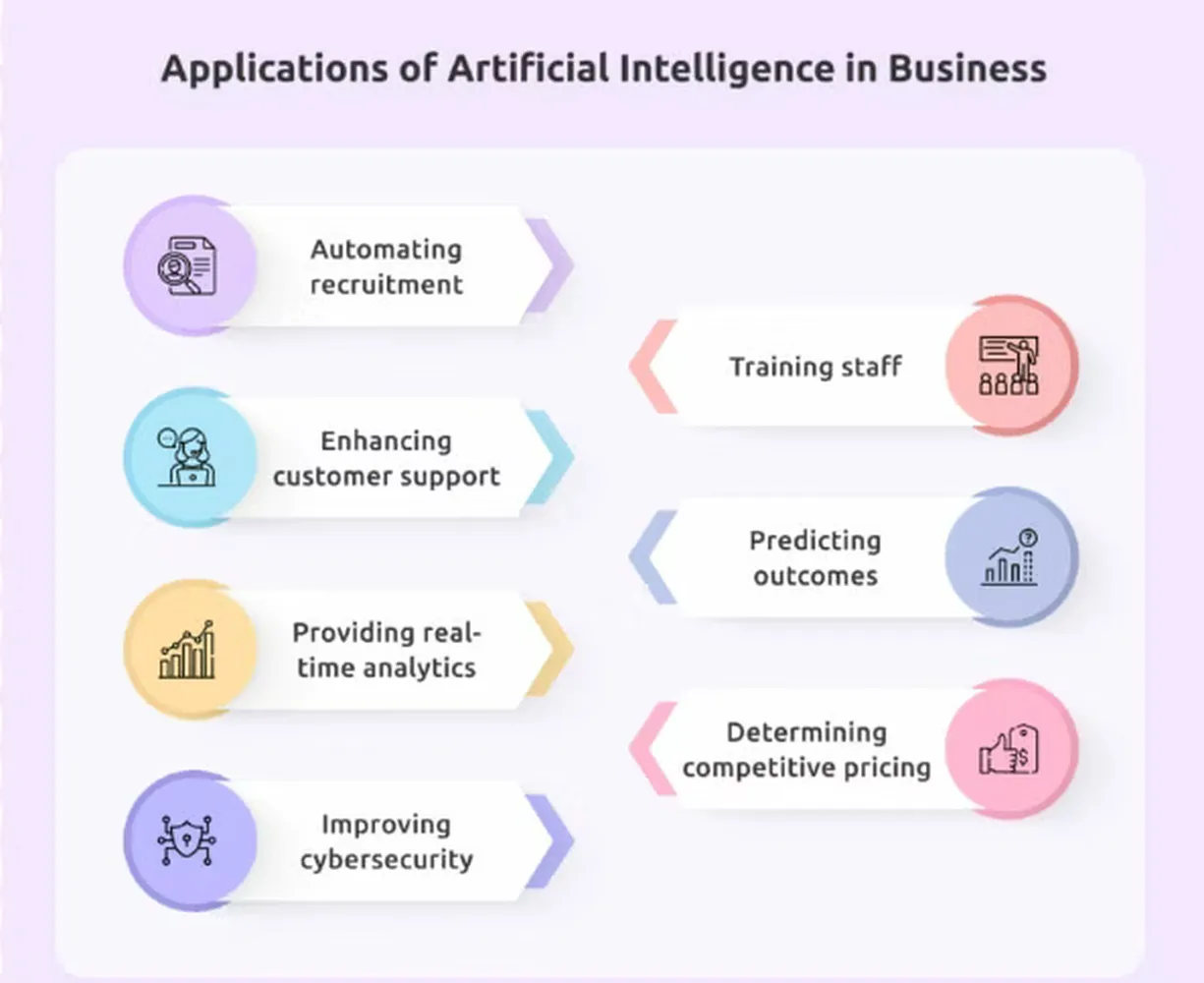
10 Powerful Ways AI Solutions Increase Business Efficiency
1. Automating Repetitive Admin & Data Tasks
AI solutions increase business efficiency by taking over data entry, invoice processing, report generation, email sorting, and form handling. Small teams reclaim 10–30 hours per week, reduce errors by 70–90%, and eliminate the mental drain of mindless work.
2. Speeding Up Customer Support & Response Times
AI solutions increase business efficiency through chatbots, auto-replies, ticket triage, and instant answers that handle 50–80% of routine inquiries. Response time drops from hours to seconds, satisfaction rises, and support staff focus on complex cases only.
3. Enabling Smarter, Faster Decision-Making
AI solutions increase business efficiency by analyzing data in real time — sales trends, inventory needs, customer behavior, cash flow forecasts — giving owners dashboards and alerts that replace weekly manual reviews with instant clarity.
4. Personalizing at Scale Without Extra Effort
AI solutions increase business efficiency by delivering tailored emails, offers, product recommendations, and content to thousands of customers automatically. Conversion rates rise 15–40% while marketing teams spend less time segmenting and testing.
5. Optimizing Pricing & Revenue Operations
AI solutions increase business efficiency with dynamic pricing that adjusts to demand, competition, and customer signals. Retailers and service businesses see 5–25% revenue uplift with almost no manual intervention.
6. Streamlining Meetings & Knowledge Work
AI solutions increase business efficiency by transcribing calls, summarizing discussions, extracting action items, and pushing tasks to tools like Slack/Asana. Teams save 5–15 hours/week and never lose important details again.
7. Improving Supply Chain & Inventory Accuracy
AI solutions increase business efficiency by forecasting demand, flagging re-order points, optimizing routes, and predicting maintenance. Stockouts drop, overstock shrinks, and logistics costs fall 10–30%.
8. Accelerating Content & Marketing Production
AI solutions increase business efficiency by drafting blogs, social posts, emails, ad copy, and product descriptions in seconds. Marketing output increases 3–7× while maintaining quality and brand voice.
9. Reducing Errors & Compliance Risks
AI solutions increase business efficiency by catching inconsistencies in invoices, contracts, expense reports, and regulatory filings. Error rates fall 60–90%, saving thousands in rework and potential fines.
10. Empowering Employees with On-Demand Help
AI solutions increase business efficiency by giving staff instant answers to internal questions (HR policies, product details, processes) via chat interfaces connected to company knowledge bases — reducing interruptions and training time.
Efficiency Gains Comparison Table
| Area | Typical Efficiency Gain | Time Saved/Week | Cost Impact |
|---|---|---|---|
| Admin & Data Entry | 60–90% | 10–30h | ↓↓↓ |
| Customer Support | 50–80% | 8–20h | ↓↓ |
| Decision-Making | 70–90% | 5–15h | ↑↑ (better decisions) |
| Marketing Personalization | 15–40% conversion ↑ | 5–12h | ↑↑ revenue |
| Meetings & Notes | 50–80% | 5–15h | ↓↓ |
| Supply Chain/Inventory | 10–30% cost ↓ | 5–10h | ↓↓↓ |
| Content Production | 3–7× faster | 8–20h | ↓↓ |
Qualitative Benefits — How Teams Feel the Difference
Businesses using AI solutions increase business efficiency often describe the change as “finally breathing.” Owners report less stress, fewer late nights fixing mistakes, faster customer replies, and more time for strategy or family. Employees feel more empowered with instant answers and less drudgery. Customers notice quicker service and better experiences. The overall mood shift is powerful — from reactive firefighting to proactive growth.
Quantitative Results Small & Mid-Size Businesses See
- 20–50% average reduction in time spent on routine tasks
- 15–40% drop in operational costs (support, admin, errors)
- 30–70% faster process turnaround (quotes, support, reporting)
- 10–35% higher employee productivity on core work
- Customer satisfaction scores rise 15–30 points (NPS/CSAT)
Real-World Examples of AI Solutions Increasing Business Efficiency
- Local e-commerce store automates order processing & customer follow-ups → handles 3× volume with same team
- Consulting firm uses AI meeting summaries → saves 12 hours/week per consultant on notes & admin
- Service business auto-sorts leads & schedules calls → response time drops from 24h to <15min
- Retail shop uses AI inventory forecasting → reduces stockouts 65% and overstock costs 40%
- Agency automates content briefs & first drafts → delivers 4× more client work without adding writers
Common Barriers & How to Overcome Them
AI solutions increase business efficiency only when adopted thoughtfully. Barriers include fear of complexity, poor data quality, no clear starting point, privacy worries, and resistance to change. Overcome them by starting with one high-pain process, using no-code tools with free trials, measuring results before scaling, choosing reputable platforms with strong security, and involving the team early so everyone sees the wins.
Quick Start Guide — Get AI Solutions Increasing Efficiency Fast
- Pick your #1 efficiency killer (support tickets? manual data? slow follow-ups?)
- Choose 1–2 mature, easy tools that solve it (Zapier, Make, Fireflies, Tidio, etc.)
- Run a 30-day pilot — track time saved, errors reduced, customer feedback
- Measure before-and-after — hard numbers build momentum
- Expand to next bottleneck once you see consistent wins
Experience Efficiency in Travel with Jaynevy Tours
AI solutions increase business efficiency — and they’re making travel planning effortless too. At Jaynevy Tours we use smart AI systems to create perfectly optimized Tanzania adventures: timed Serengeti safaris, personalized Mount Kilimanjaro itineraries, and ideal Zanzibar escapes. Save time and stress — contact us today!
Frequently Asked Questions
How do AI solutions increase business efficiency in 2026?
AI solutions increase business efficiency by automating repetitive tasks, providing instant insights, optimizing processes, reducing human error, enabling faster decisions, personalizing at scale, and freeing staff for high-value work — typically delivering 20–50% time savings and 15–40% cost reductions.
Which areas benefit most from AI solutions that increase business efficiency?
Operations (automation & supply chain), customer service (chatbots & personalization), marketing (targeting & content), finance (forecasting & fraud detection), HR (recruiting & onboarding), and decision-making (analytics & dashboards) show the fastest, largest improvements.
What results can small businesses realistically expect?
Small businesses commonly see 10–40 hours/week saved on admin, 30–70% faster process turnaround, 15–35% reduction in operational costs, 20–50% higher productivity on core work, and improved customer satisfaction leading to more repeat business.
Are AI solutions that increase business efficiency affordable for small companies?
Yes — many powerful tools start at $0–$50/month (Zapier, Make, Notion AI, Fireflies, Grammarly Business, Tidio, etc.). Most deliver ROI within 1–3 months through time savings alone, making them accessible even for very small operations.
What stops businesses from using AI to increase efficiency?
Common barriers include lack of awareness of simple tools, fear of complexity, concerns about data privacy/security, no clear starting point, limited internal skills, and hesitation to change existing workflows.