
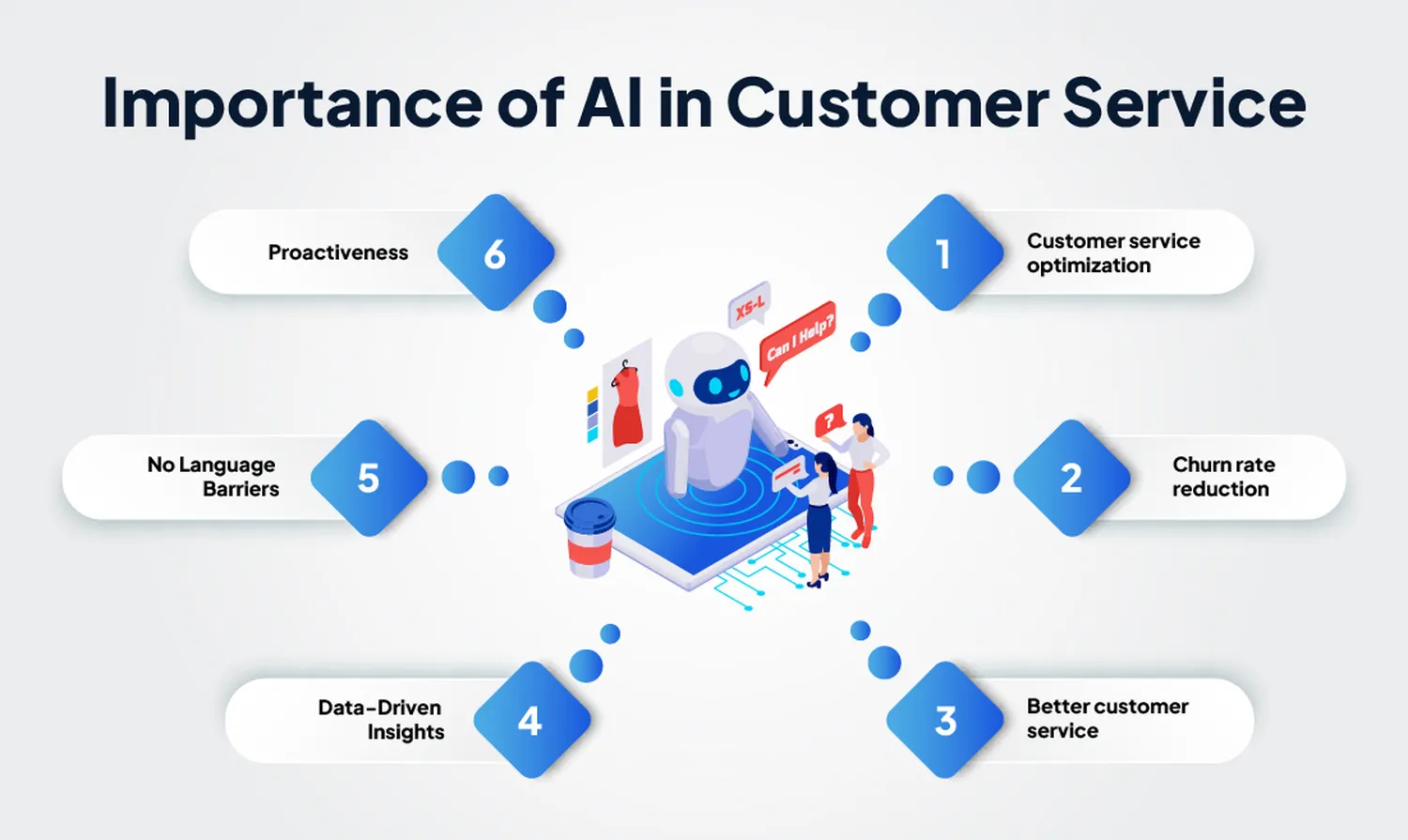
How AI Technology in Customer Support Changes the Game
Customers now expect instant answers any time, personalized help without repeating themselves, and resolutions without long waits or transfers. Traditional support — email backlogs, phone queues, repetitive questions — can no longer keep up. AI technology in customer support solves this by handling routine inquiries automatically, understanding intent across channels (chat, email, voice, social), pulling knowledge instantly, routing complex cases to the right agent with full context, suggesting replies in real time, and proactively reaching out before problems escalate. Businesses using AI technology in customer support report dramatic improvements: tickets resolved in seconds instead of hours, satisfaction scores rising even with automation, agents focusing on high-value interactions instead of repetitive ones, support costs dropping significantly, and the ability to scale service during peaks without panic hiring. In 2026 AI technology in customer support is no longer optional — it’s a core competitive advantage for any business that values fast, consistent, delightful customer experiences.
12 Powerful Ways AI Technology in Customer Support Delivers Results
1. Instant 24/7 Self-Service Resolution
AI technology in customer support powers chatbots and voice agents that resolve 40–85% of common inquiries (tracking, returns, FAQs, password resets) without human help — any time, any channel. Customers get answers in seconds instead of waiting hours or days.
2. Intelligent Ticket Routing & Prioritization
AI technology in customer support analyzes intent, sentiment, urgency, customer history, and product data — then routes tickets to the best agent or team with full context already summarized. First-contact resolution rises 20–50%, transfers drop sharply.
3. Real-Time Agent Assist & Suggested Replies
AI technology in customer support listens to live conversations, pulls relevant knowledge base articles, suggests accurate replies, and flags upsell/cross-sell opportunities. Agents respond faster, make fewer mistakes, and close more issues on first contact.
4. Automatic Ticket Summarization & Categorization
AI technology in customer support reads incoming emails/chats, summarizes in one sentence, auto-tags category/priority/sentiment, and suggests next actions. Agents start with context instead of reading long threads, ramp-up time shortens dramatically.
5. Proactive Support & Churn Prevention
AI technology in customer support monitors behavior signals (abandoned carts, support patterns, NPS drops) and triggers personalized outreach before problems grow. Proactive resolutions reduce escalations 30–70% and improve retention noticeably.
6. Multilingual & Omnichannel Consistency
AI technology in customer support handles dozens of languages with natural fluency across chat, email, voice, WhatsApp, Instagram, Facebook, and more — delivering the same accurate, on-brand experience everywhere without extra staff.
7. Sentiment Analysis & Escalation Triggers
AI technology in customer support detects frustration, urgency, or delight in real time — alerting supervisors for high-risk cases, adjusting tone, or offering goodwill gestures automatically. CSAT improves, escalations become preventive instead of reactive.
8. Knowledge Base Optimization & Search
AI technology in customer support continuously improves help articles by analyzing what customers actually ask, suggesting new content, rewriting unclear answers, and powering semantic search that understands intent beyond keywords.
9. Voice AI & Phone Automation
AI technology in customer support handles phone inquiries with natural conversation, authenticates users, resolves issues, books appointments, or seamlessly transfers to agents with full context — reducing hold times and call abandonment significantly.
10. CSAT & Feedback Analysis at Scale
AI technology in customer support processes thousands of survey responses, support tickets, and reviews — identifying trends, root causes, product issues, and agent performance insights. Continuous improvement becomes data-driven instead of guesswork.
11. Cost Reduction Without Quality Trade-Off
AI technology in customer support lowers cost per ticket 25–60% by deflecting routine volume, shortening handle times, reducing agent headcount needs during peaks, and preventing repeat contacts through better first-contact resolution.
12. Personalized & Contextual Experiences
AI technology in customer support remembers every past interaction, purchase, preference, and issue — delivering highly relevant answers and offers. Customers feel understood, loyalty increases, and lifetime value grows noticeably.
AI Technology in Customer Support – Performance Impact Table
| Support Metric | Typical Improvement | Before → After Example | Key Benefit |
|---|---|---|---|
| Auto-Resolution Rate | 40–85% | 10% → 65% | Cost & speed ↑ |
| First-Contact Resolution | 20–50% ↑ | 55% → 82% | Customer happiness ↑ |
| Average Resolution Time | 30–70% ↓ | 12h → 2h | Wait time ↓ |
| Cost per Ticket | 25–60% ↓ | $12 → $4 | Margin protection |
| CSAT / NPS | 10–40% ↑ | 78 → 92 | Loyalty ↑ |
| Agent Handle Time | 20–50% ↓ | 8 min → 4 min | Capacity ↑ |
| Support Volume Capacity | 5–20× scale | 1k → 15k/mo | Growth without hiring |
Real Voices – How Teams Experience AI Technology in Customer Support
Support managers say AI technology in customer support means “we finally sleep at night during launches,” “agents love not answering the same question 50 times,” or “customers thank the bot — that never happened before.” Agents report “I handle the interesting cases now,” “I look like a genius with instant answers,” and “my stress level dropped dramatically.” Customers comment “got help at 2 a.m. instantly,” “it remembered my last issue,” or “finally a bot that actually solved it.” The shift is powerful — from reactive firefighting to proactive, personal, scalable service that feels human even when automated.
Hard Numbers – Impact of AI Technology in Customer Support
- 40–85% of inquiries resolved without human help
- 30–70% faster average resolution time
- 25–60% reduction in cost per contact
- 10–40% higher customer satisfaction scores
- 20–50% improvement in first-contact resolution
Challenges & Responsible Use of AI Technology in Customer Support
AI technology in customer support brings real hurdles: early hallucinations or wrong answers frustrate customers, complex/emotional cases still need humans, setup & knowledge base tuning takes time, privacy/compliance concerns arise, agents may resist “Big Brother” tools, and measuring true ROI beyond deflection rate requires care. Successful teams address these by starting with low-risk queries, maintaining clear human fallback paths, investing in continuous training data, communicating openly with staff, testing rigorously before full rollout, and focusing on augmentation (not replacement) — ensuring AI technology in customer support enhances rather than replaces the human connection.
How to Start Using AI Technology in Customer Support Today
- Identify your highest-volume, lowest-complexity tickets (tracking? returns? FAQs?)
- Choose a beginner-friendly platform (Tidio, Gorgias starter, Intercom essential)
- Run 30–60 day pilot on one channel — measure deflection rate, CSAT, agent time saved
- Expand gradually — add agent assist, proactive outreach, voice only after success
- Train team & monitor closely — refine answers & handoff triggers weekly
Support Smarter — Travel Better with Jaynevy Tours
AI technology in customer support also powers effortless travel planning. We use intelligent systems to deliver fast, personalized Tanzania adventures — perfectly timed Serengeti safaris, custom Mount Kilimanjaro climbs, and ideal Zanzibar escapes. Get help instantly & travel happier — contact Jaynevy Tours today!
Frequently Asked Questions
How does AI technology in customer support work in 2026?
AI technology in customer support uses chatbots, voice agents, intelligent routing, sentiment analysis, knowledge base search, auto-resolution, ticket summarization, proactive outreach, and real-time agent assist to handle 40–85% of inquiries automatically, reduce resolution time by 30–70%, and improve CSAT/NPS while lowering support costs 25–60%.
What are the biggest benefits of AI technology in customer support?
Key benefits include 24/7 instant availability, 40–85% auto-resolution of routine tickets, 30–70% faster average resolution time, 20–50% lower support costs per ticket, 10–40% higher CSAT/NPS scores, reduced agent burnout (fewer repetitive queries), proactive issue prevention, personalized responses at scale, and ability to support 5–20× more customers without proportional headcount.
Which AI tools best represent AI technology in customer support today?
Leading platforms include Intercom AI, Gorgias AI, Zendesk AI, Ada, Forethought, Sierra, Help Scout AI, Kustomer AI, Drift Conversational AI, and Tidio — with strong agent-assist features from Salesforce Einstein, Freshdesk Freddy, and custom GPT-powered solutions built on OpenAI, Anthropic, or Google Gemini.
Is AI technology in customer support suitable for small online businesses?
Yes — affordable options like Tidio (~$29/mo), Gorgias starter (~$60/mo), Intercom essential (~$39/mo), Ada starter plans, and free/low-cost builders (ManyChat, Landbot, Chatbase, Voiceflow) deliver strong results for small teams — often handling 50–80% of inquiries and improving response time from hours to seconds without large budgets.
What challenges come with implementing AI technology in customer support?
Common challenges include initial setup & training time, risk of poor early experiences (hallucinations, wrong answers), customer preference for human touch in complex/emotional cases, data privacy & compliance (GDPR/CCPA), agent resistance to new tools, measuring true ROI beyond ticket deflection, and need for continuous tuning & fallback to humans for edge cases.