
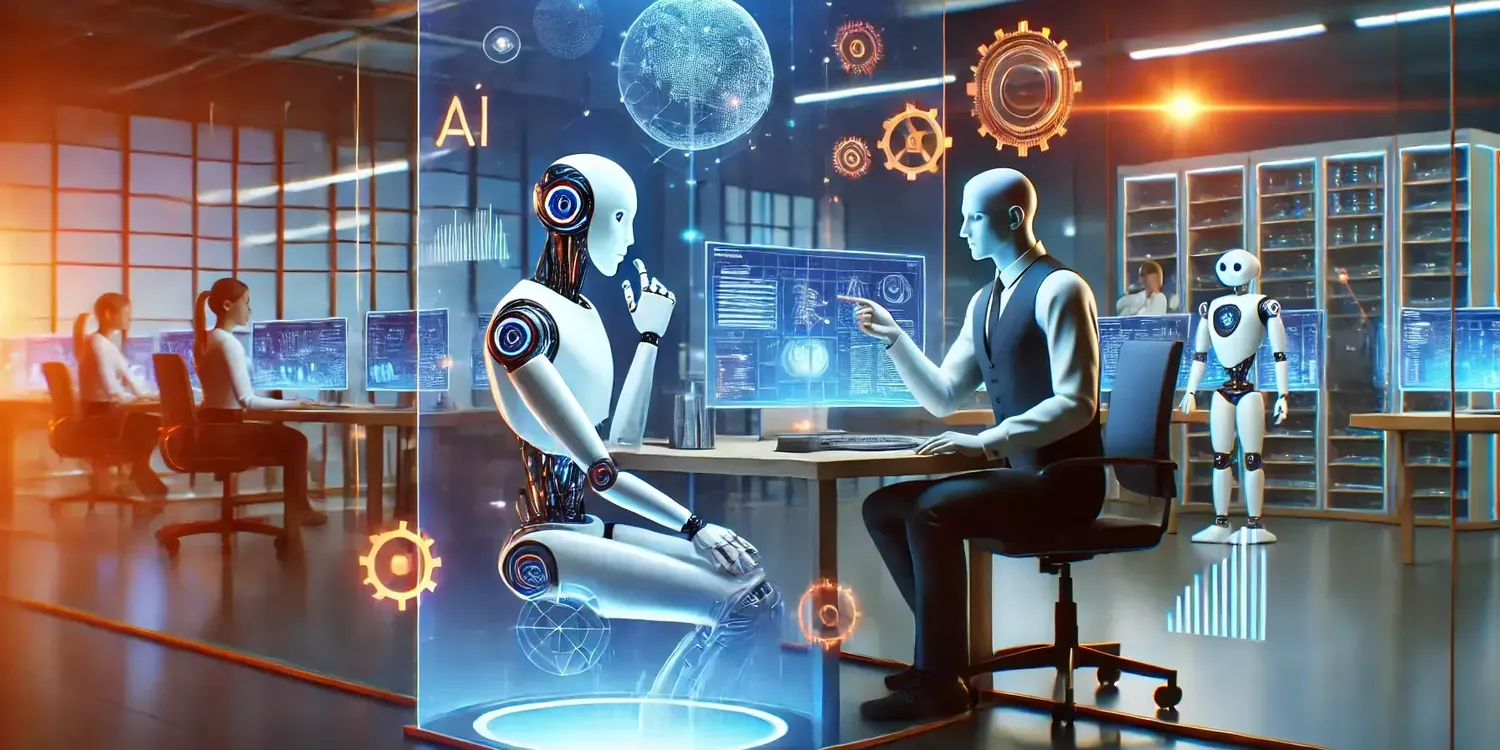
How AI Technology Transforming the Workplace Changes Daily Work
AI technology transforming the workplace removes drudgery so people focus on what humans do best — creativity, strategy, relationships, and complex problem-solving. Routine tasks (data entry, scheduling, basic analysis, report drafting, email sorting, meeting notes) are automated or accelerated dramatically. Teams handle 3–10× more volume without burnout, decisions move from days to minutes with real-time insights, collaboration becomes seamless across time zones, and employees get personalized support (learning paths, wellness nudges, career suggestions). Companies embracing AI technology transforming the workplace report feeling “lighter” — less administrative drag, faster execution, higher job satisfaction, and more time for innovation instead of maintenance. In 2026 the gap between organizations that integrate AI technology transforming the workplace thoughtfully and those that resist is visible in productivity, retention, innovation speed, and profitability.
10 Major Ways AI Technology Transforming the Workplace Delivers Impact
1. Automating Repetitive & Administrative Tasks
AI technology transforming the workplace handles data entry, invoice processing, scheduling, expense reconciliation, reporting, and workflow routing. Teams save 10–40 hours/week per person — often 30–70% of admin time — freeing capacity for strategic work and reducing burnout significantly.
2. Augmenting Knowledge Work & Decision-Making
AI technology transforming the workplace provides real-time research, summarizes vast information, runs scenario analysis, scores options, and suggests recommendations. Knowledge workers become 20–60% more productive, decisions improve in accuracy and speed, and strategic thinking gets amplified rather than replaced.
3. Enabling Seamless Hybrid & Remote Productivity
AI technology transforming the workplace powers virtual collaboration (smart meeting summaries, action tracking, async updates), auto-scheduling across time zones, personalized focus time, and digital twins of office presence. Remote teams match or exceed in-office output while maintaining culture and connection.
4. Personalizing Employee Experience & Development
AI technology transforming the workplace tailors learning paths, career recommendations, wellness nudges, feedback, and recognition. Engagement rises 15–40%, turnover drops 10–35%, and employees feel seen and supported — driving higher retention and performance.
5. Enhancing Customer-Facing Roles & Support
AI technology transforming the workplace equips sales, service, and support teams with real-time insights, next-best actions, personalized scripts, and automated follow-ups. Response times drop to seconds, first-contact resolution rises 20–50%, and customer satisfaction scores improve noticeably.
6. Optimizing Resource Allocation & Scheduling
AI technology transforming the workplace forecasts workload, matches skills to tasks, auto-schedules shifts, and balances capacity. Utilization improves 15–45%, overtime reduces, burnout risks drop, and project delivery becomes more predictable and on-time.
7. Accelerating Innovation & Product Development
AI technology transforming the workplace generates ideas, prototypes concepts, analyzes user feedback at scale, and prioritizes features. Time-to-market shortens 30–70%, innovation velocity increases, and teams iterate faster with data-driven confidence.
8. Improving Hiring, Onboarding & Talent Management
AI technology transforming the workplace screens resumes, predicts fit, personalizes onboarding, and forecasts turnover risk. Time-to-hire drops 30–60%, bad hires reduce 20–50%, and internal mobility improves — saving significant recruiting and ramp-up costs.
9. Strengthening Compliance, Risk & Security
AI technology transforming the workplace monitors for anomalies, flags policy violations, audits documents, and predicts risks. Compliance errors fall 40–80%, audit times shrink, and security incidents decrease — protecting reputation and avoiding fines.
10. Creating New Roles & Career Paths
AI technology transforming the workplace spawns positions like AI ethicists, prompt engineers, change managers, data storytellers, human-AI trainers, and AI governance specialists. Companies build future-proof workforces while offering employees exciting, high-value growth opportunities.
Impact of AI Technology Transforming the Workplace – Key Metrics Table
| Area | Typical Improvement | Time Saved | Business Impact |
|---|---|---|---|
| Admin & Routine Tasks | 30–70% | 10–40h/wk | Cost ↓, Capacity ↑ |
| Knowledge Work Productivity | 20–60% | 5–20h/wk | Output ↑↑ |
| Decision Speed & Accuracy | 20–70% faster, 15–60% better | Days → minutes | Results ↑↑ |
| Employee Engagement & Retention | 15–40% ↑ engagement | — | Turnover ↓ 10–35% |
| Customer Support Efficiency | 40–80% auto-resolved | 30–70% cost ↓ | CSAT ↑ |
| Innovation & Time-to-Market | 30–70% faster | — | Competitive edge ↑ |
| Hiring & Onboarding | 30–60% faster | — | Cost ↓, Quality ↑ |
Real Voices – How Employees & Leaders Experience AI Technology Transforming the Workplace
Employees say AI technology transforming the workplace means “I finally do meaningful work,” “meetings are shorter and actually useful,” or “I learn faster and feel supported.” Leaders report “we move at startup speed again,” “our best people stay longer,” and “decisions that used to take weeks now take hours — and they’re better.” The cultural shift is profound: from administrative overload to creative focus, from reactive firefighting to proactive strategy, from isolated work to augmented collaboration. Most describe AI technology transforming the workplace as “freeing” rather than threatening when implemented thoughtfully.
Quantitative Benefits of AI Technology Transforming the Workplace
- 20–50% average productivity gain in knowledge work
- 30–70% reduction in time spent on routine tasks
- 15–40% lower operational & support costs
- 10–35% higher employee engagement & retention
- 20–60% faster project & decision cycles
Challenges & Responsible Paths for AI Technology Transforming the Workplace
AI technology transforming the workplace brings real concerns: fear of job loss, skill obsolescence, increased monitoring pressure, isolation in automated environments, ethical risks (bias, fairness), data privacy issues, and the need for continuous upskilling. Forward-thinking companies address these by communicating transparently, investing in reskilling programs, establishing AI ethics guidelines, maintaining human oversight for sensitive decisions, measuring well-being alongside productivity, and creating new high-value roles — turning AI technology transforming the workplace into a net positive for people and performance.
How Leaders Can Start Harnessing AI Technology Transforming the Workplace
- Identify high-volume, low-judgment tasks ripe for automation (data entry? basic support? reporting?)
- Start with accessible tools (Microsoft Copilot, Notion AI, Fireflies, Zapier Central, Claude)
- Run focused pilots — measure time saved, quality, employee feedback
- Communicate openly — frame AI technology transforming the workplace as augmentation, not replacement
- Invest in upskilling & culture — build confidence and capability across the team
Experience a Transformed Journey with Jaynevy Tours
AI technology transforming the workplace also makes travel planning effortless. We use smart systems to create perfectly optimized Tanzania adventures — timed Serengeti safaris, personalized Mount Kilimanjaro experiences, and relaxing Zanzibar escapes. Travel smarter & easier — contact Jaynevy Tours today!
Frequently Asked Questions
How is AI technology transforming the workplace in 2026?
AI technology transforming the workplace automates routine tasks (40–70% time saved), augments human work with real-time insights, enables hybrid/remote productivity, personalizes employee experiences, predicts turnover & burnout, optimizes scheduling & resource allocation, and creates new roles focused on AI oversight & strategy — boosting overall productivity 20–50% while reshaping job functions.
Which jobs and tasks are most affected by AI technology transforming the workplace?
Routine & repetitive tasks (data entry, scheduling, basic analysis), customer support (chatbots handling 50–80% inquiries), content creation (drafting & editing), administrative coordination, reporting & compliance checks, basic coding/debugging, and research/summarization see the biggest transformation. Creative, strategic, interpersonal, and complex problem-solving roles are augmented rather than replaced.
What productivity and cost benefits come from AI technology transforming the workplace?
Companies report 20–50% average productivity gains in knowledge work, 30–70% reduction in time on routine tasks, 15–40% lower operational/support costs, 10–35% higher employee satisfaction (less drudgery), 20–60% faster project turnaround, and delayed hiring (6–24 months in many cases) — often translating to $10k–$100k+ annual savings per team.
How does AI technology transforming the workplace affect company culture & employee experience?
Positive effects include reduced burnout (fewer repetitive tasks), more focus on meaningful work, flexible scheduling via AI assistance, personalized learning & career paths, and better work-life balance. Challenges include fear of job displacement, need for upskilling, potential isolation in highly automated environments, and pressure to adapt quickly — successful companies invest in change management & transparency.
What skills become more valuable with AI technology transforming the workplace?
Human-centric skills rise: strategic thinking, creativity & innovation, emotional intelligence, complex problem-solving, ethical AI oversight, change leadership, cross-functional collaboration, prompt engineering & AI literacy, critical evaluation of AI outputs, and storytelling/communication — roles combining domain expertise with AI fluency become most future-proof.