
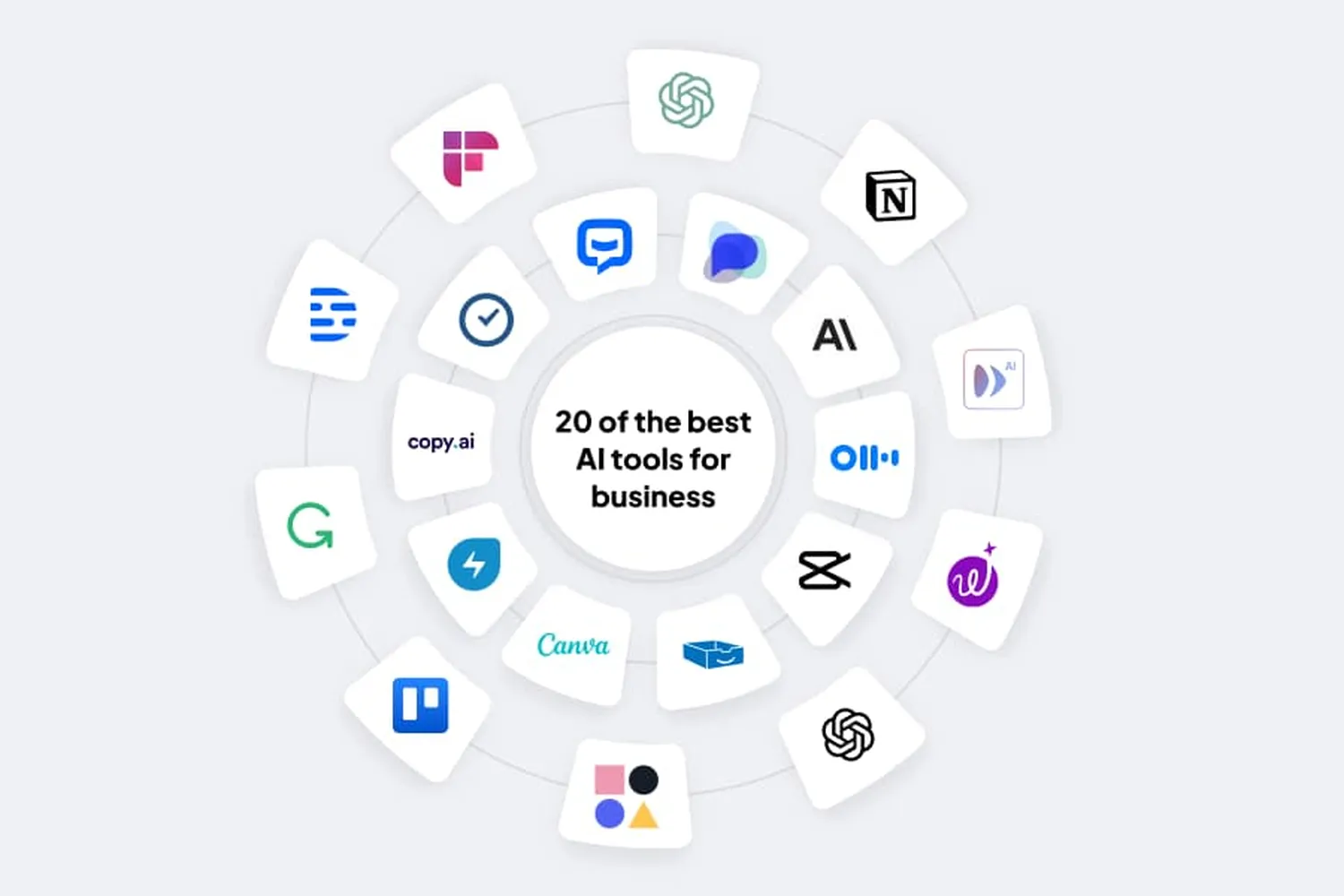
Why AI Tools That Help Businesses Scale Are Game-Changers in 2026
Growth used to mean more people, more overhead, more complexity — AI tools that help businesses scale flip that equation. They let founders serve 5–20× more customers with the same team, automate operations that once required specialists, personalize experiences at enterprise level on a small budget, test and iterate faster than competitors, and turn fixed costs (salaries, tools) into scalable, pay-as-you-grow models. Businesses using AI tools that help businesses scale often describe the feeling as “finally having runway” — less panic about capacity limits, faster revenue ramps, more confidence to invest in marketing instead of just survival, and the ability to say yes to opportunities instead of “we’re too small.” In 2026 the gap between companies that leverage these tools and those that don’t shows up in revenue velocity, profit margins, and owner freedom.
10 Powerful Ways AI Tools Help Businesses Scale
1. Automating Customer Acquisition & Marketing
AI tools that help businesses scale power ad optimization, creative testing, audience building, and personalized outreach at scale. Companies acquire customers 2–5× faster, lower CPA significantly, and grow revenue without proportional ad or headcount increases.
2. Scaling Support Without Adding Headcount
AI tools that help businesses scale handle 40–80% of inquiries via chatbots, auto-replies, and self-service — supporting 5–20× more customers with the same team. Support costs stay flat or drop while satisfaction rises.
3. Accelerating Content & Brand Production
AI tools that help businesses scale generate blogs, social posts, emails, ads, and videos 3–10× faster. Brands produce consistent, high-volume content to fuel SEO, social growth, and lead gen without hiring writers or agencies.
4. Streamlining Operations & Admin at Scale
AI tools that help businesses scale automate workflows, data entry, reporting, scheduling, and invoicing — handling 10–50× more volume without chaos or extra staff. Ops become a growth enabler instead of a bottleneck.
5. Personalizing at Enterprise Level on Small Budgets
AI tools that help businesses scale deliver tailored experiences (recommendations, emails, offers) to thousands or millions. Conversion rates and LTV rise dramatically without needing massive data teams or budgets.
6. Optimizing Sales Pipelines & Follow-Ups
AI tools that help businesses scale score leads, personalize outreach, automate sequences, and predict best next actions. Close rates improve 20–60%, sales velocity increases, and teams close more with less manual effort.
7. Forecasting Demand & Inventory Growth
AI tools that help businesses scale predict sales, set stock levels, and flag reorders accurately. Overstock & stockouts drop 20–60%, cash flow improves, and businesses confidently scale product lines or SKUs.
8. Enabling Global & Multilingual Expansion
AI tools that help businesses scale power instant translation, localized content, multilingual support, and geo-targeted ads. Companies enter new markets 3–6× faster with minimal added cost or headcount.
9. Consolidating & Reducing SaaS Spend While Scaling
AI tools that help businesses scale replace multiple tools with smarter automation (Zapier/Make flows, Notion AI hubs). SaaS bills drop 20–50% while capability and scale increase — freeing budget for growth.
10. Delaying or Avoiding Hiring During Rapid Growth
AI tools that help businesses scale handle admin, support, content, analysis, and ops so well that many companies delay first or second hires by 6–24 months — saving $30k–$300k+ in payroll while revenue grows.
AI Tools That Help Businesses Scale – Growth & Savings Table
| Area Scaled | Typical Multiplier | Time/Cost Saving | Best Tools |
|---|---|---|---|
| Marketing & Acquisition | 2–5× faster | 20–60% CPA ↓ | AdCreative.ai, Performance Max |
| Customer Support | 5–20× customers | 30–70% cost ↓ | Intercom AI, Gorgias, Tidio |
| Content Production | 3–10× output | 50–90% budget ↓ | Jasper, Copy.ai |
| Operations & Admin | 10–50× volume | 20–50% cost ↓ | Zapier, Make, Gumloop |
| Sales Pipeline | 20–60% close ↑ | 30–70% time ↓ | HubSpot AI, Seventh Sense |
| Inventory & Fulfillment | 20–60% waste ↓ | 15–40% carrying ↓ | Rows AI, predictive tools |
| Hiring Delay | 6–24 months | $30k–$300k+/yr | Notion AI, Motion |
Real Stories – How AI Tools Help Businesses Scale
E-commerce stores use AI tools that help businesses scale for ads & support → revenue triples without doubling team. SaaS startups apply AI tools that help businesses scale in onboarding & retention → churn halves, growth accelerates. Agencies leverage AI tools that help businesses scale for content & creative → client capacity doubles. Service businesses use AI tools that help businesses scale in scheduling & follow-ups → bookings rise 3× with same owner hours. The pattern is clear: AI tools that help businesses scale remove capacity ceilings and turn linear growth into exponential.
Quantitative Impact – How AI Tools Help Businesses Scale
- 2–5× faster customer/revenue growth rates
- 3–10× increase in content/marketing output
- 30–70% reduction in support & admin costs
- 20–60% efficiency gains across operations
- 6–24 month hiring delays during rapid scaling
Challenges & Solutions When Using AI Tools That Help Businesses Scale
AI tools that help businesses scale can overwhelm if mishandled: too many tools create new complexity, poor setup leads to bad outputs, over-automation loses human touch, data quality issues limit results, and measuring true scaling impact takes discipline. Overcome by starting with one bottleneck, using proven no-code tools, testing rigorously, combining AI with human review, cleaning data first, tracking KPIs weekly, and iterating fast on what works.
How to Start Using AI Tools That Help Businesses Scale Today
- Identify your current scaling bottleneck (leads? support? content? ops? fulfillment?)
- Pick 1–2 high-ROI tools targeting it (Tidio for support, Jasper for content, Zapier for ops)
- Run 30–60 day pilot — measure capacity increase, cost per unit, revenue velocity
- Expand only proven winners — avoid tool sprawl
- Build habits (weekly review, data hygiene) so scaling becomes sustainable
Scale Your Adventures with Jaynevy Tours
AI tools that help businesses scale also make travel effortless. We use smart systems for perfectly optimized Tanzania trips — timed Serengeti safaris, personalized Mount Kilimanjaro climbs, and ideal Zanzibar escapes. Grow your experiences smarter — contact Jaynevy Tours today!
Frequently Asked Questions
What are the best AI tools that help businesses scale in 2026?
Top performers include Zapier Central & Make (automation), Intercom AI & Gorgias (support at scale), Jasper & Copy.ai (content), AdCreative.ai & Performance Max (ads), Notion AI + databases (ops), Motion (scheduling), Gumloop/n8n (custom flows), and tools like HubSpot AI, Seventh Sense & Rows AI for growth workflows.
How much can AI tools help businesses scale faster?
Realistic impact: 2–5× faster customer acquisition, 3–10× content/output capacity, 30–70% reduction in manual ops time, support for 5–20× more customers without proportional headcount, 20–60% higher revenue growth rate, and ability to delay hiring by 6–24 months while scaling.
Are there affordable AI tools that help businesses scale for small companies?
Yes — Zapier & Make free tiers, Tidio (~$29/mo), Jasper starter (~$39/mo), AdCreative.ai (~$29/mo), Notion AI ($8–10/mo), Motion ($19/mo), Gumloop starter (~$29/mo), and free/low-cost Claude/ChatGPT + integrations deliver serious scaling power without enterprise budgets.
Which business areas do AI tools help scale the most effectively?
Customer acquisition & marketing (ads/content/personalization), support & retention (chatbots/automation), operations & admin (workflows/scheduling), content & brand scaling (writing/creatives), sales pipelines (lead scoring/outreach), and product delivery (recommendations/fulfillment) show the fastest, largest scaling effects.
What challenges arise when using AI tools to help businesses scale?
Common hurdles include setup time & learning curve, dependency on quality data/prompts, risk of generic outputs, integration complexity, over-automation losing human touch, privacy/compliance needs, and measuring true scaling impact vs correlation. Start small, test rigorously, combine AI with human oversight.