
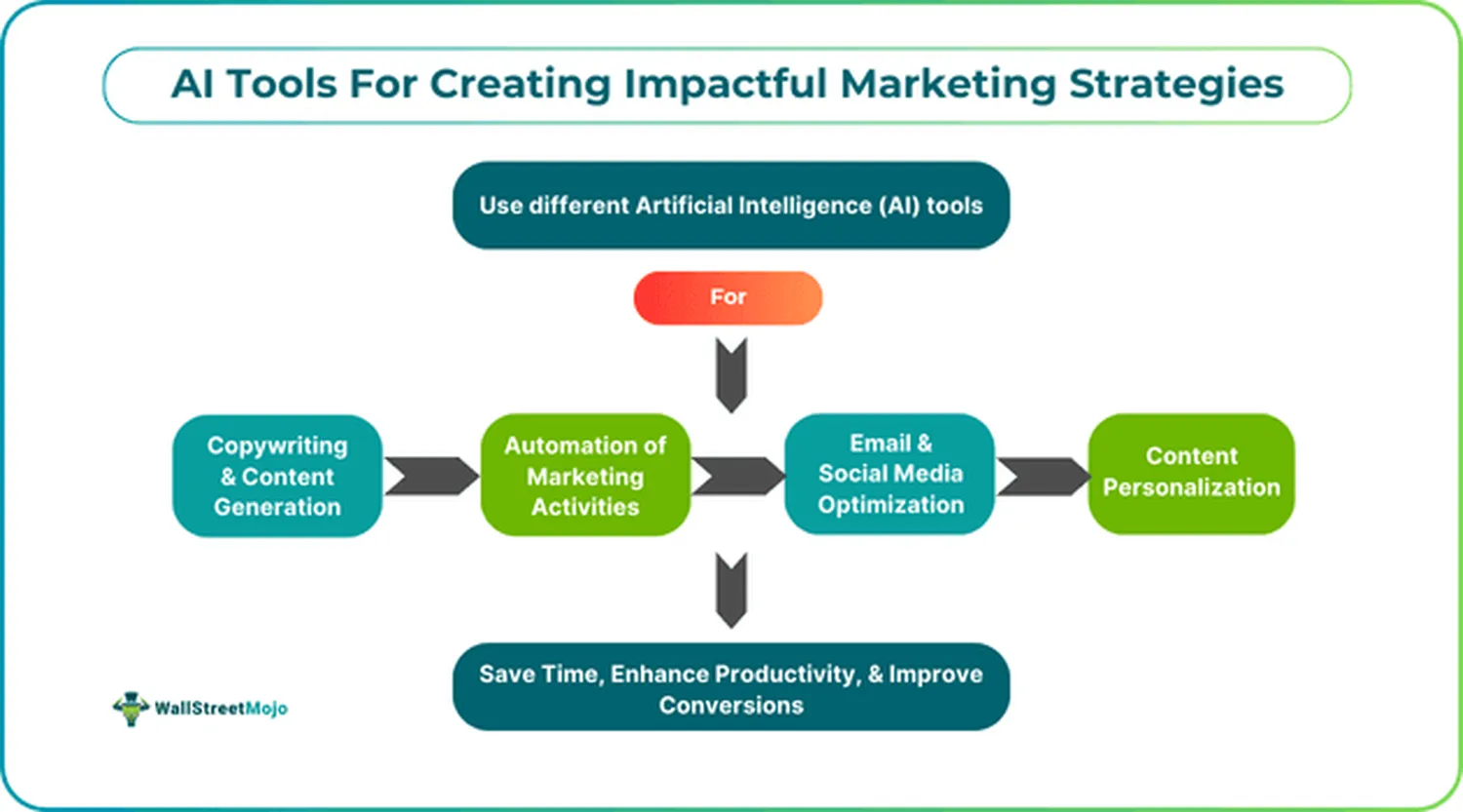
Why AI Tools That Improve Marketing Strategies Are Essential Now
Marketing has never been more competitive or more data-rich — customers expect perfect relevance, budgets are scrutinized, and manual testing can’t keep pace. AI tools that improve marketing strategies solve this by removing guesswork: they personalize instantly, test hundreds of variations automatically, bid smarter, predict performance, generate content at scale, and continuously optimize every channel. Businesses using AI tools that improve marketing strategies consistently report higher conversions, lower cost-per-acquisition, better ROAS, faster campaign scaling, less wasted spend, and teams that focus on strategy instead of grunt work. In 2026 the divide is stark: marketers who master these tools pull ahead dramatically in efficiency, creativity, and results.
10 High-Impact Ways AI Tools Improve Marketing Strategies
1. Hyper-Personalization Across Channels
AI tools that improve marketing strategies analyze behavior, history, and context to deliver tailored ads, emails, website content, and offers to every individual. Conversion rates rise 15–50%, click-through improves 20–70%, and customer lifetime value grows significantly without increasing spend.
2. Real-Time Campaign Optimization & Bidding
AI tools that improve marketing strategies auto-adjust bids, budgets, audiences, and creatives based on live performance. Platforms like Google Performance Max and Meta Advantage+ use AI tools that improve marketing strategies to cut CPA 20–60% while scaling reach profitably.
3. Automated Creative Generation & Testing
AI tools that improve marketing strategies create hundreds of ad variations (headlines, visuals, copy, CTAs) in minutes, then test them continuously. Creative fatigue drops, CTR rises 20–80%, and production speed increases 5–10× with minimal effort.
4. Intelligent Content & Copy Production
AI tools that improve marketing strategies draft blogs, social posts, emails, ad copy, and product descriptions while matching brand voice. Content velocity rises 3–8×, SEO improves with better keyword use, and marketing output scales without proportional headcount.
5. Predictive Audience Targeting & Lookalikes
AI tools that improve marketing strategies build precise lookalike audiences, predict next-best actions, and find high-intent users early. Acquisition costs drop 15–45%, ROAS improves, and campaigns reach people most likely to convert.
6. Smart Email Timing & Personalization
AI tools that improve marketing strategies optimize send times, subject lines, content, and segmentation per subscriber. Open rates rise 10–35%, clicks improve 15–50%, and churn drops as messages land when recipients are most receptive.
7. Advanced Attribution & Journey Optimization
AI tools that improve marketing strategies track cross-channel paths, assign accurate credit, and identify drop-off points. Budget shifts to high-performing channels, leaks get fixed, and overall funnel efficiency rises 15–40%.
8. Competitor & Market Intelligence
AI tools that improve marketing strategies monitor competitor ads, pricing, content, and social activity, then suggest counter-moves. Teams stay ahead, spot gaps, and react faster — often gaining 10–30% edge in share of voice or conversions.
9. Budget Allocation & Forecasting
AI tools that improve marketing strategies predict channel performance, recommend budget splits, and forecast monthly outcomes. Marketing efficiency gains 20–70%, wasted spend drops sharply, and planning becomes far more reliable.
10. A/B & Multivariate Testing Automation
AI tools that improve marketing strategies run thousands of tests simultaneously, declare winners early, and auto-allocate traffic. Testing speed increases 5–20×, winning variants emerge faster, and overall performance lifts noticeably.
AI Tools That Improve Marketing Strategies – Impact Table
| Application | Typical Gain | Speed / Scale | ROI Impact |
|---|---|---|---|
| Personalization | 15–50% conv ↑ | Instant | ↑↑↑ |
| Bidding & Optimization | 20–60% CPA ↓ | Real-time | ↑↑↑ |
| Creative Generation | 5–10× faster | Minutes vs days | ↑↑ |
| Email Timing | 10–35% open ↑ | Automated | ↑↑ |
| Targeting & Lookalikes | 15–45% CPA ↓ | Days vs weeks | ↑↑↑ |
| Content Production | 3–8× faster | Hours vs days | ↑↑ |
| Budget Allocation | 20–70% efficiency ↑ | Real-time | ↑↑↑ |
Real Feedback from Marketers Using AI Tools That Improve Marketing Strategies
Marketers who embrace AI tools that improve marketing strategies often say campaigns “run themselves,” “we test 10× more ideas,” or “our ROAS finally makes sense.” The mindset shift is huge — from manual tweaking to continuous optimization, from guessing to data confidence, from content bottlenecks to endless supply. Stress drops, creativity rises, and results speak for themselves. Most regret waiting; few go back once they see the lift.
Quantitative Results from AI Tools That Improve Marketing Strategies
- ROAS increases 1.5–5× on AI-optimized campaigns (Google/Meta 2025–26 data)
- Cost-per-acquisition drops 20–60% with automated bidding & targeting
- Conversion rates rise 15–50% through personalization
- Creative/content production speed increases 3–10×
- Marketing efficiency gains 20–70% overall
Real-World Examples of AI Tools Improving Marketing Strategies
- E-commerce brand uses AdCreative.ai + Performance Max → ROAS doubles, CPA halves
- SaaS company adds Jasper + Seventh Sense → email revenue +38%, open rates +27%
- Local service uses Meta Advantage+ AI → leads per dollar up 3.2×
- Agency automates creative testing with Copy.ai → client CTR +55%, spend efficiency +70%
- Content site uses Perplexity + Notion AI → organic traffic +140%, posts/week triple
Challenges When Using AI Tools That Improve Marketing Strategies
AI tools that improve marketing strategies deliver big wins but come with hurdles: generic outputs without good prompts, privacy compliance (GDPR/CCPA), over-automation reducing brand personality, learning curve for new platforms, risk of algorithmic bias, and the need to continually monitor & refine. Successful teams overcome these by starting small, combining AI with human creativity, using brand-aligned prompts, maintaining oversight, measuring incremental lift, and iterating fast.
How to Start Using AI Tools That Improve Marketing Strategies Today
- Pick your biggest marketing pain (high CPA? low conversions? slow content? poor targeting?)
- Choose 1–2 mature tools that solve it (Performance Max, Jasper, AdCreative.ai, etc.)
- Run a 30–60 day test with clear KPIs (ROAS, CPA, CTR, conversions)
- Measure before/after results — expand only proven winners
- Train team & build processes so AI tools that improve marketing strategies become core strength
Plan Smarter Adventures with Jaynevy Tours
AI tools that improve marketing strategies also make travel planning effortless. We use similar smart systems to create perfectly personalized Tanzania experiences — optimal Serengeti safari timing, tailored Mount Kilimanjaro itineraries, and ideal Zanzibar escapes. Get better results with less effort — contact Jaynevy Tours today!
Frequently Asked Questions
What are the best AI tools that improve marketing strategies in 2026?
Leading tools include Jasper & Copy.ai (content), AdCreative.ai (creatives), Albert.ai & Smartly.io (campaign automation), Google Performance Max AI, Meta Advantage+, HubSpot AI, Perplexity (research), Seventh Sense (email timing), Phrasee (copy optimization), and tools like Notion AI + integrations for strategy workflows.
How do AI tools improve marketing strategies and ROI?
AI tools improve marketing strategies by enabling hyper-personalization (15–50% conv ↑), real-time optimization (20–60% CPA ↓), automated creative testing (3–10× faster), predictive targeting, intelligent timing, better attribution, and content scaling — typically lifting ROAS 1.5–5× and reducing wasted spend significantly.
Are there affordable AI tools that improve marketing strategies for small businesses?
Yes — Jasper starter (~$39/mo), AdCreative.ai (~$29/mo), Copy.ai free tier, Google/Meta built-in AI features (free with ad spend), Perplexity Pro ($20/mo), Notion AI ($8–10/mo), and free/low-cost tools like ChatGPT/Claude deliver strong improvements without large budgets.
Which parts of marketing strategies benefit most from AI tools?
Personalization & targeting, ad creative production & testing, campaign bidding & optimization, email timing & subject lines, content generation & SEO, audience segmentation, predictive analytics, attribution modeling, competitor research, and budget allocation show the fastest, largest gains.
What challenges come when using AI tools to improve marketing strategies?
Common issues include generic/off-brand outputs, data privacy compliance (GDPR/CCPA), dependency on quality prompts/training data, learning curve for new tools, risk of over-automation reducing creativity, need for ongoing monitoring/refinement, and difficulty measuring true incremental lift vs placebo.