

What is the Great Wildebeest Migration?
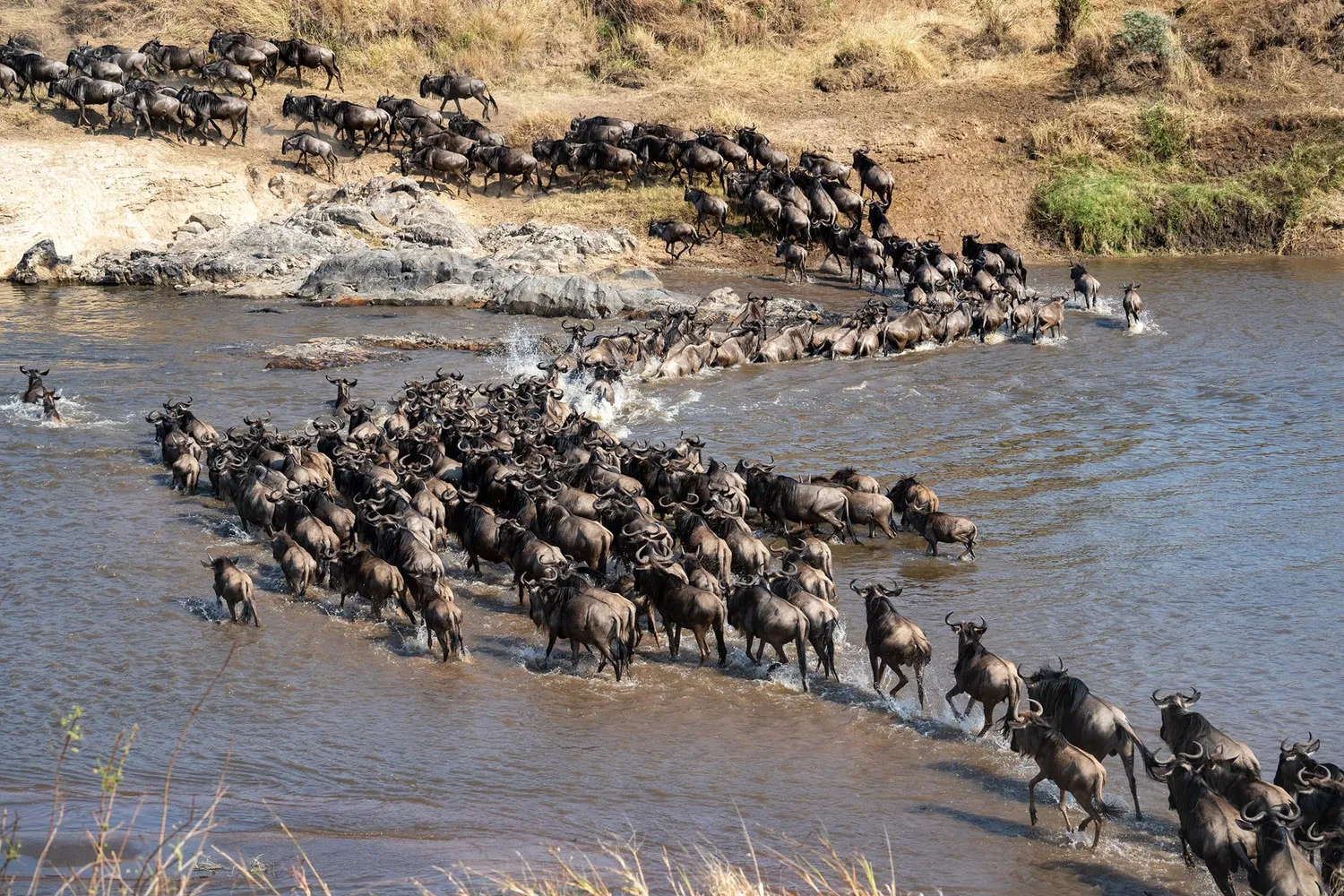
The Great Wildebeest Migration is the world’s largest terrestrial migration, involving 1.5-2 million wildebeest, 500,000 zebras, and 200,000 gazelles moving across Tanzania’s Serengeti and Kenya’s Maasai Mara. Driven by seasonal rains, it features calving season (Jan-Mar) and Mara River crossings (Jul-Sep). Quantitative: It attracts 350,000 tourists annually, generating $2 billion. Qualitative: Guides describe it as “nature’s greatest spectacle.”
Key Animals of the Migration
The migration involves herbivores and their predators, creating a dynamic ecosystem. Below are the main species:
1. Wildebeest
Population: 1.5-2 million
Role: Primary migrants
Wildebeest lead the migration, driven by their keen sense of smell to locate water and grass. They travel 1,800 miles annually, with 500,000 calves born in January-March. Qualitative: “Their thundering herds are mesmerizing,” says a ranger. Quantitative: 5-10% are lost to predators yearly.
2. Zebras
Population: 500,000
Role: Navigators
Zebras complement wildebeest with sharp eyesight, often leading herds. Their stripes confuse predators, reducing attacks. Quantitative: Zebras make up 25% of migrating herbivores. Qualitative: “Zebras’ bold patterns stand out in the savannah,” says a guide.
3. Gazelles (Thomson’s and Grant’s)
Population: 200,000
Role: Agile followers
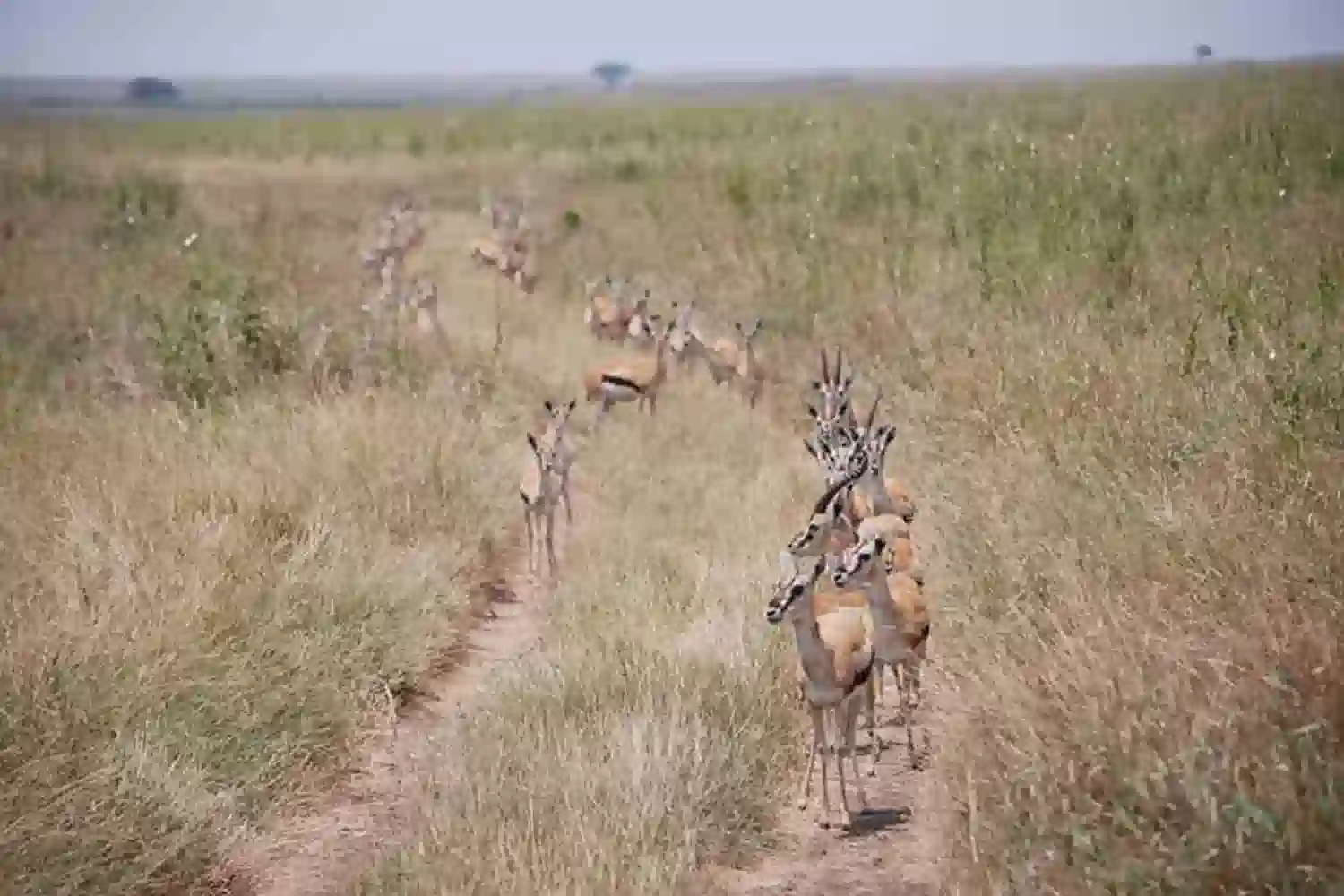
Gazelles join the migration, grazing alongside wildebeest. Their speed (up to 50 mph) helps evade predators. Quantitative: 15% of gazelles fall to cheetahs annually. Qualitative: “Their graceful leaps add beauty to the migration,” notes a traveler.
4. Lions
Population: ~3,000 in Serengeti
Role: Apex predators
Lions target weaker migrants, especially during calving season. Seronera Valley is a hotspot for lion prides. Quantitative: Lions kill ~50,000 wildebeest annually. Qualitative: “A lion’s roar at dawn is unforgettable,” says a safari-goer.
5. Cheetahs
Population: ~1,000 in Serengeti
Role: Speed hunters
Cheetahs chase gazelles and young wildebeest, reaching 60 mph. Ndutu Plains are ideal for spotting them. Quantitative: Cheetahs have a 50% hunt success rate. Qualitative: “Their speed is breathtaking,” says a photographer.
6. Crocodiles
Population: ~2,500 in Mara/Grumeti Rivers
Role: Ambush predators
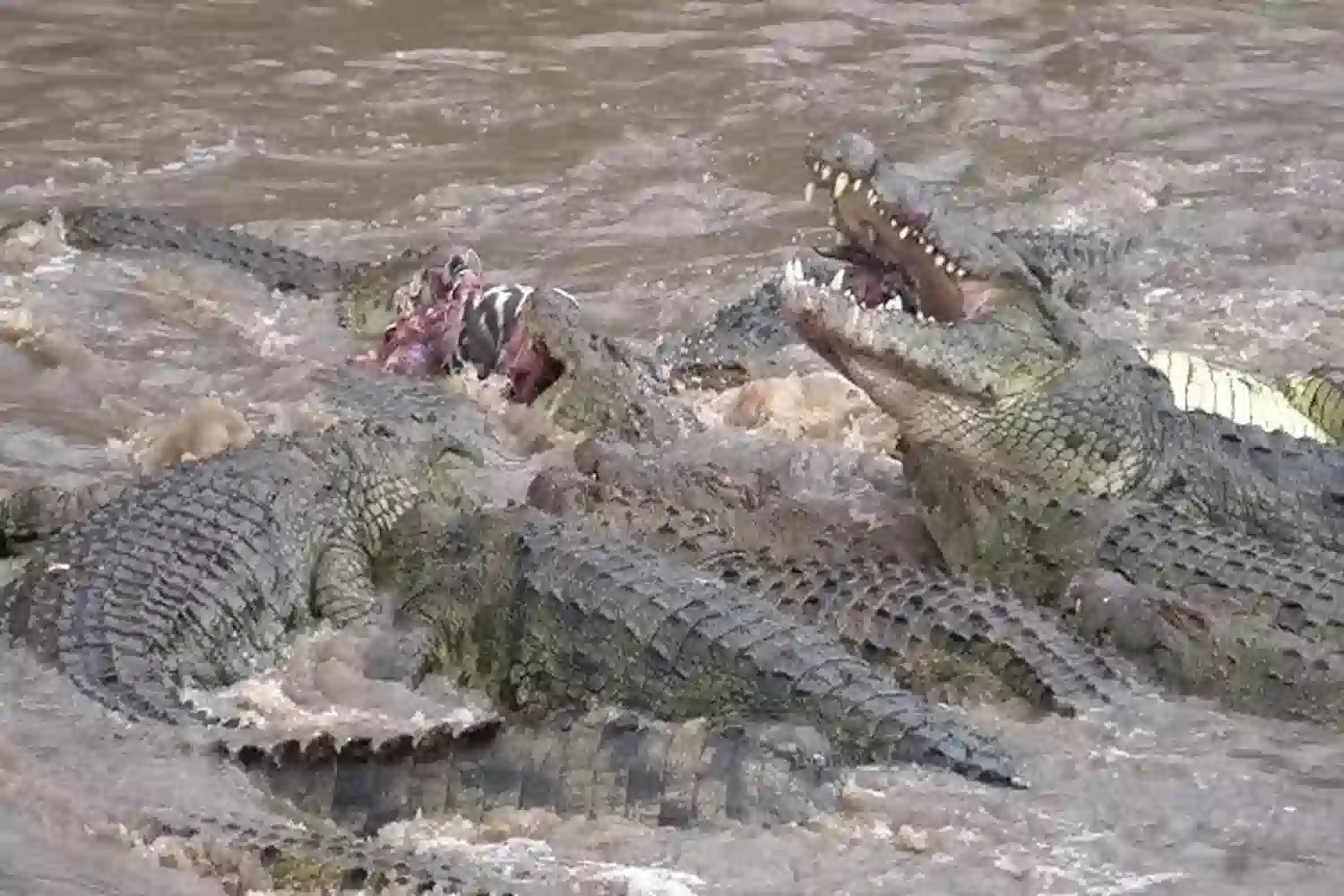
Crocodiles lurk at river crossings (Jul-Sep), taking 5-7% of crossing herds. Quantitative: ~20,000 animals are lost to crocodiles yearly. Qualitative: “River crossings are nature’s drama at its peak,” says a guide.
Other Notable Animals
- Leopards: ~1,000 in Serengeti, stalk migrants in wooded areas like Seronera.
- Hyenas: ~7,000, scavenge and hunt, taking 10% of migration kills.
- Elephants: Non-migratory, ~5,000 in Serengeti, seen in Western Corridor.
- Buffalo: ~30,000, graze near herds, visible in Lobo Hills.
- Rhinos: Rare (~30 in Serengeti), spotted in Ngorongoro Crater.
Animal Population Table
| Animal | Population | Role |
|---|---|---|
| Wildebeest | 1.5-2M | Primary migrant |
| Zebras | 500,000 | Navigator |
| Gazelles | 200,000 | Follower |
| Lions | 3,000 | Predator |
| Cheetahs | 1,000 | Predator |
| Crocodiles | 2,500 | Predator |
Sample Safari: 7-Day Migration Wildlife Tour
Price: $3,000-$7,000/person.
Inclusions: Private 4x4 vehicle, accommodation (e.g., Serengeti Serena), full board meals, park fees ($100/day), expert guide.
Itinerary:
- Day 1: Arrive in Arusha, transfer to Serengeti.
- Days 2-5: Game drives in Ndutu, Seronera, or Mara River, tracking wildebeest and predators.
- Day 6: Full-day viewing of river crossings or calving season.
- Day 7: Return to Arusha.
Qualitative: “Seeing a lion hunt was thrilling,” says a traveler. Quantitative: ~$430-$1,000/day.
Best Locations to See Migration Animals
Prime spots for wildlife observation:
- Mara River: Crocodile ambushes during crossings (Jul-Sep).
- Ndutu Plains: Calving season, cheetah hunts (Jan-Mar).
- Seronera Valley: Lions, leopards, year-round wildlife.
- Western Corridor: Grumeti River, buffalo, and elephants (May-Jun).
- Lobo Hills: Quieter area for rhinos and zebras.
Ecological Roles of Migration Animals
Wildebeest: Graze tall grasses, fertilize soil with dung, supporting savannah ecosystems.
Zebras: Lead navigation, reduce predator attacks with group vigilance.
Gazelles: Control shrub growth, provide prey for smaller predators.
Predators: Maintain herd health by culling weak animals, balancing populations.
Quantitative: Migration sustains 70% of Serengeti’s predator population. Qualitative: “The cycle is nature’s balance,” says a ranger.
Quantitative Data on Migration Animals
- Wildebeest Births: 500,000 calves born annually in Ndutu.
- Predator Kills: 100,000-200,000 migrants lost yearly (5-10%).
- Tourism Impact: 350,000 visitors, $2 billion revenue.
- Conservation Funding: $350 million annually for Serengeti preservation.
- Cheetah Success Rate: 50% for gazelle hunts, 30% for wildebeest.
Qualitative Insights: Wildlife Safari Experience
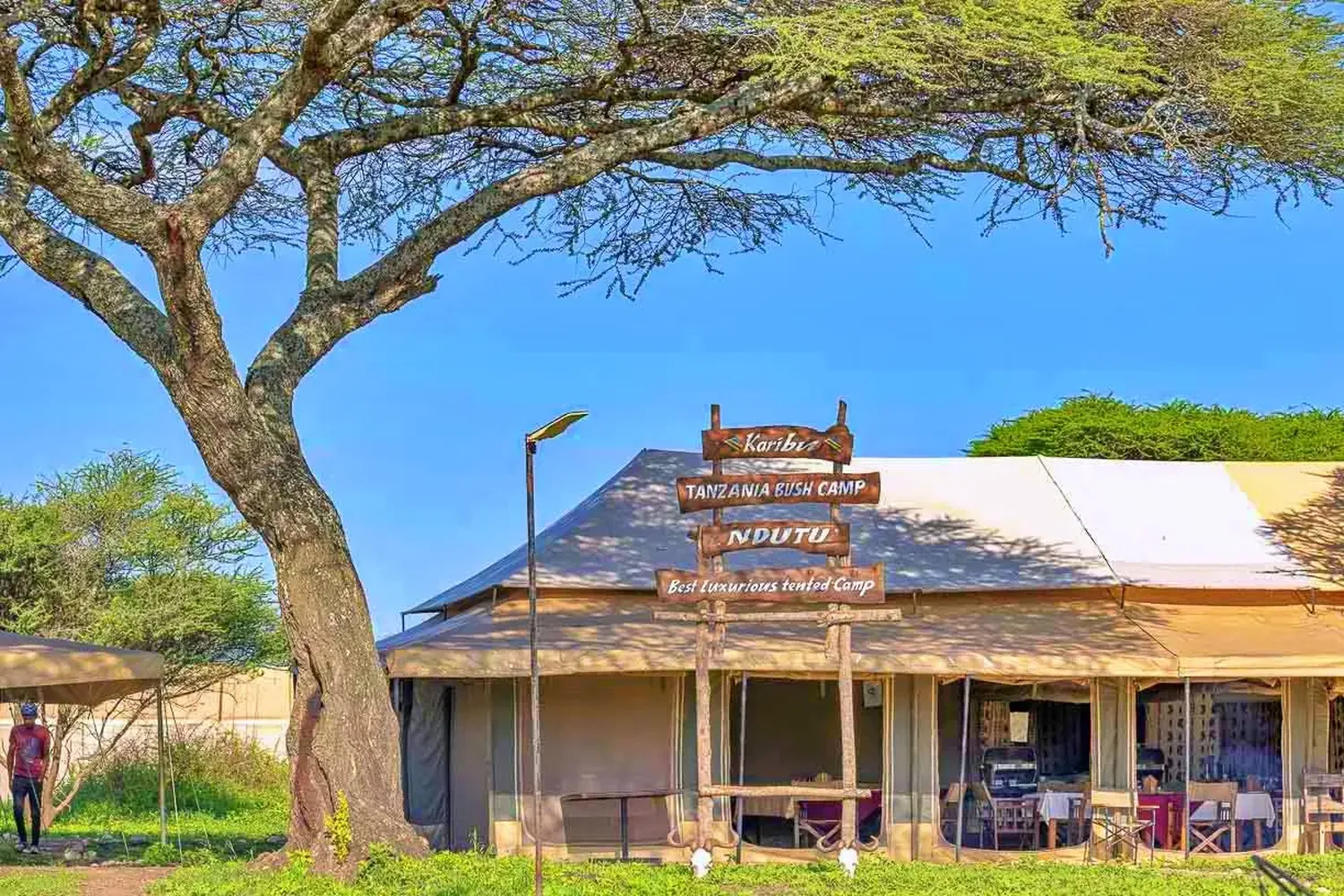
Travelers describe “heart-pounding moments” watching crocodiles ambush wildebeest or cheetahs sprint. Guides note, “Zebras’ teamwork with wildebeest is a survival lesson.” Camps like Kati Kati offer prime views of herds. Quantitative: Migration safaris score 90% satisfaction. Qualitative: “The migration’s scale is humbling.”
Best Times to See Migration Animals
January-March (Calving Season): Newborn wildebeest, gazelles, and predator activity, $180-$400/night.
July-September (River Crossings): Dramatic crocodile and lion attacks, $300-$500/night.
April-May (Green Season): Lush landscapes, fewer crowds, 20-30% savings.
Quantitative: 65% of visitors choose July-September. Qualitative: “River crossings are raw and intense,” says a traveler.

Conservation and Threats
Wildebeest and zebras are not endangered, but cheetahs and rhinos face habitat loss and poaching. Park fees ($100/day) fund anti-poaching patrols. Quantitative: $350 million supports conservation annually. Qualitative: “Protecting these animals ensures the migration’s future,” says a ranger.
Combining Migration Safaris with Other Destinations
Extend your trip with:
- Ngorongoro Crater: Big Five, $200 park fees.
- Zanzibar: Beaches, $200-$500/night.
- Tarangire National Park: Elephants, $150-$300/day.
- Lake Manyara: Flamingos, $100-$200/day.
Why Choose Jaynevy Tours for Migration Safaris?
Jaynevy Tours offers expert-guided Serengeti wildlife migration safaris, with access to prime viewing spots, safe camps, and educational insights. Combine with Kilimanjaro climbs or Zanzibar holidays. Book now!
Frequently Asked Questions
What animals participate in the Great Wildebeest Migration?
Wildebeest, zebras, and gazelles are the primary migrants, followed by predators like lions, cheetahs, and crocodiles.
How many wildebeest are in the Great Migration?
Approximately 1.5-2 million wildebeest migrate annually, alongside 500,000 zebras and 200,000 gazelles.
Where can you see predators during the migration?
Predators like lions and cheetahs are seen in Seronera, while crocodiles are prominent at Mara River crossings.
When is the best time to see migration animals?
January-March for calving season with newborn wildebeest and gazelles; July-September for river crossings with predators.
How much does a migration safari cost?
Safaris cost $3,000-$7,000 per person for 7 days, including accommodation, guides, and park fees.
Are migration animals endangered?
Wildebeest and zebras are not endangered, but predators like cheetahs face threats; conservation efforts protect all species.
What role do zebras play in the migration?
Zebras lead herds with sharp eyesight, complementing wildebeest’s sense of smell, aiding group navigation.
Can you see the Big Five during the migration?
Yes, lions, leopards, elephants, buffalo, and rhinos are visible, especially in Seronera and Ngorongoro Crater.
How do predators affect the migration?
Predators like lions and crocodiles target weaker migrants, culling 5-10% of herds, maintaining ecological balance.
Why choose Jaynevy Tours for migration safaris?
Jaynevy Tours offers expert-guided safaris to prime migration spots, ensuring safe and immersive wildlife experiences.