
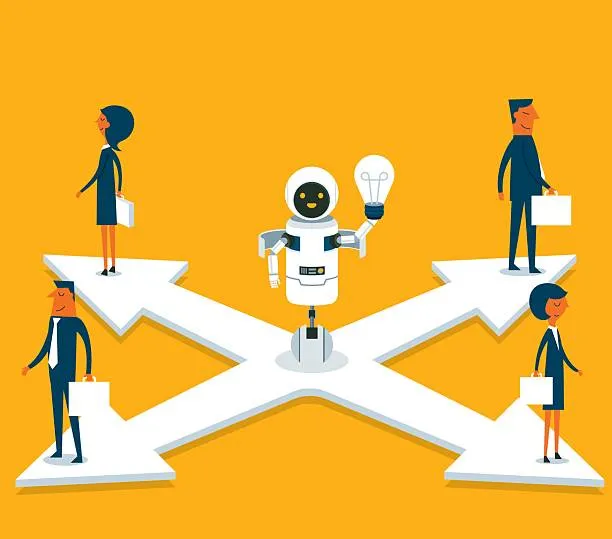
Artificial Intelligence Certificate Programs – Complete Guide
Artificial intelligence certificate programs have become a cornerstone for professionals seeking to enhance their expertise in AI without committing to lengthy degree programs. These programs offer structured learning paths, industry-recognized credentials, and hands-on experience in machine learning, deep learning, natural language processing, and other AI disciplines. Whether you're a software engineer, data analyst, or business leader, artificial intelligence certificate programs provide the flexibility and depth needed to stay competitive in an evolving technological landscape.
Why Pursue Artificial Intelligence Certificate Programs?
The demand for AI skills has skyrocketed across industries, from healthcare to finance, and even travel planning. Artificial intelligence certificate programs bridge the gap between theoretical knowledge and practical application, making them ideal for professionals who need immediate, actionable skills. Unlike traditional degrees, these programs are often shorter, more affordable, and tailored to industry needs.
For example, a travel company optimizing safari routes with AI-driven analytics would benefit from staff trained in artificial intelligence certificate programs. Similarly, tour operators using AI to personalize climbing itineraries for Mount Kilimanjaro can enhance customer experiences through data-driven insights.
Key Components of Artificial Intelligence Certificate Programs
Most artificial intelligence certificate programs cover foundational and advanced topics. Below is a breakdown of core modules typically included:
- Machine Learning Fundamentals: Supervised and unsupervised learning, regression, classification.
- Deep Learning: Neural networks, convolutional networks (CNNs), recurrent networks (RNNs).
- Natural Language Processing (NLP): Sentiment analysis, chatbots, language models.
- AI Ethics and Governance: Bias mitigation, regulatory compliance.
- Practical Applications: Real-world projects, case studies, and industry tools like TensorFlow and PyTorch.
Top Providers of Artificial Intelligence Certificate Programs
Several institutions and platforms offer reputable artificial intelligence certificate programs. Here’s a comparison of leading options:
| Provider | Program Duration | Key Features |
|---|---|---|
| Stanford University | 6-12 months | Rigorous curriculum, research-focused |
| MIT Professional Education | 3-6 months | Industry-aligned projects, expert mentorship |
| Coursera (DeepLearning.AI) | Self-paced | Hands-on labs, flexible scheduling |
How to Choose the Right Artificial Intelligence Certificate Program
Selecting the best artificial intelligence certificate program depends on your career goals, prior experience, and learning preferences. Consider the following factors:
- Accreditation: Ensure the program is recognized by industry leaders.
- Curriculum Depth: Look for programs that balance theory with practical projects.
- Instructor Expertise: Programs led by AI researchers or industry practitioners offer richer insights.
- Flexibility: Online or hybrid formats suit working professionals.
For those in the travel sector, integrating AI skills can optimize operations, from dynamic pricing models for Kilimanjaro climbing tours to personalized recommendations for East African safaris.
Career Opportunities After Completing Artificial Intelligence Certificate Programs
Graduates of artificial intelligence certificate programs unlock diverse roles, including:
- AI Engineer: Develop and deploy machine learning models.
- Data Scientist: Extract insights from large datasets.
- AI Consultant: Advise businesses on AI integration strategies.
These skills are particularly valuable in travel tech, where AI enhances itinerary personalization, demand forecasting, and customer service automation.
Frequently Asked Questions About Artificial Intelligence Certificate Programs
1. Are artificial intelligence certificate programs worth it?
Yes, they provide targeted skills in high demand, often at a fraction of the cost and time of a full degree.
2. What prerequisites are needed?
Most programs require basic programming knowledge (Python preferred) and familiarity with linear algebra and statistics.
3. How long do these programs take?
Duration varies: self-paced options may take 3-6 months, while intensive programs can last up to a year.
4. Can I transition to AI from a non-technical field?
Yes, many programs offer beginner tracks, though supplemental learning in math and coding may be necessary.
5. Do employers recognize these certificates?
Top-tier programs from institutions like Stanford or MIT carry significant weight in hiring decisions.
6. What’s the average cost?
Prices range from $500 for online courses to $5,000+ for university-backed certificates.
7. How do these programs compare to bootcamps?
Certificate programs are more structured and theory-heavy, whereas bootcamps focus on rapid skill application.
8. Can I specialize within AI?
Absolutely. Many programs offer concentrations in NLP, computer vision, or AI ethics.
Expert Tips for Succeeding in Artificial Intelligence Certificate Programs
- Build a Portfolio: Showcase projects on GitHub or a personal website.
- Network Actively: Engage with peers and instructors for career opportunities.
- Apply Learning Immediately: Use AI tools to solve real problems, such as optimizing Tanzania travel packages.
Final Thoughts
Artificial intelligence certificate programs are a strategic investment for professionals aiming to master AI without the long-term commitment of a degree. By selecting a reputable program, specializing in high-impact areas, and applying skills to real-world scenarios—like enhancing travel experiences—learners can position themselves at the forefront of technological innovation. For further insights, explore our expert articles on integrating AI into business strategies.