
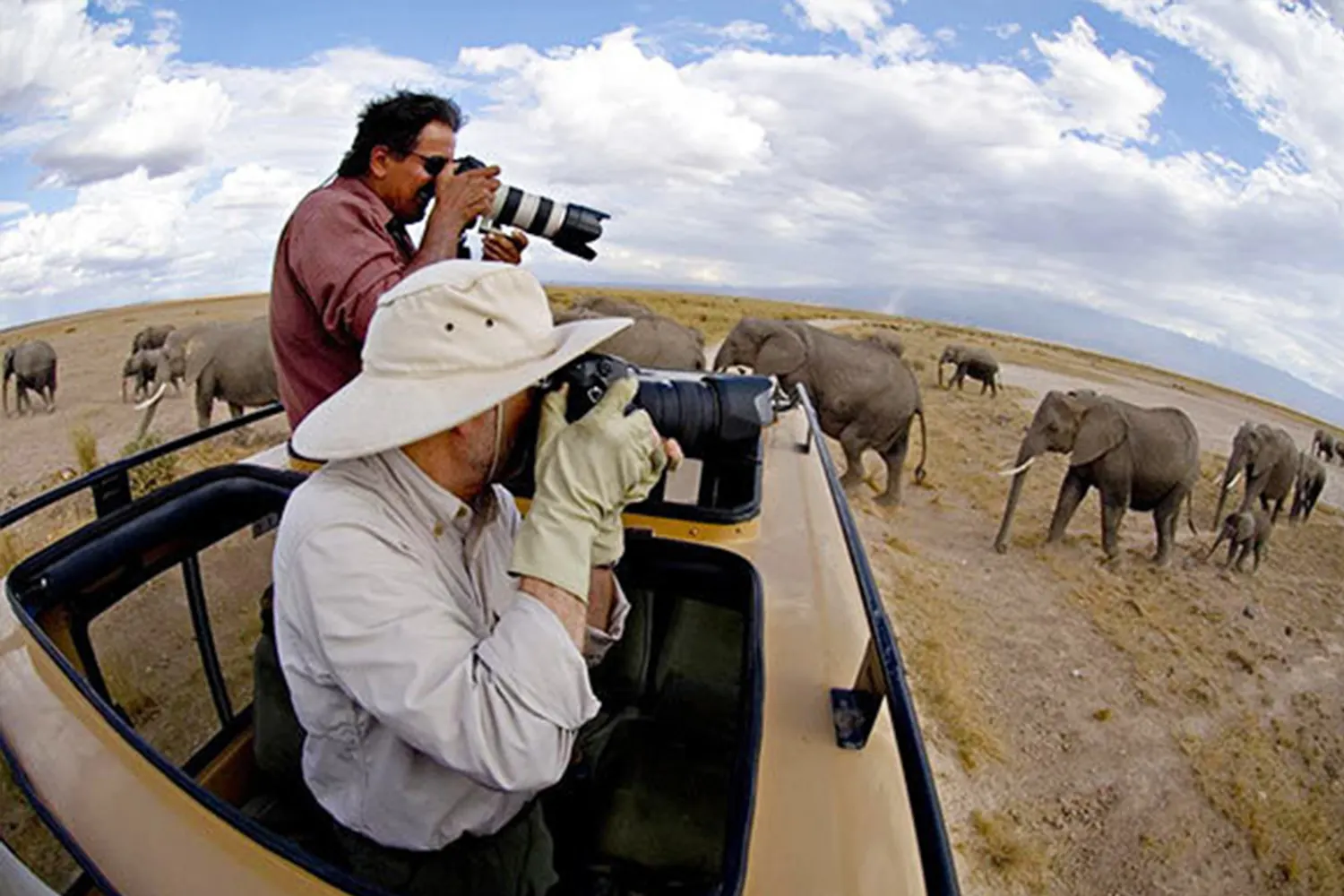
Why Tanzania Is One of the World’s Best Destinations for Safari Photography
Tanzania offers some of the most varied and dramatic landscapes in Africa — endless golden plains, volcanic craters, ancient baobabs and the Great Migration in full flow. The light is exceptional: soft golden hours at dawn and dusk last longer here than in many other countries, and the dry season provides clear skies and short grass that makes animals stand out. Professional photographers return year after year because the combination of wildlife density, open terrain and reliable weather creates endless opportunities for powerful images.
The Best Parks for Photography in Tanzania
Serengeti National Park tops the list for dramatic wide-angle shots of the migration and predator action on the open plains. Ngorongoro Crater gives you a natural amphitheatre with sweeping crater-floor views and high chances of all the Big Five in one day. Tarangire National Park shines with massive elephant herds against ancient baobab trees, perfect for silhouette and golden-hour portraits. Lake Manyara adds unique tree-climbing lions and flamingo-filled lakes for colourful reflections. The Northern Circuit combining these parks gives you the widest variety of scenes in one trip.
Best Time of Year for Safari Photography in 2026-2027
June to October is the prime photography window. Short grass and concentrated animals around waterholes make subjects easy to isolate, while the golden morning and evening light is at its most dramatic. July to September is peak migration season with river crossings that create cinematic action shots. Shoulder months March–May and November offer lush green landscapes, dramatic skies and far fewer vehicles — ideal for intimate portraits and creative compositions without crowds.
Photography-Specific Safari Tips from Professional Guides
Book a private vehicle so you can stay at sightings as long as the light is good and position the vehicle for the best angle. Early morning and late-afternoon drives give you the softest light and most active animals. Use a 200–600mm zoom lens for flexibility, and bring a bean bag or monopod for stability in the vehicle. Tell your guide you’re a photographer — they’ll know the best vantage points and will quietly reposition the vehicle to keep the sun behind you. Always shoot in RAW and carry multiple batteries because the dust and long days drain power fast.
Private vs Group Safari for Photographers – Which Wins?
Private safaris are almost always better for serious photography. You control the schedule, can wait for the perfect light, and your guide can move the vehicle instantly for the right composition. Group safaris are more affordable but you may have to leave a great scene early if others want to move on. Many photographers start with a group for the first few days and upgrade to private for the Serengeti portion where the migration action is at its best.
Real Cost Breakdown for Photography-Focused Safaris in 2026-2027
| Safari Type | 7-Day Cost Per Person | Key Photography Benefit |
|---|---|---|
| Budget Group | $1,750 – $2,800 | Affordable entry to the Northern Circuit |
| Mid-Range Private | $3,500 – $5,500 | Full control over timing and positioning |
| Luxury Private + Photo Guide | $6,000 – $9,000+ | Specialist guidance and exclusive access |
Recommended Destinations for Your First Safari in Tanzania
Tanzania offers an incredible variety of experiences for first-time safari travelers. From the endless plains of the Serengeti to the majestic peak of Kilimanjaro and the pristine beaches of Zanzibar, these iconic destinations will make your first safari unforgettable.
Serengeti National Park
Home to the largest mammal migration on Earth and one of the best places to see the Big Five
Mount Kilimanjaro
East Africa ’s highest mountain and a bucket-list adventure that many combine with their first safari in Tanzania.
Ngorongoro Conservation Area
A UNESCO World Heritage Site famous for its volcanic crater teeming with wildlife
Lake Manyara National Park
Famous for tree-climbing lions, flamingos, and beautiful landscapes..
Frequently Asked Questions About the Best Safari for Photography in Tanzania
What is the best safari for photography in Tanzania?
The Serengeti National Park during the dry season (June–October) offers the best light, open plains and migration drama. Ngorongoro Crater provides dramatic crater views, while Tarangire gives stunning elephant and baobab silhouettes.
When is the best time for photography on a Tanzania safari?
June to October for golden morning and evening light with short grass that makes animals easy to spot. Early morning and late afternoon drives deliver the most dramatic light.
What gear do professional photographers recommend for Tanzania safaris?
200–600mm zoom lenses, 8x42 or 10x42 binoculars, sturdy tripod or bean bag, extra batteries, fast memory cards, and a camera body with good low-light performance.
Is a private safari better for photography than a group one?
Yes. Private vehicles let you stay longer at sightings, position for the best light, and move when you want — critical for capturing action or waiting for the perfect moment.
How much does a photography-focused safari in Tanzania cost?
A 7-day mid-range photography safari costs $2,800–$5,500 per person sharing. Private vehicle upgrades and specialist photo guides add $800–$1,500.
The best safari for photography in Tanzania is the one that gives you time, space and the right light — and with the right planning you can capture images that will take your breath away for years to come. Whether you’re a serious photographer or simply want beautiful memories of your trip, the tips and routes above will help you make every shot count. If you’d like help building a photography-focused itinerary that matches your dates, Kilimanjaro Group Departure size and budget, the team at Jaynevy Tours is always ready to put something together that feels perfect for you — honest advice and no pressure at all.