
What You Need to Know: Our 8-day Great Migration photography safari costs from US$4,865 per person for 2 travelers at mid-range level (US$3,700 budget, US$8,165 luxury), from your arrival at Kilimanjaro International Airport to your departure. It spends three nights near the Mara River in the northern Serengeti, where the herds cross from July to October, plus two nights in the central Serengeti and one in Tarangire, in a private Land Cruiser with a pop-up roof and charging points. October brings the last crossings of the season and fewer vehicles than August; crossings are never guaranteed, so we confirm where the herds are before you arrive.
Who Is This Migration Photography Safari For?
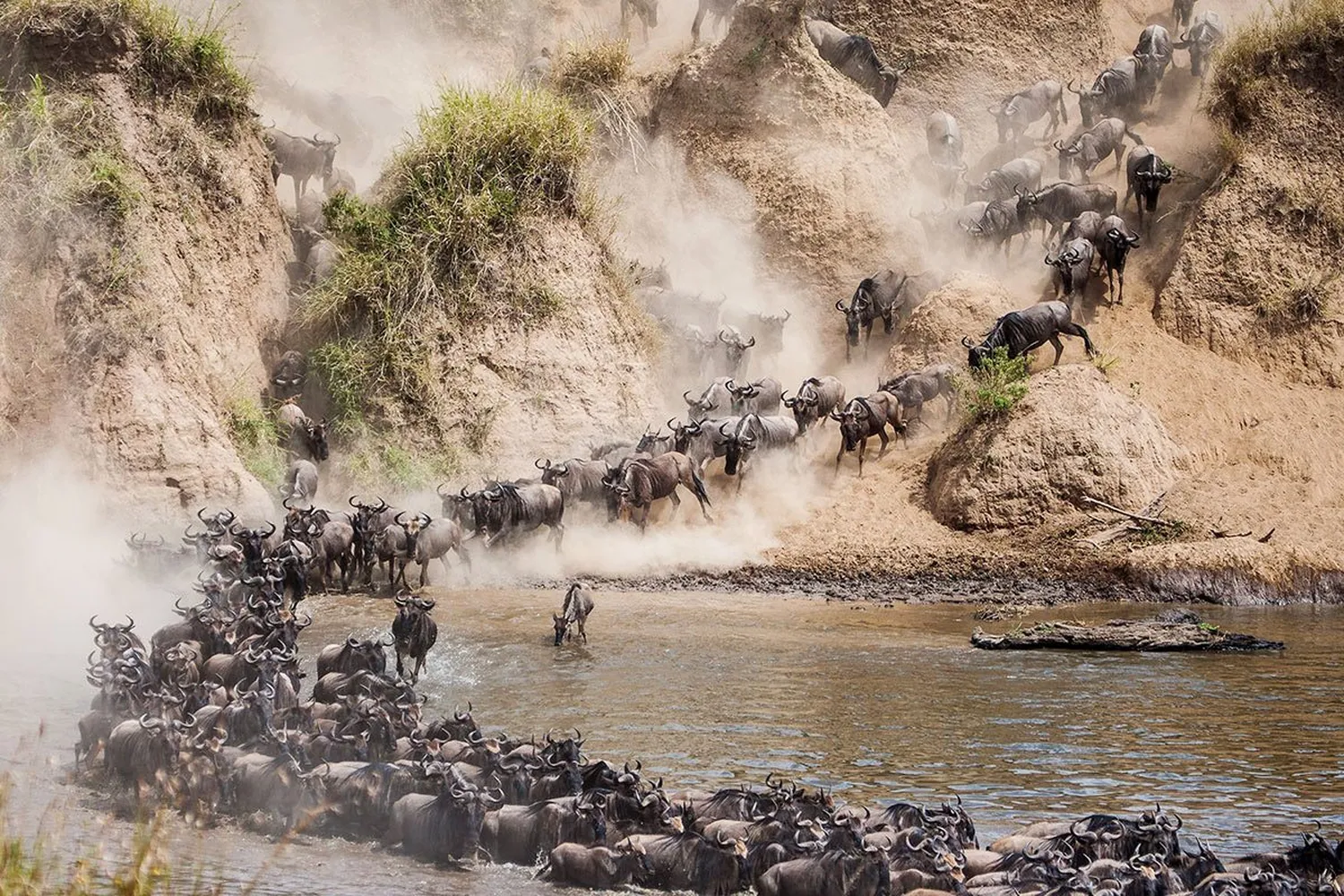
It is for travelers who want the river crossings and are willing to wait for them. Most migration safaris give the Mara River one or two days; this one gives it three nights, so you have two full days at the river and a morning on each side, which is what a crossing usually takes: patience, the right spot and a guide who reads the herds.
The rest of the trip is planned for photographs too. Tarangire's elephants and baobabs and the central Serengeti's lions and leopards give you a full portfolio, not just the river.
| This safari suits you if… | Consider another trip if… |
|---|---|
| River crossings are the main reason for your trip | You have only four days: the 4-day river-crossing fly-in |
| You photograph seriously and want time at each sighting | You want calving and newborns: the 5-day calving season safari, January to March |
| You'd like big cats and elephants as well as the migration | You want the Ngorongoro Crater too: see the options below |
Is October a Good Month for the Great Migration?
Yes, with one honest caveat. In most years the herds are still in the northern Serengeti and around the Mara River in early and mid October, and crossings continue; by late October many start moving south with the first short rains, and the last crossings of the season happen. In exchange, October has fewer vehicles at the river than August and September, and the dry-season light and short grass are good for photography.
| Month | Where the herds usually are | For photographers |
|---|---|---|
| July | Arriving in the north | The first crossings, busy camps |
| August–September | Northern Serengeti and the Mara | Crossings at their busiest, most vehicles at the river |
| October | North, starting south | The last crossings, quieter river banks |
| November | Moving south through the east | Short rains, dramatic skies, herds on the move |
The migration follows the rain, not the calendar. A few weeks before you arrive we check current reports from guides and camps in the north. If the herds have already moved south, we move your nights to follow them and requote any difference. See where the herds are each month in our Great Migration by month guide.
The 8-Day Migration Photography Safari at a Glance
Kilimanjaro airport – Arusha – Tarangire – central Serengeti – northern Serengeti and the Mara River (3 nights) – central Serengeti – Arusha – Kilimanjaro airport.
| Day | Plan | On the road | Overnight |
|---|---|---|---|
| 1 | Land at Kilimanjaro, transfer to Arusha | About 1 hour | Arusha |
| 2 | Tarangire: elephants and baobabs | About 2.5 hours, then game drives | Tarangire |
| 3 | Through the Ngorongoro highlands to the central Serengeti | About 7 hours with stops, game drive from the gate | Central Serengeti |
| 4 | Seronera at dawn, then north to the Mara River | 4–5 hours with game viewing | Northern Serengeti |
| 5 | Full day at the Mara River | Game drives only | Northern Serengeti |
| 6 | Second full day at the river | Game drives only | Northern Serengeti |
| 7 | Back south to the central Serengeti | 4–5 hours with game viewing | Central Serengeti |
| 8 | Last drive, back to Arusha and the airport | About 7–8 hours with stops | — |
8-Day Migration Photography Safari Itinerary, Day by Day
Camps are shown for each level and confirmed for your dates in the quotation; where one is full, we book a similar camp at the same level.
-
Day 1: Arrive at Kilimanjaro, transfer to Arusha
Your driver meets you at Kilimanjaro International Airport and drives you about an hour to your hotel in Arusha. In the evening your guide goes through the plan with you over dinner: tell them what you most want to photograph, the lenses you've brought, and whether you prefer to shoot from the roof or the windows, and they plan each day around it.
Stay: Parachichi House (budget), Njiro Luxury Resort (mid-range) or Gran Meliá Arusha (luxury), or similar.
Airport pickupArushaDinner -
Day 2: Tarangire National Park
About 2.5 hours from Arusha, Tarangire is at its best in the dry season, when elephant herds gather along the Tarangire River beneath ancient baobabs. Late afternoon gives warm, side-lit portraits of elephants against the trees, and staying inside the park means you are already out when the light is good the next morning.
Stay: Sangaiwe Tented Camp (budget), Tarangire Katikati Camp (mid-range) or Elephant Springs by Karibu Camps (luxury), or similar.
Elephants and baobabsTarangireBreakfast, lunch box, dinner -
Day 3: Through the Ngorongoro highlands to the central Serengeti
An early drive out of Tarangire, then up through the Ngorongoro highlands, with a stop at the crater viewpoint, and down onto the Serengeti plains. Your game drive starts at the park gate and carries on through the afternoon to your camp near Seronera, the best area of the park for lions, leopards and cheetahs.
Stay: Engiterata Adventure Camp (budget), Mberesero Serengeti Central Lodge (mid-range) or Nyota Luxury Tented Camp (luxury), or similar.
First Serengeti driveHighlands, SerengetiBreakfast, lunch, dinner -
Day 4: Seronera at dawn, then north to the Mara River
Out at first light along the Seronera River, where leopards rest in the sausage trees and lion prides are still active. After breakfast you head north, 4–5 hours with game viewing, through the Lobo hills to the northern Serengeti. By the afternoon you are near the Mara River, and your guide checks where the herds are gathering for the next day.
Stay: Serengeti Classic View Kogatende (budget), Olmorijo Camp (mid-range) or Malaika Mara River Luxury Camp (luxury), or similar.
Big cats at dawnCentral and northern SerengetiBreakfast, lunch, dinner -
Day 5: A full day at the Mara River
The day is spent where the herds are. Your guide reads their behavior: when wildebeest and zebras bunch on the bank and the leaders test the water, a crossing can start in minutes or not at all. You wait at a respectful distance, engine off, with a picnic lunch in the vehicle so you don't miss the moment. Between crossings there are crocodiles and hippos in the river and resident lions on the plains.
Stay: the same camp, so there is no packing.
River crossingsMara RiverBreakfast, picnic lunch, dinner -
Day 6: Second full day at the river
A second chance, planned around what Day 5 showed: a different crossing point, a better angle for the light, or the predators that follow the herds. Late in October, if the herds have started south, your guide follows them across the northern plains instead.
Stay: the same camp.
A day planned around the herdsNorthern SerengetiBreakfast, picnic lunch, dinner -
Day 7: Morning at the river, then back to the central Serengeti
One last early session at the river, then the drive south, 4–5 hours with game viewing, to the central Serengeti. The evening drive around Seronera is your last chance for a sunset portrait on the plains.
Stay: Engiterata Adventure Camp (budget), Mberesero Serengeti Central Lodge (mid-range) or Nyota Luxury Tented Camp (luxury), or similar.
Last river sessionNorthern and central SerengetiBreakfast, lunch, dinner -
Day 8: Serengeti to Arusha and Kilimanjaro airport
A short game drive on the way out of the park, then back through the Ngorongoro highlands to Arusha, about 7–8 hours with stops and a lunch box. Your driver takes you on to Kilimanjaro International Airport, about an hour, for an evening flight. If your flight leaves the next day, we add a night in Arusha to your quotation.
Airport drop-offSerengeti, ArushaBreakfast, lunch box
How Is This Safari Set Up for Wildlife Photography?
A private vehicle is what makes a safari work for photography: you decide how long to wait and where to stop. Our driver-guides, trained at the College of African Wildlife Management in Mweka, know what photographers need.
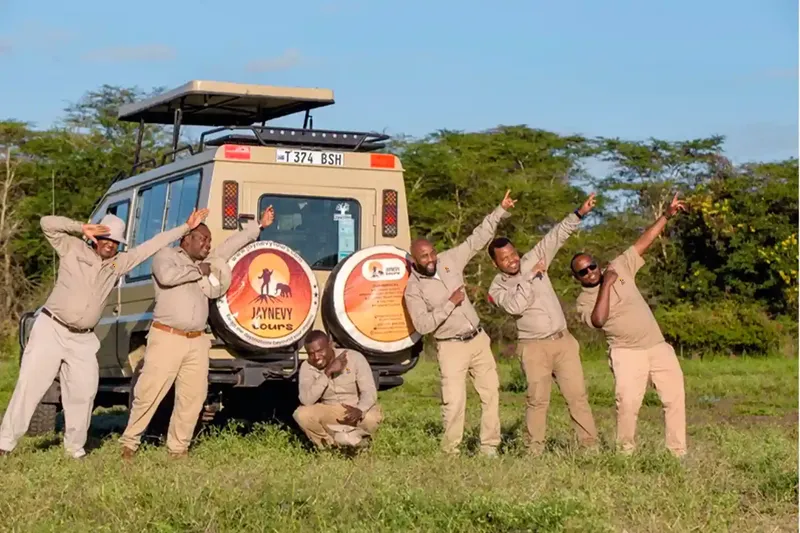
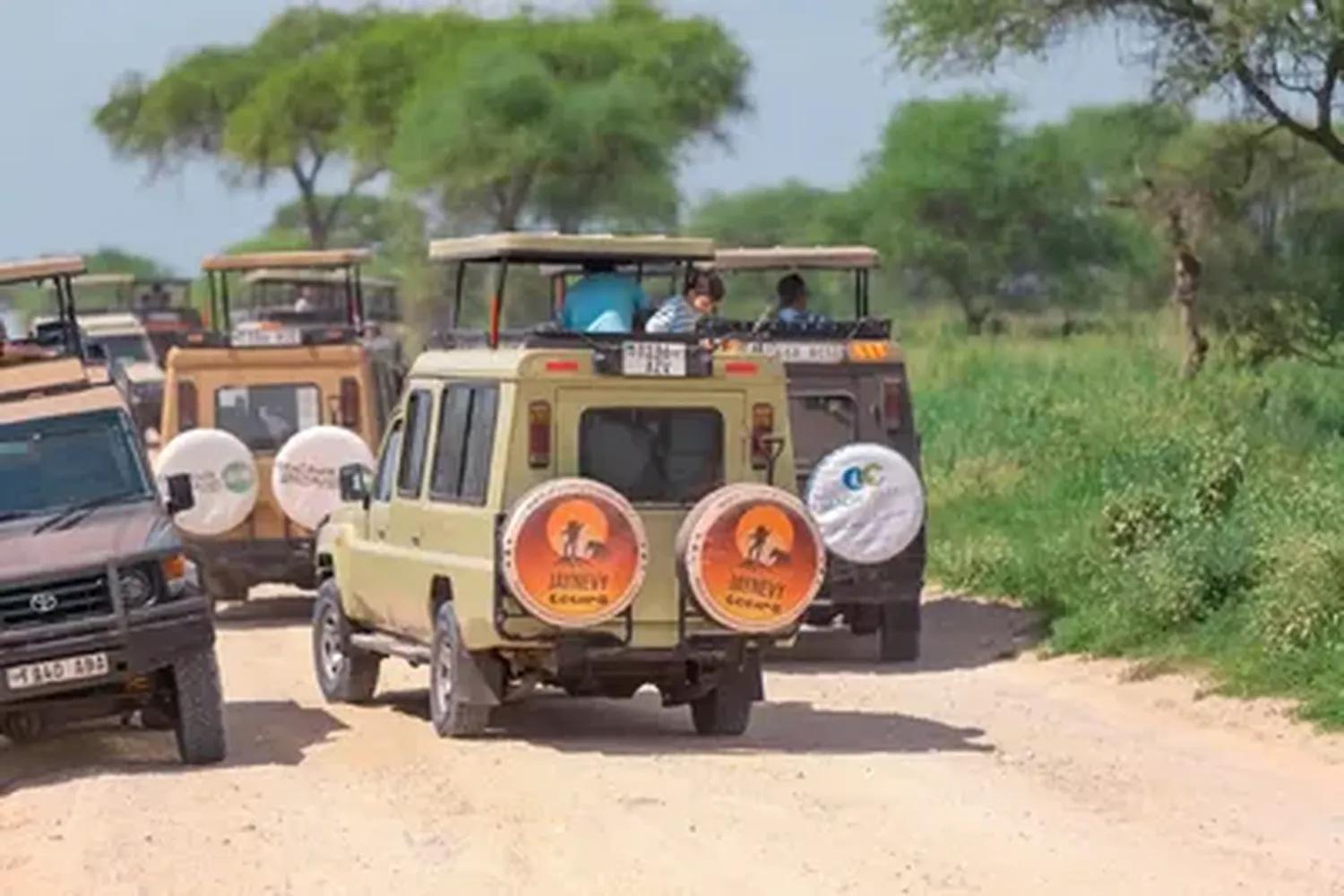
- The vehicle: a 4x4 Toyota Land Cruiser with a pop-up roof for a stable, high shooting position, sliding windows, charging points for batteries in the vehicle, and a window seat for everyone. For two travelers there is space to spread out your kit.
- The guide: switches off the engine for steady shots, positions the vehicle so the sun is behind you where possible, and waits at a sighting rather than rushing on.
- The timing: out at first light and back out for the late afternoon, with full days at the river, a picnic lunch in the vehicle and no fixed return time.
- Your kit: a 100–400 mm zoom covers most sightings and a wide lens the landscapes and close crossings. Bring a beanbag for the roof edge or window, which works better than a tripod in a vehicle, plenty of memory cards and spare batteries.
- Dust: October is dry and the river banks are dusty; change lenses inside the vehicle with the roof closed and keep cards in a dust-proof case.
Drones aren't allowed in the national parks without a permit. For settings, backups and more of our guides' tips, read our photography safari guide.
How Much Does an 8-Day Great Migration Safari Cost?
The safari costs from US$4,865 per person for 2 travelers at mid-range level, US$3,700 at budget level and US$8,165 at luxury level, from your arrival at Kilimanjaro to your departure. Prices are in US dollars. The per-person price falls as your group grows, because the vehicle and guide are shared.
| Travelers | Budget | Mid-range | Luxury |
|---|---|---|---|
| 1 | US$5,150 | US$6,375 | US$11,000 |
| 2 | US$3,700 | US$4,865 | US$8,165 |
| 3 | US$3,250 | US$4,345 | US$7,605 |
| 4 | US$3,195 | US$4,360 | US$7,660 |
| 5 | US$3,030 | US$4,150 | US$7,425 |
| 6 | US$3,030 | US$4,190 | US$7,490 |
Six nights inside Tarangire and the Serengeti carry park concession fees on top of the entry fees, and camps near the Mara River charge peak-season rates while the herds are there, which is why a migration safari costs more per day than a central Serengeti trip.
Park fees on this route
| Fee | 2026 rate (incl. VAT) |
|---|---|
| Serengeti National Park | US$82.60 per person per 24 hours |
| Tarangire National Park | About US$59 per person per 24 hours |
| Concession fee (nights inside the parks) | Per person per night, by season |
| Ngorongoro Conservation Area (charged when you drive through) | US$70.80 per person, each way |
All these fees are included in our prices. More detail is in our Tanzania park fees guide.
What the 8-Day Migration Safari Price Includes
- Airport pickup and drop-off at Kilimanjaro International Airport
- One night in Arusha, one in Tarangire, two in the central Serengeti and three in the northern Serengeti, at the level you choose
- Private 4x4 Toyota Land Cruiser with a pop-up roof and sliding windows, a fridge for drinks, charging points, one pair of binoculars per couple and eco-friendly trash bags
- Your own English-speaking driver-guide for the whole safari
- All park and concession fees, the Ngorongoro transit fees and government taxes
- Meals as listed in the itinerary, and drinking water in the vehicle
Not included
- International flights
- Tanzania visa (US$50 for most nationalities, US$100 for US citizens)
- Tanzania's mandatory inbound travel insurance, US$44 per adult (we can help you buy it)
- Your own travel insurance, including medical evacuation
- Tips for your guide and camp staff
- Alcoholic drinks and personal expenses
- Optional activities such as a Serengeti balloon flight (US$490)
Can You Change This Safari?
Yes. These are the changes photographers ask for most; each is quoted on request.
- Fly back from the north: a scheduled flight from Kogatende to Arusha with Auric Air or Coastal Aviation replaces the two long drives back, and gives you another morning at the river. The fare is confirmed in your quotation.
- Add the Ngorongoro Crater: one more night in the highlands for a crater game drive, with the best chance in Tanzania of photographing a black rhino.
- Balloon flight: a sunrise flight over the central Serengeti on the morning of Day 4, US$490 per person.
- Finish on the beach: fly from the Serengeti to Zanzibar to rest and back up your photos; see our safari and Zanzibar combinations.
How Is This Different from Our 4-Day River-Crossing Fly-In?
| 8-day photography safari | 4-day river-crossing fly-in | |
|---|---|---|
| Nights near the Mara River | 3 | 3 |
| Other parks | Tarangire and the central Serengeti | None |
| Getting there | By road, with game drives on the way | Return flights from Arusha |
| Price from (2, mid-range) | US$4,865, airport to airport | US$3,240, flights included |
Choose the fly-in if you only have a few days and the crossings are all you want; choose this safari for the crossings plus Tarangire's elephants and the central Serengeti's big cats. Both are on our Great Migration safaris page.
How to Book This Migration Safari
Send us your travel dates, the number of travelers and the camp level through the booking form, on WhatsApp +255 678 992 599 or by email to jaynevytours@gmail.com, and our team in Moshi will reply with a written quotation. Camps near the Mara River fill early in the crossing season, so book six to twelve months ahead. A 30% deposit confirms the safari and the balance is paid on arrival; you can pay online by card through Pesapal or by US-dollar bank transfer.
| When you cancel | Refund |
|---|---|
| 60 days or more before arrival | 100% |
| 30–59 days | 90% |
| 15–29 days | 60% |
| 10–14 days | 25% |
| Less than 10 days, or a no-show | No refund |
Common Questions About an 8-Day Great Migration Safari
Will I see a river crossing in October?
There is a good chance in early and mid October, when crossings usually continue, but they are never guaranteed. Three nights at the river give you the best odds, and we confirm where the herds are before you arrive.
Where is the Great Migration in October?
Usually in the northern Serengeti and around the Mara River, starting to move south late in the month with the short rains.
How much is an 8-day migration safari for 2 people?
From US$4,865 per person at mid-range level, US$3,700 at budget level and US$8,165 at luxury level, including park fees, camps, meals, the private vehicle and guide, and airport transfers.
Is the Mara River in Tanzania or Kenya?
Both. The river flows through Kenya's Maasai Mara and the northern Serengeti in Tanzania, and crossings happen on both sides; this safari stays in Tanzania, near Kogatende.
Is a private vehicle better for photography?
Yes. You decide how long to wait at a sighting, the guide positions the vehicle for the light, and you can shoot from the pop-up roof without other guests in the way.
Can I charge camera batteries on safari?
Yes. Our Land Cruisers have charging points, and most camps charge in the tents or at the main area.
Can we fly instead of driving back from the north?
Yes. A scheduled flight from Kogatende to Arusha replaces the two drives back; we quote it with the current fare.
How far ahead should we book for October?
Six to twelve months ahead, because the camps near the Mara River fill early in the crossing season.
The Bottom Line
For the river crossings with time to photograph them properly, give the Mara River three nights and add Tarangire and the central Serengeti for elephants and big cats: eight days from Kilimanjaro airport and back, from US$4,865 per person for two at mid-range level. October gives quieter river banks and the last crossings of the season; book early and we will place your camp where the herds are.