
What is the Great Migration?
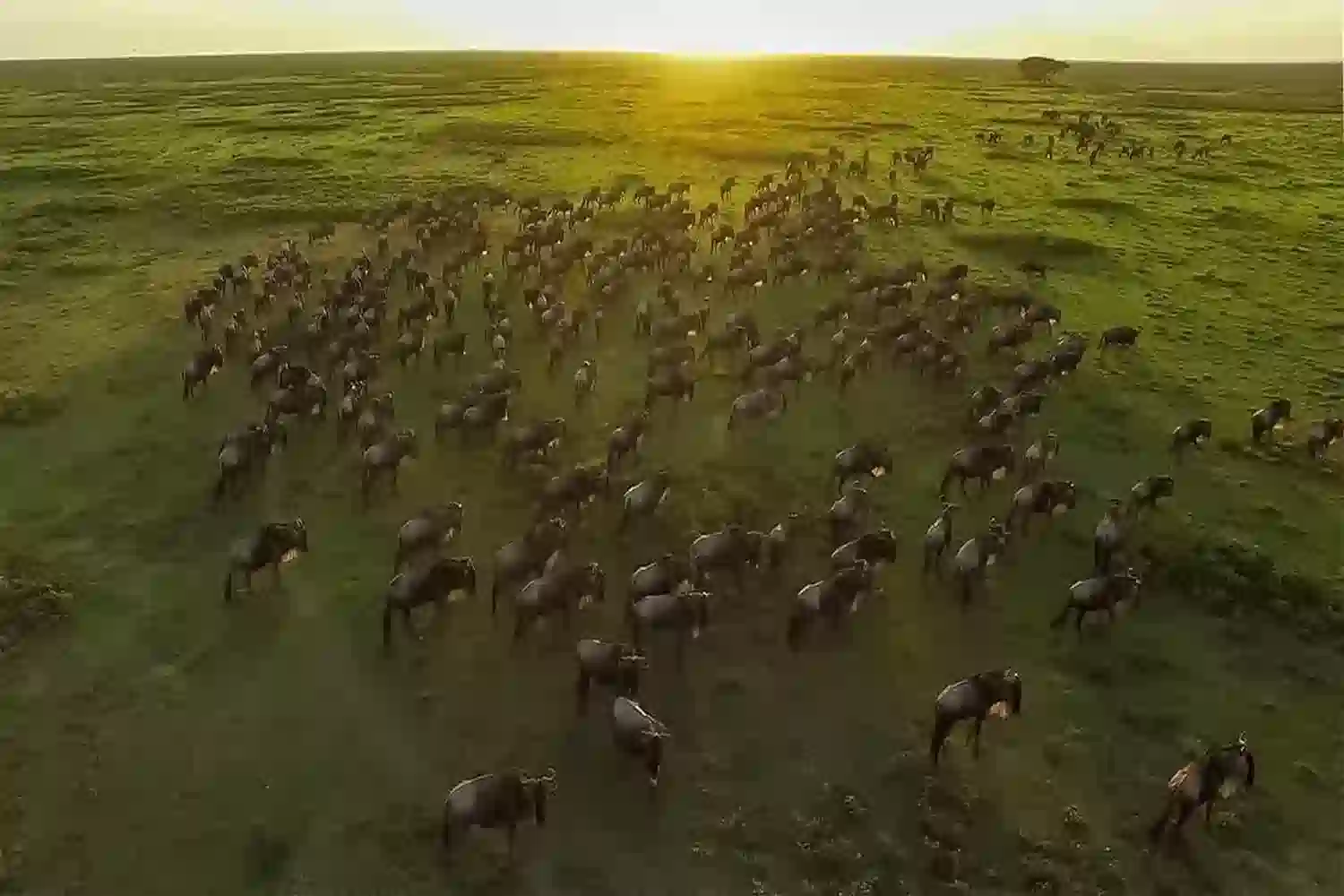
The Great Migration is the annual movement of 1.5-2 million wildebeest, 500,000 zebras, and 200,000 gazelles across Tanzania’s Serengeti and Kenya’s Maasai Mara, driven by seasonal rains. It’s a 1,800-2,000 mile loop with calving in Jan-Mar and river crossings in Jul-Sep. Quantitative: Attracts 350,000 tourists annually, generating $2 billion. Qualitative: “Nature’s epic journey,” says a ranger.
Fact 1: The Numbers Are Staggering
Fact: 1.5-2 million wildebeest participate, not “billions” as some exaggerate. With 500,000 zebras, it’s the largest terrestrial migration. Myth Busted: It’s not the “world’s only migration”—many exist, but none match its scale. Quantitative: 500,000 calves born in 3 weeks. Qualitative: “Herds stretch as far as the eye sees,” says a traveler.
Myth 1: The Migration is Always Predictable
Myth: It follows a strict calendar. Fact: Weather variations shift timings; rains can delay crossings by weeks. Quantitative: Migration patterns have shifted 2-3 weeks in recent years due to climate change. Qualitative: “Unpredictability adds thrill,” says a guide. Tip: Book flexible safaris.
Fact 2: It's Not Just Wildebeest
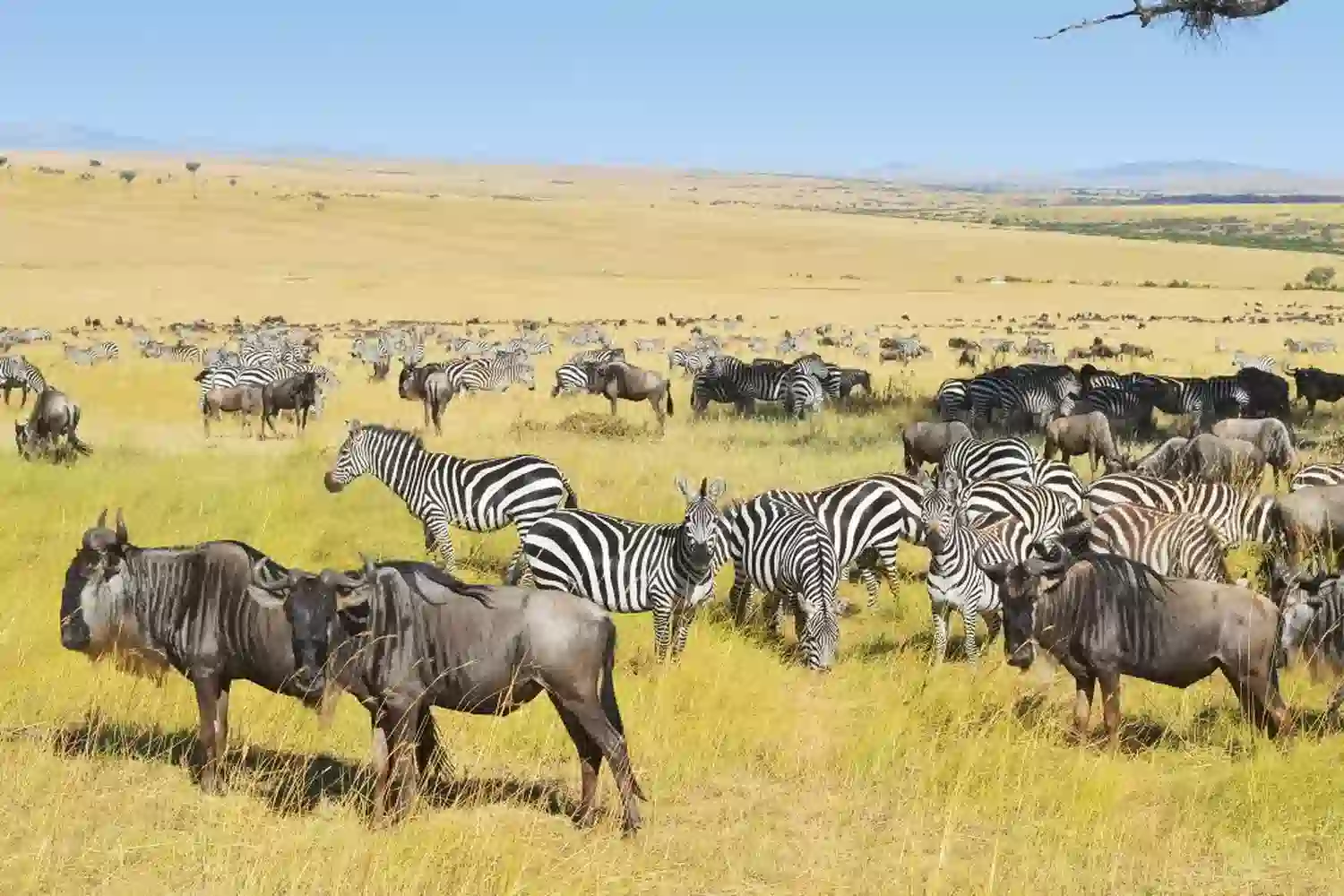
Fact: Zebras lead with sharp eyesight, gazelles follow for agility. Quantitative: 500,000 zebras, 200,000 gazelles join. Myth Busted: “Wildebeest are the only stars”—predators like 3,000 lions and 2,500 crocodiles play key roles. Qualitative: “Zebras’ stripes confuse predators,” notes a biologist.
Myth 2: All Animals Cross the River at Once
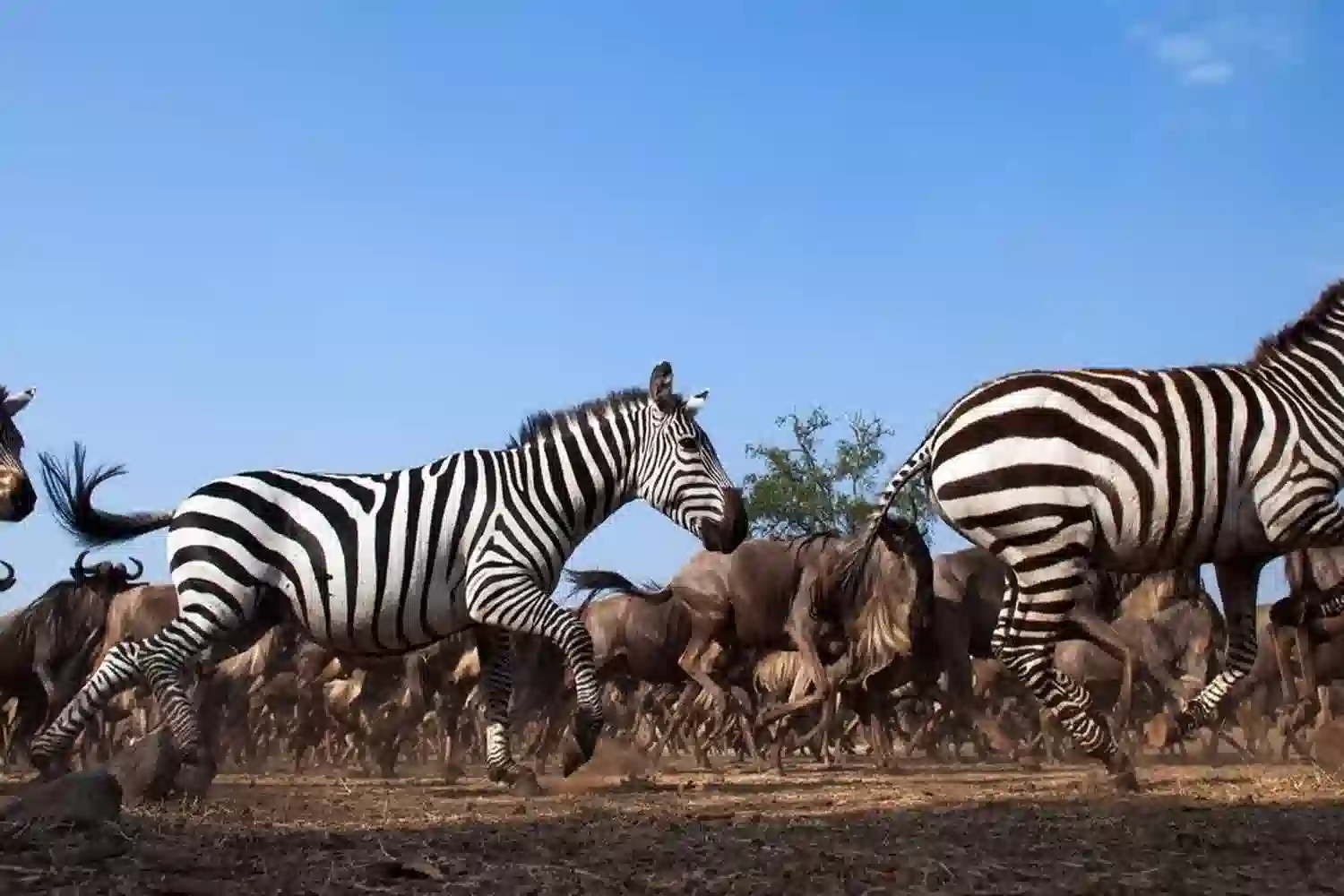
Myth: One massive crossing. Fact: Crossings occur in small groups over months, with 20,000 lost to crocodiles. Quantitative: Mara River crossings span Jul-Sep. Qualitative: “It’s a series of dramatic pulses,” says a photographer.
Fact 3: High Mortality Rate
Fact: 250,000 wildebeest die annually from predation, drowning, and exhaustion. Quantitative: 5-10% of herds lost, balancing populations. Myth Busted: “Most die from predators”—drowning claims 20-30%. Qualitative: “It’s the circle of life in action,” says an ecologist.
Myth 3: The Migration is Only in Tanzania
Myth: Exclusive to Serengeti. Fact: It spans Tanzania and Kenya, with herds in Masai Mara Jul-Oct. Quantitative: Serengeti hosts 70% of the route. Qualitative: “Masai Mara’s crossings are intense,” says a traveler.
Fact 4: Driven by Instinct, Not Navigation
Fact: Wildebeest follow rain and grass scents, not maps. Quantitative: Herds travel 1,800 miles yearly. Myth Busted: “They have leaders”—instinct and herd behavior guide them. Qualitative: “It’s a primal drive,” says a ranger.
Myth 4: The Migration is Safe to View
Myth: No risks for tourists. Fact: Safaris are safe with guides, but river crossings can be unpredictable. Quantitative: 350,000 safe visitors annually. Qualitative: “Guides ensure respectful distances,” says an operator.
Fact 5: Climate Change Threatens It
Fact: Erratic rains disrupt patterns, with 20-30% population decline projected by 2050. Quantitative: Temperatures rose 1.5°C in 50 years. Myth Busted: “The migration is eternal”—climate change alters routes. Qualitative: “We must act now,” urges a conservationist.
Migration Facts Table
| Fact | Data |
|---|---|
| Wildebeest Numbers | 1.5-2M |
| Annual Deaths | 250,000 |
| Calves Born | 500,000 |
| Route Length | 1,800 miles |
| Predators | 3,000 lions |
Qualitative Insights: Expert Views
Rangers share “myths like ‘predictable timings’ ignore weather’s role.” Travelers note “seeing the migration debunks the ‘only wildebeest’ myth.” Quantitative: 80% of visitors learn new facts on tour. Qualitative: “It’s more than wildlife; it’s ecology,” says a biologist.
Surprising Migration Truths
- Truth 1: Wildebeest swim rivers despite myths of drowning all; many survive crossings.
- Truth 2: Zebras and wildebeest team up—zebras for sight, wildebeest for smell.
- Truth 3: The migration sustains predators, balancing ecosystems.
- Truth 4: Human fences threaten routes, causing 20% population drops in areas.
- Truth 5: It’s a year-round event, not just “one big move.”
Common Myths Debunked
- Myth 1: “Migration is seasonal”—Fact: Continuous cycle.
- Myth 2: “All animals migrate together”—Fact: Groups cross over months.
- Myth 3: “Safe for all”—Fact: 250,000 deaths yearly.
- Myth 4: “Only in Africa’s summer”—Fact: Driven by rains, not seasons.
- Myth 5: “Unchanged forever”—Fact: Climate change shifts patterns.
Quantitative Data: Migration Stats
- Wildebeest Population: 1.5-2 million, with 500,000 calves born yearly.
- Deaths: 250,000 annually (10% of herd).
- Tourism Revenue: $2 billion, 350,000 visitors.
- Predators: 3,000 lions, 1,000 cheetahs in Serengeti.
- Climate Impact: 20-30% decline projected by 2050.
Conservation and the Migration
Fact: Human threats like poaching and fences endanger the migration, but conservation efforts protect it. Quantitative: $350 million funds anti-poaching annually. Myth Busted: “It’s self-sustaining”—needs protection from climate change. Qualitative: “Safaris support conservation,” says a WWF expert.
Why Visit the Migration with Jaynevy Tours?
Jaynevy Tours offers guided safaris to witness these wildebeest migration facts firsthand. Experience the truth behind the myths with expert insights. Combine with Kilimanjaro climbs or Zanzibar holidays. Book now!
Frequently Asked Questions
How many wildebeest participate in the Serengeti migration?
Fact: 1.5-2 million wildebeest migrate annually, not millions more as some myths suggest.
Is the Great Migration only about wildebeest?
Myth: It's only wildebeest; Fact: 500,000 zebras and 200,000 gazelles also join the migration.
Does the migration happen year-round?
Fact: The migration is a continuous cycle, with calving in Jan-Mar and river crossings in Jul-Sep.
How many animals die during the migration?
Fact: 250,000 wildebeest die annually from predation, drowning, and exhaustion.
Is the migration predictable?
Myth: It's always on schedule; Fact: Weather variations make timings unpredictable.
Do predators follow the migration?
Fact: Lions, cheetahs, and crocodiles opportunistically hunt migrants, with 3,000 lions in Serengeti.
Is the migration only in Tanzania?
Myth: It's Tanzania-only; Fact: It spans Tanzania’s Serengeti and Kenya’s Maasai Mara.
How long is the migration route?
Fact: The route covers 1,800-2,000 miles in a clockwise loop.
Can climate change end the migration?
Fact: Climate change threatens it with erratic rains, potentially reducing populations by 20-30% by 2050.
Why choose Jaynevy Tours for migration safaris?
Jaynevy Tours offers guided safaris to witness the migration’s facts up close, with expert insights.