
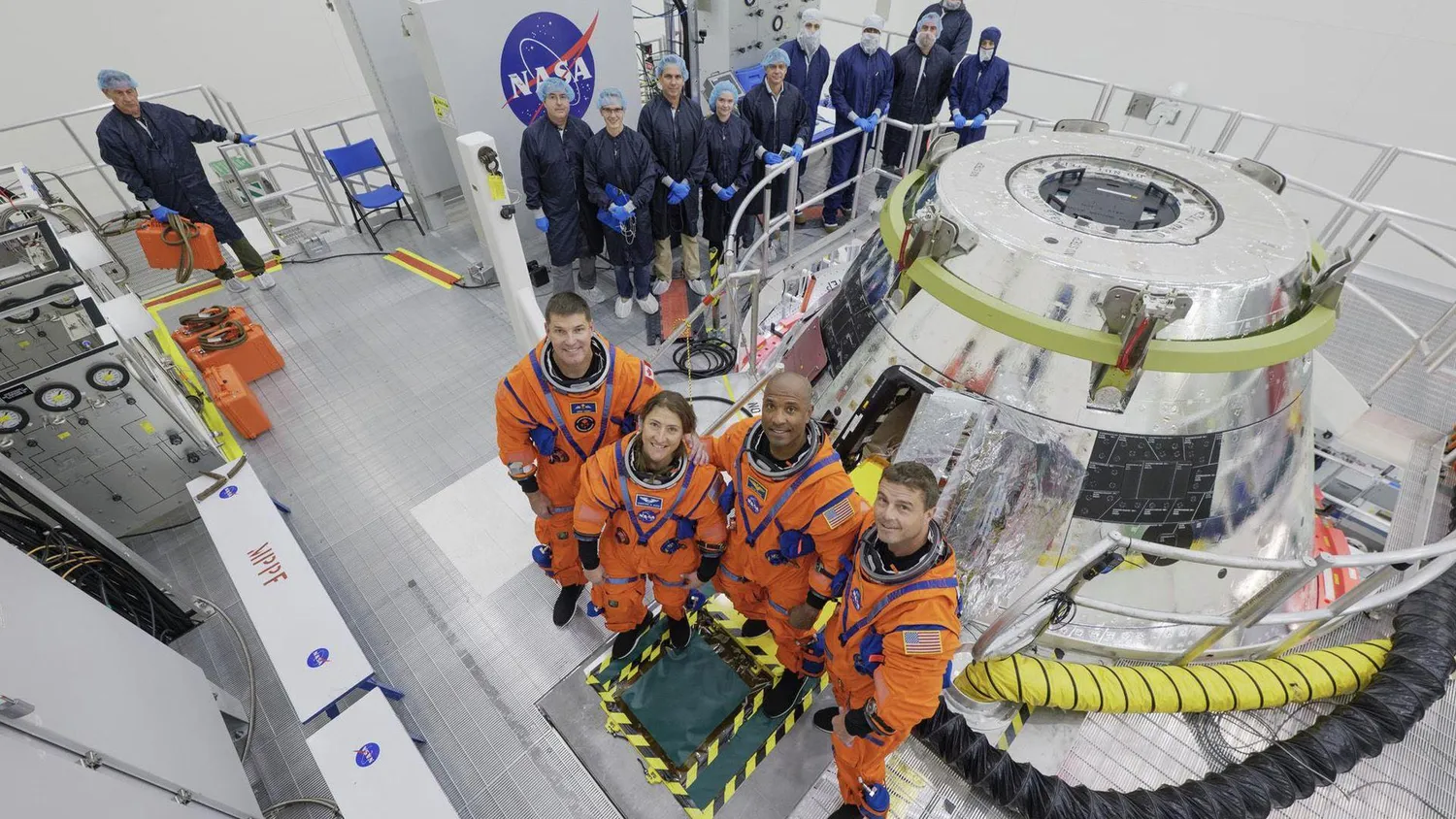
Overview of Training for the Artemis II Mission
Training for the Artemis II mission is a multi-year process that transforms highly experienced astronauts into a cohesive team ready for the unique demands of deep space. Starting shortly after crew selection, the program combines classroom learning, sophisticated simulations, physical conditioning, and real-world field exercises. The goal is to ensure every crew member can handle routine operations as well as unexpected challenges during the approximately 10-day flight that will take them farther from Earth than any humans since the Apollo era. This rigorous preparation reflects NASA’s commitment to safety and mission success in an environment where help from the ground is delayed by communication lag.
When and Where Astronauts Train for the Artemis II Mission
Official mission-specific training for the Artemis II crew began in June 2023 and continued intensively through launch preparations. The primary location is NASA’s Johnson Space Center in Houston, Texas, where astronauts spend hundreds of hours in Orion simulators and mockups. Additional training occurs at Kennedy Space Center in Florida for launch and recovery operations, as well as at various field sites across North America and beyond for specialized skills like geology. This distributed approach allows the crew to master both spacecraft systems and the scientific aspects of observing the Moon from lunar distance.
Orion Spacecraft and Systems Training
A cornerstone of how astronauts train for the Artemis II mission is hands-on familiarity with the Orion spacecraft. Crew members spend countless hours in high-fidelity simulators that replicate the exact look, sounds, and feel of the crew module. They practice every phase of flight — from launch ascent and trajectory corrections to lunar flyby observations and high-speed re-entry. Procedures for monitoring life support, propulsion, navigation, and thermal systems are rehearsed repeatedly, along with contingency responses for malfunctions. Full-scale mockups allow the crew to practice daily living tasks such as sleeping arrangements, hygiene, exercise, and operating cameras for lunar documentation.
Simulator and Integrated Team Training
Integrated simulations bring the crew together with Mission Control teams to rehearse complete mission timelines and emergency scenarios. These sessions, which intensify in the final year before launch, test communication protocols at lunar distances where delays can reach several seconds. Astronauts practice manual piloting, system troubleshooting, and coordination during critical events like proximity operations and re-entry. The training builds not only technical proficiency but also trust and clear decision-making under pressure — essential skills for a mission where the crew must operate independently for parts of the journey.
Flight and Physiological Training
To develop quick thinking and adaptability, the Artemis II crew trains in T-38 jet aircraft at Ellington Field. These dynamic flights simulate high-workload environments and help astronauts maintain spatial awareness and composure. Additional physiological training covers medical operations, exercise protocols to counteract microgravity effects, and radiation monitoring. The crew also practices emergency egress procedures, including nighttime launch scenarios and pad evacuation drills at Kennedy Space Center, ensuring they can respond effectively even in challenging conditions.
Geology and Lunar Observation Training
Since Artemis II will provide a rare close-up view of the Moon’s far side, the crew receives extensive geology and photography training. This includes classroom fundamentals on lunar features, followed by field expeditions to impact craters and volcanic landscapes in locations like Labrador (Canada) and Iceland. Astronauts learn to identify surface textures, craters, and geological processes while practicing documentation techniques. These skills ensure high-quality scientific observations and photographs that will benefit future Artemis landings and public engagement.
Artemis II Training Activities Overview Table
| Training Type | Location | Purpose |
|---|---|---|
| Orion Simulator Sessions | Johnson Space Center | Rehearse all mission phases |
| T-38 Jet Training | Ellington Field | Build decision-making skills |
| Geology Field Work | Canada, Iceland, etc. | Lunar observation practice |
| Launch & Egress Drills | Kennedy Space Center | Emergency procedures |
| Integrated Simulations | Johnson + Mission Control | Team coordination |
Quantitative Aspects of Artemis II Astronaut Training
- Duration: Training spanned nearly three years, with hundreds of hours in simulators alone.
- Team Integration: Full mission simulations with Mission Control began about 12 months before launch.
- Field Expeditions: Multiple geology trips to analog sites to prepare for lunar far-side observation.
- Emergency Scenarios: Repeated practice of launch aborts, pad egress, and re-entry contingencies.
Qualitative Insights into the Training Process
Beyond technical skills, training for the Artemis II mission fosters teamwork, resilience, and a shared sense of purpose. The crew — Reid Wiseman, Victor Glover, Christina Koch, and Jeremy Hansen — developed strong camaraderie through challenging simulations and field work. Instructors emphasize training “like you fly,” creating realistic stress to build confidence. The program also incorporates lessons from past missions while preparing for the unique aspects of deep space, such as communication delays and radiation exposure. This holistic approach ensures the astronauts are not only technically proficient but also mentally and emotionally prepared for the historic journey.
Challenges and Innovations in Modern Astronaut Training
Compared to earlier programs, Artemis II training incorporates more realistic deep-space scenarios and greater emphasis on science objectives. The use of advanced simulators allows safe repetition of rare events, while field geology adds practical experience that textbooks cannot provide. Medical and psychological support help astronauts manage the demands of long-duration isolation training. These innovations reflect NASA’s evolution toward sustainable exploration, where crews must handle more autonomy and scientific responsibilities than in previous lunar missions.
How This Training Prepares for Future Artemis Missions
The intensive preparation for Artemis II lays critical groundwork for subsequent flights, including crewed lunar landings. Data gathered during training and the actual mission will refine procedures for longer surface stays, habitat operations, and Mars precursor activities. By mastering Orion systems and deep-space operations now, NASA builds a strong foundation for the Artemis Generation of explorers who will live and work on the Moon and eventually travel farther into the solar system.
Experience Exploration Closer to Home with Jaynevy Tours
The same spirit of discovery that drives astronaut training for the Artemis II mission also inspires incredible adventures on Earth. Whether you seek wildlife encounters or mountain challenges, Jaynevy Tours offers unforgettable experiences in Tanzania — from Serengeti safaris and Mount Kilimanjaro climbs to relaxing Zanzibar beach getaways. Let curiosity guide your next journey!
Frequently Asked Questions
When did training for the Artemis II mission begin?
Training for the Artemis II crew officially started in June 2023, shortly after the crew was announced. It included mission fundamentals, systems training, simulations, and field geology work over nearly three years leading up to launch.
What simulators do astronauts use to train for Artemis II mission?
Astronauts train extensively in the Orion Mission Simulator at NASA’s Johnson Space Center, which replicates the look, feel, and sounds of the actual spacecraft. They also use full-scale Orion mockups and the Space Vehicle Mockup Facility for hands-on practice.
How do astronauts practice lunar observation for the Artemis II mission?
The crew receives geology training including classroom sessions on lunar features, field expeditions to impact craters and volcanic sites in places like Canada and Iceland, and specialized photography instruction to document the Moon’s far side during the flyby.
What emergency procedures are part of Artemis II astronaut training?
Training includes launch abort scenarios, emergency egress from the launch pad, night launch operations, re-entry contingencies, and medical operations. Crews practice using the launch abort system, egress baskets, and procedures in the Vehicle Assembly Building.
Do Artemis II astronauts train with T-38 jets?
Yes, the crew conducts T-38 jet training at Ellington Field near Johnson Space Center. These high-performance flights build spatial awareness, decision-making under pressure, and adaptability that translate directly to spacecraft operations.