
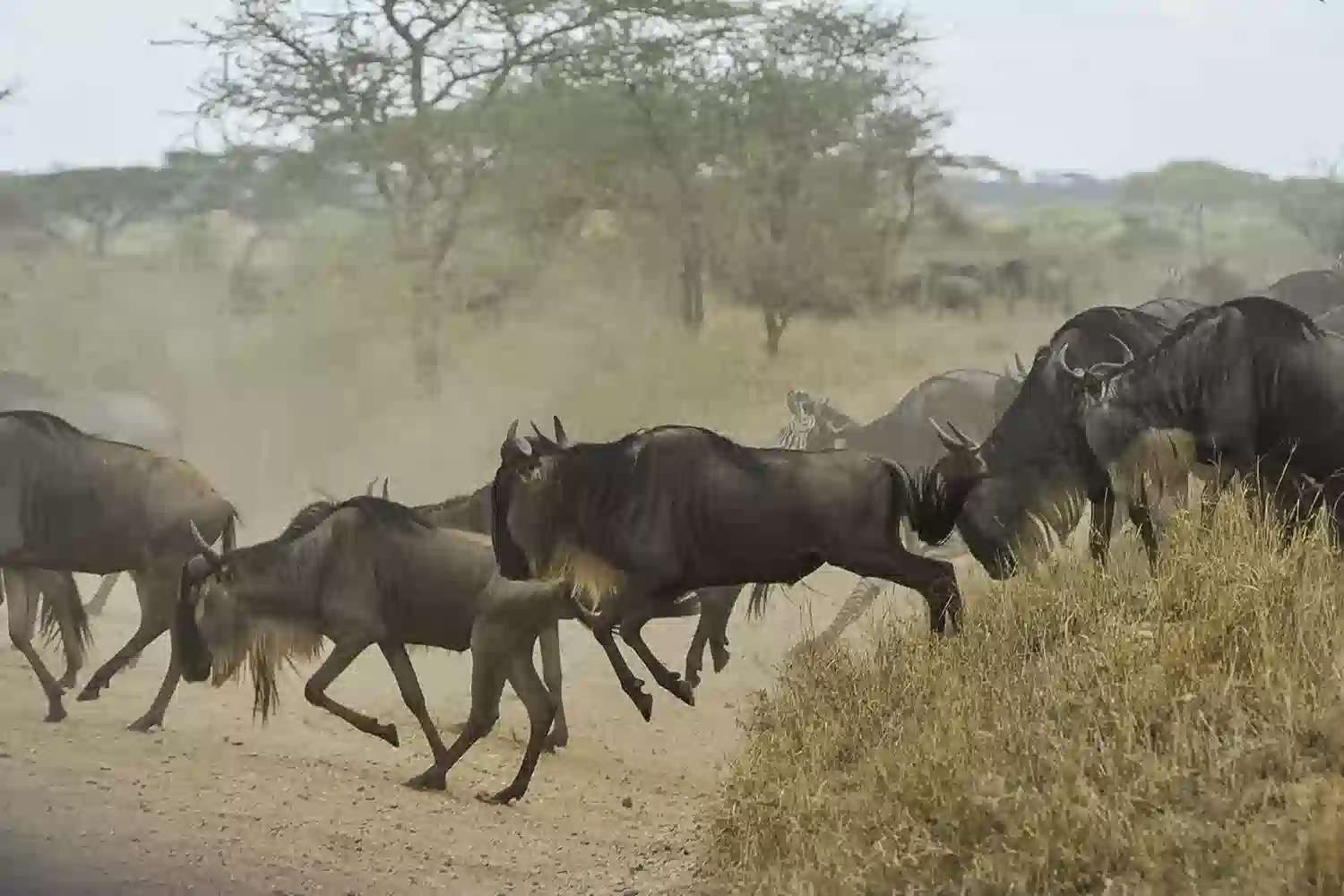
What is the Great Migration?
The Great Migration is the annual movement of 1.5-2 million wildebeest, 500,000 zebras, and 200,000 gazelles across Tanzania’s Serengeti and Kenya’s Maasai Mara, driven by seasonal rains. It’s a cycle of calving (Jan-Mar) and river crossings (Jul-Sep), attracting 350,000 tourists annually and generating $2 billion in revenue. Qualitative: “It’s nature’s ultimate survival story,” says a conservationist.
How Climate Change is Altering Rainfall Patterns
Climate change causes erratic rainfall in the Serengeti-Mara ecosystem, with longer droughts and intense floods. Quantitative: Rainfall fluctuates by 3x yearly, but droughts have increased 20% in frequency. This disrupts grazing, leading to mismatched migration timing and reduced herd health. Qualitative: “Unpredictable rains confuse the herds’ instincts,” notes a ranger.
Temperature Rises and Their Impact
The ecosystem is warming rapidly, with minimum temperatures rising 3.3°C in dry seasons and 4.2°C in wet seasons. Quantitative: Average temperatures have increased 1.5°C over 50 years. This affects water availability, increasing mortality during dry periods. Qualitative: “Warmer temperatures stress wildlife, altering behaviors,” says a WWF expert.
Increased Wildfires and Ecosystem Changes
Reduced migration due to climate shifts leads to more wildfires, consuming 80% of the ecosystem annually when herds are fewer. Quantitative: Wildfires turn the Serengeti into a net carbon source, emitting 5-10 million tons of CO2 yearly. Qualitative: “Fires destroy grasslands, threatening biodiversity,” warns a researcher.
Effects on Wildlife Populations
- Wildebeest: Droughts reduce calving success by 15-20%, with 250,000 deaths annually from all causes.
- Zebras and Gazelles: Erratic rains affect foraging, leading to 10% population declines.
- Predators: Shifts in prey migration impact lions (3,000) and cheetahs (1,000), reducing hunt success by 20%.
Quantitative: Overall biodiversity has dropped 10-15% due to climate stress. Qualitative: “Animals are adapting, but at a cost,” says an ecologist.
Future of Wildebeest Migration
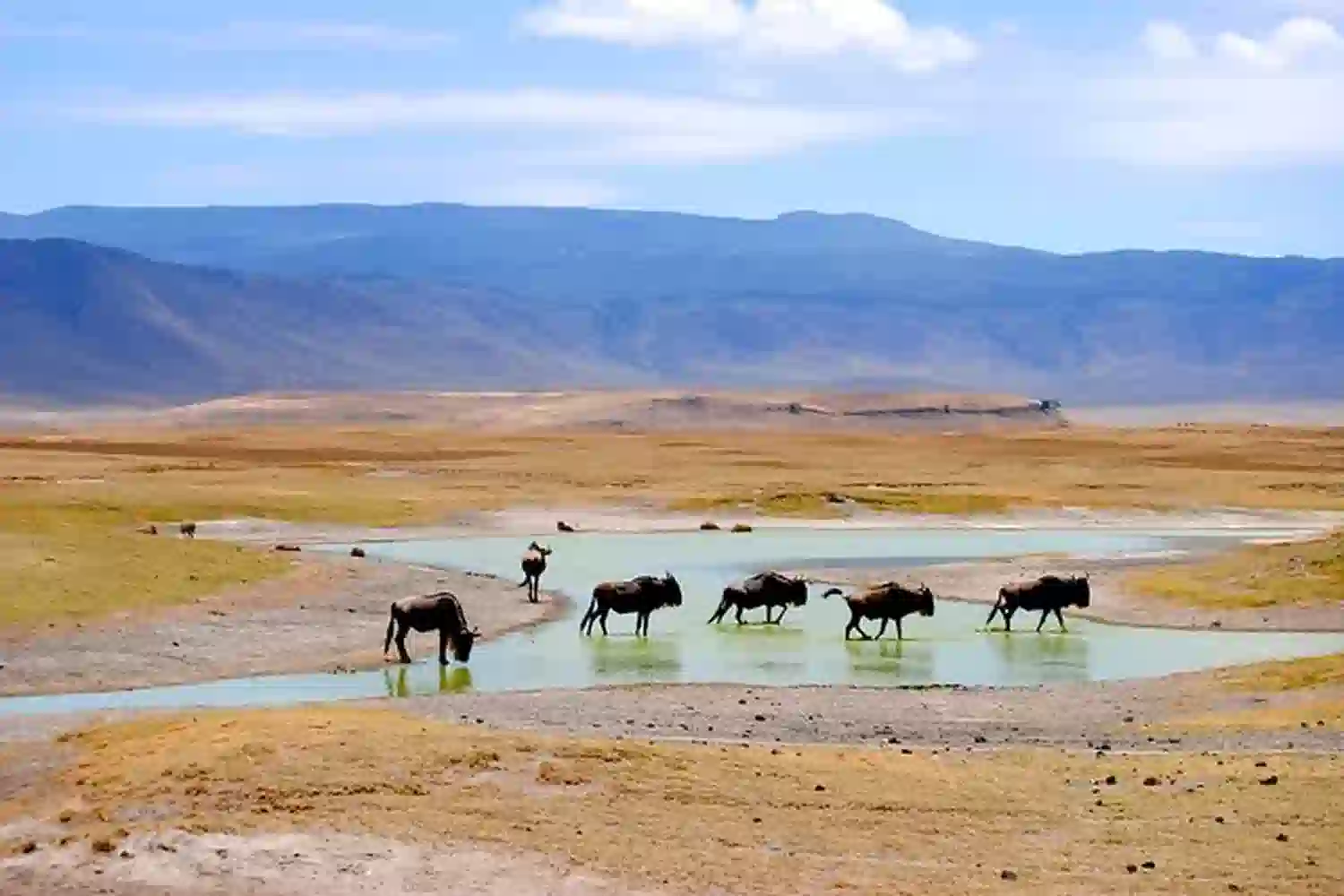
Projections indicate a 20-30% decline in wildebeest populations by 2050 if warming continues at 2°C. Quantitative: Migration routes could shift 100-200 km, with increased mortality from floods/droughts. Qualitative: “The migration’s future depends on global action,” says a climate scientist. Eco-tourism can help, contributing $350 million to conservation annually.
Conservation Efforts and Solutions
- Habitat Corridors: WWF expands corridors to adapt to shifting routes.
- Monitoring: Satellite tracking monitors 1,000 animals for climate impacts.
- Sustainable Tourism: Tours like Jaynevy’s fund anti-poaching ($350 million/year).
- Community Programs: Maasai initiatives reduce human-wildlife conflict by 15%.
Quantitative: Conservation funding has increased 25% in the last decade. Qualitative: “Local communities are key to resilience,” says a ranger.
Impact on Tourism and Local Economies
Altered patterns could reduce predictable sightings, impacting $2 billion revenue and 100,000 jobs. Quantitative: Tourism decline of 10-15% projected by 2030. Qualitative: “Eco-conscious travelers can support sustainable practices,” says an operator.
Quantitative Data on Climate Impacts
| Factor | Change | Impact |
|---|---|---|
| Temperature | +3.3-4.2°C | Reduced water |
| Droughts | +20% | Higher mortality |
| Wildfires | 80% area | Carbon emissions |
| Population | -20-30% | By 2050 |
Qualitative Insights: Expert Views
Conservationists note “climate change is the biggest threat to the migration,” with erratic weather disrupting ancient patterns. Travelers say “seeing the impacts firsthand inspires action.” Quantitative: 70% of eco-tourists support conservation post-visit. Qualitative: “It’s a wake-up call for global change,” says a visitor.
How Eco-Tourism Can Help
Sustainable safaris with Jaynevy Tours fund conservation and promote awareness. Quantitative: $350 million from tourism aids anti-poaching. Qualitative: “Your trip can contribute to solutions,” says a tour operator.
Why Choose Jaynevy Tours?
Jaynevy Tours offers eco-conscious Serengeti safaris, combining wildlife viewing with conservation education. Extend with Kilimanjaro climbs or Zanzibar holidays. Book now to support the migration’s future!
Frequently Asked Questions
How is climate change affecting the Serengeti Great Migration?
Climate change causes longer droughts, erratic rainfall, and temperature rises, altering migration patterns and reducing wildlife survival.
What temperature changes are occurring in the Serengeti?
Minimum temperatures have risen by 3.3°C in dry seasons and 4.2°C in wet seasons, impacting the ecosystem.
How does climate change impact wildebeest migration?
Unpredictable rainfall disrupts grazing, leading to mismatches in migration timing and increased mortality from droughts.
What is the future of the wildebeest migration due to climate change?
Projections show potential population declines of 20-30% by 2050 if warming continues, altering migration routes.
How does increased wildfire affect the Serengeti?
Reduced migration due to climate leads to 80% annual wildfires, turning Serengeti into a carbon source.
What are the effects of floods and droughts on the migration?
Droughts cause water shortages, while floods disrupt river crossings, affecting biodiversity and wildlife populations.
How is tourism impacted by climate change in the Serengeti?
Altered patterns reduce predictable sightings, potentially decreasing $2 billion annual revenue and 100,000 jobs.
What conservation efforts are in place for the migration?
WWF and TANAPA expand corridors, monitor climate, and fund anti-poaching with $350 million annually.
Can eco-tourism help mitigate climate change effects?
Yes, sustainable tours support conservation, contributing $350 million to protect the ecosystem.
Why choose Jaynevy Tours for sustainable safaris?
Jaynevy Tours offers eco-conscious safaris that fund conservation and provide insightful experiences.