
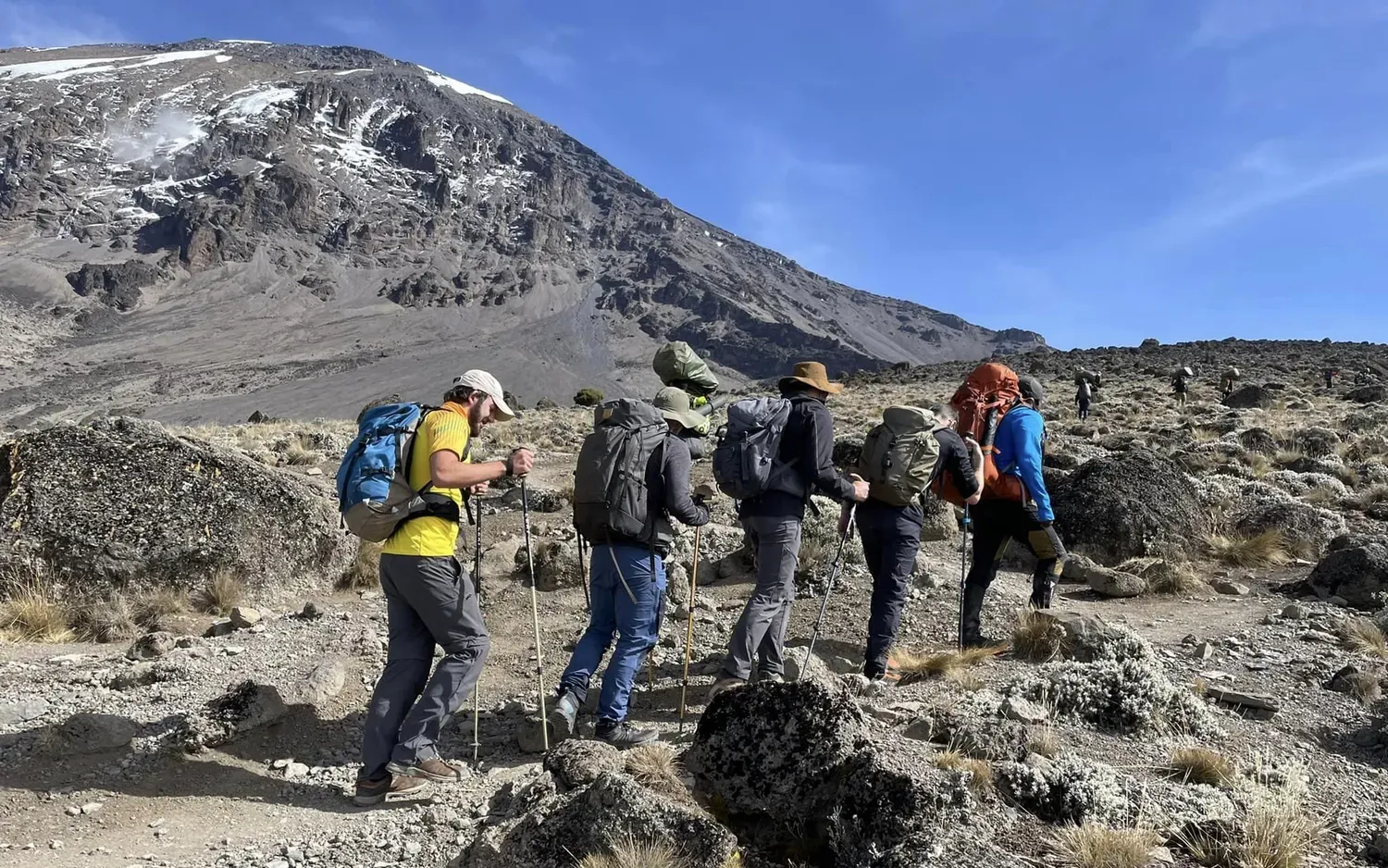
Why Climbers Love the Machame Route
The Machame Route stands out for its dramatic landscapes. You pass through lush rainforest, open moorland with giant heathers, the rocky Shira Plateau, and the dramatic Barranco Wall. Unlike some routes that go straight up, Machame uses a “climb high, sleep low” pattern that helps your body adjust to altitude. This makes it a favourite for people who want both challenge and beauty without the longest possible trek.
Machame Route Success Rate – What the Numbers Really Show
The 7-day Machame Route has an average success rate of around 85%. With reputable operators who provide strong support and good pacing, rates often reach 90-95%. The 6-day version drops to about 73-75% because there is less time for acclimatisation. The extra day in the 7-day itinerary gives your body a better chance to adapt to the thin air, which is why most experienced guides strongly recommend the longer schedule.
Overview of the 7-Day Machame Route
Total distance is approximately 62 km (38 miles). You start at Machame Gate (1,800m) and finish the descent via the Mweka Route. The route is non-technical — no ropes or ice axes needed — but it includes steep sections and the famous Barranco Wall scramble. Most days involve 4-7 hours of walking at a steady “pole pole” pace.
Day-by-Day 7-Day Machame Route Itinerary
Day 1: Machame Gate to Machame Camp
Elevation: 1,800m to 3,010m (5,900ft to 9,877ft)
Distance: ~11 km (7 miles)
Hiking time: 5-7 hours
Habitat: Montane rainforest
Your climb begins with a gentle walk through dense rainforest filled with moss-covered trees, monkeys and colourful birds. The trail is muddy in wet seasons so good boots matter. You arrive at Machame Camp in the afternoon with time to rest and enjoy your first mountain dinner.
Day 2: Machame Camp to Shira Camp
Elevation: 3,010m to 3,840m (9,877ft to 12,598ft)
Distance: ~5 km (3 miles)
Hiking time: 4-6 hours
Habitat: Moorland
The forest gives way to heather and moorland with giant lobelias. The trail is steeper but shorter today. You get your first clear views of the Shira Plateau and Kibo peak. This is where many climbers start feeling the altitude for the first time.
Day 3: Shira Camp to Lava Tower to Barranco Camp
Elevation: 3,840m to 4,630m (Lava Tower) then down to 3,960m (13,000ft)
Distance: ~10 km (6 miles)
Hiking time: 6-8 hours
Habitat: Alpine desert / moorland
This is a classic “climb high, sleep low” day. You ascend to Lava Tower (4,630m) for lunch, then descend into the beautiful Barranco Valley. The extra height helps with acclimatisation while you sleep lower at Barranco Camp. Many climbers say this is one of the most scenic days.
Day 4: Barranco Camp to Karanga Camp
Elevation: 3,960m to 4,035m (13,000ft to 13,240ft)
Distance: ~5 km (3 miles)
Hiking time: 4-5 hours
Habitat: Alpine desert
Today you tackle the famous Barranco Wall — a short but exciting scramble that is not as scary as it looks with a good guide. After the wall you walk along a ridge with great glacier views before descending slightly to Karanga Camp.
Day 5: Karanga Camp to Barafu Camp
Elevation: 4,035m to 4,673m (13,240ft to 15,331ft)
Distance: ~4 km (2.5 miles)
Hiking time: 4-5 hours
Habitat: Alpine desert
A shorter day to reach Barafu Camp, your base for the summit attempt. You have time to rest, eat well and prepare your gear for the long night ahead. The views of the southern glaciers are spectacular.
Day 6: Barafu Camp to Uhuru Peak to Mweka Camp
Elevation: 4,673m to 5,895m (Uhuru Peak) then down to 3,100m
Distance: ~11 km up + 15 km down
Hiking time: 6-8 hours to summit, 4-6 hours descent
Habitat: Arctic / glacial
Summit day starts around midnight. You climb steadily in the dark using headlamps. The final push to Stella Point and then Uhuru Peak is steep but rewarding. After celebrating at the summit you descend to Mweka Camp for a well-earned rest.
Day 7: Mweka Camp to Mweka Gate
Elevation: 3,100m to 1,800m
Distance: ~10 km (6 miles)
Hiking time: 3-4 hours
A gentle descent through forest back to the gate where you receive your summit certificate. You then drive back to your hotel in Moshi or Arusha for a hot shower and celebration.
Real Insider Tips for Success on the 7-Day Machame Route
Walk slowly from day one — “pole pole” saves energy. Drink at least 4 litres of water daily. Eat even when you don’t feel hungry. Use the extra time at camps to rest and acclimatise. The Barranco Wall looks intimidating but is straightforward with guide assistance. On summit night dress in all your warm layers before starting. Listen to your guide if they recommend turning around — the mountain will still be there next year.
Machame Route vs Other Popular Routes
| Route | Days | Success Rate (approx.) | Best For |
|---|---|---|---|
| Machame | 7 | 85-95% | Scenery & good acclimatisation |
| Lemosho | 7-8 | 85-95%+ | First-timers wanting highest success |
| Marangu | 5-6 | 50-65% | Budget & hut accommodation |
| Northern Circuit | 8-9 | 90-95%+ | Maximum acclimatisation |
Machame gives more scenery and challenge than Marangu while being shorter than the Northern Circuit or full Lemosho.
Cost Breakdown for 7-Day Machame Route (2026-2027 estimates)
| Category | Budget | Mid-Range (Recommended) |
|---|---|---|
| 7-Day Machame Climb (per person sharing) | $2,400 – $2,900 | $3,200 – $4,200 |
| Park Fees & Rescue | Included | Included |
| Guides, Porters, Meals & Tents | Included | Included |
Mid-range operators usually provide better food, more staff, oxygen and higher safety standards, which can improve both comfort and success rate.
Frequently Asked Questions About the 7-Day Machame Route
Is the 7-day Machame Route suitable for beginners?
Yes, with good fitness and proper preparation. The route is challenging but the 7-day schedule gives enough time for most reasonably fit people to acclimatise.
How difficult is the Barranco Wall?
It is a short scramble using hands and feet but not technical climbing. Guides help everyone through safely and most climbers enjoy it once they start.
What is the hardest day on the Machame Route?
Most people say summit day is the toughest due to the long distance, cold, darkness and altitude. Day 3 (Lava Tower to Barranco) is also physically demanding.
Do I need trekking poles?
Highly recommended. They help on steep sections, save knee strain on descents and improve balance on loose scree.
Ready for Your Machame Adventure?
The 7-day Machame Route offers one of the most rewarding ways to experience Kilimanjaro — beautiful scenery, good acclimatisation and a strong chance of success when you prepare well. If the detailed itinerary and success rates feel right for you, we’re here to help turn the plan into reality with reliable support every step of the way.