
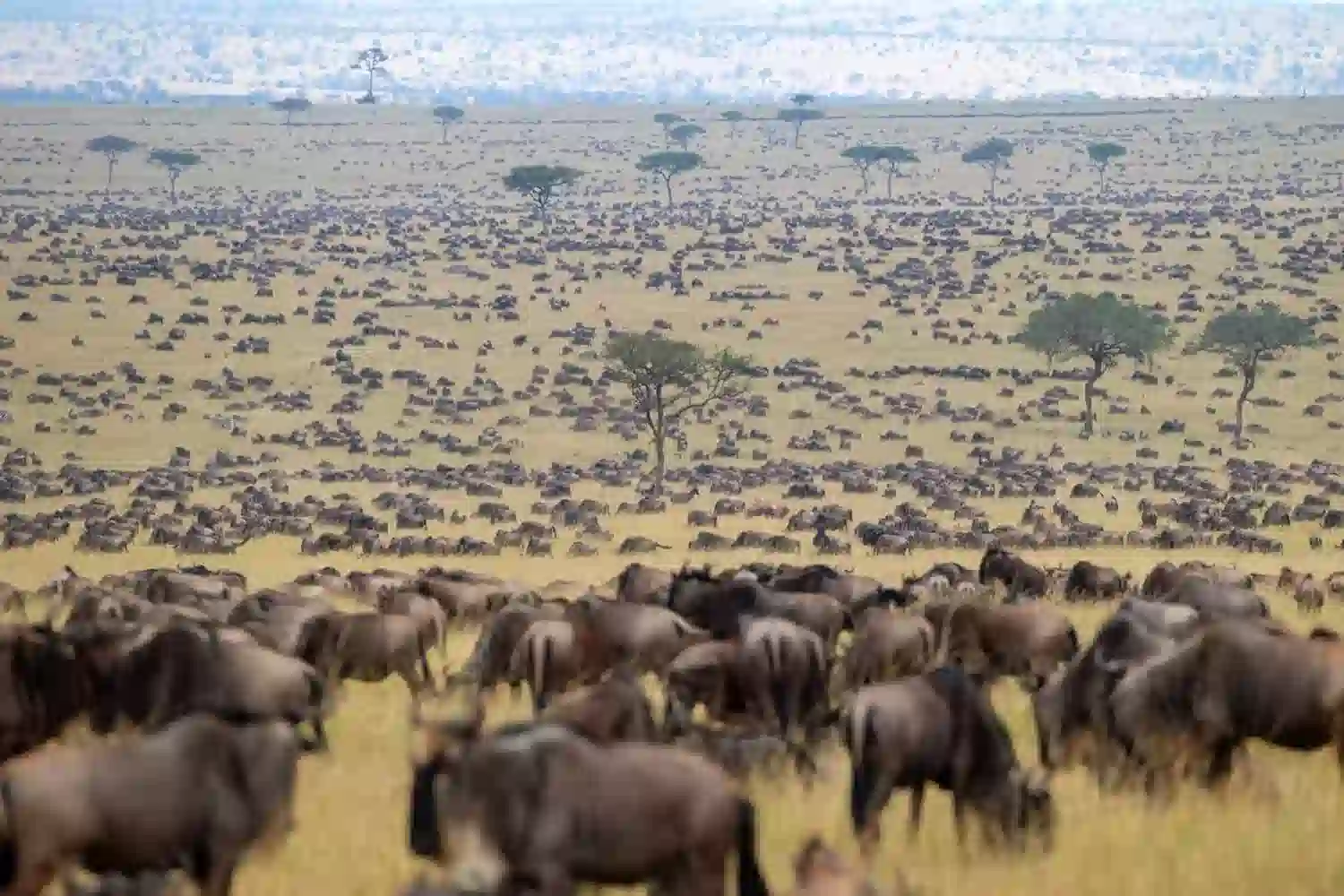
What is the Great Wildebeest Migration?
The Great Wildebeest Migration is the world's largest terrestrial mammal movement, involving over 1.5-2 million wildebeest, 500,000 zebras, 200,000 gazelles, and elands traversing a 1,000-2,000 mile clockwise circuit across Tanzania's Serengeti National Park and Kenya's Maasai Mara National Reserve. Driven by seasonal rains and the pursuit of nutrient-rich grasses, this year-round spectacle embodies the circle of life, with dramatic river crossings, mass calvings, and predator pursuits.
Qualitatively, it's described as "nature's greatest drama," with thundering herds creating dust clouds and echoing calls that evoke raw survival instincts. Quantitatively, the ecosystem spans 30,000 square kilometers, supporting 4 million animals at peaks, with annual mortality of 250,000 wildebeest from predation, drowning, and exhaustion.
Understanding the Wildebeest Migration Calendar
The migration follows rainfall patterns, making it somewhat unpredictable, but historical data provides reliable patterns. This Serengeti monthly migration guide breaks it down month-by-month, highlighting movements in Tanzania and Kenya.
| Month | Location | Key Event |
|---|---|---|
| Jan | Southern Serengeti/Ndutu | Early calving |
| Feb | Southern Serengeti/Ndutu | Peak calving |
| Mar | Southern to Central Serengeti | Late calving, northward start |
| Apr | Central Serengeti | Northward trek, rains |
| May | Western Corridor | Rutting, Grumeti crossings |
| Jun | Western to Northern Serengeti | Grumeti River crossings |
| Jul | Northern Serengeti/Maasai Mara | Mara River crossings begin |
| Aug | Northern Serengeti/Maasai Mara | Peak Mara crossings |
| Sep | Northern Serengeti/Maasai Mara | Continued crossings |
| Oct | Northern to Central Serengeti | Southward return |
| Nov | Central Serengeti | Short rains, dispersal |
| Dec | Central to Southern Serengeti | Return south, pre-calving |
January: Early Calving in Southern Serengeti (Tanzania)
Movements: Herds congregate in Ndutu and southern plains for nutrient-rich grazing. Events: Early births begin, with females dropping calves in synchronized waves. Weather: Warm (75-82°F), occasional thunderstorms. Tips: Focus on predator watches; book mobile camps. Quantitative: Up to 8,000 calves/day later. Qualitative: "A miracle of new life amid lurking dangers."
February: Peak Calving Season (Tanzania)
Movements: Stationary in southern Serengeti. Events: 500,000+ calves born over weeks, attracting 3,000 lions, hyenas. Weather: Dryish, ideal viewing. Tips: Avoid crowds in Ndutu; hot air balloons for overviews. Quantitative: 80% synchronous births. Qualitative: "Predator-prey drama at its finest."
March: Late Calving and Northward Shift (Tanzania)
Movements: Edge north to central areas. Events: Final births; predators feast. Weather: Localized showers. Tips: Shoulder season discounts; prepare for mud. Quantitative: Calves now month-old, survival rates improve. Qualitative: "Transition from birth to journey."
April: Northward Trek Amid Rains (Tanzania)
Movements: Spread through Moru Kopjes to central. Events: Long columns form. Weather: Peak rains (5+ inches). Tips: Waterproof gear; birdwatching bonus (500+ species). Quantitative: Columns up to 40km. Qualitative: "Lush green savannas alive with movement."
May: Rutting and Western Movement (Tanzania)
Movements: Head to Western Corridor. Events: Males rut for mates. Weather: End of rains. Tips: Witness competitions; fewer tourists. Quantitative: 1.5M females targeted. Qualitative: "Intense calls echoing across plains."
June: Grumeti River Crossings (Tanzania)
Movements: Reach Grumeti, some direct north. Events: First major crossings. Weather: Dry start. Tips: Private reserves for exclusivity. Quantitative: Thousands claimed by crocs. Qualitative: "Tension builds at riverbanks."
July: Mara River Crossings Begin (Tanzania & Kenya)
Movements: Northern Serengeti to Maasai Mara. Events: Early Mara plunges. Weather: Mild (75°F). Tips: Book early; combine countries. Quantitative: Herds spread over 14,750 sq km. Qualitative: "Stampedes of survival."
August: Peak Mara River Action (Kenya & Tanzania)
Movements: Back-and-forth crossings. Events: Crocodile ambushes. Weather: Dry. Tips: Conservancies for fewer crowds. Quantitative: High mortality here. Qualitative: "Epic battles in churning waters."
September: Continued Northern Spectacle (Kenya & Tanzania)
Movements: Milling in north. Events: Tail-end crossings. Weather: Sparse showers. Tips: Excellent visibility. Quantitative: 40km columns visible. Qualitative: "Vast herds under endless skies."
October: Southward Return (Tanzania & Kenya)
Movements: Cross back south via Lobo. Events: Early rains trigger. Weather: Thunderstorms. Tips: Transition viewing. Quantitative: Sensing distant rains. Qualitative: "Instinctual pull homeward."
November: Central Dispersal (Tanzania)
Movements: Through central areas. Events: Short rains begin. Weather: Rainy. Tips: Fewer visitors. Quantitative: Herds disperse. Qualitative: "Renewal with green shoots."
December: Return to Southern Plains (Tanzania)
Movements: Settle in south. Events: Pre-calving grazing. Weather: Showers. Tips: Prepare for next cycle. Quantitative: Building for births. Qualitative: "Cycle closes, ready to restart."
Factors Influencing the Wildebeest Migration Calendar
Rainfall drives movements; unseasonal weather can alter paths. Climate change poses risks with erratic patterns. Human threats: Poaching, fencing reduce populations by 20% in decades.
Qualitative Experiences in the Great Wildebeest Migration
Travelers describe "thundering hooves shaking the ground" during crossings or "emotional births" in calving season. Balloon safaris provide "aerial spectacles of endless herds."
Quantitative Data on the Migration
- 1.5-2M wildebeest, 500k zebras migrate annually.
- 500k calves born Feb-Mar, 8k daily.
- 250k wildebeest deaths/year.
- Economic impact: $2B tourism revenue, 100k jobs.
- Predators: 3k lions, 1k leopards in Serengeti.
Choosing Tanzania vs. Kenya for the Migration
Tanzania offers vast Serengeti for calving; Kenya's Maasai Mara excels in crossings. Combine for full experience. Tanzania: Year-round access; Kenya: July-Oct focus.
Safari Planning Tips Using the Serengeti Monthly Migration Guide
- Book 12-18 months ahead for peaks.
- Select mobile camps ($500-$2,000/night) for herd proximity.
- Pack: Binoculars, neutral clothes, rain gear.
- Costs: $5k-$15k/person for 7-10 days.
- Ethical: Choose anti-poaching supporters.
Accommodations for the Wildebeest Migration Calendar
Mobile tents follow herds; luxury lodges like Singita provide comfort. Semi-permanent camps in Ndutu for calving; balloon rides ($500/person) enhance views.
Conservation and Threats to the Migration
Efforts: WWF corridors, community programs. Threats: Habitat loss, poaching. Tourism funds protection, generating $2B annually.
Combining the Migration with Other Adventures
Pair with Ngorongoro Crater, Zanzibar beaches, or Kilimanjaro climbs for diverse trips.
Future of the Great Wildebeest Migration
Monitoring via satellites; expanding reserves to counter climate shifts.
Plan Your Migration Safari with Jaynevy Tours
Jaynevy Tours crafts bespoke experiences aligned with the wildebeest migration calendar. Explore Serengeti safaris, Kilimanjaro, or Zanzibar. Contact us!
Frequently Asked Questions
What is the Great Wildebeest Migration?
The Great Wildebeest Migration is the annual movement of over 1.5 million wildebeest, 500,000 zebras, and other herbivores across Tanzania's Serengeti and Kenya's Maasai Mara in search of fresh grazing and water.
When is the best month for river crossings in the wildebeest migration calendar?
July to September is prime for Mara River crossings in northern Serengeti and Maasai Mara, with dramatic scenes of herds facing crocodiles and predators.
What happens during Serengeti migration by month in February?
February marks peak calving in southern Serengeti, with up to 8,000 calves born daily, attracting intense predator activity.
Is April a good time for the Serengeti monthly migration guide?
April features herds moving north through central Serengeti amid rains, offering lush landscapes and fewer crowds, ideal for budget safaris.
How long is the Great Wildebeest Migration route?
The migration covers a 1,000-2,000 mile clockwise circuit across 30,000 square kilometers of the Serengeti-Mara ecosystem.
What wildlife besides wildebeest is involved in the migration?
Alongside 1.5-2 million wildebeest, 500,000 zebras, 200,000 gazelles, and elands migrate, followed by predators like 3,000 lions and crocodiles.
How does climate change affect the wildebeest migration calendar?
Altered rainfall patterns can disrupt timings, potentially leading to mismatches in grazing and increased mortality rates among herds.
What are the best accommodations for Serengeti migration by month?
Mobile camps that follow the herds, luxury lodges in key areas, and semi-permanent tents offer optimal viewing, with costs ranging $500-$2,000 per night.
Why is conservation important for the Great Wildebeest Migration?
It preserves biodiversity, supports local economies through $2 billion in tourism, and combats threats like poaching and habitat loss.
How to plan a safari using the Serengeti monthly migration guide?
Book 12-18 months ahead, choose seasons based on interests (calving or crossings), pack essentials, and select ethical operators like Jaynevy Tours.