
What You Need to Know: The Ngorongoro Crater is a collapsed volcano about 1,970 ft (600 m) deep and 12 miles (19 km) across, with one of Africa's highest densities of wildlife on its floor, including lions, buffalo, elephants, hippos and black rhino. It is good in every month. Non-residents pay US$70.80 per 24 hours to enter the Conservation Area, plus US$295 per vehicle to drive down into the crater. You can visit as a day trip from Arusha or as part of a safari.
What Makes the Ngorongoro Crater Different?
The crater holds a large population of wildlife in a small, enclosed area, so you can see a lot in one game drive.
The crater floor has grassland, a soda lake, swamps and a patch of forest. Most of the animals live there all year, so the game viewing is good in every season. The Conservation Area around the crater is not a national park: Maasai communities live and graze their cattle there, which is why you pass herders and bomas on the way in.
| Feature | What it means for your visit |
|---|---|
| Enclosed crater floor | Wildlife is concentrated and easy to find |
| Resident animals | Good game viewing in every month |
| High rim | Cool to cold mornings and evenings. Bring a warm layer |
| Conservation Area, not a park | Maasai villages and cattle on the highlands around the crater |
It is the best place on a short safari to see a wide range of animals.
What Wildlife Will You See in the Crater?
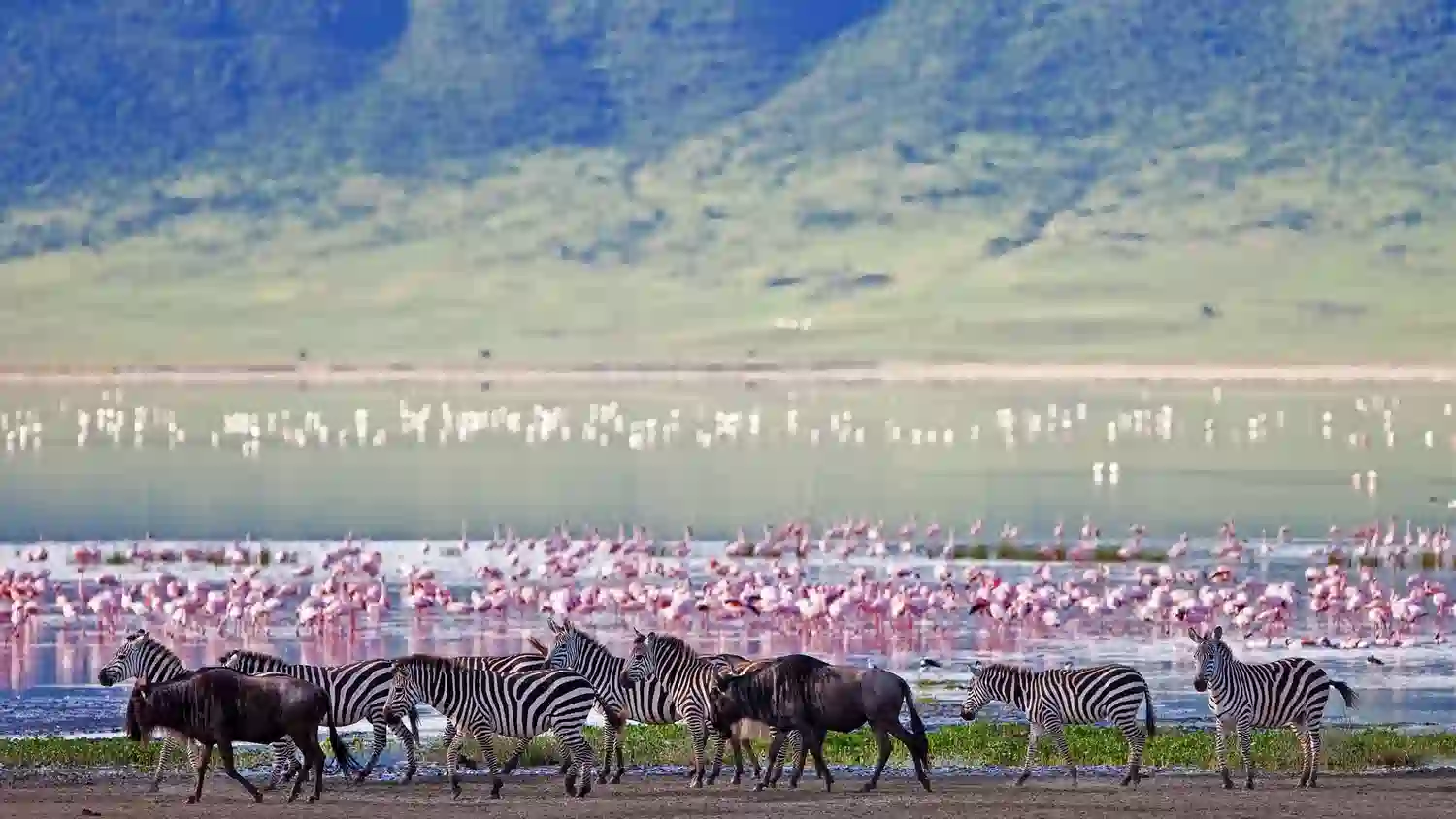
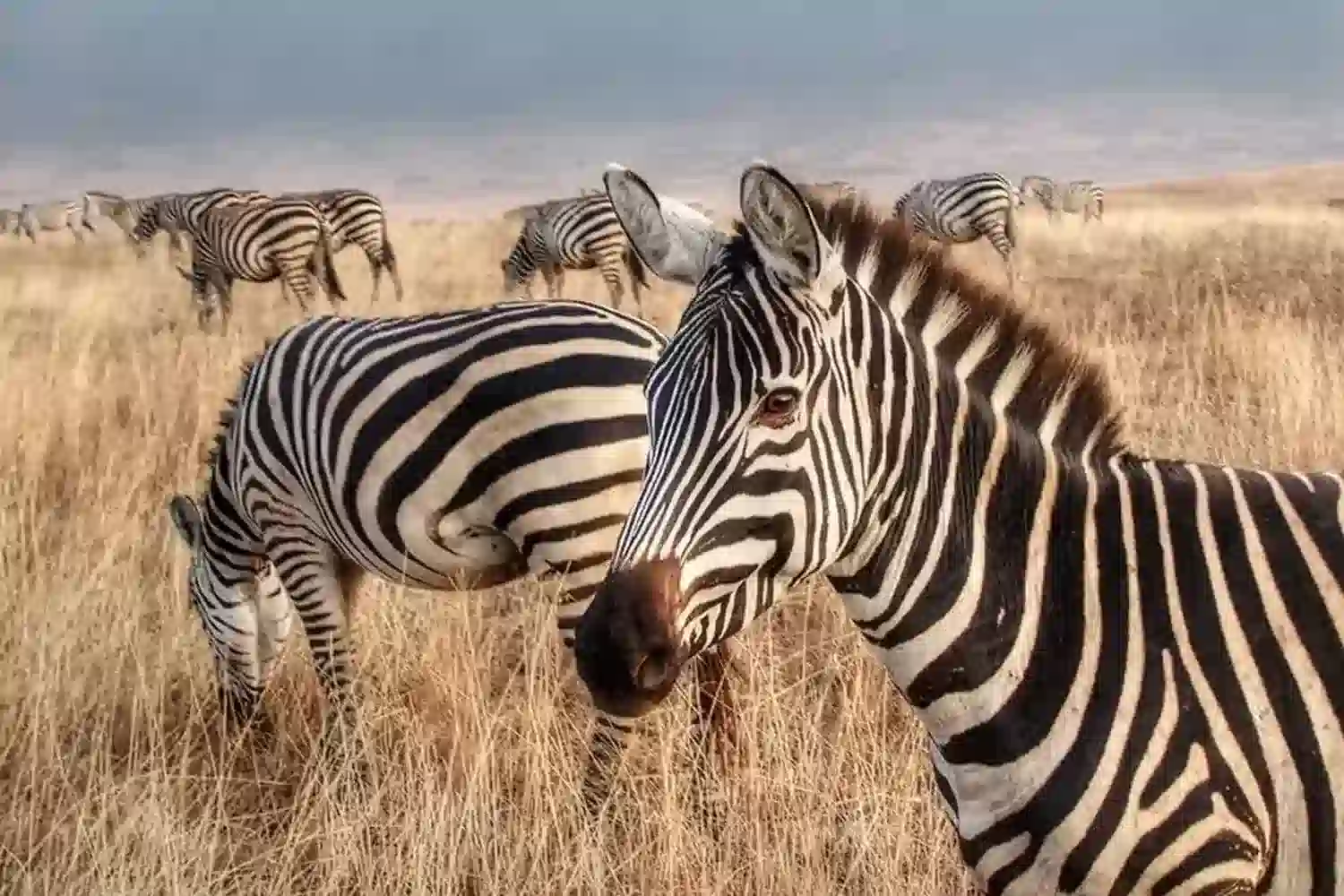
Lions, buffalo, elephants, hippos, zebras, wildebeest, hyenas and flamingos on the lake are common. Black rhino are seen on some trips.
Bull elephants often feed in the forest near the crater wall. Hippos stay in the pools, and flamingos gather on the soda lake when the water level suits them. You will not see giraffes on the crater floor, because they cannot manage the steep descent.
- Common: lions, buffalo, elephants, hippos, zebras, wildebeest, hyenas, jackals
- Seasonal: flamingos on the lake
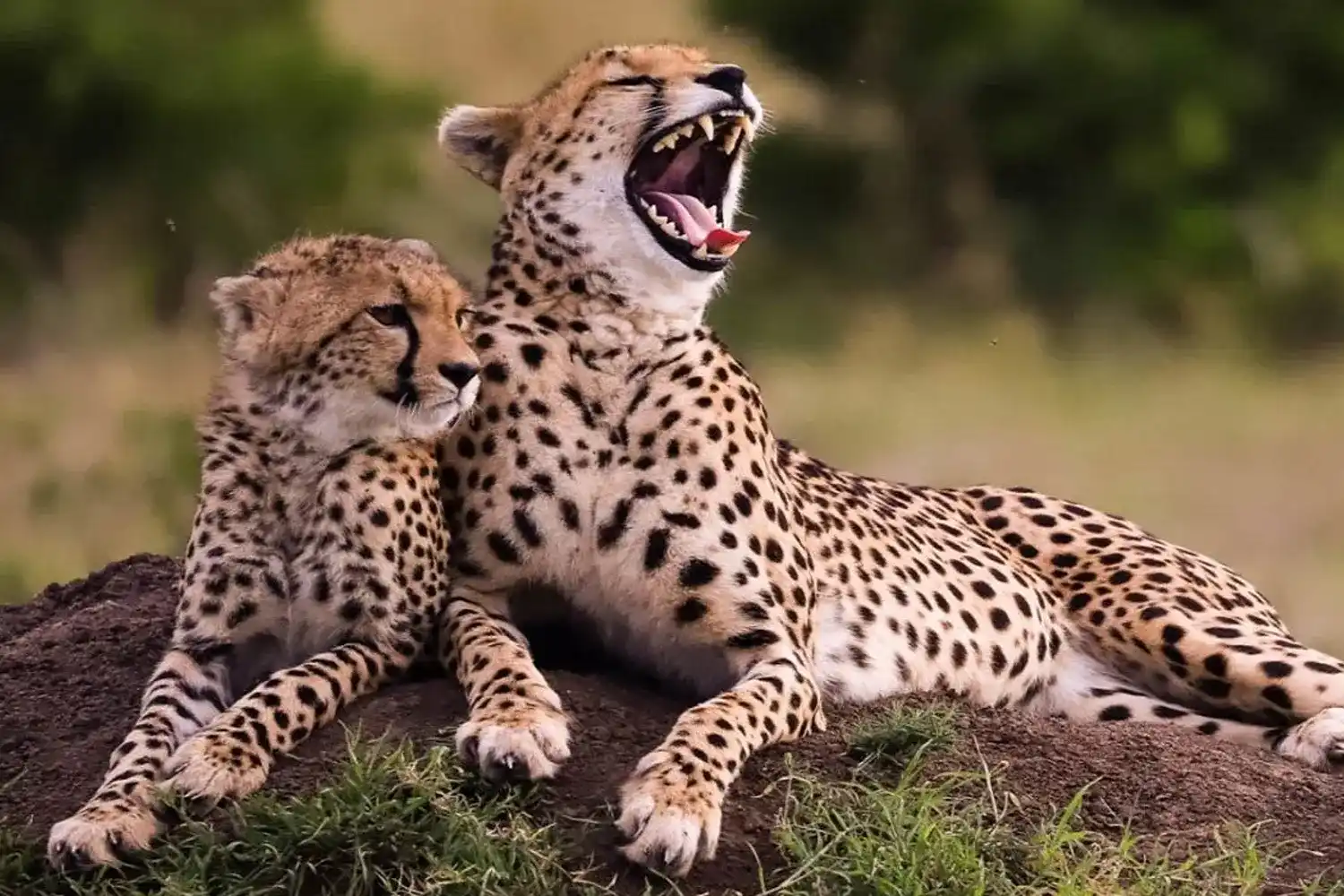
- With luck: black rhino, cheetah, leopard
- Not on the crater floor: giraffes
Black rhino are the reason many guests want the crater. Ask your guide early, as they know the areas to check.
How a Crater Game Drive Works
You drive down the crater wall early in the morning, spend the main part of the day on the crater floor with a picnic lunch, and drive back up in the afternoon.
Entry is controlled by the Conservation Area, and a crater service fee is charged for each vehicle. Both are included in our prices. Starting early gives you the best light and fewer vehicles at the sightings.
Early morning
Descent from the rim to the crater floor.
Morning and midday
Game drive across the grassland, the lake shore and the swamps, with a picnic lunch at a designated site.
Afternoon
Ascent back to the rim, then on to your lodge, Arusha or the Serengeti.
On our safaris the crater is usually the morning after a night on the rim or in Karatu, so you can go down early.
Where to Stay Near Ngorongoro
Stay on the crater rim for the earliest start, or in Karatu, less than an hour away, for more choice and lower prices.
Rim lodges are inside the Conservation Area and have views over the crater. Karatu lodges sit among farms and coffee estates in the highlands.
| Location | Examples we book |
|---|---|
| Crater rim (inside) | Ngorongoro Safari Lodge, Ang'ata Ngorongoro, Ngorongoro Serena Lodge, Lion's Paw |
| Highlands near the crater | Ngorongoro Tortilis Camp, Embalakai Ngorongoro Camp, Ngorongoro Oldeani |
| Karatu | Karatu Tented Lodge, Pamoja Farm Villas, Gibbs' Farm, Crater Rim Inn |
Our full lodge list is on the accommodation page.
We also book Meliá Ngorongoro at luxury level, Ngorongoro Wild Camp and Simba Campsite on a budget, and in Karatu, Africa Safari Karatu, Farm of Dreams Lodge, Eileen's Tree Inn, Marera Valley Lodge, Maasailand Coffee Lodge and Acacia Farm Lodge. These are lodges we book, or similar: we aren't limited to them and can arrange other lodges to suit your priorities.
Other Places in the Conservation Area
Olduvai Gorge, the Empakaai crater and Lake Eyasi can be added to a longer safari.
Olduvai Gorge is the archaeological site on the road to the Serengeti, where early human remains were found. Empakaai is a smaller crater with a lake, reached on foot. Lake Eyasi, south of the highlands, is home to the Hadzabe.
- Olduvai Gorge: a short stop on the way to the Serengeti
- Empakaai Crater: a walk to the crater lake
- Lake Eyasi: cultural visits, on our 8-day safari
Tell us if you want any of these and we will build them into your route.
Ngorongoro Safaris and Prices
A crater day trip from Arusha costs from US$533, and 2-day safaris with the crater cost from US$890 per person.
Prices are per person for 2 travelers at mid-range level, in a private Land Cruiser, including the crater fee.
Ngorongoro Crater Day Trip
One full day on the crater floor from Arusha
2-Day Tarangire and Ngorongoro
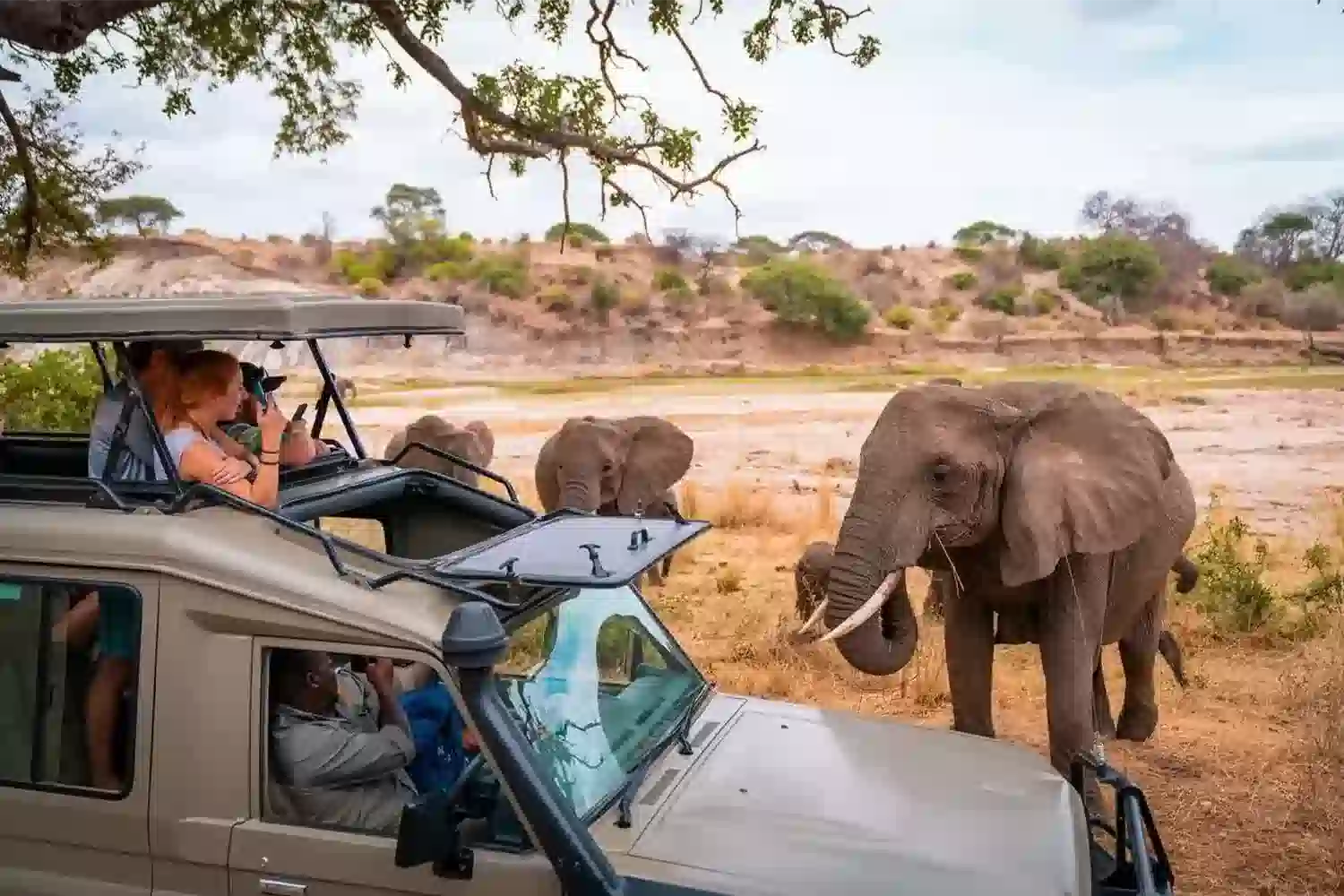
Tarangire game drive, night in Karatu, crater morning
2-Day Lake Manyara and Ngorongoro
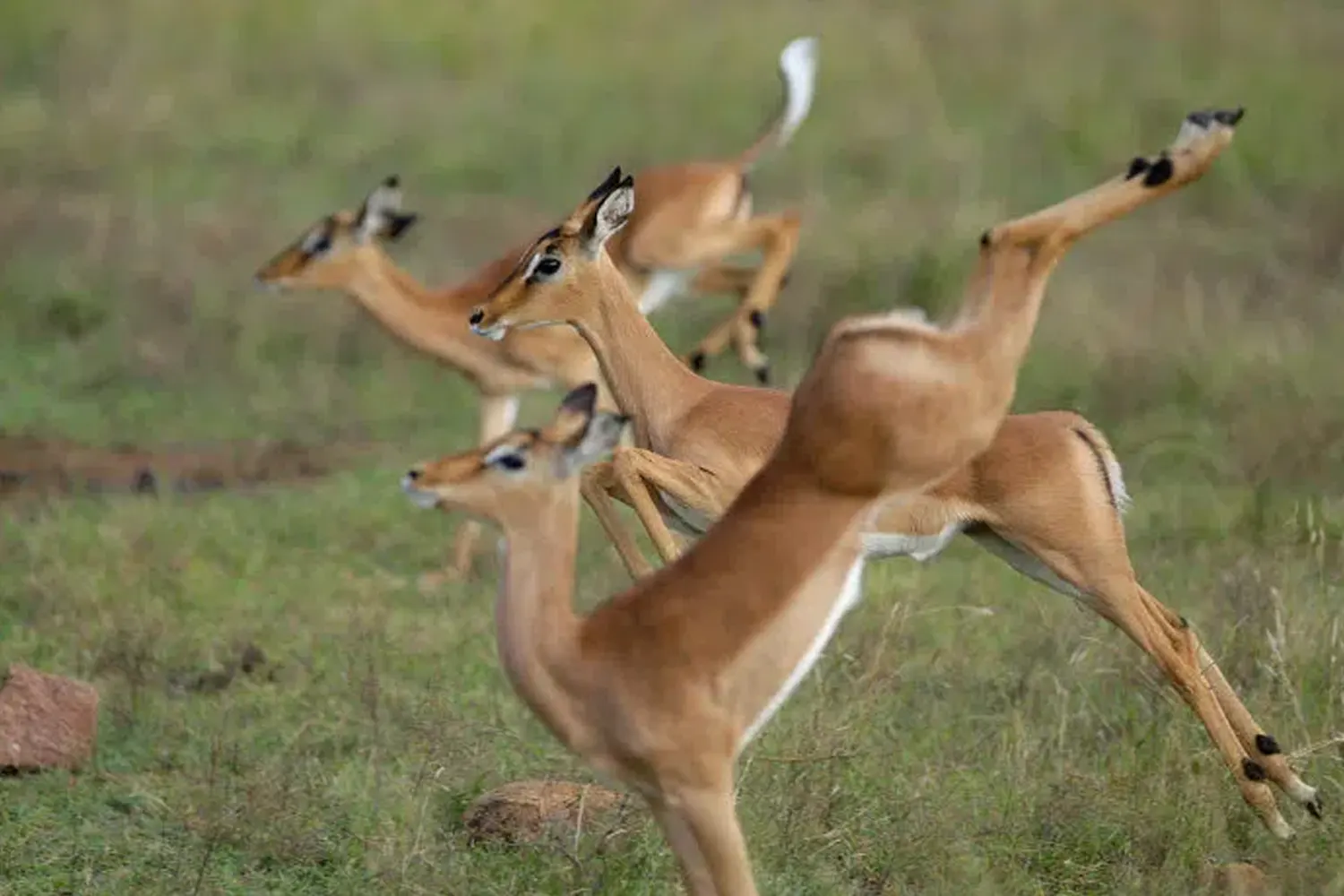
Lake Manyara, night in Karatu, crater morning
3-Day Tarangire, Manyara and Ngorongoro
Three parks close to Arusha, no long drives
4-Day Serengeti and Ngorongoro
Two Serengeti nights and a crater morning
4-Day Tarangire, Serengeti and Ngorongoro
Three parks in four days
Prices are per person, 2 people sharing.
Most of our road safaris of three days or more include the crater.
When Is the Best Time to Visit Ngorongoro?
Any month. The crater's wildlife stays there all year. June to October is the driest time, with the easiest roads.
In April and May rain can make the crater roads muddy, but there are fewer vehicles. Mornings on the rim are cold all year.
| Months | Weather | What to expect |
|---|---|---|
| June – October | Dry | Best wildlife viewing, easier roads, busiest season |
| January – February | Mostly dry, warm | Serengeti calving season |
| November and March | Changeable, some rain | Fewer crowds |
| April – May | Heavier rains | Fewest visitors; some roads muddy |
The crater fits into a safari in any season.
Ngorongoro Fees in 2026
The Ngorongoro Conservation Area is run by its own authority, not by Tanzania National Parks, and it charges two fees: an entry fee of US$70.80 per non-resident adult per 24 hours, and a crater service fee of US$295 per vehicle for each descent into the crater. Both are included in our prices.
Because the crater fee is per vehicle, it weighs most on small groups: two travelers share it two ways, six travelers six ways. That is the main reason a crater safari for four to six people costs noticeably less per person.
Tips for Your Crater Day
- Bring a warm layer: the rim is at about 7,500 ft (2,300 m) and early mornings are cold all year
- Go down early: the first hours give the best light and the fewest vehicles at sightings
- Ask your guide about black rhino at the start of the day; they know which areas to check
- Toilets are at the picnic sites on the crater floor; eat inside the vehicle if kites are about, as they snatch food
Our driver-guides graduated from the College of African Wildlife Management at Mweka and have five years of safari guiding. They speak English, and we can arrange French, Spanish, German or Chinese-speaking guides. Your Land Cruiser has a pop-up roof for standing views across the crater floor.
Ngorongoro Questions Our Guests Ask
Is the Ngorongoro Crater worth visiting?
Yes. For many guests it is the highlight of the safari, especially for black rhino and lions.
Can you do Ngorongoro as a day trip?
Yes, from Arusha or Karatu. From Arusha it is a long day of about 118 miles (190 km) each way.
Are there giraffes in the crater?
No. Giraffes live in the highlands around it but not on the crater floor.
How cold is it at Ngorongoro?
The rim is high, and early mornings and evenings are cold. Bring a fleece or a warm jacket.
How much is the Ngorongoro Crater fee?
US$70.80 per non-resident adult per 24 hours to enter the Conservation Area, plus US$295 per vehicle for the crater descent, in 2026.
How long do you spend in the crater?
Most of a day: down in the early morning, a picnic lunch on the floor, and back up in the afternoon. Time on the crater floor is limited by the authority.