
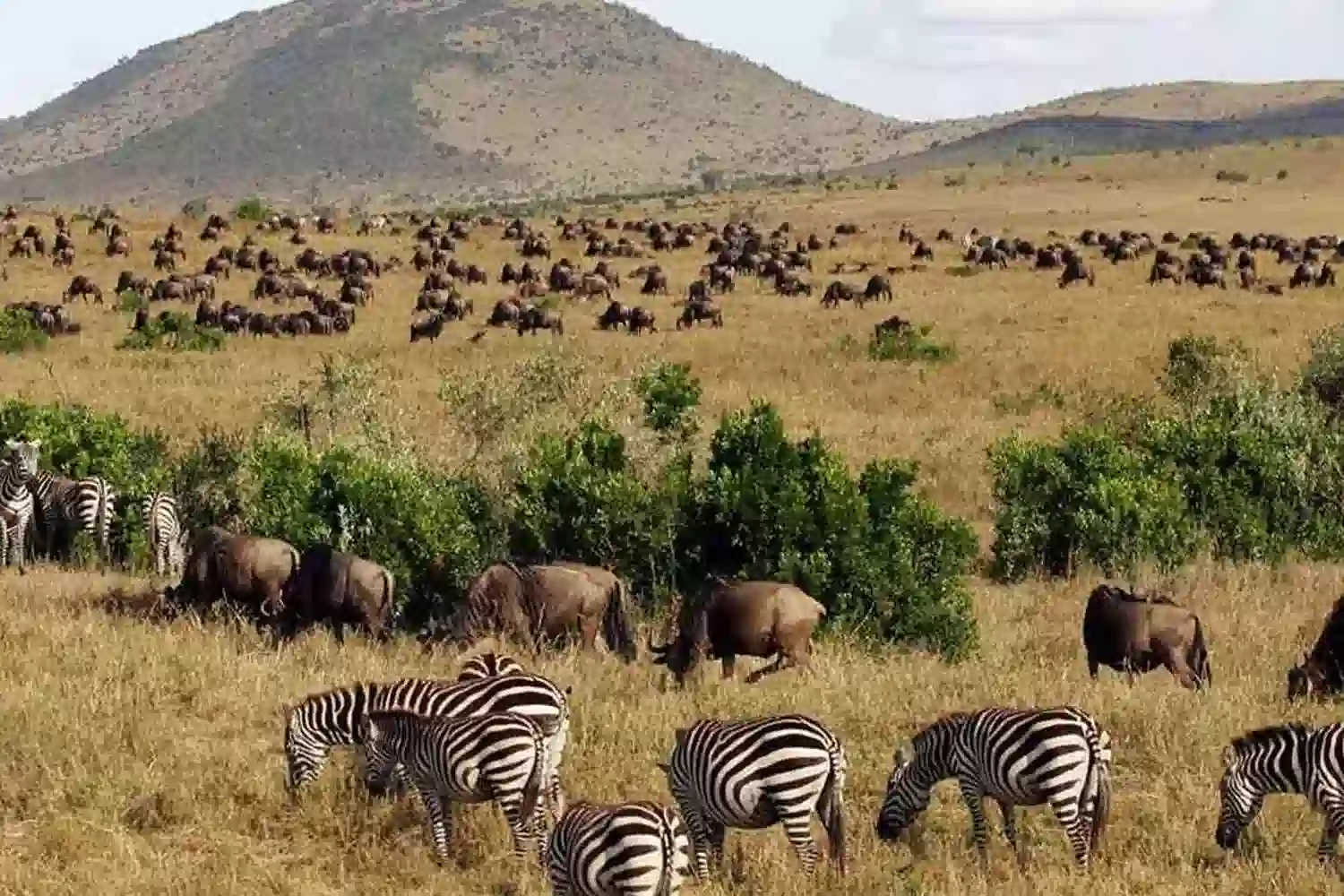
Quick Answer: Serengeti or Maasai Mara for the Great Migration?
Serengeti is the stronger all-round choice for understanding the migration cycle because the herds spend much of the annual movement within the wider Tanzanian Serengeti-Ngorongoro ecosystem. The southern plains are associated with the calving period, while the western and northern sectors become important as herds move with changing rains and grazing.
Maasai Mara is the stronger choice for a Kenya-focused safari during the northern migration phase, especially when travelers hope to witness Mara River activity. Kenya’s official tourism authority describes July to October as the main period associated with the herds entering the Mara ecosystem, but crossing timing varies from year to year and from day to day.
Serengeti vs Maasai Mara at a Glance
| Comparison Point | Serengeti | Maasai Mara |
|---|---|---|
| Country | Tanzania | Kenya |
| Role in migration | Large part of the annual circular migration cycle | Northern extension of the ecosystem used by migrating herds seasonally |
| Best-known migration phases | Southern calving, western movement, northern Serengeti and Mara River activity | Northern migration phase and Mara River activity |
| Typical seasonal emphasis | Different regions matter at different times of year | July-October is the broad official tourism window for migration activity in the Mara |
| Landscape scale | Much larger protected landscape with several distinct safari regions | More compact reserve within the same transboundary ecosystem |
| River crossing guarantee? | No | No |
| Best fit | Travelers wanting multiple migration habitats or a Tanzania safari circuit | Travelers focusing on Kenya and the northern migration phase |
1. How Are the Serengeti and Maasai Mara Connected?
UNESCO describes Serengeti National Park as the heart of a larger ecosystem that includes the Maasai Mara National Reserve to the north in Kenya. The annual migration is therefore a transboundary ecological cycle rather than two separate wildlife events.
The herd movement follows changing pasture and water conditions across Tanzania and Kenya. That is why asking “which park has the migration?” is less useful than asking where the herds are likely to be during your travel month.
2. How Big Is the Great Migration?
UNESCO describes the Serengeti migration as involving more than one million wildebeest plus hundreds of thousands of zebras, gazelles and other ungulates in a roughly 1,000-kilometre annual circular trek across the wider ecosystem.
Exact herd totals vary by source and survey year, so this page avoids combining incompatible population estimates or presenting a single marketing number as permanently fixed.
3. When Is the Southern Serengeti Calving Period?
TANAPA’s 2026 tourism material identifies January to March as the broad calving period on the southern Serengeti short-grass plains, including the Ndutu-area ecosystem. Fresh rains and nutrient-rich grasses make this southern zone especially important during this phase.
Calving is a seasonal ecological pattern, not a guarantee that large herds will be concentrated at one exact lodge, road or boundary on a particular date.
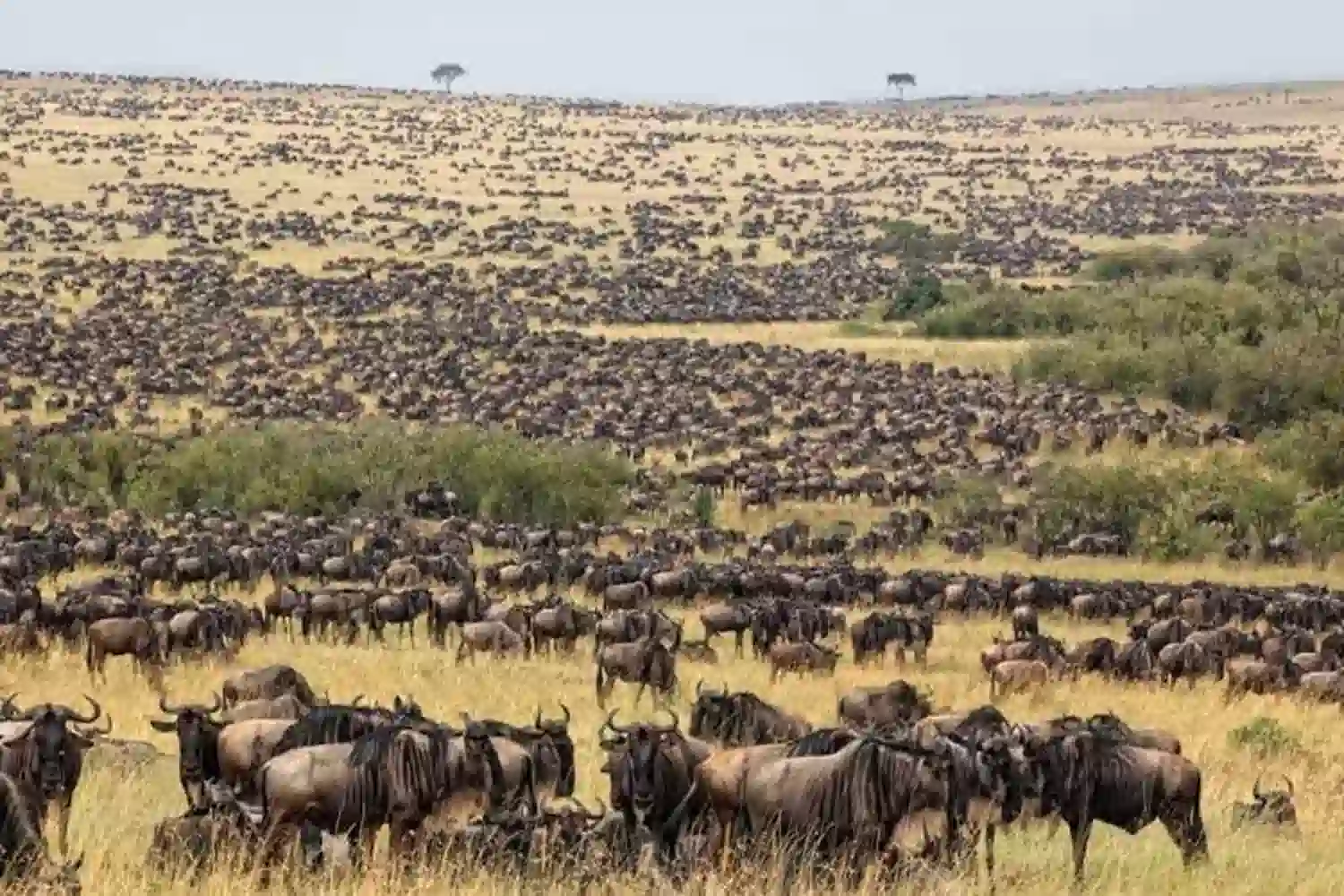
4. When Do the Herds Move Through Western and Northern Serengeti?
As seasonal conditions change, the migration moves away from the southern short-grass plains and through other parts of the ecosystem. Western Serengeti and the northern Serengeti become important at later stages of the cycle.
Published migration calendars are useful planning guides, but rainfall can shift the pace and distribution of the herds. A safari itinerary should therefore be built around a seasonal region rather than a promise that the animals will be at one fixed point.
5. When Is the Migration in the Maasai Mara?
Kenya’s official tourism authority describes July to October as the broad period when large herds move into the Maasai Mara ecosystem and Mara River activity becomes a major attraction.
This does not mean every herd is in Kenya throughout those months. Some animals can remain in northern Serengeti, move back and forth across the river system, or respond differently to localized rainfall.
6. Where Can You See Mara River Crossings?
The Mara River runs through the wider Serengeti-Mara ecosystem, so river-crossing activity is associated with both northern Serengeti in Tanzania and the Maasai Mara in Kenya. A traveler does not have to be in Kenya simply because the goal is a Mara River crossing.
Crossings are spontaneous wildlife events. Herds may gather near a riverbank and move away, cross at an unexpected point, or cross outside the hours a vehicle is present. No responsible safari operator can guarantee a crossing.

7. Which Destination Has the Bigger Landscape?
Serengeti National Park covers roughly 14,750-15,000 km², depending on how the boundary figure is rounded in official references. Kenya’s official tourism material lists the Maasai Mara National Reserve at about 1,510 km².
The size difference affects safari style. Serengeti itineraries often involve choosing among southern, central, western and northern regions, while the Maasai Mara is a more compact reserve within the same wider migration system.
8. Which Is Better for Wildlife Beyond the Migration?
Both destinations support major East African predators and plains wildlife throughout the year. UNESCO highlights the Serengeti for its exceptional predator-prey interactions and high biodiversity, while Kenya’s official tourism authority promotes the Maasai Mara for year-round wildlife viewing in addition to the seasonal migration.
Wildlife sightings are never guaranteed, and fixed claims such as “25% more predators” or a guaranteed number of lion, leopard or cheetah sightings should not be used without a defined survey and date.
9. Which Is Better for Photography?
Serengeti offers enormous landscape variety: short-grass plains, kopjes, river systems, woodland and different migration regions. Maasai Mara offers a more compact northern migration setting with open grasslands and well-known river viewpoints.
Photography quality depends more on light, animal behavior, vehicle position, weather and guide decisions than on unsupported claims about what percentage of award-winning images comes from one destination.
10. Which Is More Crowded During Migration Season?
Both destinations can become busy near famous sightings and river-access points. The Maasai Mara’s smaller reserve area can make vehicle concentrations more noticeable around major events, while Serengeti’s larger scale does not guarantee that popular northern or central locations will be quiet.
Avoid using unverified annual visitor totals as a crowd guarantee. Your actual experience depends on travel dates, accommodation location, road access, herd position and how many vehicles converge on the same sighting.
11. How Do Safari Costs Compare?
There is no reliable universal seven-day price for Serengeti versus Maasai Mara. Safari cost depends on park or reserve charges, accommodation category, season, private versus shared vehicle arrangements, internal flights or road transfers, number of travelers and whether the itinerary combines other destinations.
For a useful comparison, request quotations for the same month, number of nights, accommodation standard and vehicle style. Jaynevy Tours should confirm current inclusions and final pricing in writing rather than relying on generic figures copied from a destination article.
12. How Do Logistics Differ?
Serengeti safaris are commonly connected with Tanzania’s Northern Circuit, including routes from Arusha and combinations with Ngorongoro, Tarangire or Lake Manyara. Depending on the itinerary, access can be by road, scheduled air service or charter flight.
Maasai Mara safaris are commonly approached from Nairobi by road or scheduled flight. The right option depends on available time, budget and the location of the selected camp.
13. Can You Combine Serengeti and Maasai Mara in One Safari?
Yes. Combining both countries can make sense for travelers who want to experience different sections of the wider ecosystem, but the itinerary must account for border procedures, road connections or flights, park/reserve rules and the location of the herds.
Do not assume that crossing directly between the two protected areas is always the simplest transfer. The operational route depends on the itinerary and current border and transport arrangements.
14. Which Is Better by Travel Month?
| Broad Period | Typical Migration Focus | Planning Note |
|---|---|---|
| January-March | Southern Serengeti / Ndutu-area short-grass plains | TANAPA identifies this as the broad calving period |
| April-June | Movement away from the south through central/western parts of the ecosystem | Rainfall influences timing and route |
| July-October | Northern Serengeti and Maasai Mara become major migration areas | Mara River activity is possible but never guaranteed |
| November-December | Herds typically trend back toward eastern/southern parts of the ecosystem as conditions change | Exact distribution depends on rain and grazing |
15. Serengeti vs Maasai Mara: Final Verdict for 2026/2027
Serengeti is the better fit if you want the widest range of Great Migration experiences across different months and landscapes. It forms the core of the larger ecosystem and supports migration viewing in different regions as the year progresses.
Maasai Mara is the better fit if you are already planning a Kenya safari and your dates fall within the broad northern migration period. Its more compact reserve can provide excellent wildlife viewing, especially when the herds are in the Mara ecosystem.
If your main goal is a specific migration phase, choose the destination based on your month and the expected regional movement, not a permanent “Serengeti is better” or “Mara is better” ranking.
Frequently Asked Questions About Serengeti vs Maasai Mara
Which is better for the Great Migration, Serengeti or Maasai Mara?
Serengeti is stronger for seeing different phases of the annual migration cycle, while Maasai Mara is especially relevant during the northern migration period. The better choice depends primarily on your travel month.
When is the best time to see the migration in Serengeti?
Different parts of Serengeti are important at different times. TANAPA identifies January-March as the broad southern calving period, while western and northern areas become more important later in the annual cycle.
When is the best time to see the migration in Maasai Mara?
Kenya’s official tourism authority broadly associates July-October with the main migration period in the Maasai Mara, although herd arrival and departure vary with rainfall.
Can a safari guarantee a Mara River crossing?
No. River crossings are spontaneous wildlife events and cannot be scheduled or guaranteed by an operator, lodge or guide.
Is Serengeti or Maasai Mara cheaper?
Neither is always cheaper. Compare the same travel dates, number of nights, accommodation category, vehicle type, transfers and included park or reserve charges.
Which destination is better for photography?
Serengeti offers broader landscape variety across several migration regions, while Maasai Mara provides a more compact northern ecosystem. Actual photographic opportunities depend on wildlife behavior, light, weather and vehicle position.
Which is more crowded, Serengeti or Maasai Mara?
Both can be busy around major sightings. Maasai Mara is more compact, while Serengeti is much larger, but neither destination can guarantee low vehicle numbers at a specific migration event.
Can I combine Serengeti and Maasai Mara in one safari?
Yes. A combined Tanzania-Kenya itinerary is possible, but the route should be planned around current border, flight, road and protected-area arrangements.
Related Jaynevy Tours Safari Resources
Read more about Serengeti National Park, explore Northern Tanzania safaris, browse Tanzania safari packages, compare Kenya safari packages, or plan a cross-border trip with East Africa safari packages. For broader planning, see our travel articles and guides and Tanzania accommodation information.