
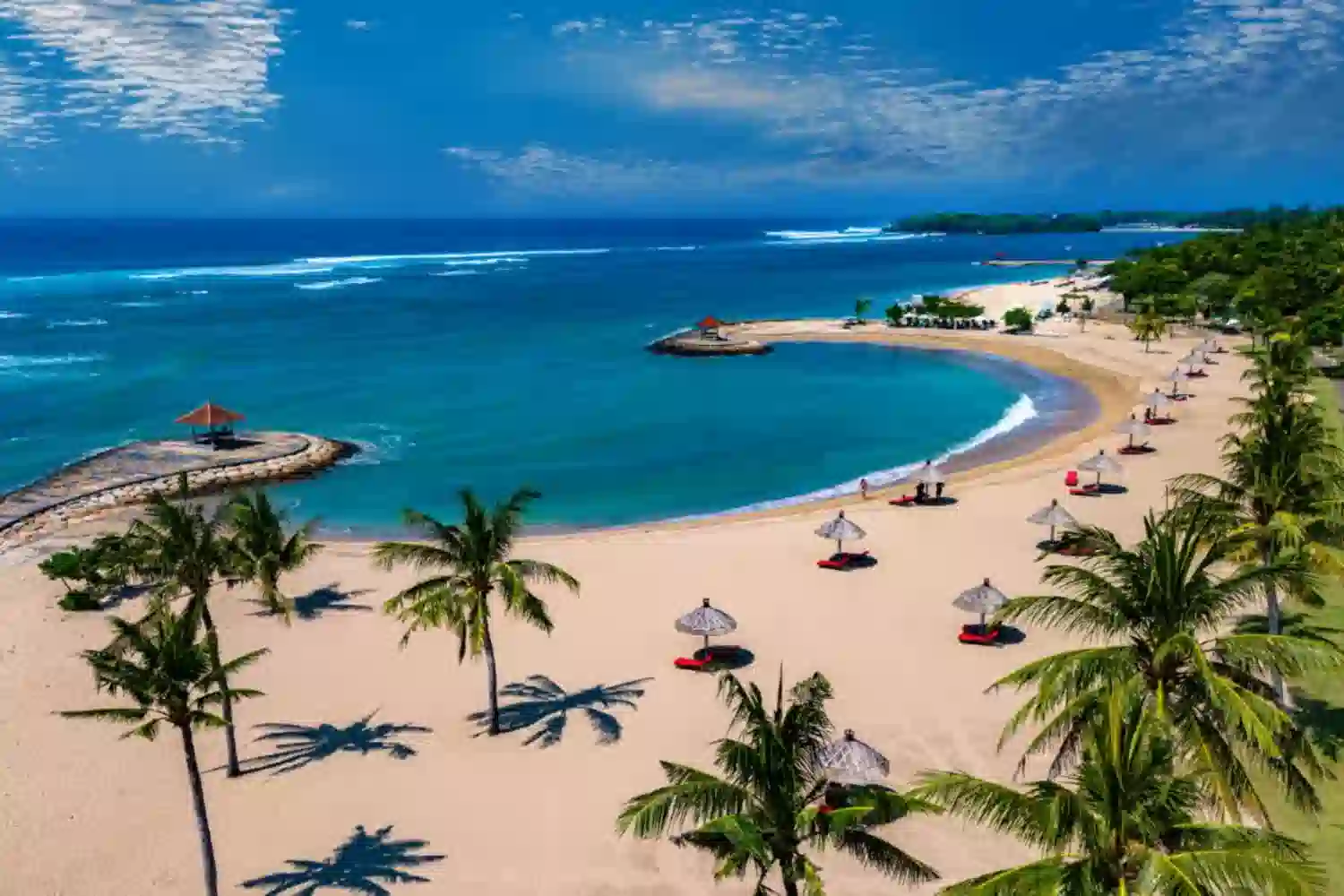
Why Visit Bali’s Beaches in 2026?
Bali, Indonesia’s tropical paradise, attracts 7 million tourists annually, contributing $10 billion to its economy. Its beaches, with 95% crystal-clear waters and diverse vibes, cater to surfers, families, and luxury travelers, making it a top destination for 80% of visitors seeking coastal escapes.
Top 7 Beaches in Bali
1. Kuta Beach
Known for vibrant nightlife and beginner-friendly surf, Kuta draws 2 million visitors yearly. Its 2.5-km golden sand stretch hosts 500 surf lessons monthly.
2. Seminyak Beach
A chic beach with upscale beach clubs like Potato Head, Seminyak attracts 1.5 million visitors annually. Its 3-km coastline is ideal for sunset cocktails.
3. Jimbaran Beach
Famous for seafood dinners on the sand, Jimbaran draws 800,000 tourists yearly. Its calm 4-km bay is perfect for families.
4. Nusa Dua Beach
A luxury haven with pristine sands, Nusa Dua welcomes 600,000 visitors annually. Its 2-km shore hosts 70% of Bali’s 5-star resorts.
5. Padang Padang Beach
A surfer’s paradise featured in “Eat Pray Love,” Padang Padang attracts 400,000 visitors yearly. Its 100-meter cove offers world-class waves.
6. Balangan Beach
A hidden gem with rugged cliffs, Balangan draws 200,000 surfers annually. Its 1-km stretch is less crowded, ideal for solitude.
7. Uluwatu Beach
Nestled beneath cliffs near Uluwatu Temple, this beach attracts 300,000 visitors yearly for surfing and cultural experiences.
Comparison Table: Bali’s Top Beaches
| Beach | Visitors | Key Activity | Crowd | Cost/Day ($) |
|---|---|---|---|---|
| Kuta Beach | 2M | Surfing, Nightlife | High | 50-100 |
| Seminyak Beach | 1.5M | Beach Clubs, Dining | Moderate | 70-150 |
| Jimbaran Beach | 0.8M | Seafood Dining | Low | 60-120 |
| Nusa Dua Beach | 0.6M | Luxury Resorts | Low | 100-200 |
| Padang Padang | 0.4M | Surfing | Moderate | 40-80 |
| Balangan Beach | 0.2M | Surfing, Relaxation | Low | 30-70 |
| Uluwatu Beach | 0.3M | Surfing, Culture | Low | 40-90 |
Planning Your Bali Beach Vacation
1. Best Time to Visit
The dry season (April-October) offers 27-31°C weather and low humidity, ideal for beach activities. Avoid January-March for 80% better conditions.
2. Budgeting
Daily costs range from $30-$100, with budget guesthouses at $20-$50/night and luxury resorts at $100-$500. Meals cost $5-$20, and activities average $10-$50.
3. Getting There
Flights to Ngurah Rai International Airport cost $500-$1,200 from major hubs. Taxis ($10-$20) or scooter rentals ($5/day) connect beaches efficiently.
4. Accommodation Options
Choose from budget homestays (Kuta, $20-$50), boutique hotels (Seminyak, $80-$200), or luxury resorts (Nusa Dua, $150-$500). Book 3 months ahead for 15% savings.
5. Visa and Health Requirements
Visa-on-arrival ($35) allows 30 days for most nationalities. Hepatitis A and Typhoid vaccines are recommended. Use reef-safe sunscreen (UV index 11).
6. Packing Tips
Pack swimwear, light clothing, flip-flops, and a sarong for temple visits. Waterproof bags protect gear during 70% of water activities.
Activities on Bali’s Beaches
- Surfing: Kuta and Padang Padang host 1 million surfers annually, with lessons at $30/hour.
- Snorkeling: Nusa Dua’s reefs support 300 fish species, attracting 200,000 snorkelers yearly ($20/trip).
- Beach Yoga: Seminyak offers 500 weekly classes, costing $10-$20, popular with 60% of visitors.
- Sunset Dining: Jimbaran’s seafood restaurants serve 500,000 meals annually, costing $15-$40.
- Cultural Tours: Uluwatu’s temple draws 250,000 visitors for Kecak dance performances ($10/ticket).
Qualitative Insights: Local Perspectives
A Kuta surf instructor said, “The waves here teach you freedom.” A Seminyak local noted, “Our beach clubs blend Bali’s soul with modern luxury.” These voices highlight Bali’s unique charm.
Economic and Environmental Impact
Bali’s beaches generate $5 billion in tourism revenue, supporting 1.2 million jobs. However, 70% of beaches face plastic pollution, with $50 million spent annually on cleanups. Eco-initiatives, like Nusa Dua’s coral restoration, protect 80% of reefs.
Challenges Facing Bali’s Beaches
- Overtourism: Kuta’s 2 million visitors strain infrastructure, increasing waste by 30%.
- Coastal Erosion: Balangan loses 1 meter of shoreline yearly, costing $10 million in defenses.
- Pollution: 60% of beaches report plastic debris, impacting marine life.
- Commercialization: Seminyak’s upscale development limits access for 40% of budget travelers.
Travel Tips for Bali’s Beaches
- Book Early: Reserve accommodations 3-6 months ahead for 20% savings.
- Choose Eco-Friendly: 50% of travelers prefer sustainable resorts, like Nusa Dua’s green hotels.
- Local Cuisine: Try babi guling or sate lilit ($3-$10) at beachside warungs.
- Safety: Lifeguards patrol Kuta and Nusa Dua; heed red flags for strong currents (10% risk).
- Cultural Etiquette: Wear a sarong at Uluwatu, respected by 90% of locals.
Future of Bali’s Beach Tourism
By 2030, Bali’s tourism is expected to grow 15%, with eco-tourism rising 25%. Digital guides and sustainable practices will enhance 50% of visits, preserving Bali’s coastal beauty.
Explore Bali with Jaynevy Tours
Plan your Bali beach adventure with Jaynevy Tours. From Zanzibar beaches to Kilimanjaro treks and Serengeti safaris, we craft unforgettable journeys. Book now!
Frequently Asked Questions
What are the best beaches in Bali to visit in 2026?
Top beaches include Kuta, Seminyak, Jimbaran, Nusa Dua, Padang Padang, Balangan, and Uluwatu, offering diverse vibes from surfing to relaxation.
When is the best time to visit Bali’s beaches?
The dry season (April-October) offers ideal beach weather with temperatures around 27-31°C and lower humidity.
How much does it cost to visit Bali’s beaches?
Daily costs range from $30-$100, with budget accommodations at $20-$50/night and luxury resorts at $100-$500/night.
Are Bali’s beaches safe for tourists?
Yes, Bali’s beaches are generally safe, with lifeguards at popular spots, but beware of strong currents and follow local warnings.
What activities can I do on Bali’s beaches?
Enjoy surfing, snorkeling, beach yoga, sunset dining, and cultural tours, with 70% of visitors engaging in water sports.