
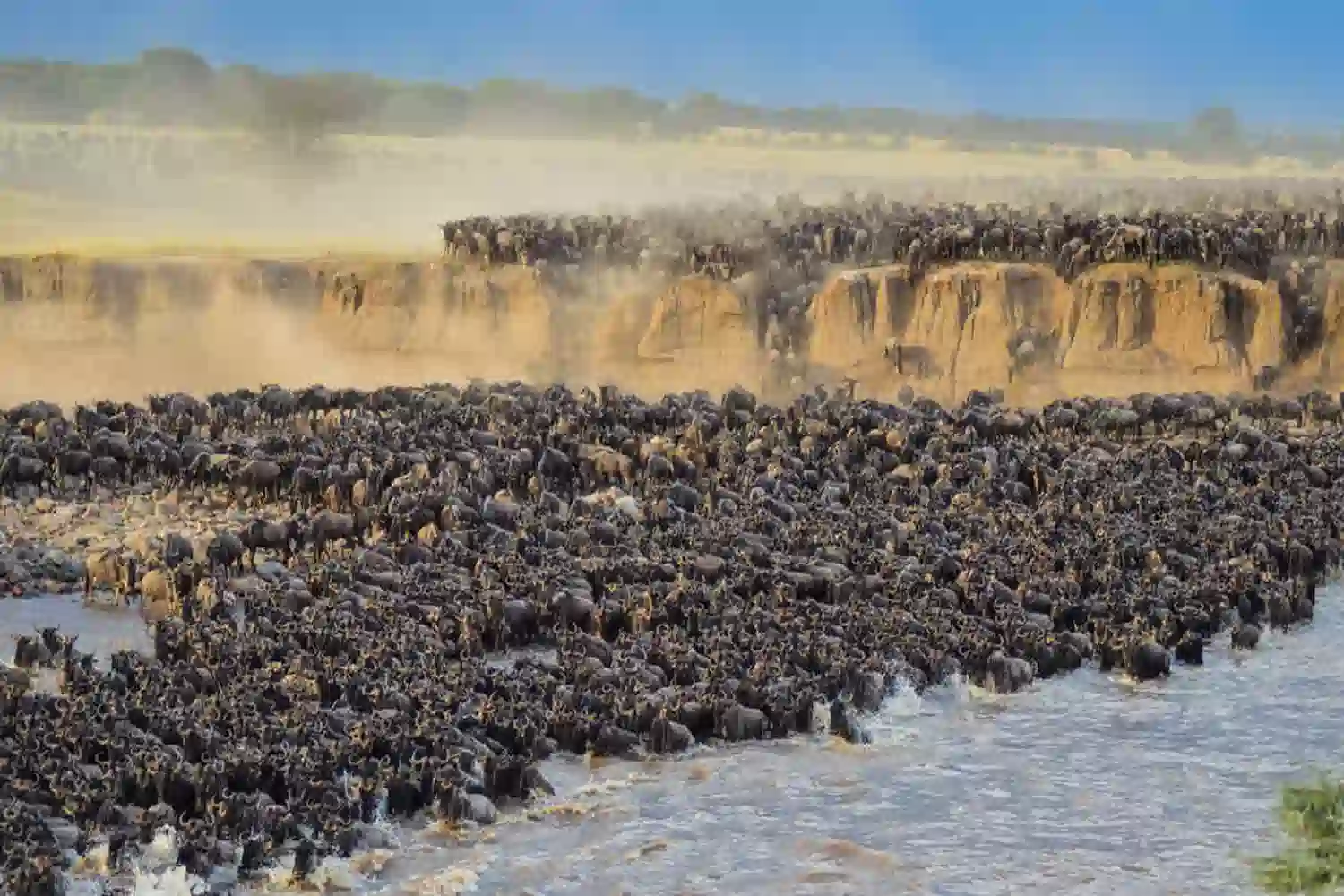
Understanding the Serengeti Migration Season
The Serengeti Great Migration is a year-round spectacle involving over 1.5 million wildebeest, 500,000 zebras, and thousands of other herbivores traversing the Serengeti-Mara ecosystem. Driven by seasonal rains and the quest for fresh grazing, this cycle creates dramatic scenes of survival. Qualitatively, it's described as "nature's greatest show," with thundering herds and predator pursuits. Quantitatively, herds cover 1,800-2,000 miles annually, consuming vast amounts of grass and facing up to 250,000 deaths from predation and exhaustion.
Overall Best Time to See Serengeti Migration
The best time to see Serengeti migration varies: January-March for calving in the south (over 500,000 births), June-October for river crossings in the west and north (dramatic Mara River scenes). Avoid heavy rains in April-May for better accessibility, though they offer lush views and discounts. High season (July-March) sees crowds, while low season (April-May) provides solitude.
Month-by-Month Breakdown of Serengeti Migration
Here's a detailed guide to when to visit Serengeti migration, with movement patterns, weather, and highlights.
| Month | Location | Key Events |
|---|---|---|
| Jan | Southern Serengeti/Ndutu | Calving begins; predator action |
| Feb | Southern Serengeti/Ndutu | Peak calving; 500k+ births |
| Mar | Southern/Central Serengeti | Last calves; northward start |
| Apr | Central Serengeti | Northward movement; rains |
| May | Western Corridor | Rutting; Grumeti crossings |
| Jun | Western/Northern Serengeti | Grumeti River crossings |
| Jul | Northern Serengeti/Mara | Mara River crossings begin |
| Aug | Northern Serengeti/Mara | Peak crossings; predator hunts |
| Sep | Northern Serengeti/Mara | Continued crossings; dry plains |
| Oct | Northern to Central | Southward return; early rains |
| Nov | Central Serengeti | Short rains; herd dispersal |
| Dec | Central to Southern | Return to south; preparing calving |
January: Early Calving in the Southern Plains
In January, herds congregate in southern Serengeti and Ndutu for early calving on nutrient-rich grasses from volcanic soil. Witness newborns taking first steps amid predators. Temperatures: 75-82°F, short showers. Qualitative: "A symphony of life with calves everywhere." Quantitative: Up to 8,000 calves born daily later in season.
February: Peak Calving Season
February is prime for calving in Ndutu and Kusini, with over 500,000 births in weeks. Predators like lions (3,000 in Serengeti) and hyenas thrive. Driest wet month, sparse rains. Insights: 80% of females calve synchronously, boosting survival rates.
March: Last Calves and Northward Shift
Herds remain in south but start edging north to Namiri Plains. Heavy thunderstorms; lush landscapes. Excellent for predator sightings. Data: Herds stationary, covering short distances daily.
April: Transition to Central Serengeti
Herds move north through Moru Kopjes, grazing remnants. Peak rains (5+ inches), fewer crowds, lower rates. Tips: Waterproof gear essential; ideal for birdwatching with 500+ species.
May: Rutting and Western Movement
Migration accelerates to Western Corridor for rutting. Dramatic thunderstorms; Grumeti crossings begin. Qualitative: "Intense mating calls echo across plains." Quantitative: Males compete for 1.5M females.
June: Grumeti River Crossings
Herds reach Grumeti Reserve, facing crocodiles. Dry season starts; localized showers. Best for western views. Data: River low, teeming with Nile crocs claiming thousands.
July: Mara River Crossings Begin
Herds arrive in northern Serengeti/Kogatende for Mara crossings. High drama with stampedes. Temperatures: 75°F days, cooler nights. Crowds peak; book early.
August: Peak River Crossings
Crossings in both directions at Mara and Talek rivers. Dry north attracts herds. Insights: Many deaths balance births; spectacular hunts by cheetahs, leopards.
September: Continued Northern Action
Crossings taper; herds in Lamai Wedge. Sparse showers north, dry south. Excellent visibility with thin vegetation. Data: Columns stretch 40km.
October: Southward Return
Tail-end crossings from Kenya; move to Lobo Valley. Early thunderstorms. Transition period with mixed wildlife.
November: Central Dispersal
Herds pass through Lobo to central Serengeti. Short rains; scarce nutrition. Zebra-wildebeest symbiosis: Zebras eat tall grass, wildebeest short.
December: Return to Southern Plains
Dispersed from Lobo to Ndutu; intense showers prepare for calving. Green landscapes; migratory birds arrive.
Factors Influencing Serengeti Migration Season
Rainfall unpredictability alters patterns; climate change may shift timings. Human impacts like fencing threaten routes. Data: Ecosystem spans 30,000 sq km, supports 4M animals at peaks.
Qualitative Experiences During Best Time to See Serengeti Migration
Travelers rave about "thundering hooves" in July crossings or "miracle of birth" in February. Balloon safaris offer aerial views; nights bring predator calls.
Quantitative Data on the Migration
- 1.5-2M wildebeest, 500k zebras migrate.
- 300-500k calves born Feb-Mar.
- 250k wildebeest perish annually.
- Tourism: $2B to Tanzania, 100k jobs.
- Temperatures: 75-82°F year-round.
Tips for Planning When to Visit Serengeti Migration
- Book 12-18 months ahead for peaks.
- Choose mobile camps for herd proximity.
- Pack layers, binoculars, sunscreen.
- Avoid crowds in remote areas like Western Corridor.
- Combine with Ngorongoro or Zanzibar.
Conservation and the Future of Serengeti Migration
Efforts include anti-poaching, habitat corridors. Challenges: 20% population decline in decades. Support ethical tours contributing to communities.
Plan Your Serengeti Migration Safari with Jaynevy Tours
Jaynevy Tours offers customized packages for the best time to see Serengeti migration. Explore Serengeti safaris, Kilimanjaro climbs, or Zanzibar beaches. Contact us today!
Frequently Asked Questions
What is the best time to see the Serengeti migration?
The best time to see the Serengeti migration depends on what you want to witness: January-February for calving in the south, or June-October for river crossings in the north and west.
When is the Serengeti migration season?
The Serengeti migration season is year-round, but peak events include calving from January to March and dramatic river crossings from June to October.
When to visit Serengeti migration for river crossings?
Visit from July to September in the northern Serengeti for the iconic Mara River crossings, where herds face crocodiles in a spectacle of survival.
What happens during the Serengeti migration in February?
February is peak calving season in the southern Serengeti, with over 500,000 calves born, attracting predators and offering intense wildlife action.
Is April a good time for Serengeti migration?
April sees herds moving north from the south, with lush landscapes and fewer crowds, but expect occasional rains; it's ideal for budget travelers.
How does weather affect the best time to see Serengeti migration?
Weather influences herd movements; dry season (June-October) concentrates animals at water sources, while wet season (November-May) brings lush greenery and calving.
What are the crowd levels during Serengeti migration season?
Crowds peak in July-September around river crossings and January-February for calving; opt for April-May or November for fewer visitors and lower rates.
How to plan a trip for the best time to visit Serengeti migration?
Book 12-18 months in advance for peak seasons, choose mobile camps following the herds, and consult experts like Jaynevy Tours for customized itineraries.