
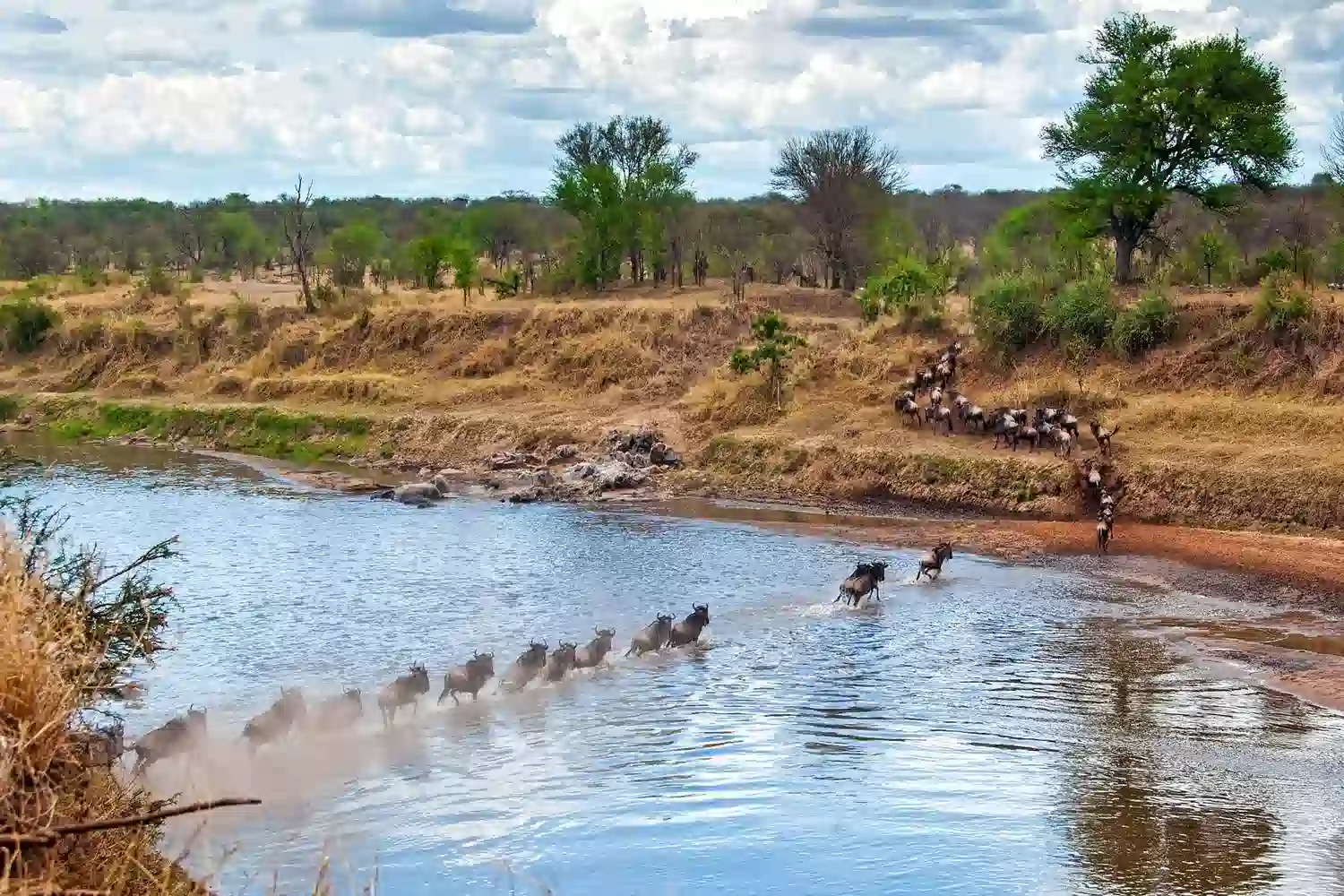
Overview of the Great Migration
The Great Migration involves over 1.5-2 million wildebeest, 500,000 zebras, and 200,000 gazelles traversing a 1,000-2,000 mile circuit across Tanzania’s Serengeti and Kenya’s Maasai Mara. Driven by rainfall, it features dramatic calving (January-March) and river crossings (July-September). Qualitatively, it’s “nature’s grandest spectacle,” with thundering herds and predator chases. Quantitatively, it spans 30,000 sq km, with 250,000 wildebeest deaths annually from predation and exhaustion.
Serengeti vs. Maasai Mara: Where to See Serengeti Migration
Tanzania’s Serengeti offers year-round viewing, with vast plains and calving season, while Kenya’s Maasai Mara excels for river crossings. Below, we compare the best safari parks for migration viewing.
| Park | Key Area | Best Season |
|---|---|---|
| Serengeti (TZ) | Ndutu | Jan-Mar |
| Serengeti (TZ) | Kogatende | Jul-Sep |
| Maasai Mara (KE) | Mara River | Jul-Sep |
| Grumeti (TZ) | Western Corridor | May-Jun |
| Mara North (KE) | Conservancy | Jul-Sep |
Top Migration Viewing Spots in Tanzania
1. Southern Serengeti (Ndutu)
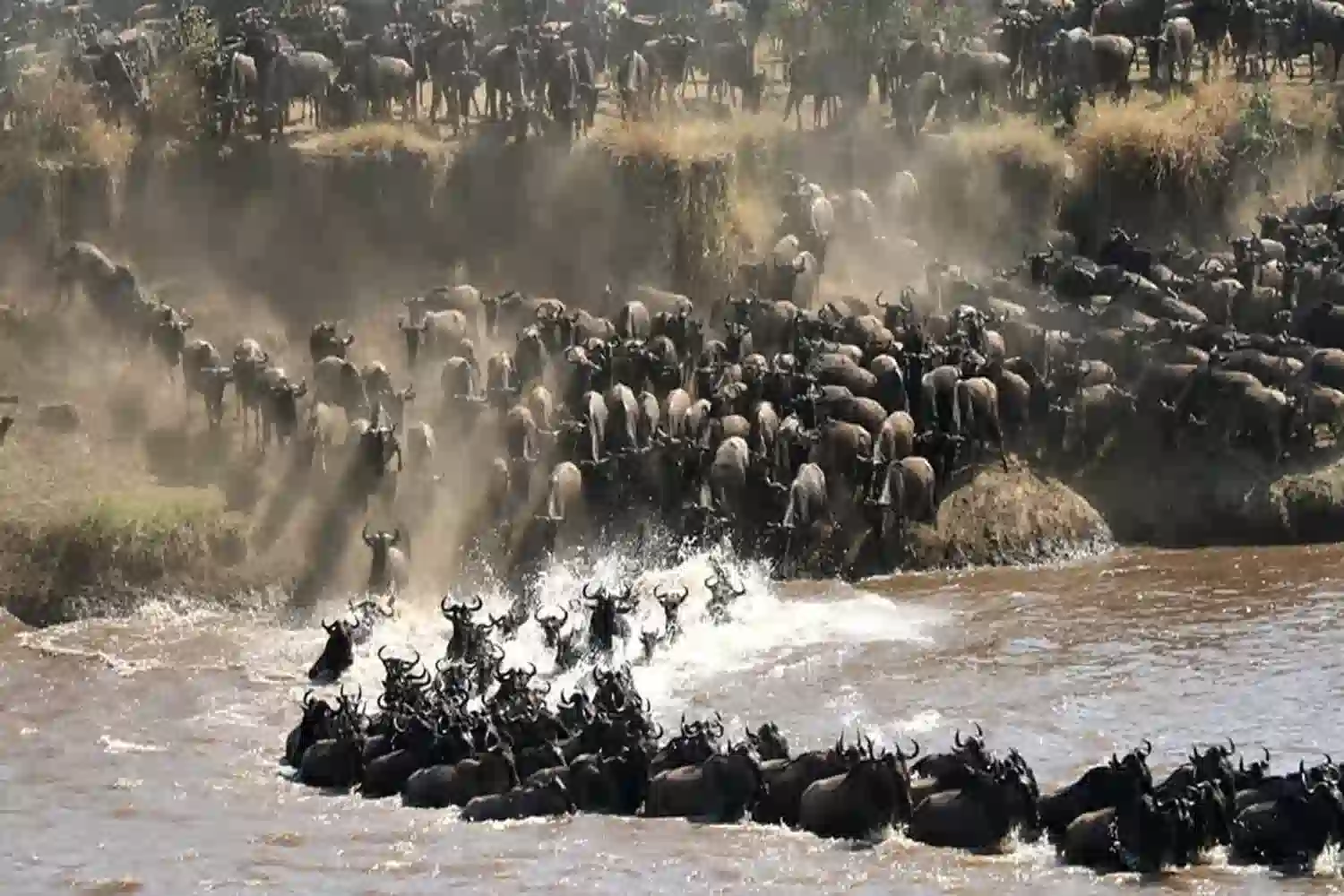
Season: January-March
Events: Calving season with 500,000+ births.
Why Visit: See newborns and predators like 3,000 lions. Weather: 75-82°F, short rains. Tips: Stay in mobile camps ($500-$1,000/night). Qualitative: “Awe-inspiring birth spectacle.” Quantitative: 8,000 calves/day at peak.
2. Northern Serengeti (Kogatende)
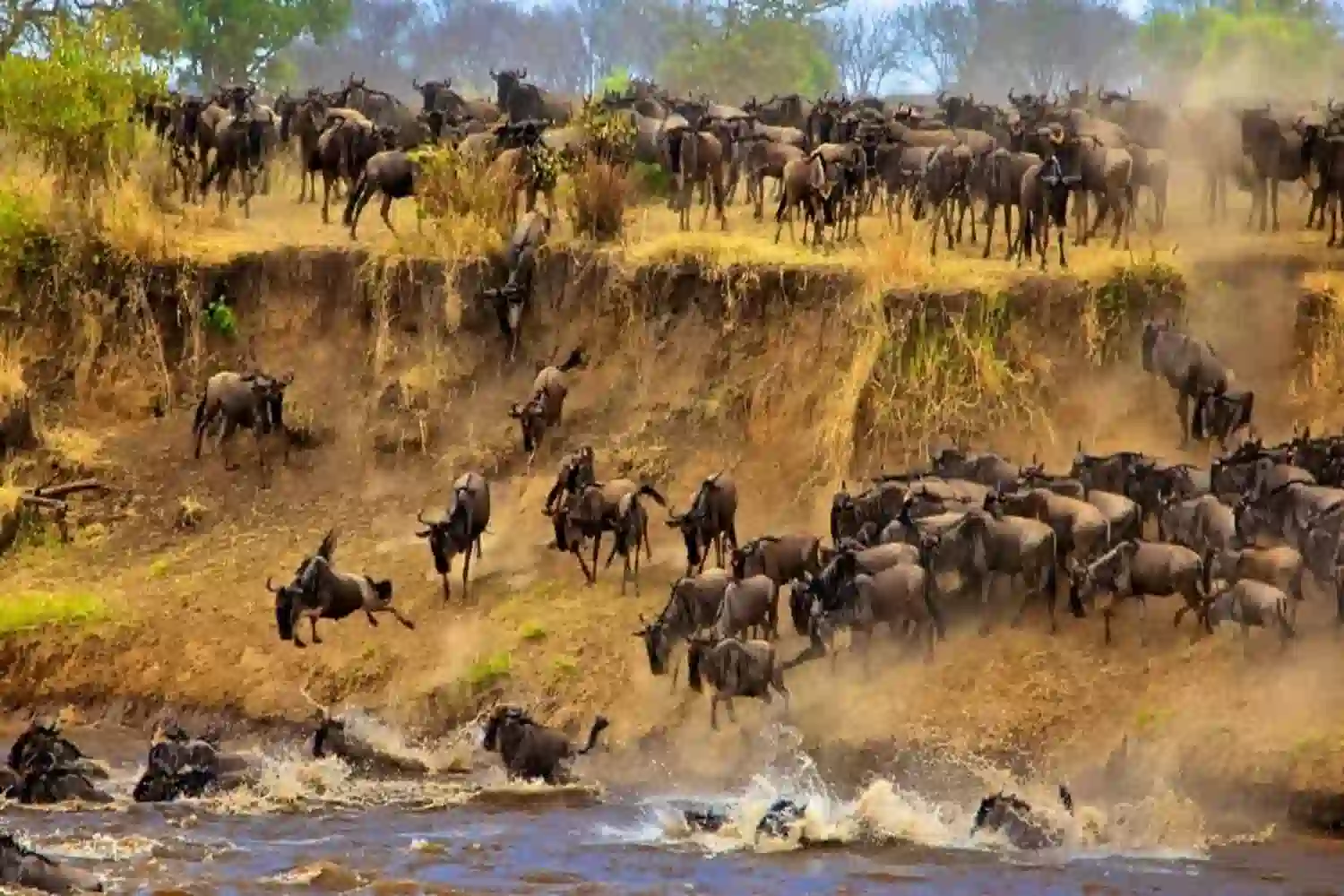
Season: July-September
Events: Mara River crossings.
Why Visit: Dramatic stampedes, crocodile attacks. Weather: Dry, 75°F. Tips: Book early; balloon safaris ($500/person). Qualitative: “Heart-pounding survival drama.” Quantitative: Columns stretch 40km.
3. Western Corridor (Grumeti)
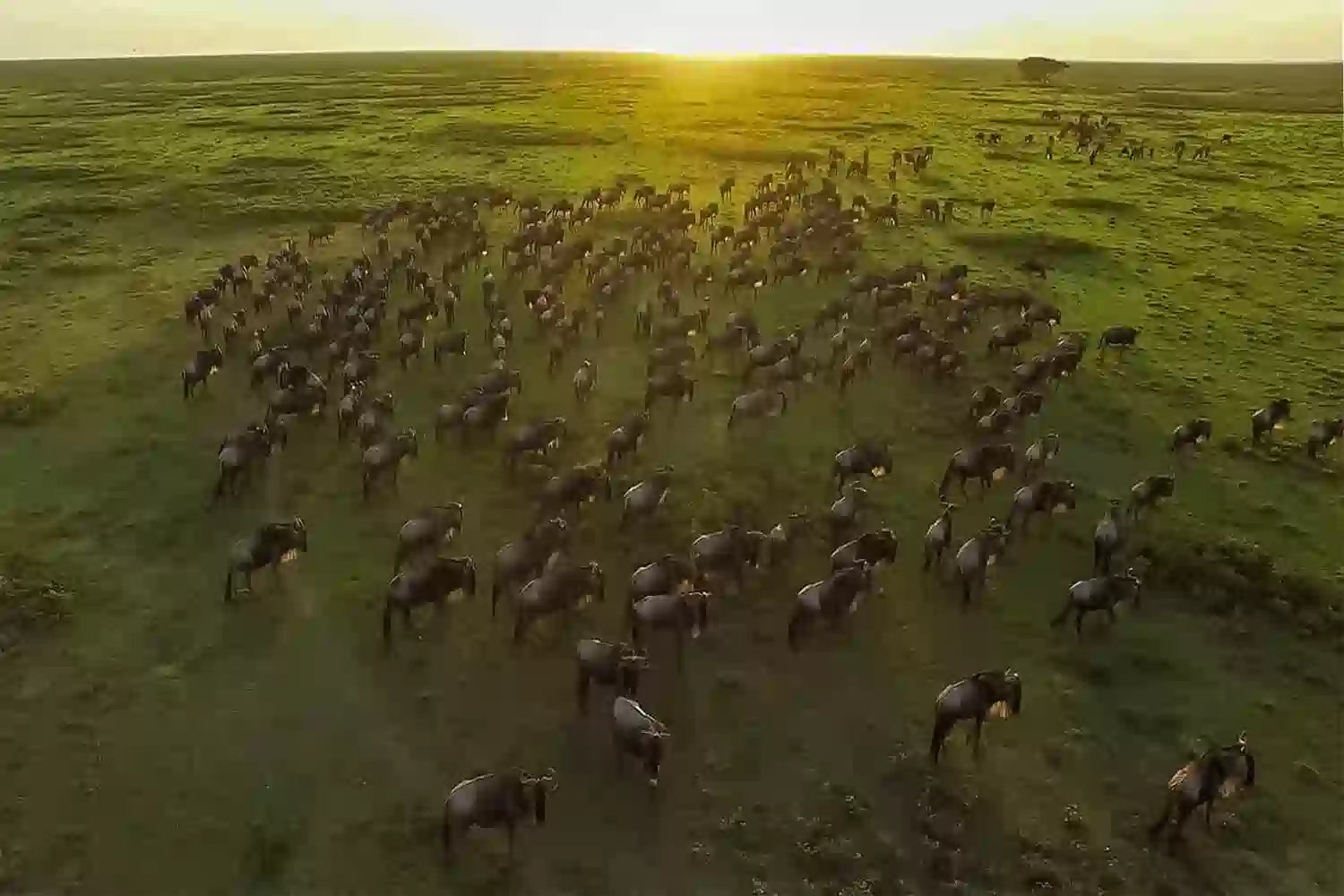
Season: May-June
Events: Grumeti River crossings, rutting.
Why Visit: Fewer crowds, private reserves. Weather: End of rains. Tips: Luxury lodges like Singita ($1,500+/night). Qualitative: “Intimate wilderness encounters.” Quantitative: Thousands lost to crocodiles.
4. Central Serengeti (Seronera)
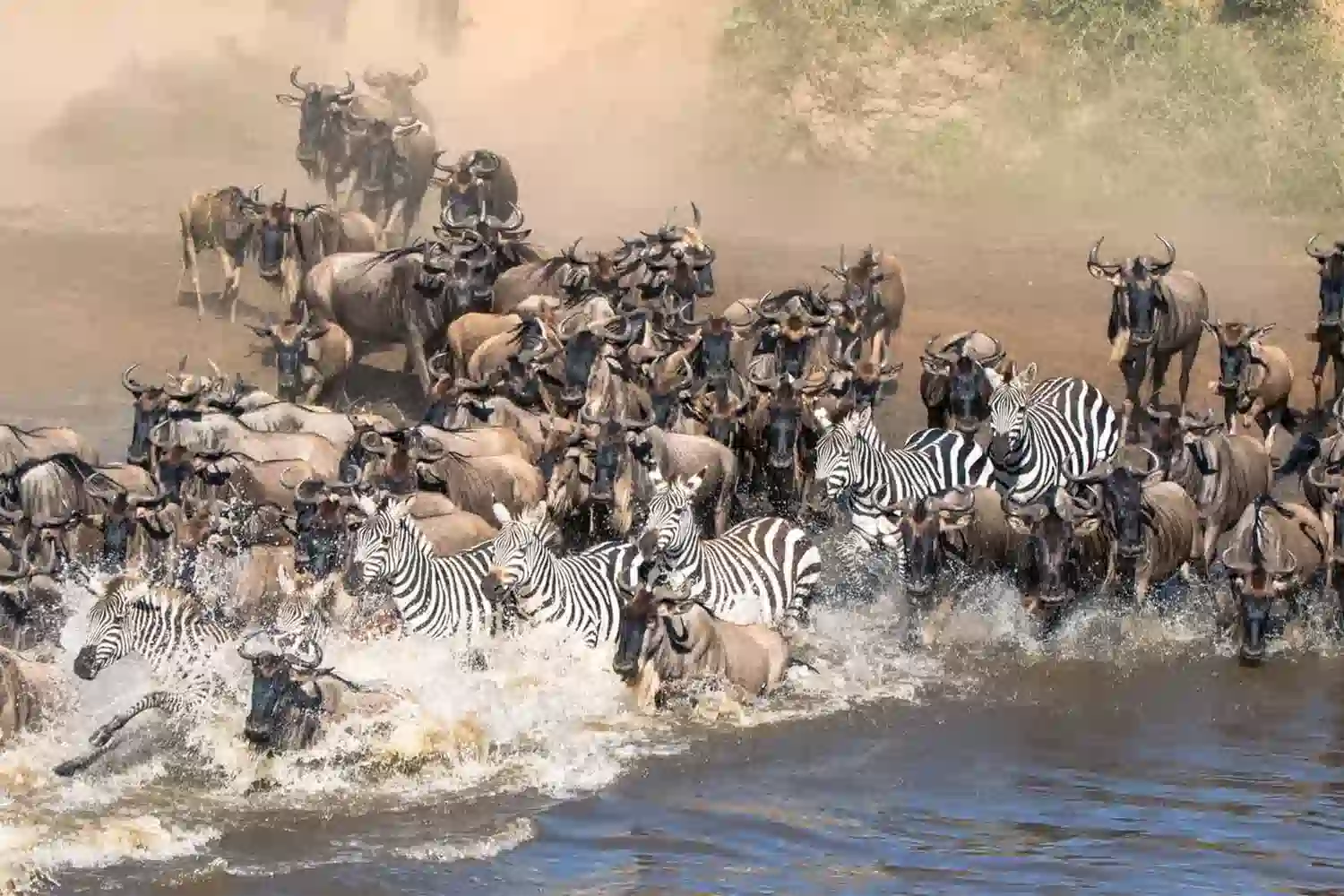
Season: April, October-November
Events: Transitional movements.
Why Visit: Year-round wildlife, birdwatching (500+ species). Weather: Rainy in April. Tips: Budget-friendly ($300-$700/night). Qualitative: “Lush plains teeming with life.” Quantitative: Herds disperse widely.
Top Migration Viewing Spots in Kenya
1. Maasai Mara National Reserve (Mara/Talek Rivers)
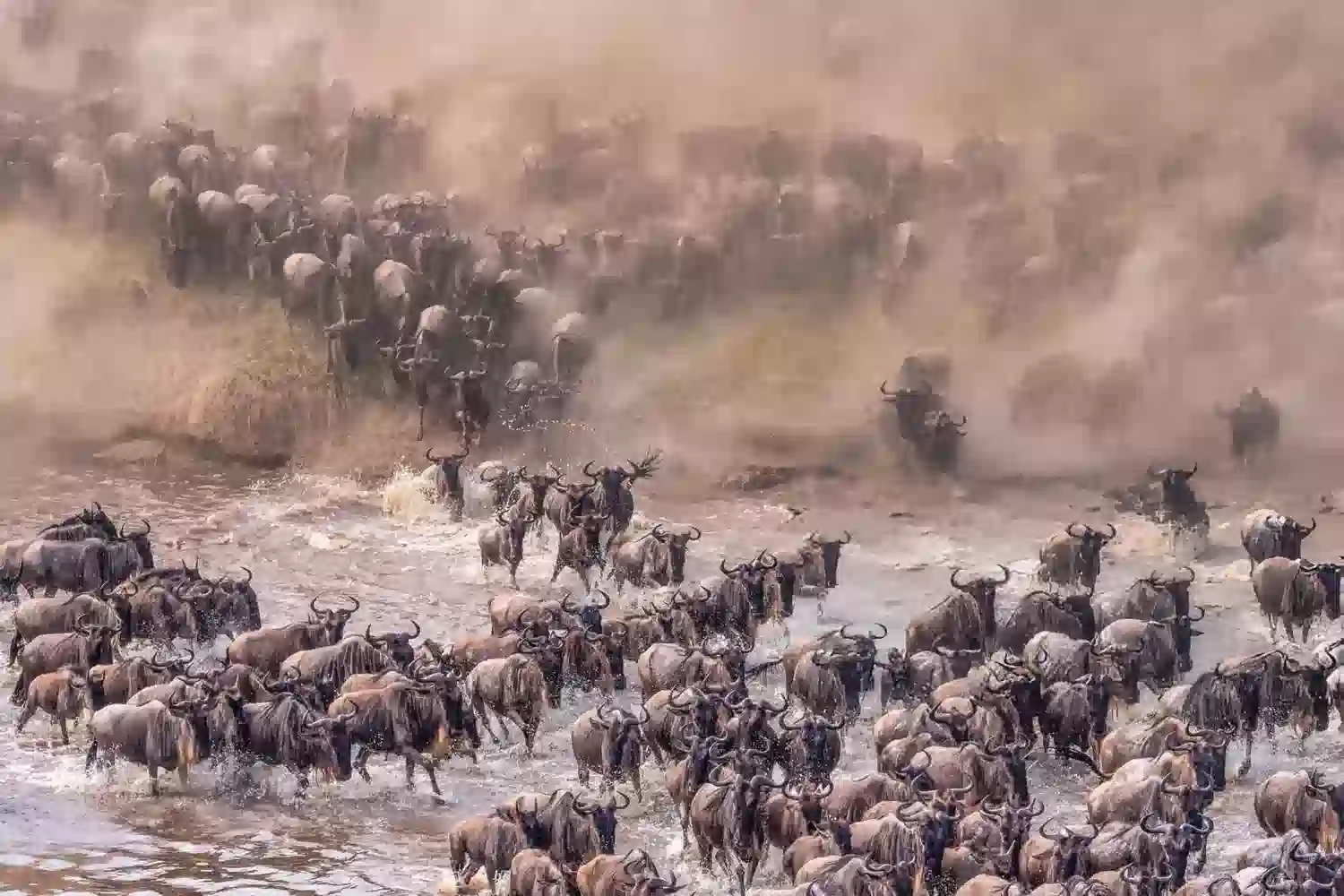
Season: July-September
Events: Mara River crossings.
Why Visit: High-drama crossings, predator hunts. Weather: Dry, 70-80°F. Tips: Stay near rivers; conservancies for exclusivity ($800-$2,000/night). Qualitative: “Epic battles in churning waters.” Quantitative: High mortality from crocodiles.
2. Mara North Conservancy
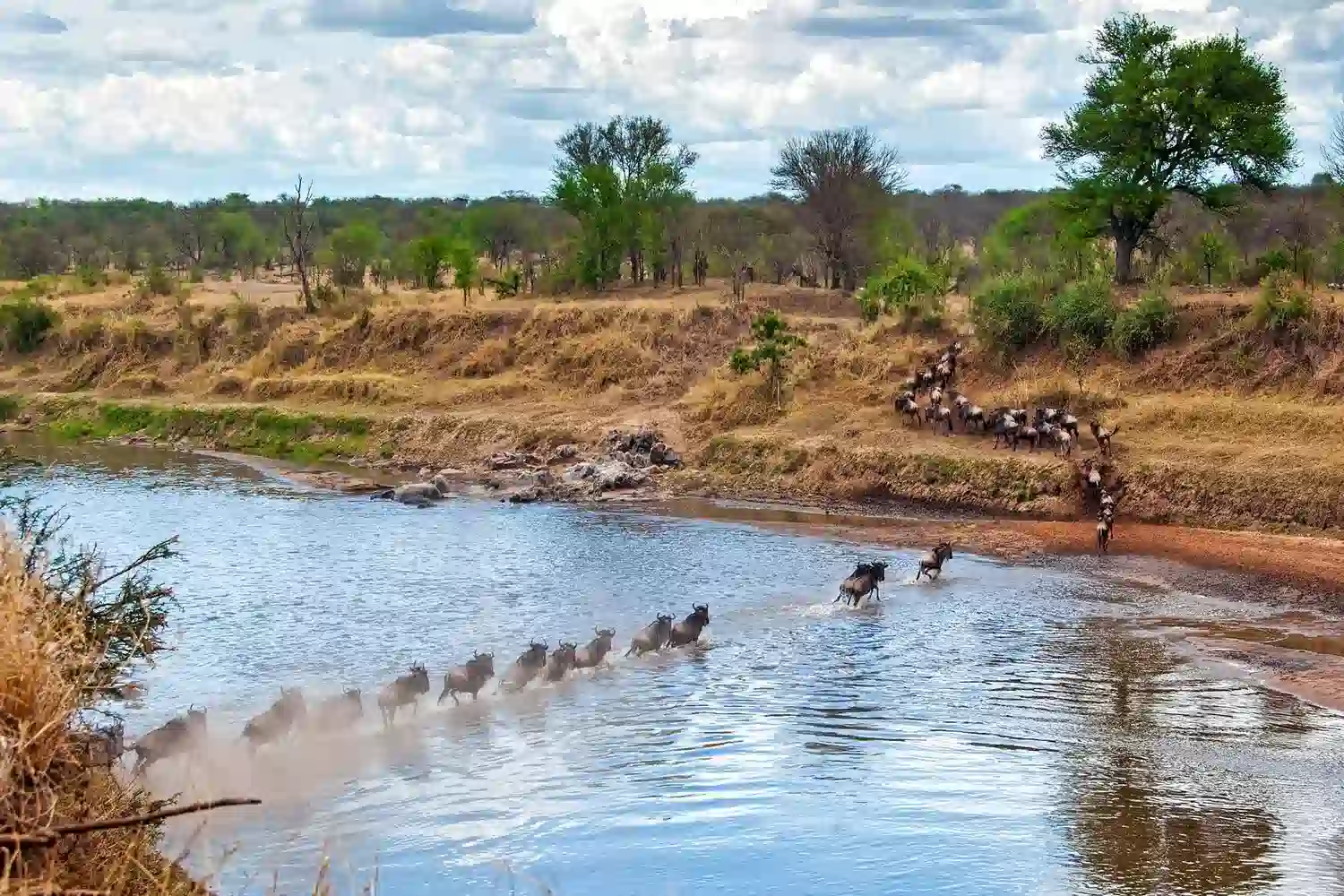
Season: July-September
Events: Crossings, predator activity.
Why Visit: Fewer vehicles, off-road driving. Weather: Dry. Tips: Luxury camps like Kicheche ($1,000+/night). Qualitative: “Exclusive, serene viewing.” Quantitative: Smaller herds, concentrated action.
3. Olare Motorogi Conservancy
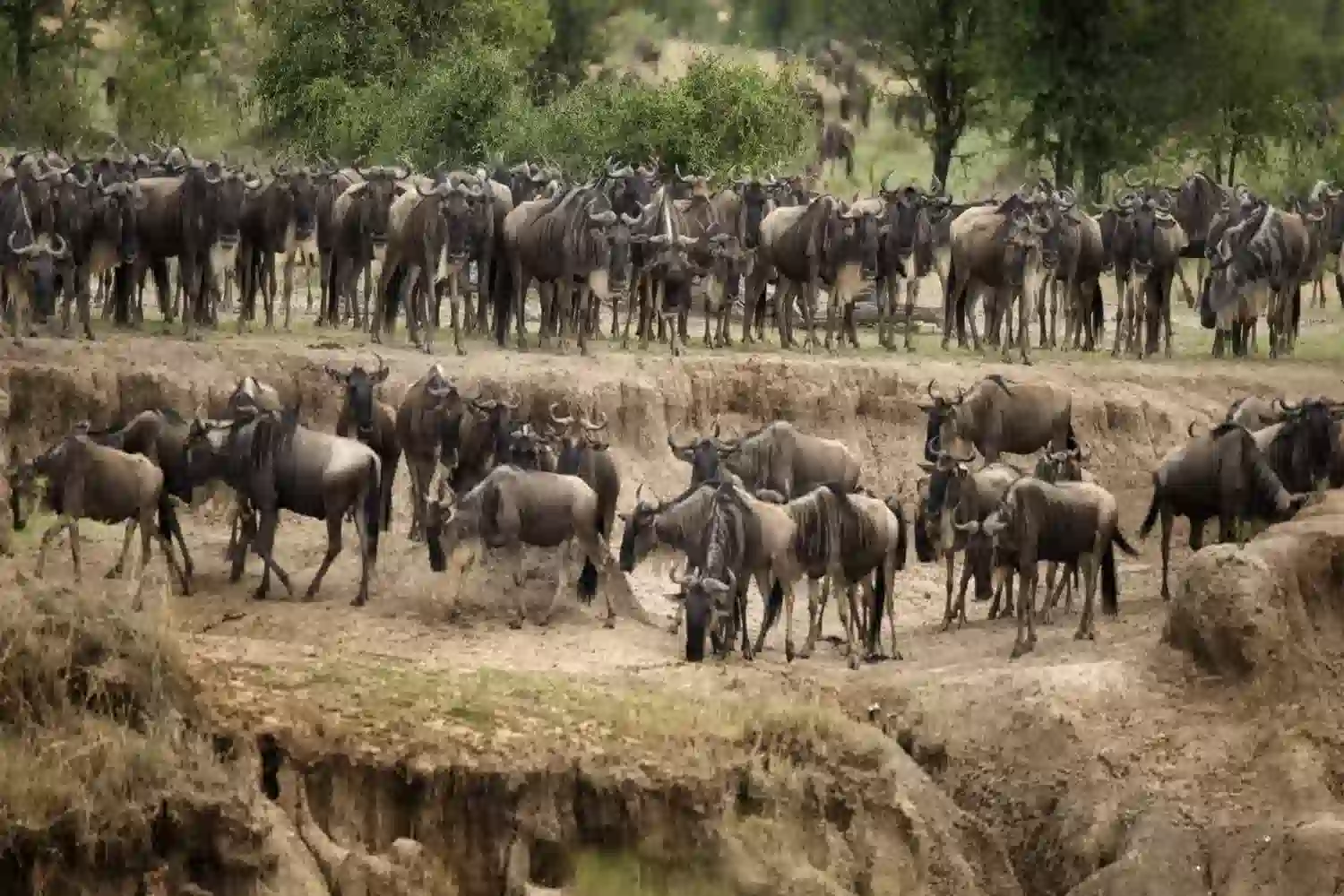
Season: July-September
Events: Crossings, night drives.
Why Visit: Private, uncrowded. Weather: Dry. Tips: Combine with Mara Reserve. Qualitative: “Intimate predator sightings.” Quantitative: Supports 1,000+ animals/sq km.
Serengeti vs. Maasai Mara: Key Comparisons
- Size: Serengeti (14,750 sq km) vs. Maasai Mara (1,510 sq km). Serengeti offers vastness; Mara is compact, action-packed.
- Events: Serengeti excels for calving (Jan-Mar); Mara for crossings (Jul-Sep).
- Access: Serengeti is year-round; Mara seasonal (Jul-Oct).
- Cost: Serengeti ($5,000-$12,000/trip); Mara ($6,000-$15,000, higher in peak).
- Crowds: Serengeti less crowded in off-seasons; Mara busy in July-Sep.
- Wildlife: Both host 1.5-2M wildebeest, 500k zebras, 3,000 lions, but Mara has denser predator action.
Qualitative Experiences at Migration Viewing Spots
Travelers describe Ndutu’s calving as “a miracle unfolding,” with newborn calves staggering to their feet. Mara crossings evoke “adrenalin-pumping chaos” as herds plunge into crocodile-infested waters. Balloon safaris ($500/person) offer “aerial vistas of endless herds.”
Quantitative Data on the Great Migration
- 1.5-2M wildebeest, 500k zebras, 200k gazelles migrate annually.
- 500k calves born in February-March, 8k daily at peak.
- 250k wildebeest deaths/year from predation, drowning.
- Economic impact: $2B tourism revenue, 100k jobs in Tanzania/Kenya.
- Serengeti: 3k lions, 1k leopards; Mara: 1,200 lions/sq km density.
Best Safari Parks for Migration: Planning Tips
- Timing: Book 12-18 months for peak seasons (Jan-Mar, Jul-Sep).
- Accommodations: Mobile camps ($500-$2,000/night) follow herds; lodges like Four Seasons Serengeti offer luxury.
- Packing: Binoculars, neutral clothing, rain gear for April-May.
- Budget: $5,000-$15,000/person for 7-10 days.
- Ethics: Choose operators supporting anti-poaching, like Jaynevy Tours.
Conservation and Challenges
Conservation efforts include WWF habitat corridors and community programs. Threats: Poaching, fencing, climate change (20% population decline in decades). Tourism funds $2B annually for protection.
Combining Migration Viewing with Other Adventures
Pair with Ngorongoro Crater (Tanzania) for Big Five sightings or Zanzibar beaches for relaxation. Kenya’s Amboseli offers Kilimanjaro views.
Why Choose Tanzania, Kenya, or Both?
Tanzania’s vast Serengeti suits year-round explorers; Kenya’s Mara is ideal for crossing enthusiasts. Combine for a full migration cycle, crossing borders via Arusha-Nairobi routes.
Plan Your Migration Safari with Jaynevy Tours
Jaynevy Tours offers tailored safaris to the best migration viewing spots. Explore Serengeti safaris, Kilimanjaro climbs, or Zanzibar holidays. Contact us today!
Frequently Asked Questions
Where is the best place to see the Great Migration in Tanzania?
The southern Serengeti (Ndutu) in January-March for calving and northern Serengeti (Kogatende) in July-September for Mara River crossings are top spots.
Where to see Serengeti migration in Kenya?
The Maasai Mara, especially around the Mara and Talek rivers from July to September, is ideal for dramatic river crossings.
What are the best safari parks for migration viewing?
Serengeti National Park (Tanzania) and Maasai Mara National Reserve (Kenya) are the primary parks, with private conservancies like Grumeti offering exclusivity.
When to visit Ndutu for the Great Migration?
January to March is best for Ndutu, where over 500,000 wildebeest calves are born, attracting predators like lions and hyenas.
Are private conservancies better for migration viewing spots?
Private conservancies like Mara North or Grumeti offer fewer crowds, off-road driving, and exclusive experiences, but at higher costs ($800-$2,000/night).
What wildlife can I see in migration viewing spots?
Expect 1.5-2 million wildebeest, 500,000 zebras, gazelles, plus predators like 3,000 lions, leopards, cheetahs, and crocodiles.
How much does a safari to see the Great Migration cost?
Costs range from $5,000-$15,000 per person for a 7-10 day safari, depending on luxury level and season.
What accommodations are best for migration viewing spots?
Mobile camps following herds, luxury lodges like Singita, and budget camps in Ndutu or Mara offer varied experiences.
How does weather affect where to see Serengeti migration?
Dry season (June-October) concentrates herds at rivers; wet season (November-May) spreads them across lush plains, impacting accessibility.
How to plan a safari for the best migration viewing spots?
Book 12-18 months ahead, choose mobile camps for proximity, pack binoculars, and select operators like Jaynevy Tours for tailored trips.