

What is the Great Wildebeest Migration?
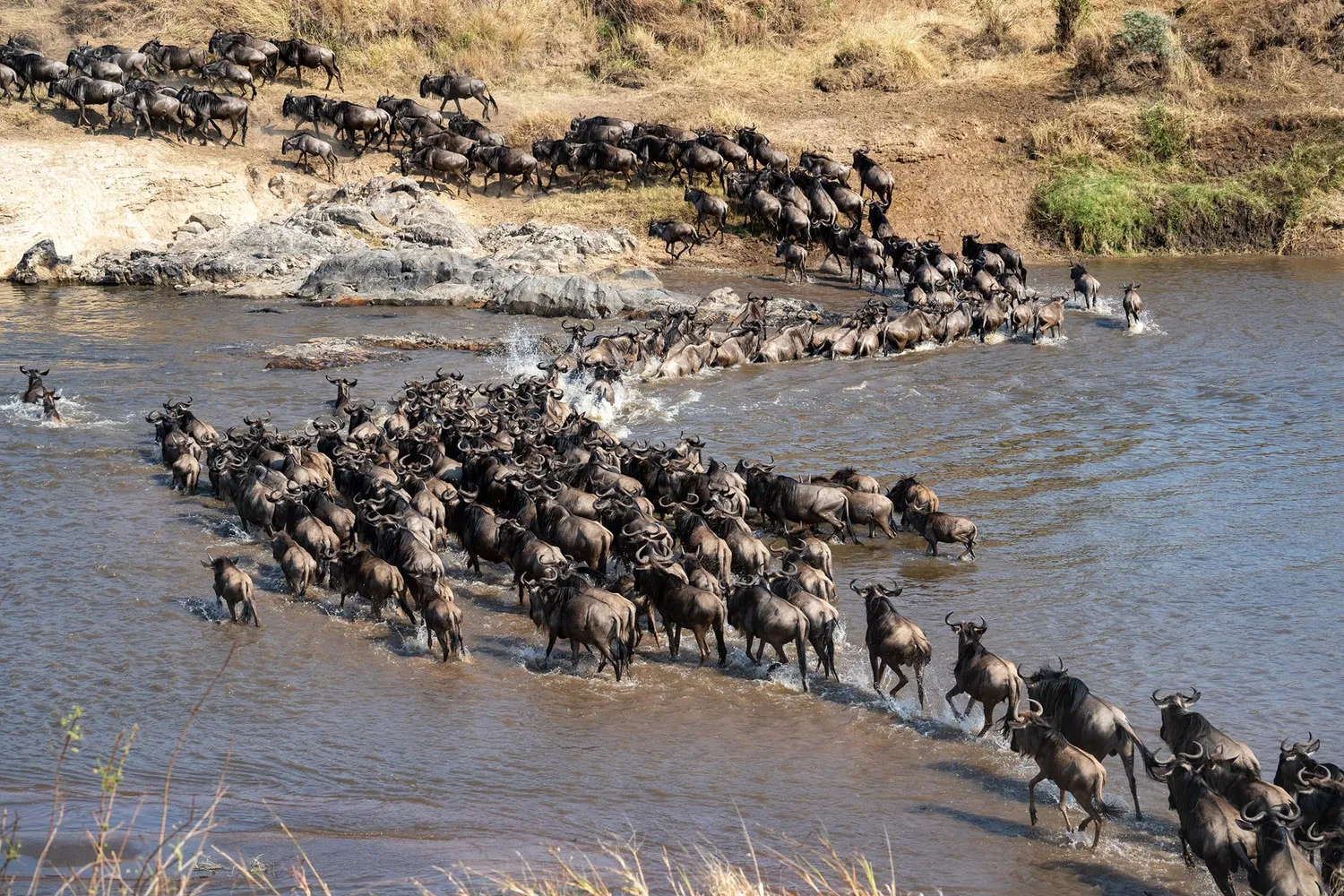
The Great Wildebeest Migration is an annual cycle involving 2 million wildebeest, zebras, and antelopes moving across Tanzania’s Serengeti and Kenya’s Maasai Mara in search of fresh grazing and water. Spanning 1,800 miles, this natural wonder attracts predators like lions and crocodiles, creating dramatic scenes like Mara River crossings where 6,000+ animals cross daily during peak season.
Why Choose a Wildebeest Migration Safari?
Tanzania hosts 70% of the migration route, with Serengeti alone covering 14,763 km² and supporting 1.5 million wildebeest. The migration’s scale—2 million animals—is unmatched globally. Qualitative highlights include the raw thrill of river crossings and cultural encounters with the Maasai. Quantitatively, tourism generates $2.5 billion annually for Tanzania, with 1.5 million visitors drawn to the migration.
Best Locations for Wildebeest Migration
The migration follows a seasonal path, with key viewing spots in Tanzania and Kenya offering 85-95% sighting success during peak times.
Serengeti National Park
Tanzania’s flagship park hosts the migration year-round. Southern Serengeti sees calving (January-February) with 500,000+ newborns. Northern Serengeti (July-September) features river crossings. The park has 3,000 lions and 1,000 leopards, enhancing predator-prey action.
Ngorongoro Conservation Area
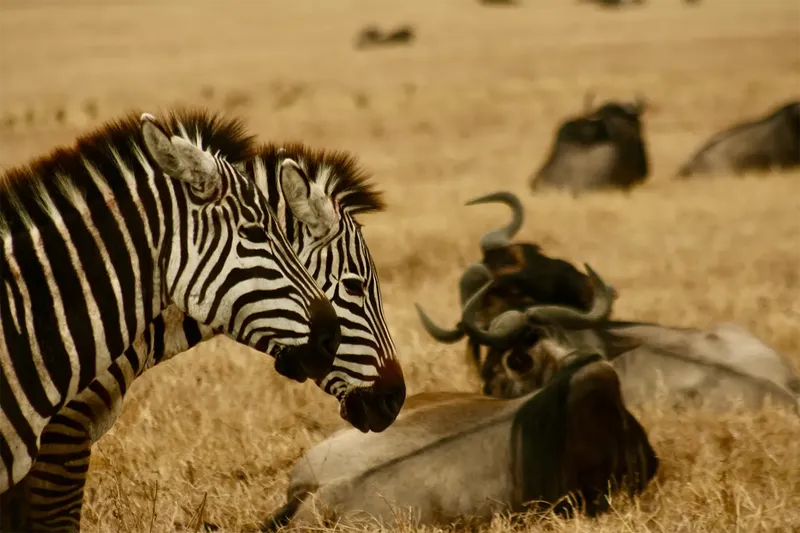
The Ndutu region (264 km²) is ideal for calving season, with 80% of wildebeest births occurring here. Expect cheetah and hyena sightings.
Maasai Mara National Reserve (Kenya)
From July to September, the migration crosses into Kenya’s 1,510 km² reserve, famous for Mara River crossings where crocodiles ambush herds.
Migration Timeline Table
| Month | Location | Event |
|---|---|---|
| Jan-Feb | Southern Serengeti | Calving season |
| Mar-May | Western Serengeti | Grazing, mating |
| Jun-Sep | Northern Serengeti, Maasai Mara | River crossings |
| Oct-Dec | Southern Serengeti | Return migration |
Best Time for a Migration Safari in 2026
January-February offers calving in Southern Serengeti, with 8,000 births daily. July-September showcases dramatic river crossings in Northern Serengeti and Maasai Mara, with 90% predator sighting rates. The wet season (March-May) brings lush landscapes but fewer crowds.
Safari Costs and Budgeting
Costs vary by accommodation and group size. Park fees ($60-$80/day) fund conservation, protecting 1.5 million wildebeest.
| Level | Per Day (USD) | Inclusions |
|---|---|---|
| Budget | 250-400 | Camping, shared drives |
| Mid-range | 450-800 | Lodges, meals |
| Luxury | 800-2,000+ | Tented camps, balloons |
Total for 7 days: Budget $2,100+, Mid-range $3,150+, Luxury $5,600+ per person.
Sample Itineraries
7-Day Migration Safari
- Day 1: Arrive Arusha, relax.
- Day 2: Tarangire for elephants, early migration.
- Day 3: Ngorongoro for calving or grazing.
- Days 4-6: Serengeti for migration tracking.
- Day 7: Return to Arusha.
10-Day Extended Safari
- Days 1-6: As above, plus Northern Serengeti crossings.
- Days 7-10: Zanzibar for beach relaxation.
Accommodation Options
Budget campsites, mid-range lodges like Serengeti Serena, or luxury options like Four Seasons Serengeti. Mobile camps follow the migration for proximity.
What to Expect on a Migration Safari
Qualitative: Heart-pounding river crossings, dust clouds of stampeding herds. Quantitative: 2 million animals, 500,000 births, 3,000 predators in Serengeti.
Wildlife Beyond Wildebeest
Zebras (400,000), lions, cheetahs (fastest at 98 mph), crocodiles, 500+ bird species like flamingos.
Conservation Impact
Tourism supports 20-30% of park budgets, funding anti-poaching for predators and habitat preservation for 1.5 million wildebeest.
Packing List
- Neutral clothing (khaki, green)
- Binoculars, high-zoom camera
- Sunscreen, hat, sunglasses
- Insect repellent, malaria pills
- Comfortable hiking shoes
Health and Safety
Yellow fever vaccination required. Malaria prophylaxis advised. Safaris are safe with guides; avoid exiting vehicles.
How to Book
Contact Jaynevy Tours for tailored packages. Visas: $50 online. Flights to Kilimanjaro (JRO) or Dar es Salaam (DAR).
Enhance Your Safari
Add hot air balloon rides ($500-$600) or Maasai village visits for cultural immersion.
Explore with Jaynevy Tours
From the Great Migration to Kilimanjaro treks and Zanzibar beaches, Jaynevy Tours crafts unforgettable adventures. Book your 2026 safari now!
Frequently Asked Questions
What is the Great Wildebeest Migration?
The Great Wildebeest Migration is an annual movement of 2 million wildebeest, zebras, and antelopes across Tanzania and Kenya, seeking fresh grazing and water.
When is the best time for a Wildebeest Migration safari in 2026?
January-February for calving in Southern Serengeti, July-September for river crossings in Northern Serengeti and Maasai Mara.
Which parks are best for the Wildebeest Migration safari?
Serengeti National Park , Ngorongoro Conservation Area, and Maasai Mara (Kenya) are prime locations for migration viewing.
How much does a Wildebeest Migration safari cost?
Costs range from $250-$400 per day for budget tours to $800-$2,000+ for luxury, depending on duration and accommodation.
What should I pack for a Wildebeest Migration safari?
Neutral clothing, binoculars, camera, sunscreen, insect repellent, and malaria prophylaxis are essential.
Is a Wildebeest Migration safari safe?
Yes, safaris are safe with experienced guides and proper precautions, including malaria prevention and following park rules.
Can I combine the migration safari with other activities?
Yes, add hot air balloon rides, Maasai village visits, or Zanzibar beach extensions for a complete experience.
What wildlife can I see during the migration?
Besides wildebeest, expect zebras, lions, cheetahs, leopards, hyenas, and over 500 bird species.
How long should a migration safari itinerary be?
A 7-10 day itinerary maximizes migration viewing across multiple parks and seasons.
How does the migration impact conservation?
Tourism funds anti-poaching and habitat preservation, with park fees contributing 20-30% to wildlife protection.