
Quick Answer: What Is a Good 6-Day Ngorongoro Crater Floor Safari Experience?
A good six-day safari gives the crater one focused early-morning game-drive day and uses the other days to build wildlife depth in Serengeti and nearby Northern Circuit parks. The crater floor itself is compact compared with Serengeti, so the strongest plan is usually Tarangire or Lake Manyara first, two to three Serengeti nights, a night near Ngorongoro, then an early descent on Day 6 before returning to Arusha.
- Best route shape: Arusha → Tarangire → Serengeti → Ngorongoro → Arusha.
- Crater timing: descend early and protect roughly five to six useful wildlife-viewing hours.
- Crater scale: NCAA describes the floor at about 260 km² and the crater at roughly 610 m deep.
- Wildlife reference: UNESCO cites about 25,000 large animals in the Ngorongoro Conservation Area.
- Best for: first-time safari travellers, families, photographers, Big Five seekers and travellers who want Serengeti plus a high-density final game drive.
- Important reality: black rhino and the complete Big Five are possible, not guaranteed.
6-Day Ngorongoro Crater Safari at a Glance
| Day | Route | Main experience | Recommended overnight |
|---|---|---|---|
| 1 | Arusha → Tarangire | Elephants, baobabs, river habitat and first game drive | Tarangire / Karatu area |
| 2 | Tarangire / Karatu → Serengeti | Ngorongoro highlands transit and afternoon Serengeti game drive | Serengeti |
| 3 | Serengeti | Full-day predator and plains-game safari | Serengeti |
| 4 | Serengeti | Second full wildlife day or seasonal migration positioning | Serengeti |
| 5 | Serengeti → Ngorongoro | Morning game drive then transfer toward crater highlands | Ngorongoro rim / Karatu |
| 6 | Ngorongoro Crater → Arusha | Early crater-floor game drive, picnic and return | Arusha / onward travel |
This route deliberately avoids giving the crater multiple days that it does not need. Instead, it protects a strong crater morning while using Serengeti for the longer, more open-ended searching that rewards repeat game drives. Travellers who want more park variety can substitute one Serengeti night with Lake Manyara; travellers focused on predators and photography should usually keep the extra Serengeti night.
What Makes the Ngorongoro Crater Floor Different?
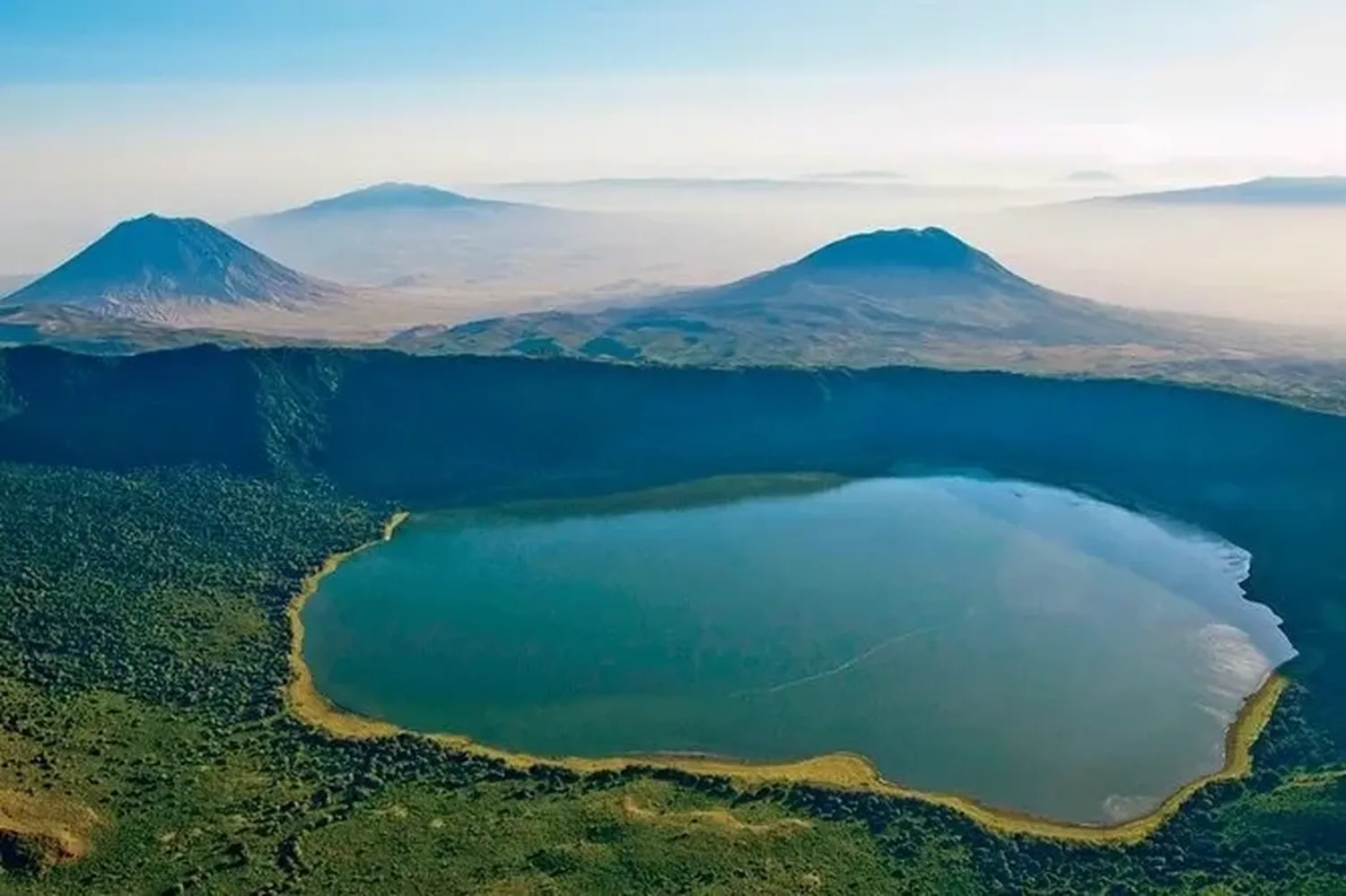
Ngorongoro is a volcanic caldera rather than an open savannah system. From the rim, the floor appears almost enclosed by steep walls. Once you descend, the experience changes quickly: open grassland, seasonal marshes, the Lerai forest, saline Lake Magadi and freshwater areas create several habitats within a relatively compact space. That habitat compression is one reason wildlife encounters can feel concentrated compared with the long-distance searching common in Serengeti.
The Ngorongoro Conservation Area Authority describes the crater as about 610 metres deep with a base area of roughly 260 square kilometres. The authority also identifies it as the flagship tourism feature of the wider conservation area. These numbers help explain why the crater can deliver a very different style of safari: you are exploring a geographically bounded bowl rather than driving across a national park covering thousands of square kilometres.
Ngorongoro Wildlife by the Numbers
UNESCO cites about 25,000 large animals in the Ngorongoro Conservation Area, mostly ungulates, alongside an unusually high density of mammalian predators. The official NCAA crater page publishes reference figures that include thousands of wildebeest, zebra, buffalo, eland and gazelles. Those figures are useful for understanding the ecosystem's scale, but they should not be read as a live census of what will be visible on the exact morning of your visit.
| Official reference | Published figure | How to interpret it |
|---|---|---|
| Crater depth | About 610 m | Shows the dramatic elevation difference between rim and floor |
| Crater base area | About 260 km² | Explains the relatively compact game-drive environment |
| Large animals | About 25,000 | UNESCO conservation-scale reference, not a daily sighting count |
| Bird diversity | About 500 species in the wider NCA | Includes crater, highlands and other habitats across the conservation area |
| Black rhino | Present but endangered | Important conservation species; never a guaranteed safari sighting |
For a deeper destination-specific guide, read Ngorongoro Crater safari guide for first-time travellers and is Ngorongoro Crater worth visiting?.
What Animals Are Most Realistic on the Crater Floor?
Wildebeest, zebra, buffalo, gazelles, spotted hyenas and lions are among the strongest general game-viewing possibilities. Hippos use permanent water areas, elephants may move through forested sections, and birdlife ranges from raptors and grassland species to waterbirds around Lake Magadi and wetlands. The crater is also one of northern Tanzania's most important areas for searching for black rhino.
But “high probability” is not the same as “guaranteed.” Black rhino can be distant, partially hidden or simply outside the most productive viewing zone during your visit. Leopards are generally less straightforward on the open crater floor than in some woodland and riverine habitats elsewhere. A safari guide should therefore make decisions based on current tracks, animal movement, light, road access and recent sightings rather than chase a marketing checklist.
Can You See the Big Five in Ngorongoro Crater?
You can search for all five across a Northern Circuit itinerary, but a single crater drive should never be sold as a guaranteed Big Five event. Lion, buffalo and elephant are realistic possibilities. Black rhino is a major reason travellers value the crater, but it remains an endangered, free-ranging species. Leopard is present in the wider Ngorongoro landscape but is not something you should expect to simply find on command.
| Big Five species | Crater-floor expectation | Better planning approach |
|---|---|---|
| Lion | Strong possibility | Use early hours and follow guide knowledge of pride territories |
| Buffalo | Strong possibility | Look across grassland, marsh edge and forest transitions |
| Elephant | Possible, especially mature bulls | Do not expect huge Tarangire-style family herds |
| Black rhino | Possible but never guaranteed | Carry binoculars; distant sightings are common |
| Leopard | Less predictable | Build leopard-search time into Serengeti rather than relying on the crater |
Detailed 6-Day Itinerary
Day 1: Arusha to Tarangire National Park
Leave Arusha after breakfast and drive to Tarangire. The park gives the safari a dry-country opening: baobab landscapes, the Tarangire River system and some of northern Tanzania's best-known elephant habitat. Rather than rush through a short afternoon loop, use the day to begin reading animal behaviour and become comfortable with the pace of a 4x4 game drive.
Tarangire is a useful first day because it contrasts strongly with both Serengeti and Ngorongoro. During drier periods, wildlife often concentrates around reliable water and riverine areas; greener periods bring different birding and landscape conditions. Overnight near Tarangire or toward Karatu depending on the route and accommodation plan.
Day 2: Tarangire / Karatu to Serengeti
Drive through the Ngorongoro highlands and continue toward Serengeti. This is a longer transfer, but it is geographically logical and avoids backtracking. Once inside the Serengeti ecosystem, the transfer becomes a game drive. Your first overnight should be positioned for the wildlife priorities of your travel month rather than chosen only by lodge brand.
If you prefer the classic four-park route with Lake Manyara as well, compare the 6-day Tarangire, Manyara, Serengeti and Ngorongoro safari from Arusha. It is more varied, but it gives Serengeti less depth than the crater-focused route described here.
Day 3: Full-Day Serengeti Game Drive
Use the first full Serengeti day for patient predator and plains-game viewing. Your guide can respond to fresh tracks, local sightings, weather, grazing patterns and seasonal herd movement rather than chase a fixed list. Lions, hyenas, elephants, giraffes, zebra, wildebeest and gazelles form part of the broader wildlife picture, while leopard and cheetah require habitat knowledge and good timing.
Serengeti's scale is the opposite of Ngorongoro's compression. This contrast is exactly why combining them works: one ecosystem rewards distance and repeated searching, the other rewards careful use of a relatively compact game-drive window.
Day 4: Second Full Day in Serengeti
A second full day gives the guide freedom to revisit productive areas, spend longer with behaviour rather than individual sightings, or move toward a seasonally stronger zone when the road distance makes sense. Photographers benefit because they can wait for better light or animal positioning instead of treating every first encounter as the only opportunity.
For travellers who prefer lodge comfort, see the 6-day Serengeti lodge safari. Budget-conscious or solo travellers can compare the 6-day Serengeti joining safari and the broader 6-day Tanzania sharing safari.
Day 5: Serengeti to Ngorongoro Highlands
Start with a morning Serengeti game drive and then work east toward Ngorongoro. The key is positioning: Day 5 should finish close enough to the crater that Day 6 begins early without a long approach drive. A rim lodge can provide dramatic views and the shortest descent logistics, while accommodation around Karatu can offer better value and more lodge choice.
Do not overfill this day with side trips. The entire value of Day 5 is to preserve both a useful final Serengeti morning and a strong crater start the next day.
Day 6: Early Ngorongoro Crater Floor Game Drive and Return to Arusha
Wake early, descend into the crater and use the cooler morning hours for your most focused wildlife search. Your guide will normally balance open grassland, marsh edge, forest, Lake Magadi and freshwater areas rather than drive a single loop. The exact route changes with road conditions and current wildlife activity.
A practical crater experience normally includes several hours of game viewing plus a picnic stop before climbing out. The return to Arusha is still a substantial drive, so travellers with an international flight the same evening should leave a safe time buffer. If your flight timing is tight, add a post-safari night rather than force the crater game drive to fit an unrealistic airport deadline.
How Much Time Do You Need on the Crater Floor?
Plan the crater as a focused half-day wildlife experience, not a 60-minute detour. In a six-day itinerary, the best use of time is usually an early descent and roughly five to six hours of productive driving, including a short picnic or comfort stop. Exact operating limits, authority rules and road procedures can change, so the driver-guide should confirm the current system before travel.
More time is not automatically better if it forces a dangerous or exhausted return to Arusha. The aim is quality: enter early, avoid unnecessary stops on the descent, cover several habitats, use binoculars for distant rhino searches, and leave enough daylight for the climb and onward drive.
Best Time for a 6-Day Ngorongoro Crater Safari
The crater can be visited year-round. Season changes the landscape, visibility, temperatures, road conditions and visitor pressure more than it changes whether the crater is “open for wildlife.” The strongest month depends on whether you prefer drier visibility, greener scenery, birding, fewer vehicles or a Serengeti migration objective elsewhere in the six-day route.
| Period | Crater character | Planning note |
|---|---|---|
| June–October | Drier conditions, cooler mornings and generally easier visibility | Popular period; book preferred lodges early |
| November–December | Short-rain greenery and changing bird activity | Road conditions and weather can vary |
| January–February | Green landscapes; useful for combining with southern Serengeti calving-season plans | Choose Serengeti camp location carefully |
| March–May | Greener, wetter scenery and often fewer vehicles | Expect rain, softer roads and possible itinerary adjustments |
Crater Rim vs Karatu: Where Should You Sleep Before the Descent?
A crater-rim lodge can reduce the morning transfer and may give dramatic views, but it often costs more. Karatu generally offers a wider range of accommodation and can provide better value, but you must leave earlier to reach the crater entry system. Neither choice is automatically better; the right one depends on budget, season, lodge availability and how strongly you value the earliest possible descent.
| Overnight location | Main advantage | Main trade-off |
|---|---|---|
| Crater rim | Shortest morning logistics and dramatic views | Usually higher accommodation cost |
| Inside NCA / highlands | Good access with varied lodge styles | Exact transfer time depends on property location |
| Karatu | Broad accommodation choice and often better value | Earlier departure needed for the crater |
6-Day Safari Cost: Realistic Planning Benchmarks
There is no single honest price for every six-day Ngorongoro safari because vehicle occupancy, lodge level, travel month, Serengeti camp location and park/conservation charges all affect the final total. A crater-focused itinerary can be built as camping, mid-range, private lodge or luxury safari, and those products should not be compared only by the headline number.
For a current Jaynevy benchmark, the live six-day four-park private safari from Arusha publishes mid-range prices from USD 1,850 pp for 4–6 travellers and USD 2,150 pp for 2–3 travellers. A separate six-day Serengeti lodge safari currently starts around USD 2,000 pp based on double occupancy. These are comparison references only; your written quotation controls the final cost.
| Cost driver | Why it changes the price | How to compare quotes |
|---|---|---|
| Number of travellers | Private vehicle and guide costs are shared | Compare the same party size |
| Accommodation | Camps and lodges vary greatly by location and season | Ask for exact lodge/camp names |
| Serengeti zone | Seasonal camps and long repositioning can add cost | Check why the chosen zone fits your month |
| Private vs sharing | Vehicle economics and flexibility differ | Do not compare as identical products |
| Park/conservation charges | Government charges form a meaningful part of safari cost | Confirm they are included in writing |
| Crater-area overnight | Rim properties can command a premium | Compare rim access against Karatu value |
For broader planning, see the Tanzania safari cost guide, 6-day Tanzania private safari and Tanzania safari packages.
What Should Be Included in the Written Quote?
- Private or shared 4x4 safari vehicle and maximum passenger count.
- Professional driver-guide and requested language.
- Five nights of accommodation with exact lodge or camp names.
- Meal plan for every safari day.
- Serengeti, Tarangire and Ngorongoro park/conservation fees stated clearly.
- Crater descent/game-drive charges applicable to your itinerary.
- Drinking water during game-drive days.
- Arusha or Moshi pickup and final drop-off arrangement.
- Applicable taxes and clearly identified optional activities.
International flights, visas, travel insurance, tips, alcoholic drinks, personal purchases, balloon safaris and extra hotel nights are normally separate unless the quotation explicitly includes them.
Private vs Group Safari for the Crater Floor
A private safari gives your party more control over departure time, photo stops and the balance between rhino searching, predators, birds and landscape. That flexibility matters in Ngorongoro because your crater-floor time is limited and every detour has an opportunity cost. Group joining lowers the per-person price but requires travellers to accept a shared route, shared timing and fixed accommodation structure.
| Factor | Private safari | Group joining |
|---|---|---|
| Crater departure time | More control | Fixed by group logistics |
| Photography stops | Flexible | Must suit all passengers |
| Per-person cost | Higher for solo/couple | Usually lower |
| Vehicle space | More predictable | Depends on group occupancy |
| Best for | Families, photographers, couples, special interests | Solo travellers and budget-focused guests |
Common Mistakes That Reduce the Crater Experience
- Sleeping too far away before the crater day. A long morning approach can waste the best wildlife hours.
- Promising the Big Five. High density does not remove the uncertainty of free-ranging wildlife.
- Trying to do Serengeti and crater floor in one rushed day. Both experiences become weaker.
- Booking a same-evening international flight with no buffer. Roads, wildlife stops and gate procedures can delay the return.
- Comparing quotes without exact lodge names. “Mid-range” and “luxury” can mean very different locations and standards.
- Ignoring cold rim conditions. Early mornings at altitude can feel much cooler than the crater floor later in the day.
What to Carry for the Crater Floor Game Drive
- Warm fleece or light insulated layer for the highlands and early descent.
- Neutral, breathable daytime clothing for the warmer crater floor.
- Binoculars, especially useful for distant rhino and bird viewing.
- Camera with spare battery and enough memory.
- Sun hat, sunglasses and sunscreen.
- Reusable water bottle if compatible with your operator's water system.
- Any essential medication kept inside the vehicle, not buried in large luggage.
Who Is This 6-Day Safari Best For?
This route is especially strong for first-time visitors who want the Serengeti–Ngorongoro combination without spending the entire holiday in transit. It also suits families because the crater floor offers concentrated viewing, photographers because Serengeti provides repeat opportunities before the crater finale, and couples who want a private itinerary with varied landscapes.
If your only goal is Great Migration tracking, allocate more nights to the seasonal Serengeti zone and use Ngorongoro as a one-day finish. If your priority is seeing the maximum number of different Northern Circuit parks, use the four-park route that includes Lake Manyara. The best six-day safari is not the one with the longest destination list; it is the one that protects enough wildlife time in the places that matter most to you.
Useful Internal Pages for Planning
- 6-Day Tarangire, Manyara, Serengeti & Ngorongoro Safari from Arusha
- 6-Day Serengeti Lodge Safari
- 6-Day Serengeti Joining Safari
- 6-Day Tanzania Private Safari
- 6-Day Tanzania Sharing Safari
- Ngorongoro Crater Day Trip Cost & Itinerary
- Ngorongoro Crater Guide for First-Time Travellers
- Is Ngorongoro Crater Worth Visiting?
- Tanzania Safari Cost Guide
- Tanzania Safari Packages
Research and Official Sources
The numerical conservation figures in this guide are separated from operational planning estimates. Crater dimensions and NCAA wildlife reference figures come from the Ngorongoro Conservation Area Authority, while the roughly 25,000-large-animal conservation reference and wider biodiversity context come from UNESCO. Drive times, lodge positioning and day-to-day pacing are itinerary-planning guidance and can change with weather, road conditions, gates, wildlife stops and accommodation.
- Ngorongoro Conservation Area Authority — Craters & Wildlife
- Ngorongoro Conservation Area Authority — Official Website
- UNESCO World Heritage Centre — Ngorongoro Conservation Area
Frequently Asked Questions
How long should you spend on the Ngorongoro Crater floor?
A crater game drive is normally planned as a substantial half-day wildlife experience rather than a quick viewpoint stop. A strong six-day itinerary descends early, uses roughly five to six hours productively on the floor, includes a picnic stop, and then climbs out in time for the return to Arusha or the next overnight. Exact access rules and operating times should be reconfirmed for your travel date.
What animals can you see on the Ngorongoro Crater floor?
The crater supports a high concentration of plains game and predators. Common possibilities include wildebeest, zebra, buffalo, gazelles, hyenas and lions, with elephants and hippos also possible. Black rhino is one of the most sought-after sightings, but no responsible operator can guarantee it or promise the full Big Five on a specific game drive.
How big is the Ngorongoro Crater?
The Ngorongoro Conservation Area Authority describes the crater as roughly 610 metres deep with a base area of about 260 square kilometres. UNESCO identifies the wider Ngorongoro Conservation Area as a globally important mixed natural and cultural World Heritage property.
How many animals live in Ngorongoro?
UNESCO cites a population of about 25,000 large animals in the Ngorongoro Conservation Area, mostly ungulates, together with a very high density of mammalian predators. NCAA also publishes reference figures for wildebeest, zebra, buffalo and other species. These should be treated as conservation reference figures, not a live daily count on the crater floor.
Is Ngorongoro Crater better than Serengeti?
They are complementary rather than interchangeable. Ngorongoro offers a compact, high-density wildlife experience inside a dramatic volcanic caldera, while Serengeti offers far greater scale, longer predator searches and seasonal migration dynamics. A six-day Northern Circuit safari is strongest when it gives Serengeti multiple nights and saves the crater floor as a concentrated final wildlife day.
What is a good 6-day safari route with Ngorongoro Crater?
A practical route is Arusha to Tarangire, then two to three nights in Serengeti, followed by a night on or near the Ngorongoro highlands and an early crater descent on Day 6. Travellers who want more park variety can add Lake Manyara, while photographers may prefer to give the extra day to Serengeti.
How much does a comparable 6-day Tanzania safari cost?
Jaynevy Tours currently publishes a comparable private six-day Tarangire, Lake Manyara, Serengeti and Ngorongoro route from Arusha from USD 1,850 per person sharing for 4 to 6 travellers in mid-range accommodation and USD 2,150 per person for 2 to 3 travellers. A separate six-day Serengeti lodge safari currently starts around USD 2,000 per person based on double occupancy. Your written quotation is the final source of truth for your dates.
What is the best time of day to descend into Ngorongoro Crater?
An early descent is usually the strongest plan because temperatures are cooler, wildlife can be more active and you protect the maximum useful game-drive window before the return journey. The exact gate, descent road, traffic situation and current authority rules should guide the final timing.
Can children do a Ngorongoro Crater floor safari?
Yes. A crater game drive can work well for families because the wildlife area is compact compared with the Serengeti. Families should still plan warm clothing for the rim, sun protection on the floor, sensible toilet and meal breaks, and realistic expectations for several hours in a 4x4 vehicle.