Price basis used in this guide: amounts are in US dollars, per person, and assume two adults sharing a room unless stated otherwise. They are realistic planning ranges rather than fixed tariffs. International flights, visas, insurance and personal purchases are excluded. Rates were reviewed on 28 July 2026; 2027 supplier and statutory prices may still change.
Quick Answer: Tanzania Safari Prices Per Person Per Day
| Safari style | Typical 2026/2027 cost | What you normally get |
|---|---|---|
| Budget joining or camping | US$250–US$350 pp/day | Shared 4x4, basic lodge or public camping, meals, guide and standard park fees |
| Mid-range lodge safari | US$350–US$550 pp/day | Comfortable en-suite lodges or tented camps, usually full board, shared or private vehicle |
| Luxury safari | US$600–US$1,200 pp/day | High-end camps, stronger locations, private services and upgraded food and guiding |
| Ultra-luxury or fly-in | US$1,200–US$2,500+ pp/day | Top-tier camps, charter or scheduled bush flights, premium private experiences |
For context, SafariBookings currently lists national averages of about US$250 for budget, US$375 for mid-range and US$600 for luxury travel per person per day. Real private safaris can be higher, especially in Serengeti peak season or when only one or two people share the vehicle.
What Is Usually Included in a Tanzania Safari Price?
A clear quote should show exactly what is included. Most professionally organised road safaris include:
- Private or shared 4x4 safari vehicle with a pop-up roof.
- Professional English-speaking driver-guide.
- Fuel, vehicle maintenance and driver expenses.
- Park, conservation and vehicle entry fees listed in the itinerary.
- Accommodation and meals stated in the programme.
- Drinking water during game drives.
- Airport or hotel transfers when specifically stated.
- Government taxes applicable to the quoted services.
Check the inclusions against your chosen Tanzania safari tour. A cheaper quote may exclude park fees, crater fees, transfers or taxes and become more expensive after booking.
What Is Commonly Excluded?
- International flights and most regional flights to Tanzania.
- Visa charges and passport-related costs.
- Travel and medical insurance; review these Tanzania safari insurance recommendations.
- Guide and lodge staff tips.
- Alcoholic drinks, premium beverages, laundry and souvenirs.
- Optional balloon safaris, walking safaris and cultural visits.
- Single-room supplements and private-flight upgrades.
- Zanzibar accommodation unless the beach extension is included.
Tanzania Safari Cost Breakdown: Where Your Money Goes
| Cost component | Typical share or planning range | Why it changes |
|---|---|---|
| Accommodation and meals | About 25–55% of the package | Camp category, location, season, meal plan and single supplements |
| Park and conservation fees | Often 15–30% on budget and mid-range trips | Number of parks, nights inside protected areas, age and residency |
| Vehicle, fuel and guide | Roughly US$250–US$400 per vehicle/day before sharing | Route distance, fuel prices, vehicle quality and group size |
| Internal flights | About US$180–US$450 per sector | Route, baggage limits, season and scheduled versus charter flight |
| Operator logistics and support | Varies by itinerary | Reservations, emergency support, staff, communications and payment costs |
The official 2025 International Visitors’ Exit Survey reported average spending of about US$289 per visitor per night on Mainland Tanzania. That figure covers many types of travellers, not only safari guests, but it shows why a fully guided wildlife itinerary with park fees and a specialist vehicle normally sits above an ordinary holiday budget.
Current Tanzania Park Fees Used in Safari Budgets
Government fees are a major reason Tanzania safaris cost more than a standard road trip. The official TANAPA tariff page currently shows the following non-resident adult conservation fees, inclusive of 18% VAT where applicable:
| Protected area | Published adult fee | Budget note |
|---|---|---|
| Serengeti National Park | US$70.80 per person | Additional overnight concession or camping charges may apply |
| Tarangire National Park | US$53.10 per person | Entry is generally valid for a 24-hour period |
| Lake Manyara National Park | US$53.10 per person | Activities and accommodation fees are separate |
| Arusha National Park | US$53.10 per person | Walking, canoeing or ranger services may cost extra |
| Nyerere National Park | US$59.00 per person | Boat trips and fly-in logistics are separate |
| Ngorongoro Conservation Area | Plan around US$70.80 pp plus about US$295 per vehicle per crater descent | NCAA entry, crater service, vehicle and accommodation-related fees are separate items |
Important: TANAPA’s online tariff page is currently labelled Financial Year 2023/2024, while NCAA states that tariffs may change without prior notice. Treat these numbers as the latest publicly displayed planning baseline, not a guaranteed 2027 invoice. Your operator should reconfirm all statutory fees before issuing the final balance.
How Group Size Changes the Price
The safari vehicle and guide are largely fixed daily costs. Sharing them reduces the per-person rate. For example, if vehicle-related costs equal US$300 per day, the split looks like this:
| Travellers in the vehicle | Illustrative vehicle cost per person/day | Effect on total price |
|---|---|---|
| 1 | US$300 | Highest solo rate |
| 2 | US$150 | Typical couple pricing |
| 4 | US$75 | Strong private-safari value |
| 6 | US$50 | Lowest private vehicle share, but less space |
This is why a Serengeti and Ngorongoro group safari can be much cheaper than a solo departure. Families and groups of four to six often get the best balance between privacy and cost.
Sample Tanzania Safari Budgets by Trip Length
The following totals are calculated from the daily planning ranges above. They cover the safari portion only and assume a normal northern-circuit road itinerary.
| Safari length | Budget | Mid-range | Luxury |
|---|---|---|---|
| 3 days | US$750–US$1,050 | US$1,050–US$1,650 | US$1,800–US$3,600 |
| 5 days | US$1,250–US$1,750 | US$1,750–US$2,750 | US$3,000–US$6,000 |
| 7 days | US$1,750–US$2,450 | US$2,450–US$3,850 | US$4,200–US$8,400 |
| 10 days | US$2,500–US$3,500 | US$3,500–US$5,500 | US$6,000–US$12,000 |
Compare a practical five-day budget safari, a flexible five-day private safari, or a longer one-week Tanzania safari to see how route and accommodation choices change the real quote.
How Much Does a 7-Day Tanzania Safari Cost?
For most first-time visitors, seven days is enough to combine Tarangire, Serengeti and Ngorongoro without rushing every game drive. A realistic tour-only budget is:
- Budget joining or camping: US$1,750–US$2,450 per person.
- Mid-range lodge: US$2,450–US$3,850 per person.
- Luxury: US$4,200–US$8,400 per person.
- Ultra-luxury or fly-in: US$8,400–US$17,500+ per person.
A private couple will normally pay more than travellers joining a six-person departure. Sleeping inside Serengeti also raises the cost through higher lodge rates and overnight concession fees, but it saves driving time and can improve early-morning wildlife access.
Budget Safari Costs: What You Give Up and What You Keep
A budget safari does not necessarily mean poorer wildlife viewing. You can still use the same park roads and see the same animals. The savings usually come from shared transport, simpler accommodation and fewer optional activities.
- You keep: a professional guide, game drives, park access, meals and essential logistics.
- You trade: private space, premium lodge locations, flexible schedules and high-end rooms.
- Best for: solo travellers, students, friends and guests who value wildlife more than luxury.
Check whether a low price uses public camping, basic lodges outside park boundaries or a true joining departure. Explore more options on the Tanzania budget safari page.
Mid-Range Safari Costs: The Best Value for Most Travellers
Mid-range safaris are popular because they combine comfortable en-suite rooms, reliable meals and strong wildlife routes without the price of top-tier camps. Expect roughly US$350–US$550 per person per day, although peak-season Serengeti properties can push the total higher.
This category is not standardised. One operator may call a simple permanent tented camp “mid-range”, while another uses a boutique lodge with a pool. Compare the exact property names, room type, park location and meal plan rather than relying only on the label.
Luxury and Ultra-Luxury Safari Costs
A luxury Tanzania safari usually starts around US$600 per person per day and can exceed US$2,500 when it includes exclusive-use vehicles, prime migration camps, private guides, premium drinks and bush flights.
The biggest luxury price drivers are not marble bathrooms or large rooms. They are location, low guest density, staff-to-guest ratio, private access, specialist guiding and the cost of operating a remote camp. A well-positioned Serengeti camp can reduce long daily transfers and provide more time in productive wildlife areas.
When Is a Tanzania Safari Cheapest?
April and May are usually the lowest-priced months because they fall in the main rainy season and many northern-circuit lodges offer green-season rates. March and November can also be good-value shoulder periods. July to October and late December to February are normally more expensive because demand is stronger.
| Travel period | Typical price level | Planning trade-off |
|---|---|---|
| July–October | High to peak | Dry weather, strong demand and migration-focused travel |
| Late December–February | High | Festive demand and southern Serengeti/Ndutu calving season |
| June, March and November | Shoulder | Good value, changing weather and fewer crowds in some areas |
| April–May | Lowest | Rain, occasional difficult roads and some seasonal camp closures |
Use the Tanzania safaris by month guide before choosing dates. The cheapest month is valuable only when its weather and wildlife pattern match your priorities.
Northern Circuit vs Southern and Western Tanzania Costs
Northern Circuit
Tarangire, Lake Manyara, Ngorongoro and Serengeti are connected by road, making them practical for a single 4x4 itinerary. Serengeti distance, crater fees and high-demand lodges raise the total, but the circuit offers the widest choice of departures and accommodation.
Southern Circuit
Nyerere and Ruaha can offer excellent value inside the parks, but domestic flights from Dar es Salaam or Zanzibar may add several hundred dollars per person. Boat safaris and walking activities may also be separate line items.
Western Circuit
Mahale, Katavi and Gombe are usually more expensive because access depends on limited flights, boats and remote camp logistics. These destinations suit travellers who prioritise exclusivity and chimpanzee or wilderness experiences over the lowest daily rate.
Road Safari vs Fly-In Safari
| Option | Cost effect | Best for |
|---|---|---|
| Road safari | Usually lower total cost, especially for 3–6 travellers | First-time visitors, families and classic northern-circuit routes |
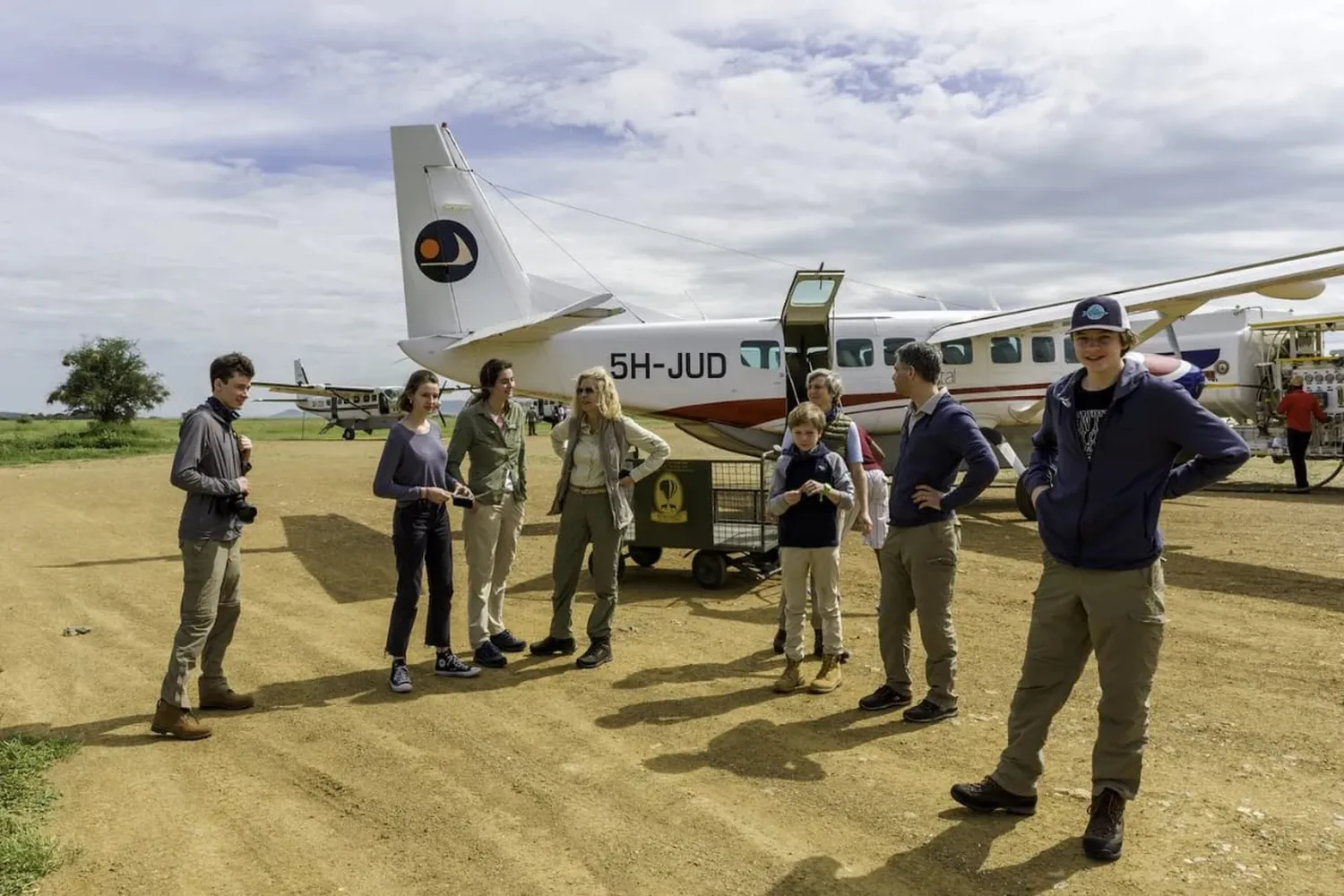
| Scheduled fly-in safari | Adds flight and transfer costs but saves long drives | Short holidays, Zanzibar combinations and remote camps |
| Private charter | Highest transport cost unless shared by a larger private group | High-end travel, tight schedules and exclusive itineraries |
Extra Costs to Add to Your Safari Budget
| Extra | Useful planning range | Notes |
|---|---|---|
| Guide tip | About US$20–US$30 per vehicle/day | Usually shared by the travelling group |
| Safari balloon flight | About US$550–US$650 per person | Park-specific fees and breakfast may be included |
| Domestic flight | About US$180–US$450 per sector | Check baggage allowance and transfer charges |
| Single supplement | About US$40–US$250+ per night | Highest at premium and peak-season camps |
| Cultural or village visit | About US$20–US$80 per person | Ask how the community benefits from the fee |
| Travel insurance | Policy-specific | Emergency evacuation and medical cover are important |
How to Reduce Tanzania Safari Costs Without Ruining the Trip
- Travel with four to six people. Vehicle and guide costs are divided across the group.
- Choose shoulder or green season. Lodge savings can be significant outside peak migration weeks.
- Mix accommodation levels. Use a simpler lodge in transit areas and spend more where location matters most.
- Limit one-night stops. Constant movement increases fuel, transfer time and logistical costs.
- Use a joining departure. This is especially effective for solo travellers and couples.
- Drive one way and fly one way. On longer Serengeti trips, this can save time without paying for flights in both directions.
- Ask for a line-by-line quote. Compare park fees, hotels, room types, transfers and activities—not just the total.
How to Compare Safari Quotes Fairly
Before accepting the lowest offer, confirm these ten points:
- Is the safari private or shared?
- How many window seats are guaranteed?
- Which exact lodges and room categories are booked?
- Are all park, concession, camping and crater fees included?
- Are taxes included or added later?
- How much drinking water is supplied?
- Are airport transfers included on arrival and departure?
- What happens if a lodge becomes unavailable?
- What deposit, cancellation and refund rules apply?
- How are statutory price increases for 2027 handled?
Review the available Tanzania safari payment options and request a written invoice before transferring money.
Family and Child Safari Pricing
TANAPA states that children under five enter its national parks free, while child rates apply from ages five to fifteen. However, lodges, airlines and NCAA may use different age bands. A family quote should list each child’s date of birth and show separate charges for accommodation, park fees, flights and extra beds.
Families can reduce costs by choosing family rooms, travelling privately with four or more people and avoiding unnecessary single rooms. Private safaris also make meal stops, toilet breaks and game-drive length easier to manage.
Is a Tanzania Safari Worth the Cost?
It is worth the cost when the itinerary gives you enough time in the parks, a reliable vehicle, a skilled guide and accommodation suited to your priorities. Spending more does not automatically create better wildlife sightings, but paying for a strong location, experienced guiding and a sensible route can improve the quality of each day.
A rushed two-night Serengeti road trip may cost less than a balanced five-day route but deliver fewer productive game-drive hours after long transfers. Value should be measured by time in wildlife areas, guide quality, comfort, transparency and support—not only by the lowest price.
Recommended Budget for First-Time Visitors
For a first Tanzania safari, a practical target is US$2,500–US$4,000 per person for a 6–7 day mid-range northern-circuit safari, excluding international flights. Couples wanting private transport and well-located Serengeti camps should plan towards the upper end. Travellers comfortable with group departures and simpler lodges can spend less.
Before packing, use the Tanzania safari packing list to avoid expensive last-minute purchases.
Frequently Asked Questions
How much does a Tanzania safari cost per person in 2026/2027?
Most travellers should budget about US$250–US$350 per person per day for a shared budget safari, US$350–US$550 for a mid-range lodge safari, US$600–US$1,200 for luxury, and US$1,200–US$2,500 or more for an ultra-luxury or fly-in safari.
How much does a 7-day Tanzania safari cost?
A seven-day safari typically costs about US$1,750–US$2,450 per person for budget travel, US$2,450–US$3,850 for mid-range, and US$4,200–US$8,400 for luxury. International flights, visas, insurance and tips are usually extra.
Why are Tanzania safaris expensive?
The price combines protected-area fees, a specialised 4x4 vehicle, fuel, a professional driver-guide, accommodation, meals, logistics and taxes. Remote camps and fly-in routes cost more because supplies, staff and guests must travel long distances.
What is the cheapest time for a Tanzania safari?
April and May usually offer the strongest lodge discounts, while parts of March and November can also provide good value. Rain can affect some roads and wildlife movements, so the lowest price is not always the best choice for every itinerary.
Are Tanzania park fees included in safari prices?
Reputable package quotes normally include park and conservation fees, but you should confirm this in writing. Ask whether the quote also includes concession fees, the Ngorongoro crater service fee, vehicle permits and any government taxes.
Is a group safari cheaper than a private safari?
Yes. A joining safari spreads vehicle, guide and fuel costs across more travellers. A private safari costs more but gives you control over departure times, stops, pace, luggage space and the daily route.
Will Tanzania safari prices increase in 2027?
Some lodge contracts, airfares and public tariffs may change for 2027. Until every supplier publishes final rates, a sensible planning approach is to keep a 5–10% contingency and request a written quote that states how future statutory increases will be handled.
Do Tanzania safari prices include international flights?
Usually not. Most safari prices begin and end in Arusha, Moshi, Kilimanjaro International Airport, Dar es Salaam or Zanzibar. International airfare, visas, travel insurance and personal spending are commonly excluded unless the quote states otherwise.
Plan a Tanzania Safari with a Clear, Itemised Price
Start with your travel dates, number of travellers, preferred parks and accommodation level. Jaynevy Tours can then match your budget to a realistic route rather than forcing every traveller into the same package. Browse the full range of Tanzania safari packages and request an itemised quotation showing accommodation, transport, park fees, meals, transfers and optional extras.
Sources and Price-Checking Notes
- Tanzania National Parks: official park fees and tariffs.
- Ngorongoro Conservation Area Authority: official tariffs.
- 2025 International Visitors’ Exit Survey Report.
- SafariBookings: Tanzania safari cost averages.
Last price review: 28 July 2026. Official fees, lodge contracts, exchange rates and aviation charges can change. Always rely on the final written quotation for your actual travel dates.