
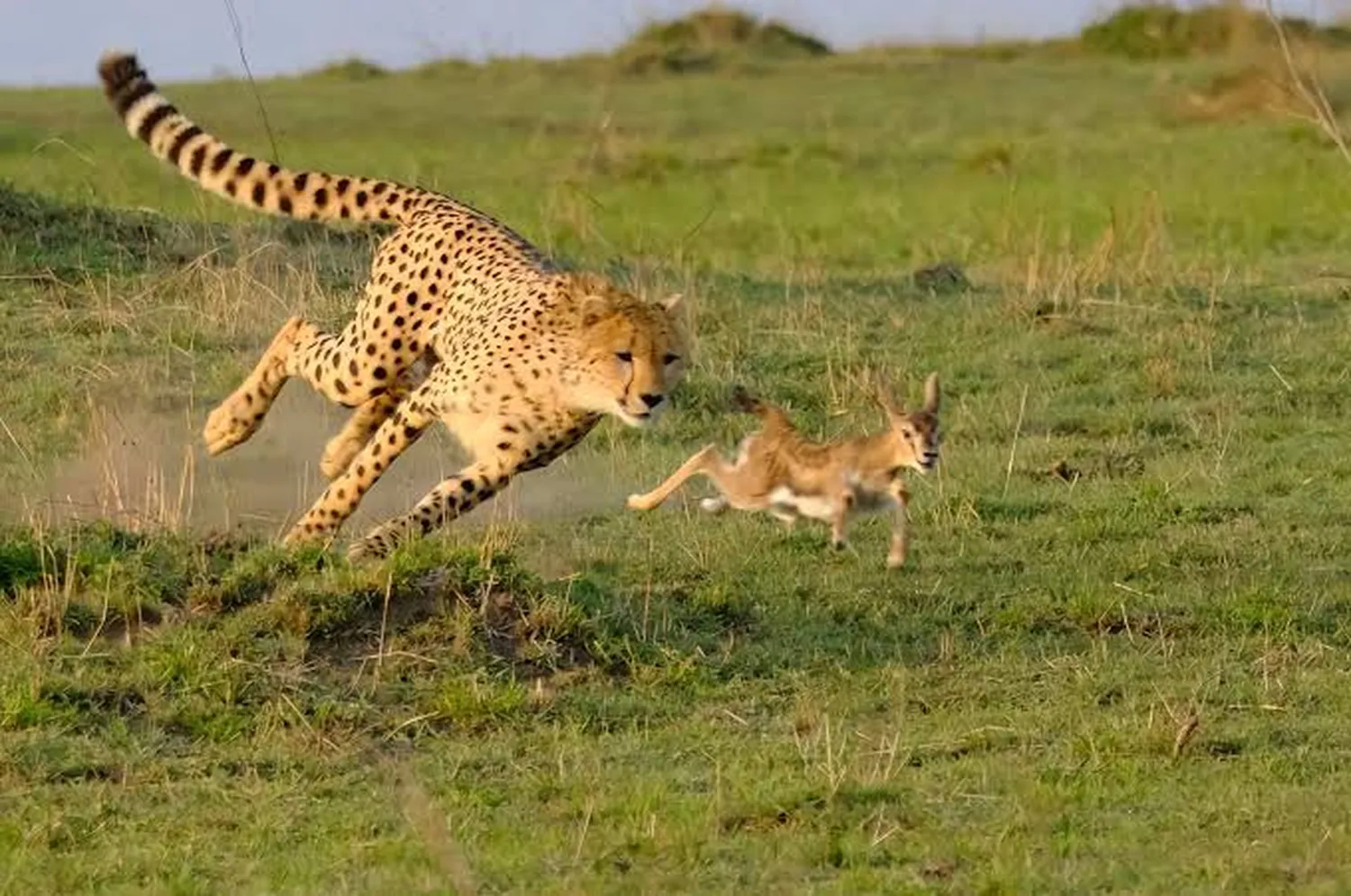
Quick Answer: What Is the Best 6-Day Serengeti Predator Safari Plan?
The strongest six-day predator plan is a Serengeti-focused itinerary with at least four substantial game-drive days. Base most of the trip in Central Serengeti/Seronera for year-round lion and leopard search time, add an eastern or southeastern plains day for cheetah habitat, and use one flexible day for the seasonal wildlife sector that is most productive during your travel month. If budget allows, a fly-in/fly-out itinerary is usually better for this specific goal because it converts long transfer hours into time in lion, leopard and cheetah country.
Do not book from a claimed “predator sighting percentage.” Lions, leopards and cheetahs are free-ranging animals. Six days improves search time; it does not create a guarantee.
- Park size: Serengeti National Park covers about 14,763 km².
- Core base: Central Serengeti is the best all-round year-round predator base.
- Lion: usually the most visible of the three large cats.
- Leopard: naturally cryptic; riverine woodland and trees deserve slow scanning.
- Cheetah: open country matters; some home ranges exceed 1,000 km².
- Best vehicle style: private 4x4 for flexible waiting and route decisions.
- Best daily rhythm: early start, long observation windows, patient scanning.
- Important: kills, hunts and cub sightings cannot be promised.
Serengeti Predator Safari at a Glance: Lion vs Leopard vs Cheetah
The three cats use the Serengeti differently, so one viewing strategy does not fit all of them. Lions can use plains, kopjes and woodland edges; leopards benefit from cover and trees; cheetahs need enough open ground to use speed while avoiding stronger competitors.
| Predator | Useful Serengeti habitat | Where to focus | Main viewing challenge |
|---|---|---|---|
| Lion | Plains, kopjes, drainage lines, woodland edges | Central Seronera; kopje systems; seasonal prey concentrations | They may spend long periods resting and become active outside the busiest viewing hours. |
| Leopard | Riverine woodland, acacia cover, trees, rocky cover | Seronera River and wooded central Serengeti corridors | Solitary, camouflaged and often partly hidden in trees or vegetation. |
| Cheetah | Open short-grass and medium-grass plains | Eastern/southeastern plains; seasonal southern ecosystem | Lower density, very large ranges and avoidance of stronger predators. |
What Does the Research Actually Say About Serengeti Predators?
Serengeti is genuinely exceptional for large carnivores, but population figures must be used carefully. TANAPA describes the Serengeti as a 14,763 km² park within a larger ecosystem of roughly 35,000 km² and notes that it supports globally important populations of lion and cheetah. UNESCO’s current World Heritage profile cites reference estimates of about 4,000 lions, 1,000 leopards and 225 cheetahs among the park’s major predators. Those figures demonstrate ecological importance, but they should not be treated as a live 2026 census or converted into a tourist sighting probability.
A peer-reviewed camera-trap study in Serengeti estimated leopard densities of about 5.41 individuals per 100 km² in the dry season and 5.72 per 100 km² in the wet season, with overlapping uncertainty intervals. That is useful evidence that Serengeti is an important leopard stronghold, but it does not mean you will see five leopards every 100 km² of driving: density is an ecological measure, not a game-drive encounter rate.
For cheetahs, the Zoological Society of London’s long-running Serengeti Cheetah Project reports that some cheetah home ranges cover more than 1,000 km². ZSL also emphasizes that cheetahs occur at lower densities than stronger African large carnivores because they need room to avoid competitors such as lions. This is exactly why a six-day cheetah search benefits from open-country scanning and flexible sector choice.
A 2024 Journal of Animal Ecology study using long-term Serengeti lion data also showed that lion demography changes with social density, season and habitat context. The practical safari lesson is simple: predator activity is dynamic. A good guide reads current conditions instead of assuming last month’s hotspot will behave the same way today.
Data Note: Population Size Is Not Sighting Probability
Large population estimates can make a destination biologically important while individual animals remain difficult to locate. Leopard camouflage, cheetah range size, grass height, weather, road access and the exact hours you spend in productive habitat all affect what a guest sees. This guide therefore avoids unsupported claims such as “99% lion success” or guaranteed cheetah sightings.
Where to Find Lions in the Serengeti
For a six-day itinerary, Central Serengeti is the safest year-round lion base. The Seronera region combines permanent water, mixed grassland, kopjes, drainage lines and resident prey. That diversity lets a guide search different lion situations without driving to another end of the ecosystem every day.
Central Seronera and Kopje Systems
Lions use open ground for visibility, rocky kopjes for shade and observation, and drainage or woodland edges when prey moves through cover. A patient guide checks known pride territories, scans the shade around kopjes during warmer hours and returns to promising areas later rather than racing between radio reports.
When Migration Herds Matter to Lions
Large herbivore concentrations can reshape predator activity, especially in the southern ecosystem during the calving period and later along western and northern migration routes. However, resident lion prides remain in many areas after the migration moves on. If your only goal is lions, you do not need to chase the migration every day.
For a broader park overview, use Jaynevy’s Serengeti National Park guide and compare the full Serengeti safari collection by duration.
Where to Find Leopards in the Serengeti
Leopard viewing rewards slow driving around riverine woodland and tree-lined drainage systems. Central Serengeti is valuable because you can repeat the same productive habitat over several mornings and evenings instead of spending most of the trip relocating camps.
Why the Seronera River System Matters
Riverine vegetation provides shade, cover and trees, while surrounding plains bring prey close to woodland edges. Scan horizontal branches, forked trunks, shaded ground under acacias and the margins of drainage channels. A leopard can remain invisible even when a vehicle is only a short distance away, so binoculars are useful even inside the 4x4.
Why More Game Drives Beat One “Leopard Day”
Leopards are solitary and their visibility changes quickly. The stronger plan is to keep several central Serengeti drives in the itinerary and use each one to revisit productive habitat. A leopard may be hidden at 08:00 and visible on a branch at 17:00; six days gives you repeated opportunities.
If photography is a priority, see the Serengeti photography adventure and consider a private Serengeti safari so your group controls waiting time at a cat sighting.
Where to Find Cheetahs in the Serengeti
Cheetahs are best searched for in open country where they can scan prey and use speed. Eastern and southeastern grasslands are especially useful, while the southern Serengeti-Ndutu ecosystem can become highly productive during the calving season.
Eastern Serengeti Open Plains
Open grassland lets you scan long distances for a cheetah sitting upright, walking a ridge or using a termite mound as a lookout. The trade-off is that the same openness means a cheetah may be far from the road. A long lens and binoculars are more useful than demanding that a driver leave designated tracks.
Southern Serengeti and Ndutu, January to March
During the calving period, huge numbers of wildebeest and other grazers concentrate in the southern ecosystem. Young animals can increase predator-prey opportunities. Ndutu is not simply another part of Serengeti National Park: the wider Ndutu/southern plains experience spans the park boundary and the Ngorongoro Conservation Area, so accommodation and permits should match the exact route.
For travelers whose dates are tied to herd movement, compare this predator strategy with Jaynevy’s Serengeti migration timing guide.
Best Time for a 6-Day Serengeti Lion, Leopard and Cheetah Safari
There is no single month when all three cats become “easy.” The better question is which sector gives the best combination of resident predators, prey, vegetation and road access for your dates.
| Period | Predator value | Best routing idea | Main trade-off |
|---|---|---|---|
| Jan–Mar | Excellent southern predator-prey activity; strong cheetah context; resident lions and leopards remain important. | Central Serengeti + southern Serengeti/Ndutu ecosystem. | Popular calving-season camps can fill early; exact herd location still responds to rain. |
| Apr–May | Green landscapes, lower traffic, productive resident-cat viewing. | Central/eastern focus with route adapted to road conditions. | Long rains can make some tracks slower or muddy. |
| Jun–Jul | Drying vegetation can improve visibility; migration may shift west/north. | Central base plus western or northern extension only if it adds wildlife value. | Long relocation drives can reduce actual cat-search hours. |
| Aug–Oct | Dry-season visibility and active water-point ecology; north can be busy with migration travel. | Keep central predator time; add north only if river/migration interest justifies it. | Peak-season traffic can build around famous sightings. |
| Nov–Dec | Short rains refresh grass; herds begin moving south; resident cats remain productive. | Central/east with flexible southward positioning as conditions develop. | Rainfall timing varies, so exact herd geography is not calendar-perfect. |
Best 6-Day Serengeti Predator Safari Itinerary
If lion, leopard and cheetah are the main purpose of the trip, fly-in/fly-out is the most efficient six-day format. It avoids using the first and last days on long road transfers and creates five nights inside or immediately adjacent to high-value Serengeti habitat.
Day 1: Arusha to Seronera by Flight — First Central Serengeti Predator Drive
Fly from Arusha to a Serengeti airstrip and begin game viewing after meeting your guide. Use the afternoon for central Seronera rather than immediately driving to a distant seasonal sector. The first goal is to establish current lion-pride locations, check riverine trees for leopard and learn what prey is doing around the central plains.
Day 2: Full Day Central Serengeti — Lion and Leopard Priority
Start early. Work kopjes, open plains, Seronera River habitat and woodland edges. Spend time with behavior instead of leaving every stationary cat after five minutes. A lion pride beginning to stir or a leopard watching impala from cover can become more interesting if you wait.
Day 3: Eastern Serengeti — Cheetah and Open-Plains Search
Use a long open-country game drive toward eastern or southeastern plains where route conditions permit. Scan termite mounds, ridgelines and short grass for cheetah silhouettes. Lions may also use these plains, while hyenas and jackals add useful context to the predator guild.
Day 4: Seasonal Predator Sector — Follow the Ecology, Not a Fixed Map
Choose this day according to season: southern ecosystem during the calving months, western/northern areas when migration geography and accommodation make sense, or another central/eastern day when long relocation would cost too much viewing time. This flexible day is one of the biggest advantages of a private safari.
Day 5: Return to Central Serengeti — Leopard Follow-Up and Golden-Hour Cats
Revisit the most productive areas from Days 1 and 2. Guides can use fresh tracks, prey alarm behavior and recent sightings to decide where to spend the final full day. Keep the late afternoon open for cats becoming active as temperatures fall.
Day 6: Dawn Game Drive and Flight Out
Use the last morning for a focused drive rather than a rushed multi-park detour. Then fly back to Arusha or connect onward. For a premium version of this structure, compare the 6-day luxury Serengeti fly-in safari.
Road-Based Alternative: Cheaper, but Protect Your Serengeti Time
A road safari from Arusha can still work, but the drive to and from the Serengeti consumes part of the six-day window. If you choose road travel, do not add four or five parks just to make the itinerary look bigger. A predator-first road plan should keep at least three nights in the Serengeti and use the transfer days intelligently. See the core 6-days Serengeti safari before deciding whether fly-in or road travel gives better value for your dates.
Best Time of Day to Look for Lions, Leopards and Cheetahs
Early morning and late afternoon are usually the most valuable shared windows, but cheetahs can also be active in daylight. A predator safari should not finish every game drive by mid-morning simply because breakfast is waiting.
| Time | Lion | Leopard | Cheetah |
|---|---|---|---|
| Sunrise–09:00 | Excellent for movement, social behavior and finishing nighttime activity. | Strong search window around riverine cover and trees. | Good scanning before heat builds; hunting may occur in daylight. |
| 09:00–15:30 | Often resting; shade around kopjes and bushes becomes important. | May rest in trees or dense shade; binocular scanning matters. | Can remain active, but heat and distance may reduce obvious movement. |
| 15:30–sunset | Activity often increases as temperatures fall. | Another valuable period for movement from cover. | Good for movement, scanning and late hunting attempts. |
Private vs Shared Safari for Predator Viewing
A private vehicle is usually worth the premium when cats are the main objective. Predator viewing often depends on waiting, returning to the same location, skipping a generic sightseeing stop or spending an hour scanning a tree line. Those decisions are harder in a shared vehicle with passengers who have different priorities.
| Factor | Private safari | Shared safari |
|---|---|---|
| Departure time | Flexible within park/lodge logistics | Agreed by group schedule |
| Waiting at a leopard sighting | You decide how long | Other guests may want to move |
| Cheetah scanning detours | Easier to customize | Usually follows common route |
| Photography positioning | More control over vehicle placement when rules allow | Shared window/roof space |
| Cost per person | Usually higher for small groups | Usually lower |
How to Photograph Serengeti Lions, Leopards and Cheetahs Better
- Carry binoculars even if you have a telephoto lens. They are faster for scanning trees and distant plains.
- Use a flexible zoom. Cats can move from close portraits to distant behavior quickly.
- Prioritize behavior. Grooming, territorial scent-marking, cub interactions and hunting preparation tell a stronger story than a static headshot.
- Keep shutter speed ready. Cheetah acceleration and lion interactions can become fast with little warning.
- Support the lens. A bean bag or stable roof-rest technique helps inside a safari vehicle.
- Protect equipment from dust and sudden rain. Serengeti conditions can change within the same day.
- Never pressure the guide to crowd or block wildlife. Ethical positioning protects animals and usually produces more natural photographs.
What You Should Not Expect From a Predator Safari
- A guaranteed lion hunt, leopard kill or cheetah chase.
- All three species every day.
- A cub sighting on request.
- Off-road driving wherever you want; access depends on park rules and designated areas.
- Migration herds to remain in the same sector for fixed calendar dates.
- Every famous sighting to be quiet; peak-season traffic can build around cats.
- Population estimates to translate directly into tourist encounter rates.
Why a Predator-Focused Safari Should Not Chase Every Radio Call
The best guides use shared information, but they also read habitat and animal behavior. Driving twenty kilometres to join a large cluster of vehicles can be less productive than staying with fresh lion tracks, alarm-calling impala or a cheetah already scanning prey. A six-day itinerary gives enough time to balance current sightings with patient fieldcraft.
Central Serengeti makes this easier because many productive habitats are close enough to combine within one day. Read the Serengeti Central Seronera Loop guide for more context on the central road network. If your dates put wildlife far north, compare the Northern Serengeti road guide before adding a long relocation.
Who Is This 6-Day Serengeti Predator Safari Best For?
This itinerary is particularly strong for:
- wildlife photographers who want repeated cat-search sessions;
- first-time Serengeti visitors who care more about behavior than ticking many parks;
- families or couples comfortable spending long periods observing one sighting;
- travelers interested in ecology, predator-prey relationships and field interpretation;
- return safari travelers who want a narrower, deeper Serengeti theme.
If you prefer a general wildlife trip rather than a cat-focused one, compare broader Serengeti Tanzania safari packages before choosing this specialist structure.
Frequently Asked Questions About a 6-Day Serengeti Predator Safari
Can I see lions, leopards and cheetahs on a 6-day Serengeti safari?
Yes, all three occur in the Serengeti, but no ethical operator can guarantee all three on a particular departure. Lions are generally the easiest of the three to locate, leopards are more cryptic and often associated with riverine or wooded cover, and cheetahs use large ranges and favor open country.
Which Serengeti area is best for lions?
Central Serengeti around Seronera is a strong year-round base for lion viewing because it combines open plains, kopjes, watercourses and resident prey. Seasonal herd movements can make other sectors exceptionally productive as well.
Which Serengeti area is best for leopards?
The Seronera River system and nearby acacia woodland are practical places to spend repeated search time for leopards. They are solitary and well camouflaged, so several game drives are more useful than a single rushed pass.
Which Serengeti area is best for cheetahs?
Open grasslands in the eastern and southeastern Serengeti are well suited to cheetahs. From roughly January to March, the southern Serengeti-Ndutu ecosystem can be particularly interesting because large concentrations of young ungulates attract predators, although Ndutu also extends into the Ngorongoro Conservation Area.
Is January to March the best time for a Serengeti predator safari?
January to March is excellent for predator-prey activity in the southern Serengeti-Ndutu ecosystem during the calving period, but it is not the only good window. Resident lions, leopards and cheetahs can be seen year-round, while the best sector changes with rainfall, prey and road conditions.
Is the dry season good for a predator safari?
Yes. June to October often gives thinner vegetation, concentrated prey around water and productive early-morning game drives. However, migration herds may be far north or west while resident predators remain in central areas, so route choice still matters.
Should I choose a private vehicle for a predator-focused safari?
A private vehicle is usually the better fit when big cats are the main objective because you control departure times, how long you wait at a sighting and whether you stay with a promising area instead of moving on with a group schedule.
Do predator safaris guarantee a hunt or kill?
No. Predators spend much of the day resting, moving, socializing or watching prey. Hunts and kills are unpredictable natural events and should never be promised in advance.
What camera lens is useful for lions, leopards and cheetahs?
A flexible telephoto zoom is practical from a safari vehicle because cats may be close or hundreds of metres away. Binoculars are also essential, especially for scanning trees, kopjes and distant open plains.
Is six days enough for a predator-focused Serengeti safari?
Yes, particularly with a fly-in itinerary that converts transfer time into game-drive time. A road itinerary can also work, but it spends more of the six-day window in transit and should avoid adding too many extra parks if predator viewing is the primary goal.
Research Notes and Trusted Sources
This guide uses published conservation information to improve planning, not to manufacture wildlife guarantees. UNESCO predator numbers are reference population estimates presented on the World Heritage property profile, not a live 2026 head count. The leopard figures below come from a spatially explicit camera-trap study, while the cheetah range information comes from ZSL’s long-term Serengeti Cheetah Project.
- UNESCO World Heritage Centre: Serengeti National Park — park/ecosystem significance and predator reference figures.
- TANAPA Serengeti overview — 14,763 km² park size and ecosystem context.
- Allen et al.: Counting cats for conservation — Serengeti leopard density estimates of 5.41 and 5.72 individuals per 100 km² in dry and wet seasons.
- Zoological Society of London: Serengeti Cheetah Project — long-term research, low density and home ranges exceeding 1,000 km² for some cheetahs.
- Conquet et al. 2024, Journal of Animal Ecology — seasonality and social-density effects in long-term Serengeti lion demography.
Editorial note: Wildlife locations change continuously. Your guide should use current field information, weather, habitat and park rules for the actual departure. Jaynevy Tours does not guarantee a hunt, kill, cub, or a specific individual predator.