
Quick Answer: How Should You Tailor a 6-Day Tanzania Wildlife Safari?
Start with your top two wildlife priorities, then build the route around them. If big cats and photography matter most, give the Serengeti three or four nights and reduce minor stops. If elephants are the priority, keep a full Tarangire day or two. If the Great Migration is the purpose of the trip, place the Serengeti nights in the most practical seasonal sector for your dates. If you want broad variety, combine Tarangire, Serengeti and Ngorongoro with an optional Lake Manyara day.
| Main priority | Best 6-day emphasis | Why | Main compromise |
|---|---|---|---|
| Big cats | 3–4 Serengeti nights + Ngorongoro | More dawn, evening and repeat predator-search time | Fewer parks |
| Great Migration | Seasonally positioned Serengeti + Ngorongoro | Route follows likely herd region rather than a fixed camp | May require longer transfers or fly-in sectors |
| Elephants + classic safari | Tarangire + Serengeti + Ngorongoro | Strong contrast between elephant country, plains and crater | No dedicated Manyara day |
| Birding + habitat variety | Manyara + Tarangire + Serengeti + Ngorongoro | Adds wetlands, forest and Rift Valley habitat | Less Serengeti depth |
| Photography | Fewer parks, longer stays, private vehicle | Protects light, patience and positioning | Less destination variety |
What “Tailored Wildlife Viewing” Really Means
A tailored safari is not simply a standard itinerary with your name added to the top. It should change decisions that affect wildlife time: which parks are included, how many nights are assigned to each area, the location of the lodge or camp, whether the vehicle is private, the starting time of game drives, the balance between full-day and split drives, and the optional activities that are allowed to compete for safari hours.
For example, a traveller who says “I want to see as many parks as possible” needs a different six-day route from someone who says “I want cats, behaviour and photography.” The first may prefer a four-park loop. The second may get more value from Tarangire, three Serengeti nights and Ngorongoro. Tailoring is therefore a resource-allocation decision: six days are fixed, so every extra transfer or activity has an opportunity cost.
Best All-Round 6-Day Tailored Wildlife Itinerary
For first-time visitors who want a strong balance without overloading the route, the most useful default is Tarangire → Serengeti → Serengeti → Serengeti → Ngorongoro highlands → Ngorongoro Crater and Arusha. It keeps the three strongest complementary wildlife systems and protects three nights in the Serengeti.
| Day | Route | Wildlife focus | Tailoring decision |
|---|---|---|---|
| 1 | Arusha → Tarangire | Elephants, plains game, baobab landscape | Full game-drive day rather than a short transit stop |
| 2 | Tarangire → Serengeti | Changing habitats and arrival game drive | Choose Serengeti sector for season and priorities |
| 3 | Serengeti | Predators, plains wildlife, behaviour | Early start or full-day route depending sightings |
| 4 | Serengeti | Second deep game-viewing day | Revisit productive areas instead of chasing distance |
| 5 | Serengeti → Ngorongoro | Morning wildlife + highland transition | Leave early enough to protect Day 6 crater timing |
| 6 | Ngorongoro Crater → Arusha | High-density crater wildlife | Early descent and realistic airport/hotel buffer |
Day 1: Arusha to Tarangire — Start with Elephant Country
Leave Arusha in the morning and use Tarangire as a genuine wildlife day, not a token stop. The park is especially valuable when your interests include elephants, baobab landscapes and dry-country game. A tailored trip can decide whether one day is enough or whether a second Tarangire night is worth trading for a Serengeti night. In the dry season, the river system can become especially important for wildlife concentration, but conditions vary from year to year.
Day 2: Tarangire to Serengeti — Choose the Right Serengeti Sector
The most important tailoring decision may be where you sleep in the Serengeti. Central Serengeti is a practical year-round base for many travellers and is especially useful for general predator viewing. A migration-focused trip may use a different region according to the month, recent herd movement, road conditions and accommodation availability. The best camp is not always the most luxurious one; location can save or waste hours every day.
Day 3: Serengeti — Prioritize Behaviour, Not Just a Species List
Use the first full Serengeti day to build around current sightings and your interests. A photographer may want to remain with a pride for an hour while the light improves. A family with younger children may prefer a shorter morning drive, lodge break and afternoon drive. A first-time visitor may want a broader circuit covering different habitats. Because your vehicle is private, the guide can make these trade-offs with your party rather than with unrelated guests.
Day 4: Serengeti — The Value of a Second Full Day
The second full Serengeti day is where a tailored six-day safari becomes meaningfully different from a rushed highlights route. You can return to an area where predators were active, explore a different habitat, spend longer with elephants or plains game, or adjust the day around seasonal herd information. Wildlife viewing is probabilistic; repeated time in a productive ecosystem is often more valuable than constantly moving to collect destination names.
Day 5: Serengeti to Ngorongoro — Keep the Transfer Strategic
Enjoy a morning game drive, then move toward Ngorongoro. This day should be timed around the following morning, not only around how late you can stay in Serengeti. Sleeping on or near the crater rim can protect an early descent but often costs more; Karatu can offer wider accommodation choice and value but adds morning transfer. A tailored plan should show this trade-off clearly.
Day 6: Ngorongoro Crater — Finish with a Contrasting Ecosystem
Ngorongoro adds a compact, high-density game-viewing environment after the huge Serengeti landscape. The crater is about 260 km², roughly 20 km in diameter and about 610 m deep; the Ngorongoro-Lengai Geopark describes it as home to over 25,000 animals. These figures explain why the crater is useful in a six-day itinerary, but they do not mean every animal or every member of the Big Five will be seen on demand.
Five Tailored 6-Day Safari Designs
| Safari design | Suggested allocation | Best for | Watch-out |
|---|---|---|---|
| Big-cat focus | 1 Tarangire + 4 Serengeti/transition + 1 crater | Lions, cheetahs, leopard searches | Do not promise hunts or cats on command |
| Migration focus | 4 Serengeti nights + Ngorongoro | Travellers following herd movement | Camp region must match season |
| Elephant + predator | 2 Tarangire + 3 Serengeti + crater | Elephant lovers and photographers | Less ecosystem variety |
| Birding + general wildlife | Manyara + Tarangire + 2 Serengeti nights + crater | Birders and habitat generalists | Shorter Serengeti stay |
| Slow private safari | 3 parks only, fewer lodge changes | Couples, seniors, families | Fewer park names, better pace |
Wildlife Numbers: What the Data Actually Tells You
Official and intergovernmental figures are useful for understanding scale, not for promising what you will see from one vehicle. UNESCO describes Serengeti National Park as 1.5 million hectares of savannah. Its World Heritage documentation describes an annual migration of about two million wildebeest plus hundreds of thousands of gazelles and zebras. TANAPA describes Serengeti as having an exceptionally high concentration of large carnivores. These facts justify spending multiple days there, but they are ecosystem-level numbers rather than a daily sighting forecast.
Ngorongoro gives a different kind of wildlife opportunity because the crater floor is much smaller and supports a large concentration of animals. That is why combining a vast Serengeti component with a crater day gives a six-day route ecological contrast instead of simply repeating the same style of game drive.
How to Tailor the Safari for Big Cats
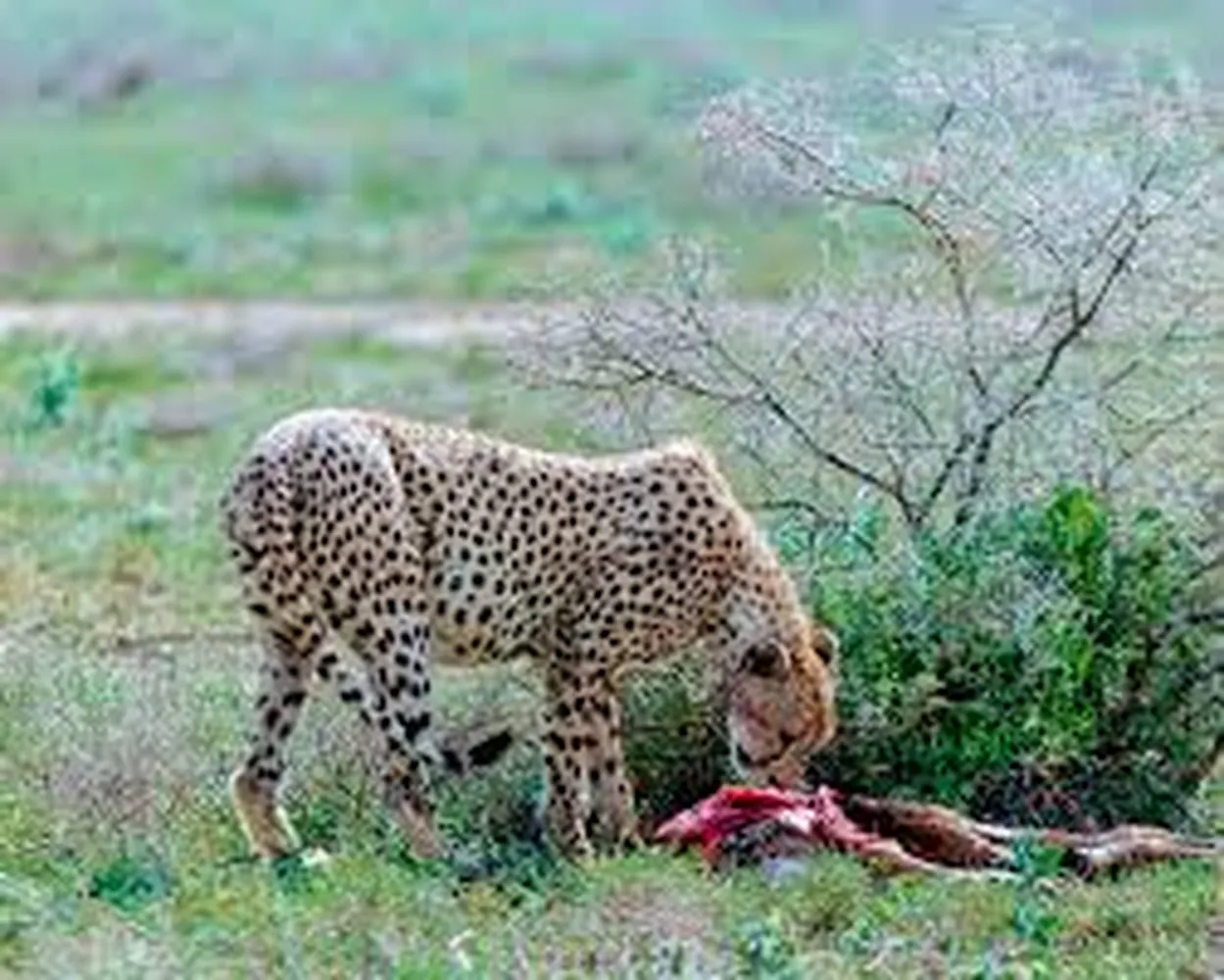
If lions, leopards and cheetahs are the priority, reduce unnecessary park-hopping. Keep at least three Serengeti nights, use a private vehicle, discuss early starts with the guide and choose accommodation based on access to the area you want to explore. Central Serengeti is often valuable for year-round predator searches, while seasonal areas can be important when prey concentrations shift.
- Lions: allow repeated time in productive plains and kopje areas rather than expecting one quick drive to deliver every behaviour.
- Leopards: riverine vegetation and known territories can improve search strategy, but sightings remain less predictable.
- Cheetahs: open-country habitats can be productive, especially where prey and visibility align.
- Hyenas: include them in your predator brief; they are ecologically important and can produce excellent behavioural viewing.
For related planning, see Jaynevy’s Serengeti big-cat guide and the wider Serengeti National Park guide.
How to Tailor the Safari Around the Great Migration
A migration-focused safari should be tailored around likely herd location, not around a promise of a crossing. Rainfall and grazing influence movement, and the useful Serengeti sector changes through the year. Jaynevy’s current 6-day luxury Great Migration safari explicitly plans the Serengeti portion around season, current wildlife information and confirmed accommodation rather than guaranteeing one fixed location.
| Period | Typical planning emphasis | Tailoring principle |
|---|---|---|
| Jan–Mar | Southern Serengeti / Ndutu ecosystem interest | Prioritize calving-season landscapes where conditions support it |
| Apr–Jun | Changing central/western movement | Keep location flexible around rainfall and access |
| Jul–Oct | Northern/western migration interest depending month | Do not equate travel date with a guaranteed river crossing |
| Nov–Dec | Return movement toward southern areas | Use current herd reports rather than a fixed annual calendar |
How to Tailor for Elephants, Birding or Families
Elephant-focused
Give Tarangire more time. One full day can work, but two nights allow a slower exploration of river, woodland and baobab habitats before moving to Serengeti. This is a better use of six days for an elephant enthusiast than adding Lake Manyara simply because it appears in a standard route.
Birding-focused
Add Lake Manyara or protect slower birding time in mixed habitats. TANAPA reports more than 400 bird species in Lake Manyara, making it a meaningful addition for birders rather than just a scenic stop. A birder may also prefer fewer long transfer days and a guide with strong bird identification skills.
Family-focused
Reduce very long full-day drives, choose family-friendly room configurations and keep snacks, restroom breaks and lodge downtime in the plan. “Tailored” should mean the schedule fits the children’s ages and attention spans—not that every adult game drive is simply shortened at the last minute.
Private vs Sharing Safari: Why It Matters for Tailoring
| Feature | Private safari | Sharing safari |
|---|---|---|
| Start times | Can be adjusted within operational limits | Group schedule |
| Sighting duration | Your party decides with the guide | Compromise among guests |
| Wildlife focus | Can prioritize birds, cats, elephants or photography | Usually general-interest viewing |
| Route changes | More flexible when permits, logistics and accommodation allow | Usually fixed |
| Cost | Higher for small parties; improves as vehicle costs are shared | Often lower per person |
A truly tailored wildlife safari is normally private because the main benefit is control over time and priorities. If budget is more important than customization, compare the 6-day Tanzania sharing safari rather than paying for a private itinerary you do not need.
2026/2027 Price Benchmarks for a Tailored 6-Day Safari
There is no honest single price for a tailored safari because the point of tailoring is that the inputs change. The most useful approach is to compare live packages with known service levels, then request a written quote for your chosen route.
| Published comparison | Current starting reference | What it tells you |
|---|---|---|
| 6-day private four-park mid-range, 4–6 travellers | USD 1,850 pp | Lower per-person vehicle share for a larger private party |
| 6-day private four-park mid-range, 2–3 travellers | USD 2,150 pp | Small private groups carry more vehicle cost per person |
| 6-day luxury Northern Circuit, two sharing | From USD 3,950 pp | Private luxury 4x4 plus premium accommodation benchmark |
| 6-day luxury Great Migration safari | From USD 3,950 pp | Seasonal positioning and premium accommodation benchmark |
These are published planning references, not a new quote for this page. Your total can change with travel month, room category, exact Serengeti sector, group size, domestic flights, optional balloon safari, pickup/drop-off point and supplier availability. Compare the wider Tanzania safari cost guide if you are deciding between service levels.
What Should Be Included in a Tailored Quote?
A useful quotation should be specific enough that two safari offers can be compared line by line. Ask for:
- exact number of safari days and nights;
- private or shared vehicle status;
- start and finish location;
- park sequence and approximate night allocation;
- named lodges/camps or a clearly defined “or similar” standard;
- meal basis;
- park, conservation and crater-related charges included in the price;
- domestic flights, if any;
- optional activities priced separately;
- child policy, single supplements and room configuration where relevant;
- what happens if a preferred seasonal camp is unavailable.
Road Safari or Fly-In: Which Is Better for Wildlife Time?
Road travel works well when you want Tarangire, Ngorongoro and Serengeti in one connected landscape journey. A fly-in sector becomes more valuable when the priority is maximizing Serengeti hours, starting from Zanzibar, or avoiding a long overland transfer. A tailored itinerary can also mix the two: drive through Tarangire and Ngorongoro, then fly out of Serengeti, or fly into Serengeti and continue overland.
The right answer depends on what you are optimizing: money, bush time, scenery, luggage flexibility or comfort. Do not choose a flight simply because it sounds premium if it does not save meaningful time in your exact route.
Common Tailoring Mistakes
- Trying to include too many parks. Six days can support variety, but every extra park takes time away from wildlife depth.
- Choosing lodges before choosing wildlife priorities. Location should follow the route, not the other way around.
- Asking for guaranteed sightings. Good planning increases opportunity; it does not control wild animals.
- Adding every optional activity. Balloon rides, cultural visits and walks are valuable only if they do not crowd out your main reason for travelling.
- Ignoring seasonality. The same Serengeti camp is not equally useful for every migration objective throughout the year.
- Comparing headline prices without service details. Private vehicle, lodge location and included fees can explain large price differences.
Who Gets the Most Value from a Tailored Six-Day Safari?
- Photographers who need patience and control over sighting time.
- Repeat safari travellers who already know which species or habitats interest them.
- Couples and honeymooners who want privacy and a slower pace.
- Families who need age-appropriate timing and room arrangements.
- Birders who want specialist guiding and habitat-specific stops.
- Migration-focused travellers whose lodge location must change by season.
- Travellers with mobility, dietary or medical logistics that should be built into the plan before arrival.
Useful Jaynevy Pages for Building Your Route
- 6-Day Tanzania Private Safari — a useful starting structure for a private Northern Circuit itinerary.
- 6-Day Luxury Northern Circuit Safari — useful for premium private routing and lodge-level comparison.
- 6-Day Luxury Great Migration Safari — useful when migration positioning is the main priority.
- Serengeti National Park — destination context before deciding how many nights to allocate.
- How to See Big Cats in Serengeti — useful for predator-focused planning.
- Tanzania Safari Cost — helps compare budget, mid-range and luxury assumptions.
- 6-Day Tanzania Sharing Safari — a reference if lower cost matters more than customization.
How to Write a Useful Wildlife Brief Before Booking
The quality of a tailored safari depends heavily on the brief you give the planner. “We want to see everything” sounds simple, but it does not help when two good wildlife options compete for the same afternoon. A better brief ranks priorities. For example: big cats first, elephants second, birding third; early starts are welcome; no more than three lodge changes; one balloon safari only if it does not reduce a full Serengeti day. That information turns customization into real itinerary design.
| Question to answer | Example | Why it changes the itinerary |
|---|---|---|
| Top wildlife priority | Big cats and predator behaviour | Pushes more time into Serengeti and away from short park stops |
| Preferred pace | Early starts, lodge break at midday | Changes game-drive structure and lodge-location value |
| Photography needs | Long lens, low-angle light, patience at sightings | Supports private vehicle planning and fewer rushed transfers |
| Accommodation goal | Comfortable mid-range, wildlife location more important than spa facilities | Helps avoid paying for luxury features that do not improve game viewing |
| Non-wildlife must-have | One Maasai cultural visit | Allows the activity to be placed on a logical transfer day |
| Hard constraint | Must finish at JRO by late afternoon | May require a different final-night location or an internal flight |
It also helps to state what you do not care about. If Lake Manyara is not important, say so. If a swimming pool matters more than a crater-rim view, say so. If you would rather spend three hours with a leopard than add another destination, say so. A good planner can then protect those preferences instead of defaulting to a generic circuit.
When Tailoring Should Reduce, Not Add
Customization is often described as adding things, but the strongest safari may come from removing them. Dropping one park can add an extra dawn and evening in the Serengeti. Skipping a distant lodge can reduce transfer fatigue. Leaving out an optional activity can protect a full wildlife day. For a six-day trip, subtraction is often the most valuable form of personalization because time is the scarce resource.
This is especially important for travellers arriving after a long international flight or continuing to Kilimanjaro, Zanzibar or another country immediately afterward. A route that looks impressive on paper can become tiring when every day starts before sunrise and ends after dark. The tailored version should match the energy level and trip context of the actual travellers.
Research Notes and Data Quality
This guide separates verified destination-scale figures from operational planning advice. Serengeti scale and migration figures are based on UNESCO World Heritage information, while Ngorongoro crater dimensions and animal concentration are based on Ngorongoro-Lengai Geopark information. Published Jaynevy package pages provide the current price benchmarks used here. Wildlife numbers describe ecosystems or protected areas; they are not promises about what one safari vehicle will see in six days.
Frequently Asked Questions
What does a tailored 6-day wildlife safari in Tanzania mean?
It means the route, park mix, accommodation, game-drive pace and optional activities are planned around your priorities instead of forcing every traveller into one fixed itinerary. Tailoring improves how time is used, but wildlife remains free-ranging.
Which parks are best for a tailored six-day safari?
Tarangire, Serengeti and Ngorongoro are the strongest all-round combination for many first-time visitors. Add Lake Manyara for birding and habitat variety, or move that day into Serengeti for deeper predator or migration viewing.
Can the safari be tailored for big cats?
Yes. Give the Serengeti more nights, use a private vehicle and discuss early-start strategy and habitat preferences with your guide. Leopard and cheetah are still never guaranteed.
Can the safari be tailored around the Great Migration?
Yes. The useful Serengeti sector changes through the year, so camp location and route should follow travel dates, recent herd movement and access rather than a fixed promise.
Is a private safari better for wildlife photography?
Usually. A private vehicle gives your party more control over start times, photography angles, how long to remain at sightings and when to move on.
How much does a tailored 6-day Tanzania safari cost?
Comparable current Jaynevy packages range from a published mid-range private reference of USD 1,850 per person for 4–6 travellers to specific luxury six-day packages starting from USD 3,950 per person. Your final tailored quote depends on season, group size, lodging, routing and extras.
Can families tailor the safari pace?
Yes. Families can reduce lodge changes, choose shorter game-drive blocks, request family rooms and build in rest time. Activity age restrictions should be checked before booking.
Can I add a hot-air balloon or cultural visit?
Yes, subject to availability, location, age rules and additional cost. Optional activities should be placed where they do not remove the wildlife time you value most.
What information should I send before asking for a tailored quote?
Send your dates, traveller count and ages, accommodation level, wildlife priorities, photography interests, mobility or dietary needs, start and finish point, and any must-have activities. The more specific the brief, the more useful the itinerary can be.
Final Planning Advice
The best 6-day tailored wildlife viewing safari in Tanzania is not the itinerary with the most parks; it is the itinerary that spends your six days on the wildlife experiences you care about most. Decide whether your priority is predators, migration, elephants, birding, photography, family pace or broad variety. Then use a private route, sensible lodge locations and enough time in the strongest habitats. Ask for a written quotation that shows exactly how the itinerary was tailored and what is included.