
Quick Answer: Is December Good for a 6-Day Tanzania Safari?
Yes. December is one of the best green-season months for travellers who want active wildlife, greener photography backgrounds, migratory birds and the Great Migration moving back toward central and southern Serengeti. It is also one of the most expensive December periods if your dates fall over Christmas and New Year, so the best camps, family rooms and flights should be reserved early.
The biggest planning mistake is assuming the migration is already fixed in Ndutu for the entire month. December is transitional. Early in the month, herds may still be spread through central, eastern or northeastern Serengeti; after enough short-rain growth, more animals can move toward the southern plains. A six-day itinerary should therefore keep the Serengeti camp location flexible and use recent herd information before final confirmation.
What Makes a Tanzania Safari in December Different?
December sits between two very different safari narratives. The long dry season is over, so wildlife is no longer forced into the same permanent water sources. At the same time, the heavy long rains of March–May have not started. TANAPA describes November–December as the short-rain period, when landscapes become greener, birding improves and some tracks can become muddy. That combination creates excellent photography and active wildlife, but it requires more flexible daily routing than a dry-season safari.
The holiday calendar adds another layer. Early December can feel relatively relaxed, but demand rises sharply around Christmas and New Year. Jaynevy Tours' dedicated Tanzania safari in December guide recommends booking festive travel well ahead, particularly when you need specific lodges, family rooms or combined safari-and-Zanzibar plans.
Early December vs Christmas–New Year Safari
| Factor | Early December | Christmas–New Year period |
|---|---|---|
| Accommodation demand | Usually more flexible | High to peak at popular safari camps and family rooms |
| Price pressure | Often easier to keep within standard seasonal rates | Festive supplements and premium room demand can raise the total |
| Serengeti migration | Often more transitional through central/eastern zones | Southern movement may be more established if rains have produced fresh grazing |
| Road conditions | Depend on recent short rains | Can be greener and locally muddier after repeated showers |
| Best for | Value, flexibility and quieter logistics | Families, school holidays and festive travel when booked early |
Where Is the Great Migration in December?
December is best described as a southbound transition month. TANAPA's Serengeti migration map shows the broad annual movement returning from the northern ecosystem toward central and southern Serengeti, while its Serengeti materials describe more than 1.5 million migrating wildebeest accompanied by large numbers of zebra and gazelle. UNESCO describes the wider annual movement as roughly 2 million wildebeest plus hundreds of thousands of zebra and gazelle across a circular trek of about 1,000 km.
Rainfall is the trigger that matters most. Fresh grass can pull herds south quickly in one year and more slowly in another. This is why a December booking should not promise a specific herd position months in advance. Use the Tanzania safaris by month guide for the broader seasonal cycle, then confirm the final Serengeti region from current field reports.
When Does Ndutu Become Important?
Ndutu and the short-grass plains become increasingly important as the herds approach the later-December to February calving phase. The dedicated Ndutu and southern Serengeti guide is useful when your dates are late December or extend into January. However, it is safer to treat Ndutu as a likely late-December target rather than a guaranteed location for the first week of the month.
Best 6-Day Tanzania Safari Itinerary for December
For six days, the strongest plan combines reliable resident-wildlife parks with enough Serengeti flexibility to follow the seasonal movement. The route below works particularly well when the migration is moving into central or southern Serengeti.
| Day | Suggested route | December planning logic |
|---|---|---|
| 1 | Arusha → Tarangire National Park | Elephants, baobabs, resident predators and strong birding provide a reliable opening day even when wildlife is more dispersed after rain. |
| 2 | Tarangire/Karatu → Ngorongoro Crater | Crater wildlife is less dependent on migration position and gives a concentrated game-viewing day. |
| 3 | Ngorongoro highlands → central Serengeti | Central Serengeti is a practical transition base if herd reports are still spread north or east of the southern plains. |
| 4 | Central Serengeti → southern Serengeti / Ndutu when current reports support the move | Build the route around fresh grazing rather than a fixed calendar assumption. |
| 5 | Full-day game drive in the best current Serengeti migration zone | Protects a complete day for herd tracking, predators and photography. |
| 6 | Morning game drive → road or scheduled flight to Arusha/JRO | A flight can protect safari time, while a road return reduces cost but creates a longer final day. |
If migration is your main priority, compare this route with the 6-day Serengeti wildebeest migration safari. Travellers who want full control over camp changes and departure times should consider the 6-day private Tanzania safari. A 6-day sharing safari can cost less, but the fixed route must still match December herd geography.
December Weather: Short Rains, Green Landscapes and the 2026 Forecast
TANAPA's current trip-planning guidance describes November–December as the short-rain season: greener scenery, fewer dry-season concentrations and some muddy tracks. For December 2026 specifically, Tanzania Meteorological Authority expects the Vuli season to be strongly influenced by a strong El Niño. TMA forecasts average to above-average rainfall across many northern bimodal-rainfall areas, including the northeastern highlands and Lake Victoria basin, with rainfall outside the normal season potentially continuing into January 2027.
This does not mean six days of continuous rain. Tropical showers are often uneven and local. The practical implication is that your guide should have route flexibility, the vehicle should be a proper 4×4, and accommodation should be positioned to reduce unnecessary driving on soft tracks. A 2027 December forecast cannot responsibly be predicted this far ahead; use the seasonal pattern now and check TMA again closer to travel.
| Condition | Likely effect | Best response |
|---|---|---|
| Short showers | Green landscapes, dramatic skies and reduced dust | Keep camera rain protection accessible rather than buried in luggage |
| Wet local tracks | Slower driving or route changes in low-lying areas | Use a capable 4×4 and avoid overpacking the daily itinerary |
| Fresh grazing | Herbivores can disperse away from permanent water | Rely on guide knowledge and recent sightings rather than only waterholes |
| Cool dawn / warm day | Temperature changes through the game-drive day | Use light layers rather than one heavy jacket |
| Festive traffic | Busy gates, camps and domestic flights on key dates | Pre-book and start game drives early |
What Wildlife Can You See in December?
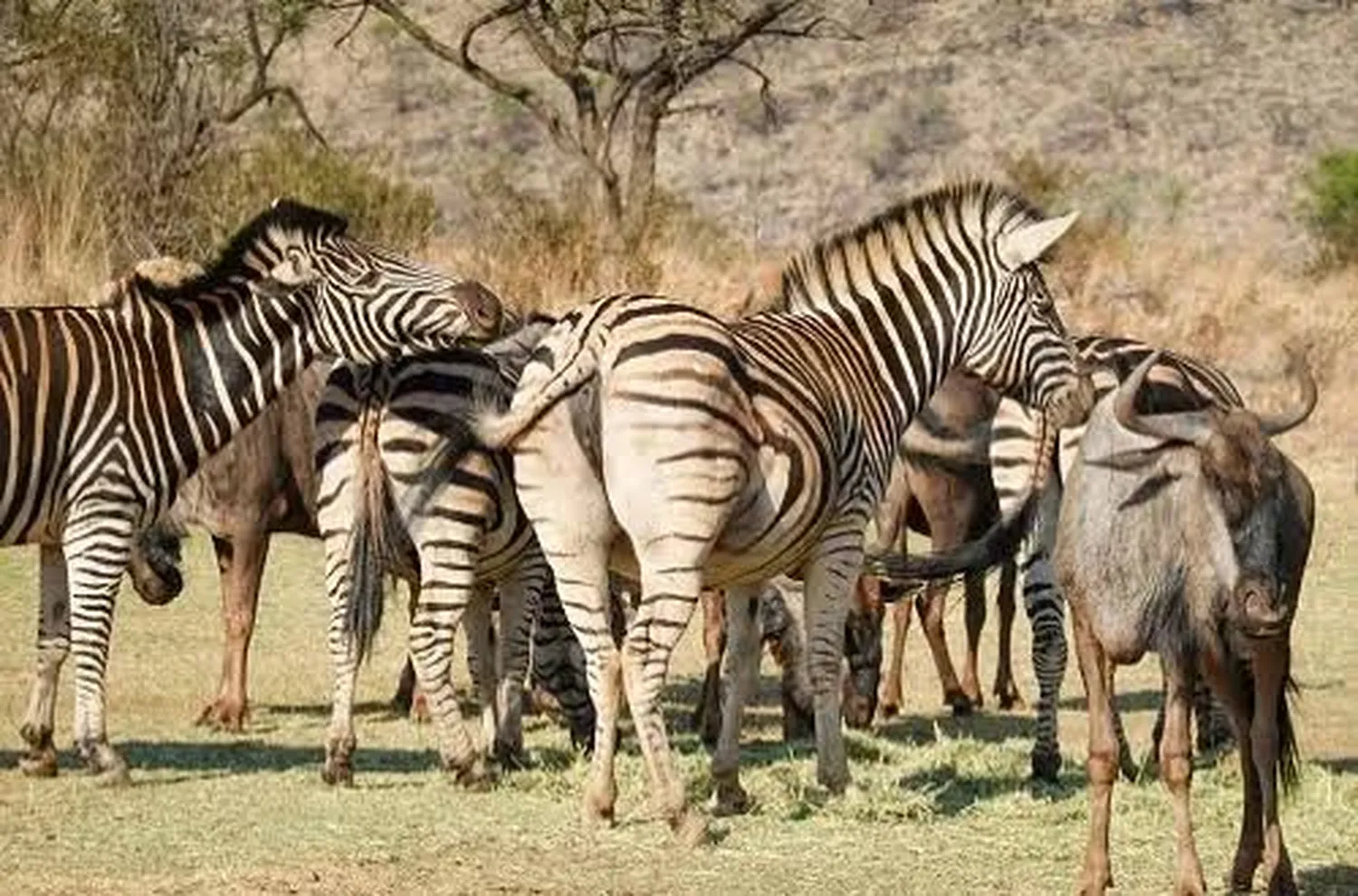
December is not only about wildebeest. Serengeti remains productive for lions, cheetahs, hyenas, leopards, elephants, giraffes and resident antelope. The returning migration increases predator-prey activity as herds spread through greener habitats. TANAPA describes the Great Migration as one of Serengeti's defining attractions and notes more than 1.5 million wildebeest in the migrating system.
Ngorongoro is especially valuable in a six-day itinerary because the crater holds substantial resident wildlife independent of the exact migration location. Tarangire remains worthwhile for elephants, baobabs, predators and birds even though December wildlife is usually more dispersed than during the June–October dry season.
Why December Is Strong for Birding and Photography
The return of seasonal water transforms wetlands, grasslands and woodland edges. Migratory birds from the northern hemisphere increase diversity, while fresh vegetation replaces the pale dry-season background. For photographers, this means richer colour, cleaner air after rain and dramatic cloud formations. The trade-off is less predictable road access and a higher chance of brief showers during a game drive.
- Carry a microfiber cloth and simple rain cover for cameras.
- Use a beanbag or vehicle support rather than relying only on a tripod.
- Pack binoculars even if photography is your main goal.
- Ask the guide to prioritise morning and late-afternoon light when logistics allow.
- Protect spare batteries and memory cards from moisture and dust.
How Much Does a 6-Day Tanzania Safari Cost in December?
Jaynevy Tours' current 2026/2027 Tanzania safari cost guide publishes broad planning ranges of USD 250–350 per person per day for budget travel, USD 350–550 for mid-range and USD 600–1,200 for luxury. Multiplying those daily benchmarks gives approximate six-day planning totals of USD 1,500–2,100 budget, USD 2,100–3,300 mid-range and USD 3,600–7,200 luxury before festive supplements, premium room choices, bush flights or other upgrades.
| Style | Published daily benchmark | Approx. 6-day planning total | December holiday note |
|---|---|---|---|
| Budget / joining | USD 250–350 pp/day | USD 1,500–2,100 pp | Festive availability can be tighter; route flexibility is limited on fixed departures |
| Mid-range | USD 350–550 pp/day | USD 2,100–3,300 pp | Family rooms and well-positioned Serengeti camps can sell early |
| Luxury | USD 600–1,200 pp/day | USD 3,600–7,200 pp | Peak festive rates and premium bush flights can move the final price above the planning range |
These are planning numbers, not a quote. Park/conservation fees, group size, private versus shared vehicle, exact accommodation, airport transfers and domestic flights all affect the final total. Use the detailed Tanzania safari cost guide, then request an itemised written quotation for your exact dates.
Christmas and New Year Booking Strategy
December is unusual because weather does not create the main price spike—the holiday calendar does. Christmas and New Year coincide with school holidays and international travel demand, so a safari that is easy to book on 5 December can be difficult to reproduce on 27 December.
- Reserve nine to twelve months ahead when possible. This is especially important for festive dates, family rooms, northern or southern Serengeti migration camps and scheduled bush flights.
- Book the region before chasing a specific lodge brand. Wildlife location matters more than marketing prestige on a six-day itinerary.
- Check cancellation terms. Festive deposits and supplier deadlines can be stricter than ordinary dates.
- Confirm all transfers. International flight arrival times, JRO transfers and bush-flight luggage rules must match the safari schedule.
- Buy appropriate travel insurance. Review the Tanzania safari insurance recommendations before paying non-refundable festive deposits.
What to Pack for a December Tanzania Safari
| Item | Why it matters in December |
|---|---|
| Lightweight neutral shirts and trousers | Comfortable for warm daytime game drives and easy layering |
| Light fleece or jacket | Useful for cool early starts, especially around Ngorongoro |
| Compact waterproof shell | Short-rain showers can arrive quickly |
| Closed walking shoes | Better for wet or muddy camp paths than open sandals |
| Hat, sunscreen and sunglasses | UV exposure remains strong even in the green season |
| Insect repellent | More standing water and vegetation can increase insects |
| Binoculars | Very useful for birds and distant predator sightings |
| Soft-sided bag | Often easier for bush-flight baggage restrictions |
| Camera rain cover / dry bag | Protects electronics during sudden showers |
Common December Safari Mistakes to Avoid
- Assuming all December herds are already in Ndutu. December is transitional and rainfall controls the timing.
- Booking Christmas week like ordinary low season. Festive demand can be very high despite the short rains.
- Choosing the cheapest camp regardless of location. A long daily commute can waste the limited wildlife time you paid for.
- Overloading a six-day route. Four or five parks plus Zanzibar transfers often creates more driving than wildlife viewing.
- Ignoring road conditions. Green-season tracks can change after heavy local showers.
- Expecting Mara River crossings. December is a southbound-return period, not the main northern crossing season.
Who Should Choose a December Holiday Safari?
| Traveller | Fit | Why |
|---|---|---|
| Family travelling during school holidays | Excellent if booked early | Convenient dates, varied wildlife and easy combination with Zanzibar |
| First-time safari traveller | Very good | Serengeti, Ngorongoro and Tarangire still deliver a broad wildlife experience |
| Photographer | Excellent | Green backgrounds, dramatic skies and reduced dust |
| Migration-only traveller | Good with flexible routing | Herds are moving south, but exact position is rain-dependent |
| Budget traveller on Christmas week | Challenging | Festive accommodation demand can push prices above ordinary December levels |
| Birdwatcher | Excellent | Seasonal wetlands and migratory birds improve diversity |
Frequently Asked Questions About a 6-Day Tanzania Safari in December
Is December a good month for a six-day Tanzania safari?
Yes. December combines green scenery, active resident wildlife, migratory birds and the Great Migration moving back toward central and southern Serengeti. The main trade-offs are short-rain showers, variable road conditions and high festive-season demand around Christmas and New Year.
Where is the Great Migration in December?
December is a transition month. Herds often move from northern and eastern Serengeti toward central and southern Serengeti as fresh grass develops after the short rains. By late December, Ndutu and the southern short-grass plains can become increasingly important, but exact location depends on rainfall and grazing.
Is Christmas week expensive for a Tanzania safari?
Christmas and New Year are high-demand travel dates. Accommodation, family rooms and flights can sell early and may be priced above ordinary December dates. The final safari price should be confirmed for the exact dates and group size.
How far ahead should I book a December Tanzania safari?
For Christmas and New Year travel, booking nine to twelve months ahead is sensible when possible, especially for well-located Serengeti camps, family rooms and scheduled bush flights. Early December is usually easier to secure than festive week.
What is the weather like in Tanzania in December?
December is generally part of the short-rain or green season in northern Tanzania. Showers are often local rather than all-day, but roads can become muddy. For 2026 specifically, the Tanzania Meteorological Authority expects Vuli rainfall to be average to above average in many northern bimodal-rainfall areas, with some off-season rain potentially continuing into January 2027.
Should I stay in central or southern Serengeti in December?
A flexible itinerary is best. Early December may favor central or eastern Serengeti, while later December can justify moving toward the southern Serengeti and Ndutu area if current herd reports support it. Avoid committing every Serengeti night to one region months in advance without a seasonal plan.
Can I see river crossings in December?
December is not the main Mara River crossing season. The safari focus shifts toward returning herds, green landscapes, predators and movement into central and southern Serengeti rather than northern river crossings.
Is Tarangire still worth visiting in December?
Yes, but the wildlife pattern differs from the dry season. With seasonal water available across the ecosystem, animals can be more dispersed. Tarangire still offers elephants, baobabs, predators and excellent birdlife and works well as the first day of a six-day Northern Circuit safari.
How much does a six-day Tanzania safari cost in December?
Jaynevy Tours currently publishes broad 2026/2027 planning ranges of about USD 250–350 per person per day for budget travel, USD 350–550 for mid-range and USD 600–1,200 for luxury. Six-day planning totals are therefore roughly USD 1,500–2,100, USD 2,100–3,300 and USD 3,600–7,200 respectively before festive-season premiums or special upgrades. These are planning ranges, not a quotation.
What should I pack for a December safari?
Pack lightweight neutral clothing, a light fleece for early mornings, a compact waterproof shell, closed shoes, insect repellent, sunscreen, a hat, binoculars and camera protection. Soft-sided luggage is preferable if a bush flight is included.
Research Sources and Further Reading
This page separates long-term seasonal patterns from the specific 2026 forecast. Migration locations remain natural and cannot be guaranteed for an exact date.
- Tanzania National Parks: current best-time and short-rains planning guidance
- TANAPA Serengeti guide: Great Migration and park attractions
- TANAPA Serengeti migration route map and seasonal context
- UNESCO World Heritage Centre: Serengeti National Park
- Tanzania Meteorological Authority: Vuli October–December 2026 seasonal forecast
- Google Search Central: optimization for generative AI features