
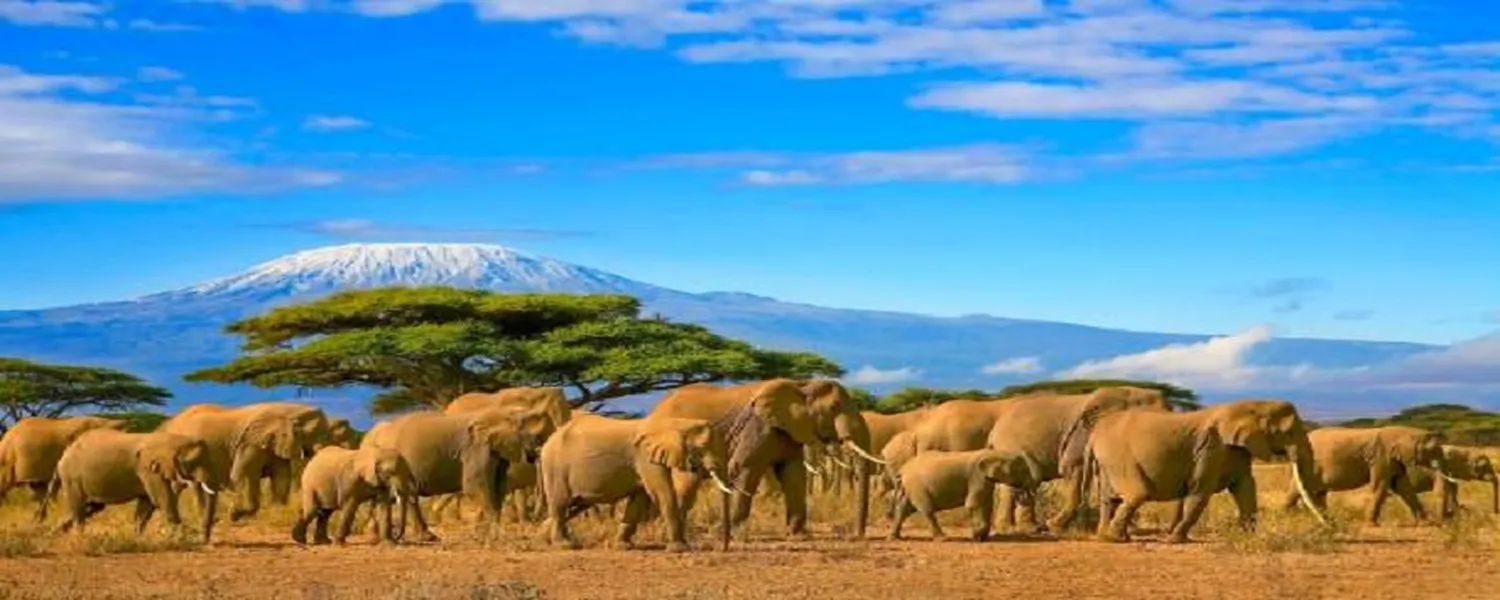
Quick Answer: Is a 6-Day Tanzania Safari Good in January and February?
Yes. January and February are among the strongest months for a six-day safari if your priority is the southern Serengeti and Ndutu calving season. January usually brings large herds settling on the green short-grass plains and the build-up to peak births. February is normally the more concentrated calving period, with predator activity following the newborn wildebeest.
TANAPA's Serengeti migration guidance describes roughly 1.35 million western white-bearded wildebeest and says more than 250,000 calves are born each year, with about four-fifths of births compressed into a few weeks around mid-February and peak days estimated at 8,000–12,000 births. Those figures describe the biological event, not a promise for one game drive; rainfall can shift the exact herd distribution.
January vs February: Which Month Is Better?
Neither month is universally better. The decision depends on whether you want the build-up to calving or the highest probability of seeing large numbers of newborn wildebeest. The migration is driven by rainfall and fresh grass, so the calendar should guide the itinerary without being treated as an appointment schedule.
| Planning factor | January | February |
|---|---|---|
| Migration focus | Herds settling across southern/eastern short-grass areas | Herds usually concentrated around southern plains and Ndutu |
| Calving | Early births and increasing activity, especially later in the month | Usually the strongest synchronized calving period |
| Predator viewing | Strong around herd concentrations | Often especially intense because newborn prey attracts predators |
| Landscape | Green after the short rains | Green short-grass plains with dramatic storm light possible |
| Booking pressure | High around New Year; often more flexible later | High around well-positioned Ndutu seasonal camps |
| Best for | Travellers wanting big herds plus a broader seasonal experience | Travellers prioritising newborns and calving-season action |
For month-specific planning, compare the dedicated Tanzania safari in January guide with the Tanzania safari in February guide. Both URLs are listed in the Jaynevy Tours sitemap.
Why January and February Need a Different Serengeti Route
A common planning mistake is to spend all Serengeti nights around Seronera simply because central Serengeti is famous and excellent year-round. That is a good general wildlife plan, but it is not always the best migration plan in January and February. The seasonal herds usually use the nutrient-rich short-grass plains in the south, extending through Ndutu and the southern Serengeti–Ngorongoro ecosystem.
The practical consequence is location. A camp near the herds can turn hours of daily commuting into wildlife time. For a six-day itinerary, that matters more than squeezing in one extra park. Read the Ndutu and southern Serengeti guide before choosing accommodation.
What the Research and Official Data Say
| Data point | Figure | Why it matters |
|---|---|---|
| Serengeti National Park size | 14,763 km² | TANAPA's park brochure shows why camp location matters; Serengeti is too large to treat as one game-drive zone. |
| Serengeti–Mara migration | About 2 million wildebeest plus hundreds of thousands of gazelles and zebras | UNESCO describes one of the world's largest remaining unaltered animal migrations. |
| Annual wildebeest circuit | About 1,000 km | UNESCO notes the migration is a long circular trek, so monthly locations are seasonal rather than fixed. |
| TANAPA calving estimate | 250,000+ calves per year; ~80% in a few weeks | The short birth window explains why February has such concentrated wildlife activity. |
| Peak birth estimate | 8,000–12,000 births per day | TANAPA's migration guideline illustrates the scale of peak calving, not a guaranteed daily count for visitors. |
| Tanzania international arrivals, 2025 | 2,294,495 | The official 2025 exit survey recorded 7.1% growth from 2024, showing strong travel demand. |
| Wildlife visitors choosing package tours | 82.8% | The 2025 exit survey found wildlife visitors generally preferred package arrangements for coordinated guides, permits, transport and accommodation. |
| Average wildlife-safari expenditure, 2025 survey | USD 452 pp/night overall; USD 678 package; USD 225 non-package | This is survey spending, not a Jaynevy package price, but it gives useful context for how widely safari trip budgets vary. |
Data note: tourism spending figures come from Tanzania's 2025 International Visitors' Exit Survey and measure reported visitor expenditure. They should not be presented as a quote for a six-day package. A safari quotation depends on vehicle sharing, accommodation, park/conservation fees, seasonal rates and optional flights or activities.
Best 6-Day Tanzania Safari Itinerary for January and February
This route gives the seasonal southern Serengeti enough time without dropping Tarangire and Ngorongoro. It is a planning framework; the exact order can be reversed depending on arrival time, accommodation availability, local road conditions and the latest migration location.
| Day | Route | Why it works in January–February |
|---|---|---|
| 1 | Arusha → Tarangire National Park → Karatu | Starts with elephants, baobabs and a different habitat before the Serengeti plains. |
| 2 | Ngorongoro Crater game drive → Karatu/NCA edge | Adds concentrated year-round wildlife and keeps you positioned for the southern route. |
| 3 | Drive to Ndutu / southern Serengeti → afternoon game drive | Puts the safari where migration herds are most likely to be during this season. |
| 4 | Full day Ndutu and southern plains | Protects a complete day for calving herds, cheetahs, lions and hyenas. |
| 5 | Second full southern Serengeti/Ndutu day | Reduces dependence on one lucky sighting and lets the guide follow current herd reports. |
| 6 | Early game drive → road return toward Arusha or scheduled flight where booked | Uses the final morning for wildlife while keeping departure logistics explicit. |
If you want a more general six-day wildlife circuit rather than a migration-first plan, compare the 6-day Tarangire, Serengeti, Ngorongoro, Manyara and Eyasi safari. If the Great Migration is your main reason for travelling, the 6-day Serengeti wildebeest migration safari is the more relevant comparison.
Wildlife You Can Expect Beyond the Wildebeest
Calving season is not only about counting wildebeest. Newborns and concentrated herbivore herds create a strong food base for predators. Lions, spotted hyenas and cheetahs are important targets in the Ndutu–southern plains zone, while resident wildlife remains productive elsewhere in Serengeti and Ngorongoro.
- Cheetahs: open short-grass country gives them room to hunt and can make sightings easier than in dense woodland.
- Lions: prides follow concentrations of wildebeest, zebra and gazelle and may be active early and late in the day.
- Hyenas: common around calving herds and often highly active where births and predator kills are concentrated.
- Elephants: reliable in Tarangire and present in parts of Serengeti and Ngorongoro.
- Black rhino: Ngorongoro can provide an opportunity, although every sighting remains unpredictable.
- Birdlife: wet-season conditions support resident and migratory birds, adding value for birders and photographers.
January and February Weather: What It Means for Game Drives
TANAPA describes Serengeti as having a subtropical climate, with the broad rainy season running from November to April and the dry season from May to October. The park sits roughly 1,100–2,000 metres above sea level and receives about 900–1,000 mm of rain annually. January and February therefore belong to the greener part of the safari year, but rain is not normally continuous across every day or every part of the ecosystem.
For travellers, the important issue is not simply whether rain falls. It is how rainfall changes grass quality, herd position and road conditions. A shower can produce beautiful photography light and fresh grazing; prolonged local rain can make some tracks slower. The itinerary should therefore leave room for the guide to adjust daily game-drive direction.
| Condition | Benefit | Trade-off |
|---|---|---|
| Green plains | Strong colour, newborn animals and dramatic photography | Wildlife may spread when grazing is widely available |
| Passing showers | Cooler periods and dramatic skies | Some tracks can become muddy |
| Warm afternoons | Comfortable for many travellers | Cats may rest more during the hottest hours |
| Cool highlands | Comfortable crater viewing | Ngorongoro mornings can require a fleece or warm layer |
How January and February Affect Safari Price
January and February are not automatically low-season months. New Year demand can keep early January expensive, and well-positioned Ndutu seasonal camps can sell strongly around peak calving dates. The cheapest lodge in the wrong location can also create a false saving if you spend extra hours and fuel driving to the herds every day.
Price is mainly shaped by the number of people sharing the vehicle, the exact camp location, room category, park and conservation fees, whether the itinerary uses road or scheduled flights, and whether the safari is private or shared. Ask for a written quotation that names the accommodation and states every major inclusion and exclusion.
What a Clear Six-Day Quote Should Show
- Private or shared safari 4×4 arrangement.
- Professional driver-guide and all planned game drives.
- Five nights of named accommodation or a clearly stated equivalent standard.
- Serengeti, Ngorongoro and Tarangire fees relevant to the confirmed route.
- Crater descent where included.
- Meals and drinking water as stated in the itinerary.
- Airport/Arusha transfers if included.
- Domestic flight on Day 6 if the itinerary uses a fly-out option.
- Clear exclusions for tips, alcohol, insurance, visas and optional activities.
Packing List for a January or February Tanzania Safari
- Light neutral shirts and trousers for warm daytime game drives.
- A fleece or warm layer for early mornings and the Ngorongoro highlands.
- A lightweight waterproof shell rather than a heavy raincoat.
- Comfortable closed shoes with good grip for wet ground around camps.
- Wide-brim hat, sunglasses and high-SPF sun protection.
- Binoculars; 8×42 or 10×42 sizes are common safari choices.
- Camera rain cover, lens cloths and spare batteries.
- Soft-sided luggage if a scheduled bush flight is part of the safari.
- Personal medication, insect repellent and a small day bag.
7 Mistakes to Avoid on a 6-Day January–February Safari
- Booking only central Serengeti. It is excellent year-round, but not always the best base for calving-season migration.
- Using a calendar as a guarantee. Rainfall can move the herds earlier, later or farther east/west.
- Giving Ndutu only one night. One arrival afternoon and one departure morning can be too fragile for a migration-focused trip.
- Choosing accommodation by price alone. A cheaper camp far from the herds can cost you wildlife time.
- Ignoring road conditions. Green-season tracks can change quickly after local rain.
- Overpacking parks. Four or five parks in six days can turn a safari into a transfer schedule.
- Expecting guaranteed kills or births. The season raises probabilities, but wildlife remains wild.
Who This Six-Day Seasonal Safari Suits Best
| Traveller | Fit | Reason |
|---|---|---|
| First-time safari traveller | Excellent | Combines three major northern wildlife areas without requiring a very long trip. |
| Wildlife photographer | Excellent | Green backgrounds, newborns, predators and dramatic skies are strong photographic subjects. |
| Family with older children | Good | High wildlife activity can keep game drives engaging; choose suitable drive lengths. |
| Traveller who dislikes any rain | Moderate | January–February are green-season months and showers are possible. |
| River-crossing seeker | Poor fit | Mara River crossings are a different seasonal phase; January–February is about the southern plains and calving. |
How to Plan the Trip Around Your Exact Dates
Start with the month, then ask where the herds have been using the plains in recent weeks. Accommodation should follow the seasonal target. If you are travelling in early January, keep the southern and eastern plains flexible. By late January and through much of February, Ndutu becomes the most important planning base in a typical year.
For a broader month-by-month view, use the Tanzania safaris by month guide. It helps separate calving-season travel from dry-season wildlife viewing and the later river-crossing phase.
Frequently Asked Questions
Is January a good month for a 6-day Tanzania safari?
Yes. January is a strong month for green landscapes, large migration herds moving onto the southern Serengeti and Ndutu short-grass plains, predator activity and early calving. Exact herd position still follows rainfall, so accommodation should be chosen close to the current southern migration zone.
Is February better than January for a Tanzania safari?
February is usually the stronger choice when wildebeest calving is the main priority because births are highly synchronized on the southern plains. January can be better for travellers who want the build-up to calving, large herds and potentially a little more date flexibility.
Where should I stay for the Great Migration in January and February?
For a migration-focused safari, stay in or near Ndutu and the southern Serengeti rather than automatically using only central Serengeti. The best exact camp position depends on recent rainfall, grazing and road conditions.
How many nights should I spend around Ndutu on a 6-day safari?
Two to three nights in the Ndutu or southern Serengeti zone is a practical target when calving is the priority. It gives more than one dawn and late-afternoon wildlife window and reduces the risk of spending most of the trip on transfers.
Does it rain in Serengeti in January and February?
Yes. TANAPA describes Serengeti's rainy season as running broadly from November to April. January and February can still have bright periods and good game viewing, but showers are possible and local rainfall can change road conditions and herd distribution.
Can I see the Big Five in six days?
A six-day northern circuit can provide opportunities for lion, elephant, buffalo, leopard and black rhino, especially when Ngorongoro and Serengeti are included. No responsible operator can guarantee every species because wildlife sightings are natural and unpredictable.
Is February calving guaranteed on my exact travel dates?
No. The broad biological pattern is reliable, but the exact peak can shift with rainfall and grazing conditions. Plan around the southern plains, allow multiple game-drive sessions and treat specific daily birth numbers as estimates rather than guarantees.
Should I visit central Serengeti in January or February?
Central Serengeti remains excellent for resident wildlife, but travellers whose main goal is migration calving usually gain more by allocating extra time to Ndutu and the southern plains. Central Serengeti can be added if flight logistics, resident cats or a broader Serengeti experience matter more.
What should I pack for a January or February safari?
Pack light breathable clothing, a warm layer for early mornings and Ngorongoro, a light waterproof jacket, closed shoes, sun protection, binoculars, camera protection and any personal medication. Soft-sided luggage is useful when small aircraft are included.
How early should I book a January or February safari?
Book as early as practical if you want a well-positioned seasonal camp in Ndutu, especially for February. The most useful camps have limited inventory, and choosing location well matters more than simply choosing the cheapest room.
Sources and Data Notes
The seasonal and statistical statements above were checked against official or high-authority sources. Migration location remains rainfall-dependent, so historical patterns are used for planning rather than guarantees.
- TANAPA: Serengeti migration facts and calving figures
- TANAPA: Serengeti National Park climate, access and ecosystem information
- UNESCO World Heritage Centre: Serengeti National Park
- Tanzania National Bureau of Statistics: Tourism Statistics
- 2025 International Visitors' Exit Survey Report
- Google Search Central: optimizing for generative AI features
Editorial note: Google retired FAQ rich-result display in May 2026, but the visible FAQ section remains useful for readers. Structured data is used only when it accurately describes visible page content; it is not treated as a ranking guarantee.