
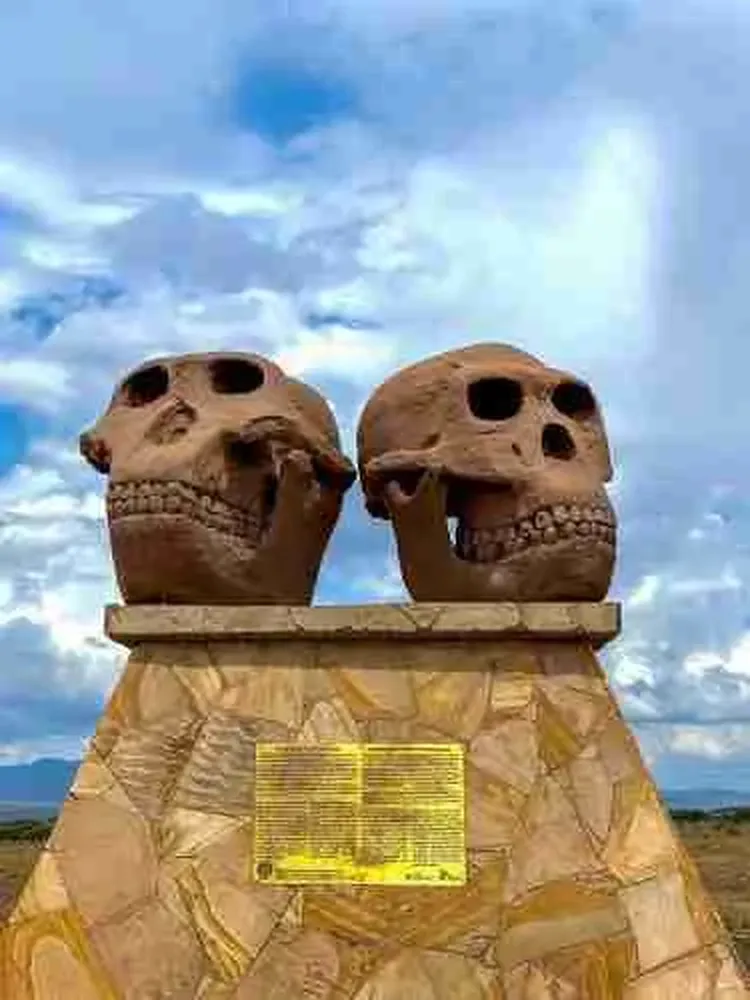
Quick Answer: Is a 6-Day Tanzania Safari with Olduvai Gorge Worth It?
Yes—especially if you want more than wildlife alone. Olduvai Gorge fits naturally into a road safari between the Ngorongoro highlands and Serengeti. The strongest six-day version normally gives Tarangire one day, Serengeti about three nights, Olduvai a focused one-to-two-hour stop, Ngorongoro Crater one major game-drive day and enough road time to connect the route without turning every day into a transfer.
Olduvai should be treated as an archaeological highlight, not a replacement for a Serengeti game drive. UNESCO describes the wider Ngorongoro property as preserving an exceptionally long human-evolution record spanning almost four million years, while the NCAA describes gorge exposures reaching nearly 100 metres deep at the deepest point.
6-Day Olduvai Gorge Safari at a Glance
| Day | Route | Main experience | Night |
|---|---|---|---|
| 1 | Arusha → Tarangire | Baobabs, elephants, first game drive | Tarangire / Karatu area |
| 2 | Tarangire/Karatu → Olduvai → Serengeti | Olduvai Gorge Museum + archaeological context + game drive en route | Central Serengeti |
| 3 | Serengeti | Full-day predator and plains game viewing | Central Serengeti |
| 4 | Serengeti | Second full game-drive day; seasonal migration option | Central Serengeti |
| 5 | Serengeti → Ngorongoro | Morning game drive, highland transition | Crater rim / Karatu |
| 6 | Ngorongoro Crater → Arusha | Crater-floor game drive and return | Trip ends |
Why Olduvai Gorge Belongs on a Northern Tanzania Safari
Most Tanzania itineraries are built around wildlife density, scenery and the Great Migration. Olduvai adds a different kind of depth. Instead of only asking what lives here now, the stop asks how landscapes, climate, animals and human ancestors interacted over an extraordinary span of time. That makes the drive between Ngorongoro and Serengeti more meaningful because you are travelling through a landscape that has been studied for both natural history and human evolution.
UNESCO lists the Ngorongoro Conservation Area as a mixed natural and cultural World Heritage property. Its archaeological record includes a sequence of hominin species and evidence of human-environment dynamics extending for almost four million years. The property includes Olduvai Gorge and the separate Laetoli footprint site; these should not be confused as the same attraction. The famous Laetoli footprints are about 3.6 million years old, while Olduvai is known for a broad fossil and stone-tool record including Homo habilis and other members of the Homo lineage.
For travellers who normally think of Tanzania only in terms of lions, elephants and wildebeest, this creates a useful perspective: the Northern Circuit is simultaneously a wildlife landscape, volcanic landscape, pastoral landscape and archaeological landscape.
Olduvai Gorge Facts You Can Rely On
| Fact | Reliable context | Why it matters to visitors |
|---|---|---|
| World Heritage context | Ngorongoro was inscribed for natural values in 1979 and cultural criterion was added in 2010 | Olduvai is part of a globally significant cultural-natural property |
| Human-evolution record | UNESCO describes evidence spanning almost four million years | It is not one isolated fossil discovery; it is a long scientific sequence |
| Hominin evidence | UNESCO cites Australopiths, Homo habilis, Homo erectus and Homo sapiens within the wider record | Shows changing human lineages over time |
| Gorge depth | NCAA says nearly 100 m at its deepest point | The erosion exposes layered sediments that made the site scientifically valuable |
| Museum history | Mary Leakey founded the museum in 1970; a new museum/visitor centre replaced the older structure in 2017 | Today's visit combines field context with modern interpretation |
| Exhibits | NCAA describes fossils, stone tools and extinct-animal skeletons | Provides accessible context without needing specialist archaeological training |
Day-by-Day 6-Day Tanzania Safari Including Olduvai Gorge
Day 1: Arusha to Tarangire National Park
Leave Arusha after breakfast and drive south-west toward Tarangire. Starting here is useful because it gives you a genuine game-drive day instead of spending the first day racing directly to Serengeti. Tarangire is particularly associated with baobab landscapes, elephants and dry-season wildlife concentrations around permanent water. Your guide can use the afternoon to understand what you care about most—big cats, elephants, birds, photography or a broad first-time safari experience.
Overnight can be near Tarangire, around Manyara or in Karatu depending on the next day's timing. For a route that includes Olduvai, Karatu can be operationally efficient because it positions you closer to the Ngorongoro highlands the following morning.
Day 2: Karatu/Ngorongoro Highlands to Olduvai Gorge, Then Serengeti
This is the defining day of the itinerary. Enter the Ngorongoro Conservation Area and travel across the highlands toward the western plains. Stop at Olduvai Gorge Museum for interpretation of the area's archaeology, fossils, stone tools and research history. For most general safari travellers, a focused visit of roughly one to two hours is enough to understand the site's significance without losing the entire afternoon to transit.
After Olduvai, continue toward Naabi Hill and Serengeti. The road section itself is scenic and often wildlife-rich. Once inside Serengeti National Park, your transfer naturally becomes a game drive. Do not expect a rigid camp arrival time if lions, cheetahs, elephants, giraffes or large plains-game concentrations appear en route.
Important: exact Olduvai admission, museum, interpretation or guide fees can change. Your quotation should state whether these are included. Do not assume that “all park fees included” automatically means every archaeological or museum activity is covered.
Day 3: Full-Day Central Serengeti Game Drive
After the more structured Olduvai day, use Day 3 for flexible wildlife exploration. Central Serengeti works well year-round because permanent water, river systems, kopjes and mixed habitats support resident wildlife. Start early if predators are a priority. Lions may use roads or kopjes, leopards often favour riverine trees, and cheetahs are easier to scan for on open plains.
Serengeti is large enough that one “full day” should not be judged by the number of kilometres covered. A guide who spends time watching a pride settle near a watercourse or waiting for a leopard to move can deliver more value than a vehicle that simply races between sightings. Compare the dedicated 6-day Serengeti safari if wildlife depth matters more to you than adding more parks.
Day 4: Second Full Serengeti Day
The second full Serengeti day is what protects this itinerary from becoming too cultural at the expense of wildlife. Use it differently from Day 3. If you had strong predator sightings around Seronera, explore another habitat; if migration herds are within a practical radius, reposition accordingly; if photography is the priority, choose early and late sessions with a quieter midday break.
The Great Migration is not permanently in central Serengeti. Herd distribution responds to rainfall and grazing, so a responsible operator should recommend a camp region that fits your month rather than promise a crossing or fixed herd location. For broader destination context, see the Serengeti National Park guide.
Day 5: Serengeti Morning Game Drive to Ngorongoro
Start with one more morning game drive before heading east toward Ngorongoro. This is useful because many predators remain active in the cooler hours, and the morning can produce a memorable final Serengeti sighting before the landscape changes again.
Overnight either on the crater rim or in Karatu. Rim lodging is convenient for an early crater descent and can be spectacular, but it often costs more. Karatu offers a wider price range and can still work well when departure is early. If you want a private vehicle and complete control over stop duration, compare Jaynevy's 6-day Tanzania private safari. If price is more important than flexibility, the 6-day sharing safari is a relevant comparison.
Day 6: Ngorongoro Crater Floor and Return to Arusha
Descend early into Ngorongoro Crater for a final concentrated wildlife experience. The crater is a completely different environment from Serengeti: compact, enclosed by steep walls and rich in grassland, wetlands and soda-lake habitat. Lions, buffaloes, wildebeest, zebras, gazelles, hippos and hyenas are realistic targets. Black rhino is a valued possibility, not a guaranteed sighting.
After the crater game drive, ascend and return to Arusha. The Ngorongoro Crater guide and crater day-trip cost and itinerary guide provide extra context if you are deciding how much time to allocate to the crater.
How Much Time Should You Spend at Olduvai Gorge?
| Visit style | Suggested planning window | Best for | Trade-off |
|---|---|---|---|
| Brief stop | 45–60 minutes | Travellers mainly focused on wildlife | Less time for detailed interpretation |
| Balanced visit | 1–2 hours | Most first-time visitors | Requires disciplined departure for Serengeti |
| Special-interest visit | 2+ hours | Archaeology, anthropology or geology enthusiasts | Can reduce afternoon Serengeti time |
These are planning windows, not official museum session lengths. Confirm current opening arrangements, lecture availability and fees with your operator. If archaeology is your primary reason for travelling, a seven-day itinerary is often more comfortable because it creates room for Olduvai without compressing Serengeti.
Olduvai Gorge vs Ngorongoro Crater: Do Not Treat Them as the Same Stop
| Feature | Olduvai Gorge | Ngorongoro Crater |
|---|---|---|
| Main reason to visit | Human evolution, archaeology, geology | Wildlife and volcanic landscape |
| Typical safari activity | Museum, viewpoint, interpretation | 4×4 crater-floor game drive |
| Time needed | Usually 1–2 hours for a balanced general visit | Several hours for a meaningful game drive |
| Best positioning | En route between Ngorongoro and Serengeti | Early morning from rim/Karatu area |
| Wildlife focus | Secondary | Primary |
| What makes it unique | Exceptionally long record of human evolution | World-famous intact caldera and wildlife density |
How Much Does a 6-Day Safari Including Olduvai Gorge Cost?
There is no single honest price for every Olduvai-inclusive six-day safari. Accommodation category, season, number of travellers sharing the vehicle, Serengeti camp location, room occupancy, current government charges and whether the Olduvai museum/interpretation cost is included all affect the total.
| Current comparison benchmark | 2–3 travellers | 4–6 travellers | Use it for |
|---|---|---|---|
| Mid-range 6-day Northern Circuit | USD 2,150 pp | USD 1,850 pp | Baseline comparison |
| Luxury reference | USD 2,450 pp | USD 2,150 pp | Higher-comfort planning |
These are current Jaynevy published references for a comparable 6-day Tarangire–Manyara–Serengeti–Ngorongoro private route from Arusha, not a guaranteed price for this exact Olduvai page. Always request a written quote for your dates. For broader price context, see the Tanzania safari cost guide.
What Should the Written Quotation Include?
- Private or shared 4×4 vehicle and maximum passenger count.
- Professional driver-guide and requested language.
- Five safari nights with exact lodge/camp names or clearly defined category.
- Serengeti, Tarangire and Ngorongoro park/conservation charges included.
- Olduvai Gorge museum/admission/interpretation charges stated separately or clearly included.
- Crater service/vehicle arrangements if applicable.
- Meals and drinking water during safari days.
- Arusha pickup and final drop-off.
- Taxes and any seasonal lodge/concession supplements.
- Optional activities such as balloon safari, Maasai visit or walking activity listed separately.
What Is Usually Not Included?
International flights, visa costs, travel insurance, gratuities, alcoholic drinks, personal purchases, premium room upgrades and optional activities are commonly outside the base safari price unless the quotation says otherwise. Archaeological or museum charges deserve special attention because a general phrase such as “all park fees included” may not clearly answer whether every Olduvai activity is covered.
Best Time for a Safari with Olduvai Gorge
Olduvai's archaeological value does not depend on migration season, but the wildlife component does. The best travel month is therefore the month that suits the Serengeti experience you want.
| Period | Safari character | Olduvai effect | Planning note |
|---|---|---|---|
| Jan–Mar | Southern Serengeti/Ndutu often important for migration and calving | Easy to combine geographically | High demand around peak calving weeks |
| Apr–May | Green season, rain possible, fewer vehicles in many areas | Museum remains a useful weather-proof interpretive stop | Road conditions can affect timing |
| Jun–Oct | Dry-season wildlife viewing; migration shifts west/north | Still convenient en route | Northern migration focus may require extra distance |
| Nov–Dec | Short rains and southward herd movement | Works well in classic overland loop | Rainfall patterns vary year to year |
Who Should Choose This Safari?
This six-day route is especially strong for first-time Tanzania travellers who want Serengeti and Ngorongoro but also value context. It suits couples, families with school-age children, teachers, researchers outside specialist archaeology, photographers who enjoy landscape history, and travellers who prefer a trip with cultural depth rather than only animal checklists.
It is less suitable if your only goal is maximum Great Migration positioning, because specialist migration itineraries often need the route and camp location to follow a seasonal zone. It can also feel rushed for serious archaeology enthusiasts; in that case, add a seventh day.
Common Planning Mistakes
- Adding Olduvai without removing anything else. Six days has limits. Protect Serengeti nights instead of stacking too many parks.
- Assuming Olduvai and Laetoli are the same attraction. They are distinct archaeological sites within the wider Ngorongoro property.
- Not confirming fees. Ask specifically whether museum, lecture or archaeological access charges are included.
- Using the stop as a rushed photo break. The value is interpretation, not simply standing at a viewpoint.
- Planning a late Olduvai departure and expecting a long Serengeti game drive. Protect daylight and camp check-in logistics.
- Guaranteeing specific wildlife. Olduvai adds history; it does not change the fact that Serengeti and Ngorongoro wildlife is free-ranging.
Wildlife and Human History in the Same Landscape
One reason this itinerary feels unusually coherent is that the archaeological and wildlife stories are not separate. UNESCO's Ngorongoro description links the area's human-evolution record with long-term human-environment dynamics, while the same wider ecosystem supports one of the world's great ungulate migrations. The property covers about 809,440 hectares, and UNESCO cites around 25,000 large animals in the Ngorongoro area as a long-standing World Heritage reference figure. These are property-level figures, not daily sighting guarantees.
The result is a trip that moves from elephant habitat in Tarangire to ancient sediments at Olduvai, then into Serengeti predator country and finally into the Ngorongoro caldera. That variety is the real advantage of the six-day road format.
Private vs Sharing Safari for an Olduvai Stop
| Factor | Private safari | Group joining |
|---|---|---|
| Olduvai stop duration | You can usually choose how long to stay | Depends on group itinerary |
| Photography/lecture pace | Flexible | Shared priorities |
| Cost | Higher for solo/2 travellers | Lower per person |
| Serengeti route flexibility | High | Limited to scheduled route |
| Best for | Families, couples, special interests | Budget-conscious solo travellers |
Frequently Asked Questions
Can Olduvai Gorge fit into a six-day Tanzania safari?
Yes. Olduvai Gorge fits naturally into a Northern Circuit road safari because it lies within the Ngorongoro Conservation Area between the Karatu/Ngorongoro highlands and Serengeti. The best six-day plan treats it as a focused cultural and archaeological stop rather than trying to turn the day into both a long museum visit and a full Serengeti game-drive day.
How much time should I allow for Olduvai Gorge?
For most safari travellers, around one to two hours is a practical planning window for the museum, viewpoint and interpretation, although a specialist archaeology-focused visit may need longer. Opening times, access arrangements, lectures and fees should be reconfirmed for your travel date.
What is important about Olduvai Gorge?
Olduvai is one of the world's most important palaeoanthropological landscapes. UNESCO says the wider Ngorongoro property preserves an exceptionally long sequence of evidence for human evolution spanning almost four million years, including multiple hominin species and stone-tool traditions.
Is Olduvai Gorge the same as Ngorongoro Crater?
No. Both are inside the Ngorongoro Conservation Area, but they are different attractions. Ngorongoro Crater is a wildlife-rich volcanic caldera, while Olduvai Gorge is an archaeological and geological site associated with human-evolution research and fossil discoveries.
Can I visit Olduvai Gorge on the way to Serengeti?
Yes. That is usually the most efficient arrangement. A road safari can travel from the Ngorongoro/Karatu side toward Naabi Hill and Serengeti, stop at Olduvai Gorge, then continue into Serengeti. Exact timing depends on your lodge location, gate formalities, road conditions and how long you spend at the museum.
Will adding Olduvai Gorge reduce my Serengeti game-drive time?
It can if the itinerary is poorly paced. The solution is to protect at least two or preferably three Serengeti nights and avoid adding too many extra parks. A well-planned six-day route can include Olduvai without sacrificing the main wildlife experience.
How much does a six-day Tanzania safari with Olduvai Gorge cost?
A comparable current Jaynevy Tours six-day private Northern Circuit safari publishes mid-range references from USD 1,850 per person sharing for 4–6 travellers and USD 2,150 for 2–3 travellers. Olduvai admission, museum or interpretation charges should be confirmed in the final quotation rather than assumed to be included.
Are fossils and original artefacts visible at the Olduvai Gorge Museum?
The NCAA says the museum displays fossils, stone tools and skeletons of extinct animals excavated in the gorge. Some important finds may be represented by high-quality copies or interpretation displays, so visitors should treat the museum as an educational site rather than expect every famous original fossil to be on public display.
Is Olduvai Gorge suitable for children and families?
For families interested in human origins, geology and archaeology, the museum can add valuable context to a wildlife safari. Younger children may enjoy it more when the stop is kept focused and combined with visual exhibits rather than a long technical lecture.
Research Notes and Source Quality
This guide uses current information from the Ngorongoro Conservation Area Authority (NCAA), UNESCO World Heritage Centre, current Jaynevy Tours published safari pages, the Jaynevy English sitemap, and Google's official Search documentation. UNESCO describes the Ngorongoro property as preserving almost four million years of human-evolution evidence and lists Olduvai among the property's key archaeological components. NCAA provides current visitor-site descriptions and museum history.
For SEO, Google's current guidance continues to emphasize helpful, reliable, people-first content and says that foundational SEO best practices remain the basis for visibility in AI Overviews and AI Mode. As of 16 August 2026, Google's official ranking history shows the latest completed ranking event as the June 2026 spam update, completed on 26 June 2026.
Final Planning Advice
A good 6-day Tanzania safari including Olduvai Gorge should not feel like a wildlife trip with a museum awkwardly inserted into it. Build the route so Olduvai sits naturally on the road between Ngorongoro and Serengeti, protect at least two full Serengeti game-drive days, descend into Ngorongoro early on the final day, and request a written quotation that explicitly states whether Olduvai museum or interpretation fees are included. If human evolution is one of your main reasons for travelling, add a seventh day rather than sacrificing Serengeti time.