
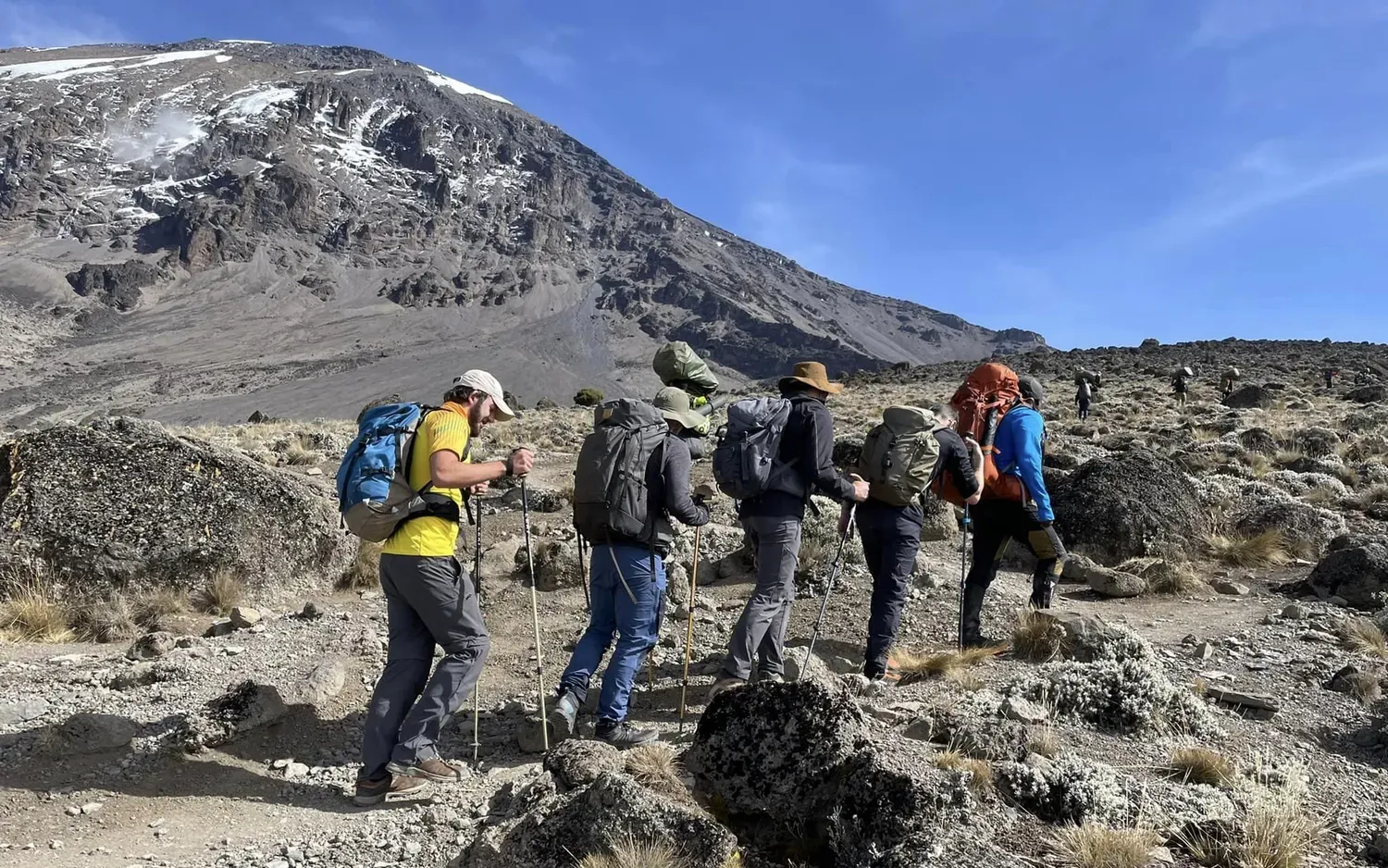
7-Day Kilimanjaro Machame Route at a Glance
Quick answer: the seven-day Machame Route is a camping itinerary on Kilimanjaro that keeps Karanga Camp as a separate overnight stop before Barafu. The route starts at Machame Gate, crosses Shira, Lava Tower and Barranco, reaches Uhuru Peak if conditions and guide assessment allow, and descends through Mweka.
| Trip detail | What this route page states |
|---|---|
| Mountain duration | 7 trekking days |
| Route | Machame ascent with Mweka descent |
| Highest point | Uhuru Peak, 5,895 m |
| Mountain accommodation | Camping |
| Key extra overnight | Karanga Camp between Barranco and Barafu |
| Current Jaynevy standard-package reference | From USD 2,150 pp |
| Route-guide planning range | USD 1,800–3,000 pp for preliminary budgeting only |
Why Choose the 7-Day Machame Route?
The main advantage of the seven-day version is pacing. Karanga Camp remains a separate overnight stage between Barranco and Barafu, so the upper mountain is not compressed into the same schedule as the shorter version. That does not remove altitude risk, but it creates another mountain night before summit night and breaks the Barranco–Karanga–Barafu section into more manageable stages. The route also passes Shira Plateau, Lava Tower, Barranco Wall and the alpine terrain below Barafu.
What Is the Difference Between 6-Day and 7-Day Machame?
The seven-day version adds time before the summit attempt by keeping Karanga as its own overnight stop. The trail is largely the same, but the six-day version compresses the upper section. For a fuller explanation, read our 6-day vs 7-day Machame Route comparison.
| Decision point | 7-day Machame | 6-day Machame |
|---|---|---|
| Karanga overnight | Kept as a separate camp night | Upper section is more compressed |
| Mountain nights before summit | One additional night | Shorter overall schedule |
| Best fit | Travelers who prefer more time on the route | Travelers prioritizing a shorter itinerary |
How Much Does the 7-Day Kilimanjaro Machame Route Cost?
Jaynevy Tours currently lists the standard 7-day Machame climbing package from USD 2,150 per person for mid-range camping and services. This route guide also carries a broader USD 1,800–3,000 per-person planning range. The broader range is for preliminary budgeting only and should not be treated as a fixed offer or a substitute for the current written quotation.
| Price reference | Published figure | How to use it |
|---|---|---|
| Current standard 7-day Machame package | From USD 2,150 pp | Current starting reference for the linked standard package |
| This route guide | USD 1,800–3,000 pp | Broad planning range only |
| Budget Machame option | Check current quotation | Separate product with its own inclusions |
| Group-joining Machame option | Varies by scheduled departure | Separate departure-based product |
Your final amount can depend on group size, private versus joining arrangements, travel dates, hotel nights, rentals and optional services. Use the written quotation as the controlling price document.
7-Day Kilimanjaro Machame Route Itinerary
The seven days below are trekking days. Pre-climb arrival, briefing and any hotel night should sit outside Day 1 unless your booked documents state otherwise. Distances and times are approximate where the current route page provides them, and actual progress can vary with weather, trail conditions, pace and guide safety decisions.
Day 1 – Machame Gate to Machame Camp
- Approx. elevation: about 1,800 m to 3,000 m
- Approx. distance: 10–11 km
- Typical hiking time: 5–7 hours
After registration and crew organization at Machame Gate, begin through montane rainforest. The trail climbs steadily to Machame Camp, where the first mountain night is spent in tents.
Day 2 – Machame Camp to Shira Camp
- Approx. sleeping altitude: around 3,800 m
- Approx. distance: around 5 km
Leave the forest and move into heath and moorland toward the Shira Plateau. The walking distance is shorter than Day 1, but the sleeping altitude rises significantly, so controlled pacing remains important.
Day 3 – Shira Camp to Barranco Camp via Lava Tower
- High point: Lava Tower, around 4,600 m
- Approx. sleeping altitude: Barranco near 3,950 m
- Approx. distance: around 10 km
- Typical hiking time: 6–8 hours
Walk into alpine desert toward Lava Tower, then descend to Barranco Camp. This higher daytime exposure followed by a lower sleeping camp is one of the route’s key altitude-exposure stages.
Day 4 – Barranco Camp to Karanga Camp
Climb the Barranco Wall, using hands for balance on some sections, then cross ridges and valleys toward Karanga Camp. The wall is a steep scramble rather than a technical rock climb. Keeping Karanga as a separate overnight is the defining scheduling difference of this seven-day version.
Day 5 – Karanga Camp to Barafu Camp
- Approx. distance: around 4 km
Continue through exposed alpine terrain to Barafu Camp, the base for the summit attempt. After arrival, climbers eat, hydrate, organize clothing and equipment, receive the summit briefing and rest before the night ascent.
Day 6 – Barafu Camp to Uhuru Peak, then Mweka Camp
- Highest point: Uhuru Peak, 5,895 m
The summit attempt normally begins around midnight. Ascend toward Stella Point and continue to Uhuru Peak if weather, health and guide assessment allow. Afterward, descend back past Barafu and continue much lower to Mweka Camp. This is the longest and most demanding day of the route.
Day 7 – Mweka Camp to Mweka Gate
- Approx. distance: 9–10 km
Descend through forest to Mweka Gate, complete park exit procedures and meet the transfer vehicle. Any hotel, onward transfer or post-climb arrangement should match the services confirmed in your booking documentation.
What Is Included in the Current Jaynevy 7-Day Machame Package?
The linked current standard package lists the core arrangements below. Because this route page references that package rather than replacing its quotation, the written booking documents remain the final source for exact inclusions.
- Pre- and post-climb hotel accommodation listed by the current standard package
- Airport transfers and transport to and from the park gate
- Professional mountain guides, porters and cook
- Mountain meals and purified drinking water
- Camping tents, sleeping pads and mess-tent arrangements
- Park and conservation fees included in the package
- Safety support and equipment stated for the booked departure
What Is Excluded or Confirmed Separately?
International travel, personal items and services not written into the package should be treated separately. Avoid relying on old fixed figures for changing costs such as flights, visas, insurance or crew gratuities.
- International flights to and from Tanzania
- Travel insurance suitable for high-altitude trekking and evacuation
- Personal clothing, footwear and rental gear not included in writing
- Crew gratuities
- Visa fees and personal travel documents
- Extra hotel nights, drinks, souvenirs and optional activities
How Do Pre-Climb and Post-Climb Logistics Work?
The seven-day count refers to mountain trekking, not the full Tanzania stay. The current standard package separately lists hotel accommodation and airport/gate transfers, but exact hotel nights and transfer timing should be confirmed in the written quotation.
| Logistics item | How to confirm it |
|---|---|
| Arrival before Day 1 | Confirm arrival date, briefing time and gear-check arrangements |
| Pre-climb hotel | Confirm the exact hotel night and category in writing |
| Airport transfer | Confirm pickup airport, date and time |
| Gate transport | Confirm transport to Machame Gate and from Mweka Gate |
| Post-climb hotel | Confirm whether the night after Day 7 is included |
What Is Camping Like on the Machame Route?
Machame is a camping route rather than a hut route. Mountain nights are spent in tents at designated camps. The current standard package lists camping tents, sleeping pads and mess-tent arrangements, while items such as sleeping bags, private toilets or upgraded equipment should be checked against the quotation instead of assumed.
How Should Climbers Think About Altitude and Safety?
The seven-day schedule gives more time than a shorter Machame itinerary, but it does not remove high-altitude risk. Fitness does not prevent altitude illness. Climbers should report symptoms early, follow the guide’s pace and accept conservative decisions when health or conditions make continued ascent unsafe. The route page does not promise a summit outcome.
When Is a Good Time to Climb the Machame Route?
January to early March and June to October are commonly chosen for drier conditions on this route page. April and May are usually wetter, while November often brings shorter rains. Weather can still change quickly at any time of year.
| Period | Planning note from this route guide |
|---|---|
| January to early March | Commonly chosen for drier conditions |
| April to May | Usually wetter |
| June to October | Commonly chosen for drier conditions |
| November | Often associated with shorter rains |
Regardless of month, prepare for rain, wind, cold and strong sun with appropriate waterproof and insulating layers.
How Should You Prepare for Seven Days on Machame?
Train for repeated trekking days, not only summit night. Build aerobic endurance, leg strength and comfort walking uphill and downhill for several hours. Practice on uneven trails using the boots and daypack you plan to take. If you have medical concerns about high-altitude travel, discuss the itinerary with an appropriate healthcare professional before departure.
What Should You Pack for the 7-Day Machame Route?
Prioritize footwear, layering, weather protection and summit-night essentials. Your final gear list should match what is included or rented in the booked package.
- Broken-in trekking boots and appropriate hiking socks
- Moisture-managing base layers and warm mid-layers
- Insulated jacket plus waterproof jacket and trousers
- Warm hat, sun hat, gloves and UV-protective sunglasses
- Headlamp with spare batteries for summit night
- Trekking poles and a comfortable daypack
- Reusable water containers suitable for cold conditions
- Sleeping bag suitable for cold mountain nights if not included or rented
Who Should Choose the 7-Day Machame Route?
This route suits active travelers who prefer camping, varied scenery and a longer Machame schedule with Karanga as a separate overnight. It can suit prepared first-time Kilimanjaro climbers, but it should not be described as easy: summit night is long, altitude is substantial and mountain weather can be severe.
| If this describes you | How the 7-day Machame route fits |
|---|---|
| You want seven mountain days | Strong fit |
| You prefer tents rather than huts | Strong fit |
| You want Karanga as a separate overnight | Strong fit |
| You need the shortest possible Machame itinerary | Compare the 6-day version |
| You want a scheduled shared departure | Compare the group-joining option |
| You want a dedicated private arrangement | Compare the 7-day private guided trek |
How Do You Book the 7-Day Machame Route?
Confirm the exact trip configuration in writing before payment. The route page provides planning guidance, while the quotation should control the final price and services.
- Send your preferred trekking dates and number of climbers.
- Choose private, group-joining or another available departure format.
- Confirm hotel nights, airport transfers, gate transport and rental gear.
- Review the final price, inclusions, exclusions and dietary or other operational requirements.
- Use the written booking confirmation as the final reference for your departure.
You can also review Jaynevy Tours payment options before confirming the booking.
Related 7-Day Kilimanjaro Machame Options
For a current bookable standard version, see the 7-day Machame climbing package. Price-focused travelers can compare the 7-day budget Machame option, while scheduled shared departures are covered by the 7-day Machame group-joining package. You can also browse all Kilimanjaro climbing packages.
Frequently Asked Questions About the 7-Day Machame Route
How much does the 7-day Kilimanjaro Machame Route cost with Jaynevy Tours?
Jaynevy Tours currently lists its standard 7-day Machame Route climbing package from USD 2,150 per person for mid-range camping and services. This route guide also carries a broader USD 1,800–3,000 planning range. Your final written quotation should confirm the exact rate, group size, dates and inclusions.
What is the correct 7-day Machame Route itinerary?
The seven trekking days are Machame Gate to Machame Camp, Machame Camp to Shira Camp, Shira to Barranco via Lava Tower, Barranco to Karanga, Karanga to Barafu, Barafu to Uhuru Peak and down to Mweka Camp, then Mweka Camp to Mweka Gate.
Why does the 7-day Machame Route include Karanga Camp?
Karanga Camp separates the Barranco-to-Barafu section into two stages, giving climbers an additional night on the mountain before moving to Barafu and the summit attempt.
Does the 7-day Machame Route include the hotel night before the climb?
The seven days refer to trekking days on Kilimanjaro. The current Jaynevy standard package separately lists pre- and post-climb hotel accommodation, but the exact hotel nights and transfer timing should be confirmed in the written quotation.
What is included in Jaynevy Tours' current 7-day Machame package?
The current standard package lists pre- and post-climb hotel accommodation, airport and gate transfers, professional guides, porters and cook, mountain meals and purified water, camping equipment, park and conservation fees, and stated safety support. Your written quotation is the final confirmation.
Is the 7-day Machame Route suitable for first-time Kilimanjaro climbers?
It can suit fit first-time Kilimanjaro climbers who are prepared for consecutive trekking days, camping and high altitude. Technical climbing experience is not normally required, but fitness does not prevent altitude illness.
When is a good time to climb the Machame Route?
January to early March and June to October are commonly chosen for drier conditions. Kilimanjaro can still receive rain, wind, cold and snow at any time, so climbers should prepare for changing mountain weather.
How should climbers manage altitude on the 7-day Machame Route?
Climbers should follow the guide's pace, report symptoms early and avoid pushing onward when health or conditions make continued ascent unsafe. Worsening altitude illness can require stopping ascent or descending.