
7-Day Kilimanjaro Machame Route Climb
This 7-day Kilimanjaro climb is a Machame Route expedition that takes you from lush rainforest to the icy summit of Uhuru Peak, Africa's highest point. Our team arranges your mountain guides and porters, all meals and camping equipment on the mountain, park and conservation fees, and pre- and post-climb hotel nights in Moshi or Arusha. The price of this 7-day Machame Route climb starts from USD 1,739 per person. Because summit success depends on your fitness, acclimatization and the weather on summit night, it can never be guaranteed. The final package price and confirmed inclusions are provided in your written quotation.
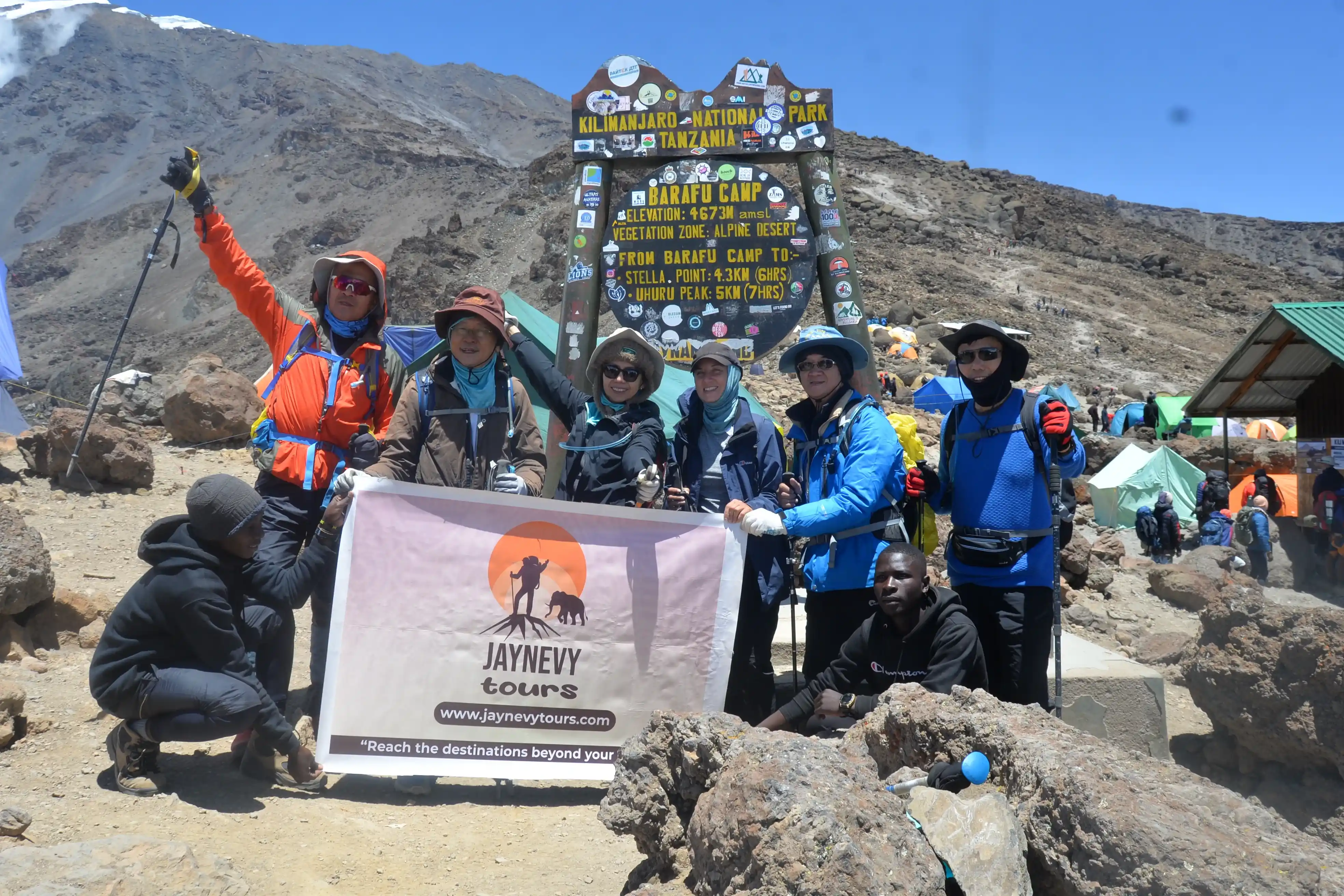
7-Day Kilimanjaro Machame Route Climb Overview
Our Machame Route package offers a well-balanced climb through Kilimanjaro's different climate zones, starting in the green rainforest and ending in the icy summit area. From the moment you arrive in Moshi or Arusha, our experienced mountain crew supports you every step of the way.
You'll trek through forest trails, cross the wide Shira Plateau, climb the Barranco Wall, and begin your summit push under a sky full of stars before reaching Uhuru Peak at sunrise. The route is known for good acclimatization thanks to its steady "pole pole" (slowly, slowly) pace and gradually changing landscapes. Throughout the climb, our guides monitor your health with oxygen and pulse oximeters and coordinate emergency evacuation if it's ever needed.
This trip works well on its own or combined with a Tanzania safari or a Zanzibar beach stay afterward. Good fitness and a positive attitude go a long way on this route — with proper preparation, it's a rewarding, achievable climb for most active travelers.
How Much Does This 7-Day Machame Route Climb Cost?
The price of our 7-Day Kilimanjaro Machame Route Climb starts from USD 1,739 per person at budget-level pre- and post-climb accommodation, and rises to around USD 2,136 per person at luxury level. What changes the final figure: your accommodation category before and after the climb, group size, and travel dates. This starting price covers park and conservation fees, guides and porters, meals and camping equipment on the mountain, and transfers; the exact figure for your dates is confirmed in your written quotation.
We offer flexible rates for groups, with better per-person value for larger parties. Solo climbers or those wanting a private climb can also book on their own — contact us for an exact quote based on your dates and group size.
What's Included in Your Kilimanjaro Climb
- 2 nights hotel accommodation in Moshi or Arusha (pre- and post-climb)
- Airport transfers and transport to and from the mountain gate
- Professional mountain guides, porters and cook
- All meals (breakfast, lunch, dinner) and purified water on the mountain
- Camping equipment (tents, sleeping pads, mess tent) and all park and conservation fees
- Oxygen and pulse oximeters for altitude monitoring, plus coordination of emergency evacuation off the mountain if needed
What's Excluded from Your Kilimanjaro Climb
- International flights to and from Tanzania
- Travel and medical insurance, including evacuation and repatriation cover
- Personal expenses (tips, drinks, souvenirs)
- Optional activities or extra hotel nights
- Tips for guides, porters and crew (customary)
- Visa fees and sleeping bag or gear rental (if needed)
- Alcoholic beverages and additional meals off the mountain
This list helps you plan any extras while making sure the core climb, support and logistics are fully covered for a smooth experience.
Accommodation Before and After Your Climb
Our package includes 2 nights of hotel accommodation in Moshi or Arusha, before and after the climb itself. We offer three accommodation levels — the price above reflects budget level; mid-range and luxury raise the total accordingly.
Budget Accommodation
A simple and comfortable option before and after your climb. Rooms are clean and basic, with private or shared bathrooms, hot showers, Wi-Fi and breakfast — a good choice if you'd rather put your budget toward the mountain than the hotel.
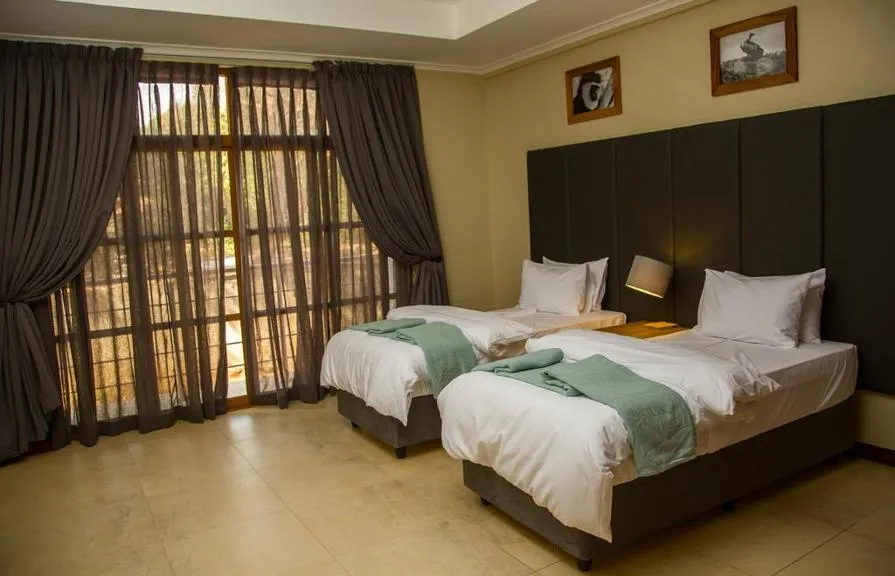
Mid-Range Hotels
Spacious, well-furnished rooms with private bathrooms, hot showers, Wi-Fi and an on-site restaurant, giving you a comfortable, quiet place to rest before and after the trek.
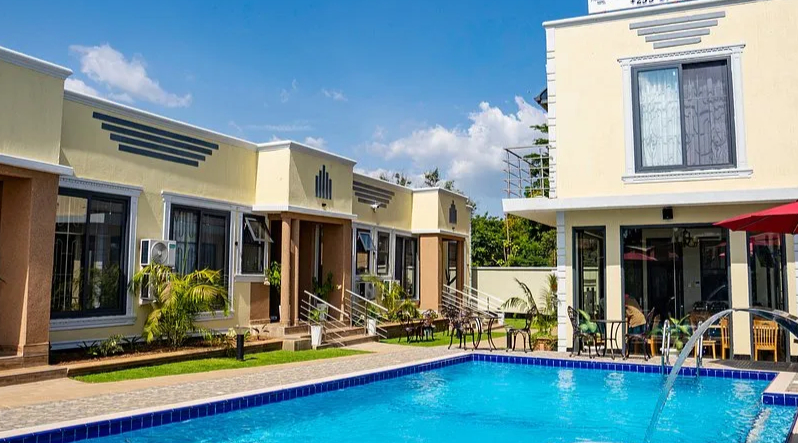
Luxury Hotels
Spacious rooms, comfortable beds, private bathrooms, a swimming pool and excellent dining — for climbers who want extra comfort and personalized service before and after the mountain.
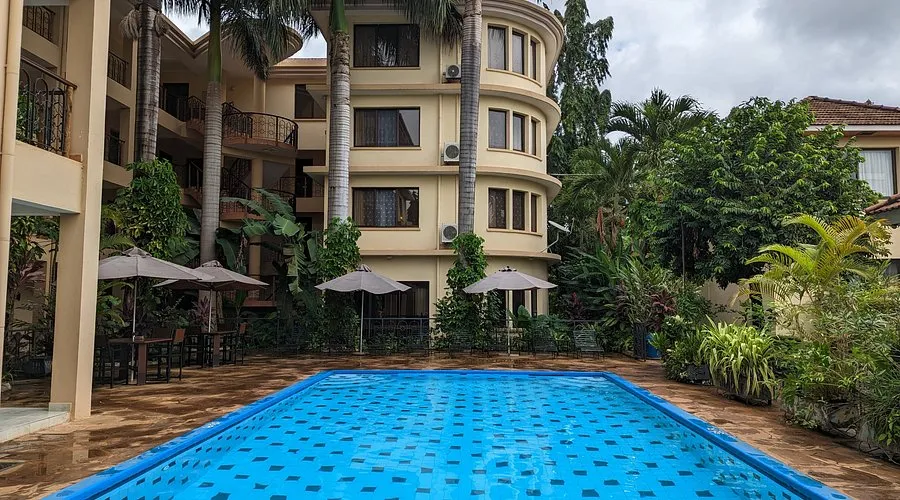
Whichever category you choose, you'll have restful nights off the mountain and quality camping tents during the trek itself. Once the numbers are clear, here's exactly how the seven days unfold.
7-Day Kilimanjaro Machame Route Itinerary
This itinerary gives your body time to properly acclimatize while taking you through Kilimanjaro's changing climate zones and iconic landmarks. Below is your day-by-day program for reaching Uhuru Peak.
Day 1 – Arrival in Tanzania and Hotel Rest
Arrive at Kilimanjaro International Airport (JRO) or Arusha. Our driver transfers you to your hotel in Moshi or Arusha for rest and a pre-climb briefing with your guide, including a gear check.
Overnight in a comfortable hotel, with time to adjust to Tanzania time.
Day 2 – Machame Gate to Machame Camp
Drive to Machame Gate (1,800m) for registration, then trek through lush montane rainforest with giant ferns, birds and monkeys. Steady climb to Machame Camp (3,000m).
Hiking time: 5-7 hours
Distance: ~11km
Habitat: Rainforest. Overnight camping with meals.
Day 3 – Machame Camp to Shira Camp
Ascend through moorland with views of Shira Plateau and distant peaks. A shorter but steeper day to Shira Camp (3,800m) for better acclimatization.
Hiking time: 4-6 hours
Distance: ~5km
Habitat: Moorland and heath. Overnight camping.
Day 4 – Shira Camp to Barranco Camp via Lava Tower
Climb to Lava Tower (4,600m) for acclimatization, then descend to Barranco Camp (3,950m), passing the dramatic Barranco Wall.
Hiking time: 6-8 hours
Distance: ~10km
Habitat: Alpine desert. Overnight camping.
Day 5 – Barranco Camp to Karanga Camp
Scale the Barranco Wall (not technical), cross alpine terrain, and descend slightly to Karanga Camp (4,035m) — a shorter day to rest before the summit push.
Hiking time: 4-5 hours
Distance: ~5km
Habitat: Alpine. Overnight camping.
Day 6 – Karanga Camp to Barafu Camp and Midnight Summit Attempt
A short trek to Barafu Camp (4,550m) for rest. After an early dinner, you rest until the midnight summit push toward Uhuru Peak (5,895m) via Stella Point and the crater rim. Full altitude and health guidance for summit night is covered in the altitude and health section below.
Hiking time: 6-8 hours ascent, plus descent to Mweka Camp
Habitat: Rock and ice. Overnight at Mweka Camp (3,100m).
Day 7 – Mweka Camp to Mweka Gate and Departure
Descend through rainforest to Mweka Gate (1,800m). Receive your summit certificate, then transfer to your hotel for a hot shower before onward travel or rest.
Hiking time: 4-6 hours
With the day-by-day plan in place, here's a closer look at some of the route's most memorable landmarks.
Machame Route Highlights
Mount Kilimanjaro offers a striking range of scenery via the Machame Route. From rainforest to glaciers, these are the landmarks that stand out along the way.
1. Machame Rainforest
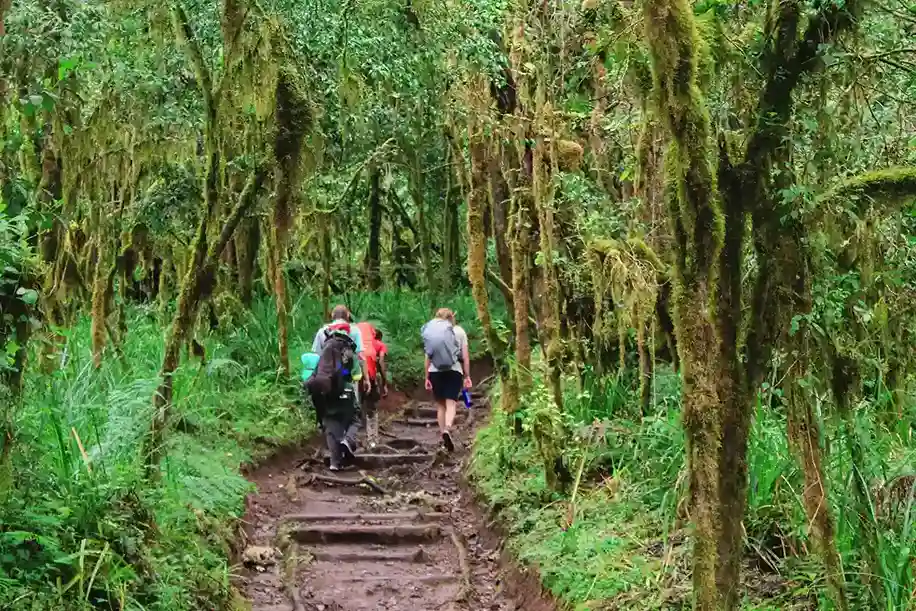
The Machame Rainforest is the first and greenest section of the climb. You walk under tall trees, past giant ferns, and may spot monkeys and colorful birds. The air is fresh and cool, making it a memorable start to the mountain.
2. Shira Plateau
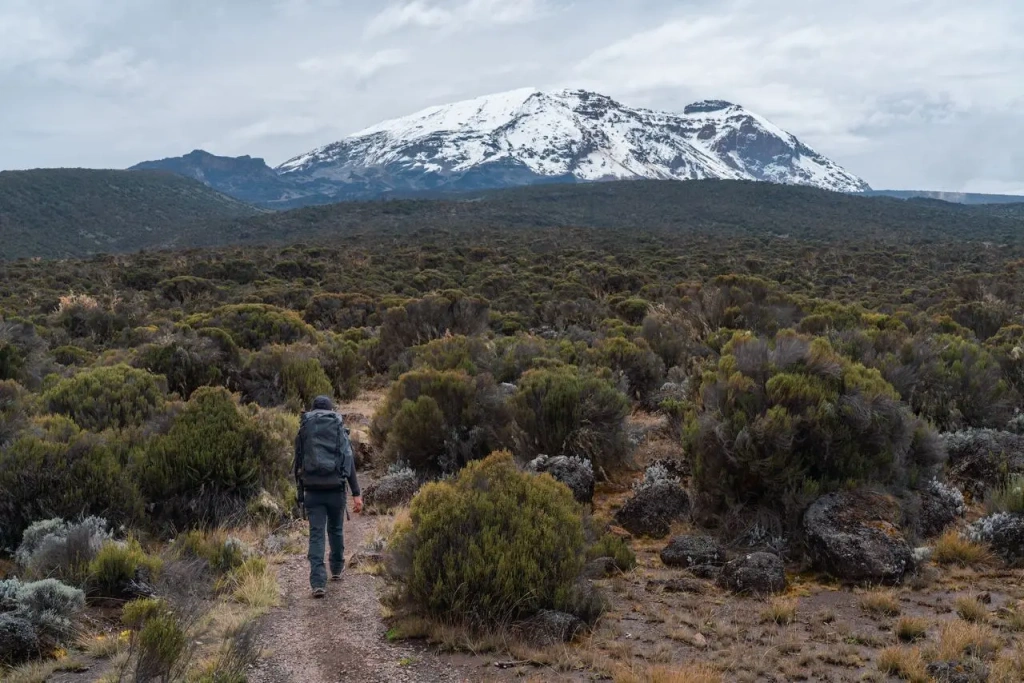
Shira Plateau is a wide, open area with sweeping mountain views. After leaving the rainforest, the landscape shifts to moorland with low plants and rocky paths. The air feels cooler, and you can clearly see Kibo Peak — a good place to acclimatize and take in the scenery.
3. Barranco Wall and Lava Tower
Barranco Wall is one of the most memorable parts of the Machame Route. You'll scramble up this steep rock face using your hands in places; it looks more intimidating than it is, and is manageable with your guide's support. The views from the top are worth the effort.
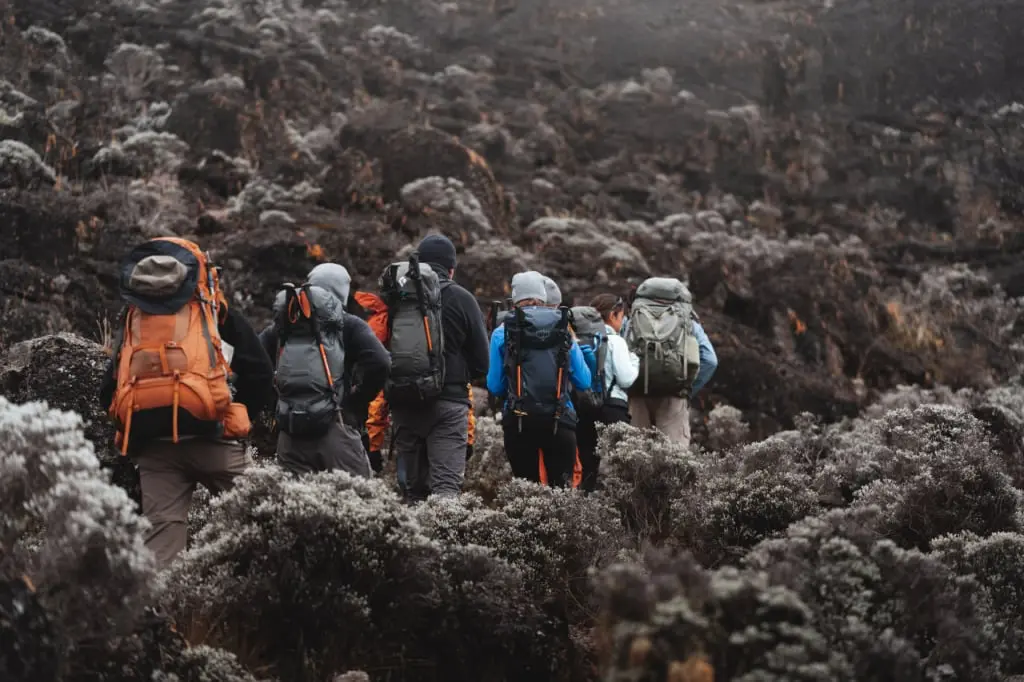
Lava Tower is a tall volcanic rock formation along the route. Climbers pass here for acclimatization, helping the body adjust to higher altitude, with dramatic rocky views before descending to camp.
4. Uhuru Peak – Summit of Africa
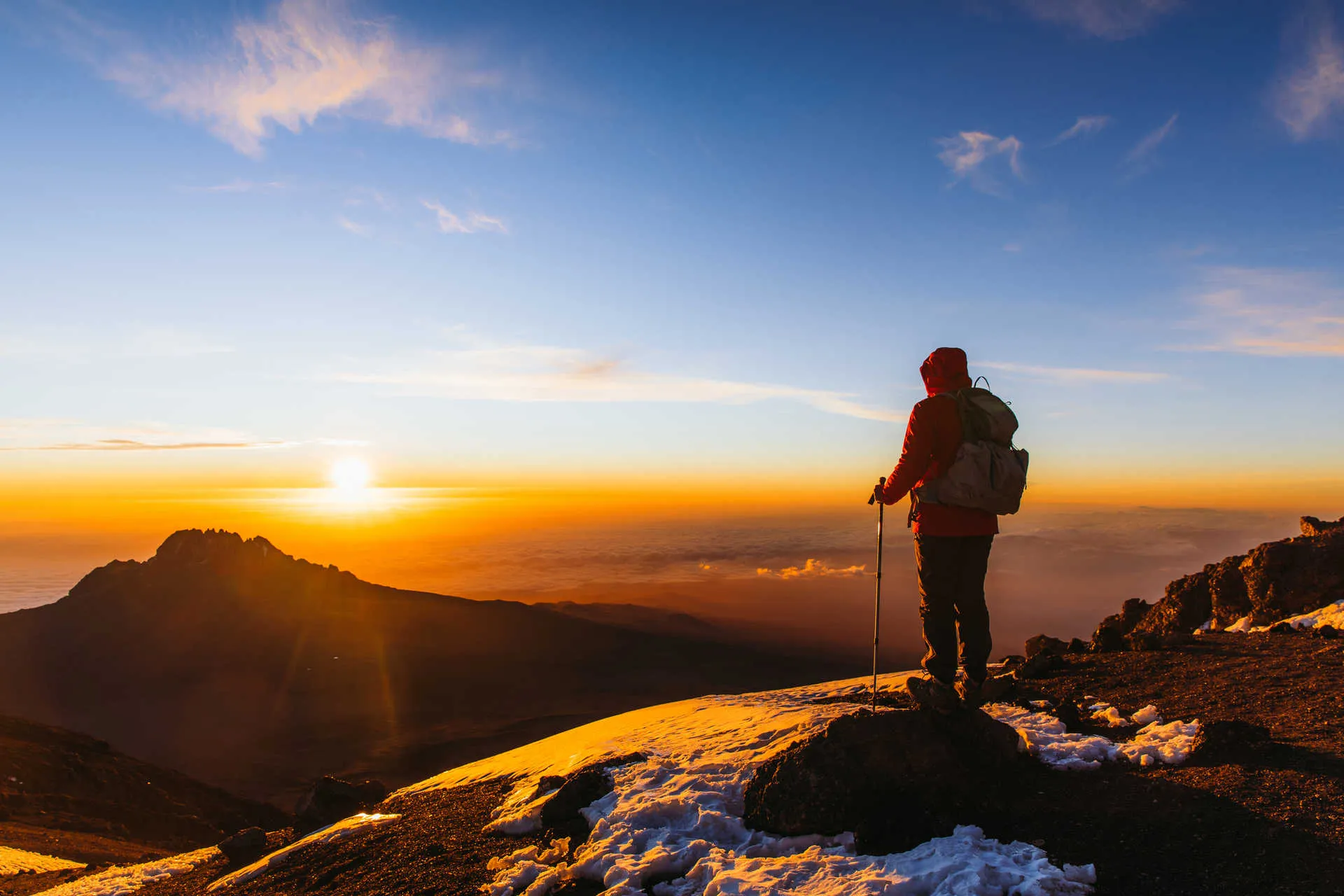
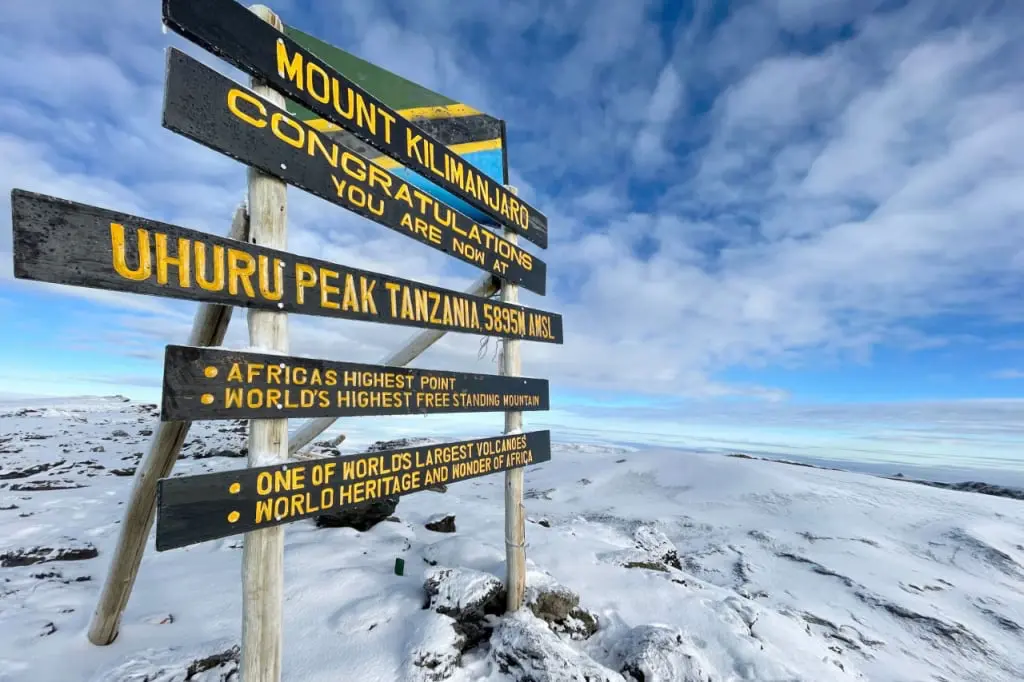
Uhuru Peak is the highest point on Mount Kilimanjaro and the tallest point in Africa. Reaching it is the goal of the climb — you arrive around sunrise, standing above the clouds with sweeping views and a strong sense of achievement.
5. Alpine Desert and Glaciers
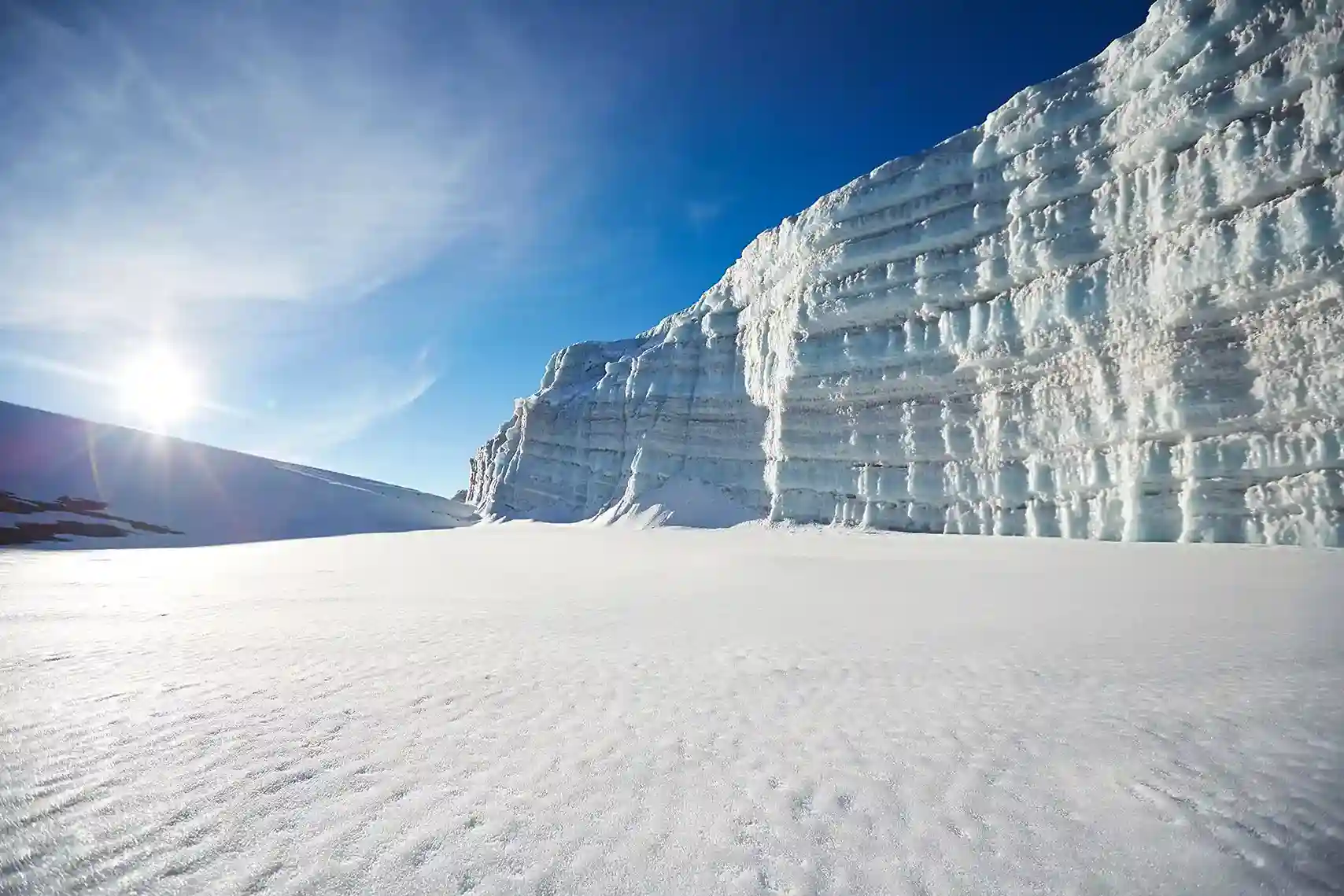
The alpine desert is a dry, rocky area high on the mountain, where plants are few, temperatures drop, and the air becomes noticeably thinner. Above this zone, you'll see Kilimanjaro's remaining glaciers — striking ice formations that mark the final stage of the climb.
Once you know what you'll see along the way, it's worth knowing when in the year gives you the best chance of clear views.
Best Time to Climb Kilimanjaro via the Machame Route
The best time to climb Kilimanjaro is during the dry season: January to March, and June to October. These months generally offer clearer skies, less rain, more stable trails and better views on summit day. The wetter months, April, May and November, are quieter on the mountain but bring a higher chance of rain and reduced summit visibility.
| Season | Months | What to expect |
|---|---|---|
| Dry season | January–March, June–October | Clearer skies, stable trails, busier camps |
| Wet season | April, May, November | Quieter trails, higher chance of rain and reduced visibility |
Local expert insight: even in the dry season, nights at camp and the summit push are well below freezing, so pack warm layers regardless of when you travel.
Decision guidance: choose dry-season dates if clear summit views and stable trails matter most to you. Choose April, May or November if you'd rather climb with fewer people on the trail and don't mind a higher chance of rain. Once you've settled on timing, it's worth understanding the health side of climbing at altitude.
Altitude Sickness and Health Requirements
Altitude sickness is a real risk on Kilimanjaro at any fitness level, which is why this 7-day Machame itinerary is built with extra acclimatization time. Our guides carry oxygen and pulse oximeters, monitor your health throughout the climb, and can recommend descent if needed for your safety — the final call on summit night rests with your lead guide.
A 7-day itinerary gives your body more time to adjust to altitude than shorter climbs, since you gain height gradually and pass through every one of Kilimanjaro's climate zones at a manageable pace. This doesn't remove the risk of altitude sickness, but it does reduce it compared to faster ascents. No prior climbing experience is required, but a reasonable level of fitness makes the days on the mountain considerably more enjoyable.
- Talk to your doctor about altitude sickness prevention before you travel
- Build up your cardiovascular fitness and hiking stamina in the months before your climb
- Tell us about any pre-existing health conditions in advance
- Stay well hydrated and eat throughout each day on the mountain
- Listen to your guide — descent is sometimes the safest choice, even close to the summit
Local expert insight: the slow "pole pole" pace on this route isn't just tradition — climbing too fast is one of the most common reasons climbers struggle with altitude, so resist the urge to rush ahead of your guide.
Decision guidance: this climb suits most travelers in reasonable health and fitness. Summit success can never be guaranteed — it depends on your body's response to altitude as much as your fitness level. With your health preparation covered, here's what to actually pack.
What to Pack for Your Kilimanjaro Climb
Pack warm layered clothing you can add or remove as you move through climate zones, sturdy broken-in hiking boots, a headlamp, trekking poles, and gloves and a warm hat for summit night. Bring sunscreen and sunglasses for the exposed upper sections, and a reusable water bottle or hydration bladder.
- Layered clothing (base layers, fleece, waterproof outer shell)
- Sturdy, broken-in hiking boots
- Warm hat, gloves and a headlamp for the summit night push
- Trekking poles
- Sunscreen, sunglasses and lip balm with SPF
- Reusable water bottle or hydration bladder
- A four-season sleeping bag (not included — bring your own or arrange a rental with us)
Local expert insight: temperatures swing dramatically between the rainforest at the start and the summit push at night, so layers you can adjust matter more than any single heavy item.
With your bags packed, here's who tends to get the most out of this 7-day climb.
Who This 7-Day Machame Route Climb Suits
This 7-day Machame climb suits active travelers who want a challenging but achievable adventure with a good margin for acclimatization. With proper preparation, it's a realistic goal for most people in good physical condition, not just experienced mountaineers.
Couples, friends and solo climbers all do well on this route, thanks to its steady pace and gradually changing scenery. It's also a good option to combine with a Tanzania safari or a Zanzibar beach stay afterward for a fuller trip.
Worth discussing with us first if you have a pre-existing health condition, limited hiking experience, or want a faster or slower itinerary than 7 days — we can advise on what fits your situation. If you're ready to move forward, the questions below cover most of what's left to know before booking.
Frequently Asked Questions about the 7-Day Kilimanjaro Machame Route Climb
Is 7 days enough to climb Kilimanjaro via the Machame Route?
Yes, 7 days is a good length for the Machame Route. The extra day compared to shorter itineraries gives your body more time to acclimatize, which is one of the biggest factors in reaching the summit safely and comfortably.
What is included in the 7-day Kilimanjaro Machame package?
Our package includes pre- and post-climb hotel nights, airport and gate transfers, mountain guides and porters, all meals and camping equipment on the mountain, park and conservation fees, and oxygen and pulse oximeters for altitude monitoring. International flights, travel insurance and tips are excluded — see the full list above.
How much does the 7-day Kilimanjaro Machame climb cost?
The price of our 7-Day Kilimanjaro Machame Route Climb starts from USD 1,739 per person at budget-level accommodation, rising to around USD 2,136 per person at luxury level. The exact figure depends on your accommodation category, group size and travel dates, confirmed in your written quotation.
When is the best time to climb Kilimanjaro?
The dry seasons, from January to March and June to October, generally offer the clearest weather, the most stable trails, and the best summit conditions.
Is summit success guaranteed on this climb?
No summit can ever be guaranteed. Reaching Uhuru Peak depends on your fitness, how well you acclimatize, and weather conditions on summit night. Our guides monitor your health throughout and may recommend descent if needed for your safety.
What should I pack for a Kilimanjaro climb?
Pack warm layered clothing, a headlamp, trekking poles, gloves and a warm hat, sunscreen and sunglasses, and a reusable water bottle. A four-season sleeping bag is not included in the package and can be rented locally if you don't want to bring your own.
Can I combine a Kilimanjaro climb with a safari or Zanzibar?
Yes, many climbers extend their trip with a Tanzania safari or a Zanzibar beach stay afterward to relax and recover before heading home.