
What You Need to Know: Yes. A private safari in Tanzania can be planned around a wheelchair: game drives happen from the vehicle, so most of the safari is seated, and we choose lodges with accessible rooms and routes with shorter drives, such as Tarangire, Lake Manyara and the Ngorongoro Crater. Tell us about your mobility and equipment when you enquire, so we can check every lodge and transfer before you book.
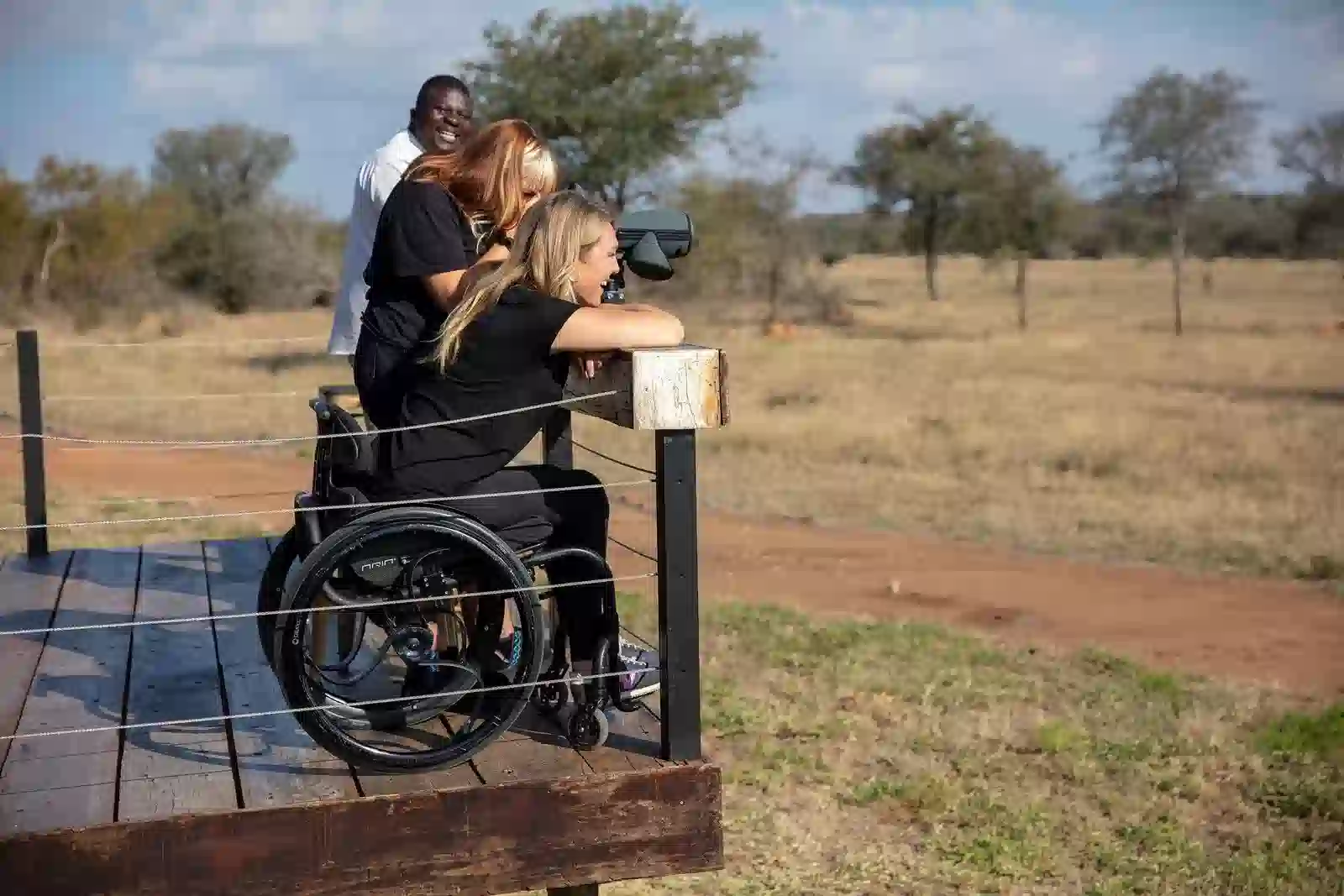
What We Plan Around on a Wheelchair Safari
| Need | How we plan it |
|---|---|
| Getting in and out of the vehicle | Your driver-guide and lodge staff help with transfers; we discuss your needs in advance |
| Rooms | Lodges with ground-floor or accessible rooms, ramps and accessible bathrooms, checked before you book |
| Distances | Routes with shorter drives and nights in one lodge where possible |
| Equipment | Space for a folding wheelchair in the private vehicle |
| Toilets on game drives | Planned stops at lodges and picnic sites with the most suitable facilities |
Which Safari Routes Suit Wheelchair Users?
The parks closest to Arusha suit wheelchair users best: the 3-day Tarangire, Manyara and Ngorongoro safari keeps drives short and both nights in one Karatu lodge. The Serengeti is possible on a longer safari with rest days, or by flying in to avoid the long drive.
A good first accessible safari is three or four days on the northern circuit: Tarangire for elephants, the Ngorongoro Crater for the Big Five, and Lake Manyara, with lodges chosen for accessible rooms and bathrooms. Drives between parks are short, roads are mostly good, and the crater gives excellent wildlife without long hours in the vehicle.
With more time, the Serengeti can be added, ideally by flying in to avoid the long road. Zanzibar's beach hotels make a relaxing ending; some have ramps and accessible rooms. We check each property in advance and share the details with you before you book.
The Safari Vehicle and Your Guide
Our safaris use private 4x4 Land Cruisers from partner fleets in Arusha, with a high step into the vehicle; with at most six guests and a private vehicle, there is room for a folding wheelchair and you set the pace. Our driver-guides graduated from the College of African Wildlife Management at Mweka and have five years of safari guiding. They speak English, and we can arrange French, Spanish, German or Chinese-speaking guides.
Health and Insurance for an Accessible Safari
See your doctor before you travel about any condition affected by long drives, heat or altitude (the Ngorongoro crater rim is at about 7,500 ft / 2,300 m), and about malaria prevention. Make sure your insurance covers medical treatment and evacuation; every safari we run has AMREF Flying Doctors evacuation cover.
How Far Ahead to Plan an Accessible Safari
Every traveler's needs are different, so the best first step is a conversation. Tell us about your mobility, equipment and what you'd love to see, and we design a route, check each lodge and vehicle arrangement, and share the details with you before you book.
Give us as much notice as you can, ideally three months or more, so we can confirm accessible rooms and arrangements at each lodge. For Kilimanjaro, see our page on Kilimanjaro and wheelchair users.
- Tell us about your mobility, equipment and any medical needs when you first contact us
- We check accessible rooms and bathrooms at each lodge before we confirm
- Bring spare parts and repair tools for your wheelchair
- Allow extra time at airports and between parks
- Travel insurance must cover your needs and medical evacuation
How to Book an Accessible Safari
Send your dates, the number of travelers and your lodge level, and we reply with a written quotation. A 30% deposit confirms your safari and the balance is paid on arrival.
| When you cancel | Refund |
|---|---|
| 60 days or more before arrival | 100% |
| 30–59 days | 90% |
| 15–29 days | 60% |
| 10–14 days | 25% |
| Less than 10 days, or a no-show | No refund |
What an Accessible Safari Day Looks Like
An accessible safari day follows the same rhythm as any other: an early start, a game drive with a picnic lunch, and an afternoon at the lodge. The difference is in the details we plan ahead: the transfer in and out of the vehicle, accessible rooms and bathrooms at each lodge, rest breaks, and the pace of the day.
Zanzibar After an Accessible Safari
Many guests end their safari with a few days on Zanzibar. Some beach hotels have ramps, accessible rooms and level paths to the beach; the north coast, where the tide stays in, is easiest for swimming. Stone Town's narrow, uneven lanes are harder, so a short guided visit by vehicle may suit better. We check each hotel before you book.
Common Questions About Wheelchair Safaris in Tanzania
Which safari route is best for wheelchair users?
Routes with short drives and accessible lodges, such as the 3-day Tarangire, Manyara and Ngorongoro safari.
Can a wheelchair go in the safari vehicle?
A folding wheelchair fits in our private Land Cruisers; your guide helps with transfers.
Are there accessible lodges on safari?
Some lodges have accessible rooms; we check each one for your needs before you book.
Which parks are best for an accessible safari?
Parks with good roads and short drives, such as Tarangire, Lake Manyara and the Ngorongoro Crater, are easiest.
Can a wheelchair fit in the safari vehicle?
A folding wheelchair fits in the luggage area; your guide helps with transfers in and out of the vehicle.
Are there accessible lodges in the Serengeti?
Some camps and lodges have accessible rooms; we check availability for your dates.
How far ahead should I plan an accessible safari?
Three to six months gives time to check lodges and arrangements.
The Bottom Line
A safari is very possible in a wheelchair with a private vehicle, accessible lodges and short drives. Tell us your needs early and we will plan each step.
Send us your dates, the number of travelers (with children's ages) and your lodge level through the form, on WhatsApp +255 678 992 599 or by email to jaynevytours@gmail.com, and our sales team in Moshi will reply with a written quotation.