
How Is Tanzania Flag – Meaning, Colors, and History Explained
Many people curious about Tanzania often ask, how is Tanzania flag? The flag of Tanzania is a powerful national symbol that represents the country’s unity, history, and natural beauty. It combines vibrant colors and a simple yet meaningful design that tells the story of Tanzania’s people and geography. In this guide, we explain the meaning, colors, symbolism, and history behind the flag of Tanzania.
1. Description – What Does the Flag of Tanzania Look Like?
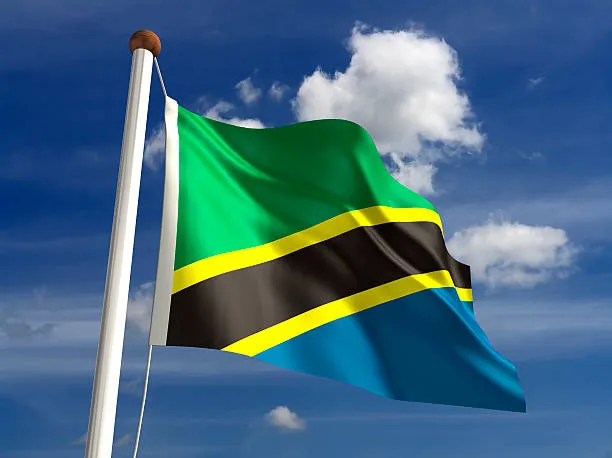
The flag of Tanzania consists of four colors arranged in a unique diagonal pattern. A black diagonal band bordered with yellow runs from the lower hoist-side corner to the upper fly-side corner, dividing the flag into two triangles:
- The upper triangle is green.
- The lower triangle is blue.
The design makes the Tanzanian flag one of the most distinctive national flags in Africa. It reflects both the natural beauty of the country and the unity of its people.
2. Meaning of the Colors in the Tanzania Flag
Each color in the Tanzanian flag carries deep symbolic meaning related to the nation’s land, people, and values.
- Green: Represents the rich agricultural lands and natural vegetation of Tanzania.
- Yellow (Gold): Symbolizes the country’s mineral wealth and economic potential.
- Black: Stands for the people of Tanzania, their unity, and African heritage.
- Blue: Represents the Indian Ocean, as well as Tanzania’s beautiful lakes and skies.
Together, these colors express the harmony between Tanzania’s natural environment, its people, and national prosperity.
3. Historical Background of the Tanzanian Flag
The flag of Tanzania was officially adopted on April 26, 1964, following the union of Tanganyika and Zanzibar to form the United Republic of Tanzania. The design combines elements from the two original flags of the former territories:
- Tanganyika’s flag: Green with a black stripe bordered by yellow.
- Zanzibar’s flag: Blue with black and green horizontal stripes.
When the two nations united, elements from both flags were merged to create the new flag of Tanzania, symbolizing unity and cooperation between mainland Tanganyika and the islands of Zanzibar.
4. Flag Proportions and Design Rules
The Tanzania flag’s proportions follow a 2:3 ratio, with each color occupying a balanced section of the design. The black diagonal band and its yellow borders are perfectly centered, ensuring equal visibility for all colors.
- The flag must always be displayed horizontally with the green area at the top and blue at the bottom.
- It is flown at government buildings, schools, embassies, and on national holidays like Union Day and Independence Day.
5. The Symbolism Behind the Tanzanian Flag
Beyond its visual appeal, the Tanzanian flag represents important national ideals:
- Unity: The merging of two nations into one republic.
- Peace and Stability: The colors symbolize the balance between land, sea, and people.
- Prosperity: Gold lines highlight Tanzania’s natural wealth and ambition for growth.
The flag reminds citizens of the country’s motto, “Uhuru na Umoja” — Freedom and Unity.
6. When and How the Tanzania Flag Is Used
The Tanzanian national flag is displayed on public buildings, schools, and during official events. It is also raised every morning at government institutions and lowered respectfully at sunset.
- Used during Independence Day (December 9) and Union Day (April 26).
- Flown at half-mast during national mourning.
- Commonly seen on sports uniforms, national celebrations, and diplomatic missions abroad.
7. Interesting Facts About the Tanzania Flag
- The Tanzanian flag’s design has remained unchanged since 1964.
- It symbolizes one of the few successful political unions in Africa — Tanganyika and Zanzibar.
- The flag’s combination of land and sea colors reflects Tanzania’s unique geography, from Mount Kilimanjaro to the Indian Ocean.
8. Summary – How Is Tanzania Flag
In summary, the flag of Tanzania is a proud emblem of national unity, peace, and progress. Its green, yellow, black, and blue colors beautifully express the country's land, people, and ocean. Adopted in 1964 after the union of Tanganyika and Zanzibar, the flag continues to stand as a symbol of harmony, strength, and identity for all Tanzanians.
To learn more about Tanzania’s history, travel, and culture, visit www.jaynevytours.com.