Luxury Safari for the Great Migration
Discover the pinnacle of wildlife adventures with a luxury safari for the Great Migration in Tanzania, where over 1.5 million wildebeest, 200,000 zebras, and countless gazelles traverse the vast Serengeti plains in search of fresh grazing lands. This extraordinary event, often hailed as one of the Seven Natural Wonders of the World, offers unparalleled opportunities for immersive experiences in opulent settings. Whether you're seeking exclusive lodges with panoramic views or private guided tours that bring you close to the action, a luxury safari for the Great Migration promises unforgettable moments amidst Africa's raw beauty. From dramatic river crossings to predator-prey interactions, every aspect of this journey is enhanced by high-end amenities, expert guides, and sustainable practices that ensure the preservation of this iconic spectacle for generations to come.

Luxury safari for the Great Migration overview
A luxury safari for the Great Migration in Tanzania elevates the experience of witnessing this massive wildlife movement to new heights of comfort and exclusivity. Travelers can expect bespoke itineraries that align with the migration's patterns, ensuring prime viewing of the herds' dramatic journeys across the Serengeti. High-end accommodations, such as tented camps and lodges like Singita Sasakwa or Four Seasons Safari Lodge, provide lavish suites with private plunge pools, gourmet dining, and spa services, all while offering front-row seats to the natural drama unfolding outside. Quantitative data highlights the scale: approximately 1.5 million wildebeest cover nearly 1,000 miles annually, with survival rates around 80% for adults but only 50% for calves due to predation and environmental challenges. Qualitatively, the luxury safari for the Great Migration immerses guests in sensory-rich encounters, from the thunderous hoofbeats of crossing herds to intimate sightings of lions, cheetahs, and hyenas in action.
Expert private guides, often with over 20 years of experience, lead customized game drives in state-of-the-art vehicles equipped with charging ports, refreshments, and photographic setups. Additional luxuries include hot air balloon rides over the plains at dawn, where guests can observe the migration from above, spotting patterns in herd movements that span up to 30 kilometers wide. Sustainability is a core focus, with many luxury operators contributing to conservation efforts; for instance, camps like Asilia’s Sayari donate portions of fees to anti-poaching initiatives, protecting an ecosystem that supports over 70 large mammal species. The luxury safari for the Great Migration also incorporates cultural elements, such as visits to Maasai villages where guests learn about traditional herding practices that have coexisted with the migration for centuries.
To optimize your luxury safari for the Great Migration, consider the seasonal variations: calving season in southern Serengeti sees up to 8,000 births daily, while northern river crossings involve perilous swims across crocodile-infested waters, with success rates varying from 70-90% depending on water levels. Budgets typically range from $5,000 to $20,000 per person for 7-10 day trips, inclusive of flights, meals, and activities. This investment not only guarantees comfort but also supports local economies, employing over 10,000 people in Tanzania's tourism sector annually. Whether combining with beach extensions in Zanzibar or extending to nearby parks like Ngorongoro Crater , a luxury safari for the Great Migration delivers a blend of adventure, relaxation, and profound connection to nature's grandest spectacle.
Recommended Itineraries
Explore our curated 5-7 day luxury migration safari itineraries, designed for optimal wildlife encounters in Tanzania's Serengeti. These packages feature exclusive accommodations, private transfers, and expert-guided activities tailored to the migration's rhythm.
5-Day ItineraryWitness river crossings with private guides, luxury tented camps, and balloon rides.
6-Day ItineraryPredator action and crossings, with spa sessions and gourmet dining.
7-Day ItineraryCalving to crossings, including Ngorongoro extension and cultural visits.
Why the Great Migration Is Africa’s Most Iconic Wildlife Event
The Great Migration stands as Africa's most iconic wildlife event, drawing adventurers from around the globe to witness its sheer magnitude and raw drama. In a luxury safari for the Great Migration, you'll experience this phenomenon up close, where herds of over 1.5 million wildebeest, accompanied by 200,000 zebras and 500,000 gazelles, embark on a perpetual cycle covering approximately 1,800 kilometers annually. This movement, driven by seasonal rains and the quest for nutrient-rich grasses, showcases nature's intricate balance, with predation rates claiming up to 250,000 animals yearly from lions, hyenas, and crocodiles. Qualitatively, the luxury safari for the Great Migration immerses you in sensory overload—the dust clouds rising from thundering hooves, the calls echoing across the plains, and the tension of river crossings where survival hangs in the balance.
What elevates the Great Migration to legendary status is its predictability yet unpredictability; while general patterns follow rainfall (with 80-90% accuracy in seasonal forecasts), exact timings can shift by weeks, adding an element of excitement to your luxury safari for the Great Migration. Conservation data underscores its importance: the Serengeti ecosystem supports biodiversity equivalent to 4,000 species, including 35 types of plains game. Economically, it generates over $2 billion in tourism revenue for Tanzania and Kenya combined, sustaining local communities and anti-poaching efforts that have reduced elephant poaching by 60% in recent years. A luxury safari for the Great Migration not only offers front-row views but also contributes to these vital initiatives through eco-friendly lodges that employ sustainable practices, such as solar power usage covering 70% of energy needs.
Beyond the numbers, the qualitative essence lies in witnessing life's cycle: calving season alone produces 500,000 newborns, with 90% survival in favorable conditions, symbolizing renewal amidst peril. Predators thrive too, with lion prides numbering up to 20 members feasting on the abundance, leading to kill rates of one per day during peak migration. For travelers on a luxury safari for the Great Migration, this event transcends observation—it's a profound narrative of resilience, where each crossing and chase tells a story of evolution honed over millennia. Enhanced by expert insights from guides tracking via GPS (accurate to 10 meters), your experience becomes educational, revealing how climate change could alter patterns by 20-30% in coming decades, emphasizing the urgency of preservation in every luxury safari for the Great Migration.
Where the Great Migration Happens in Tanzania
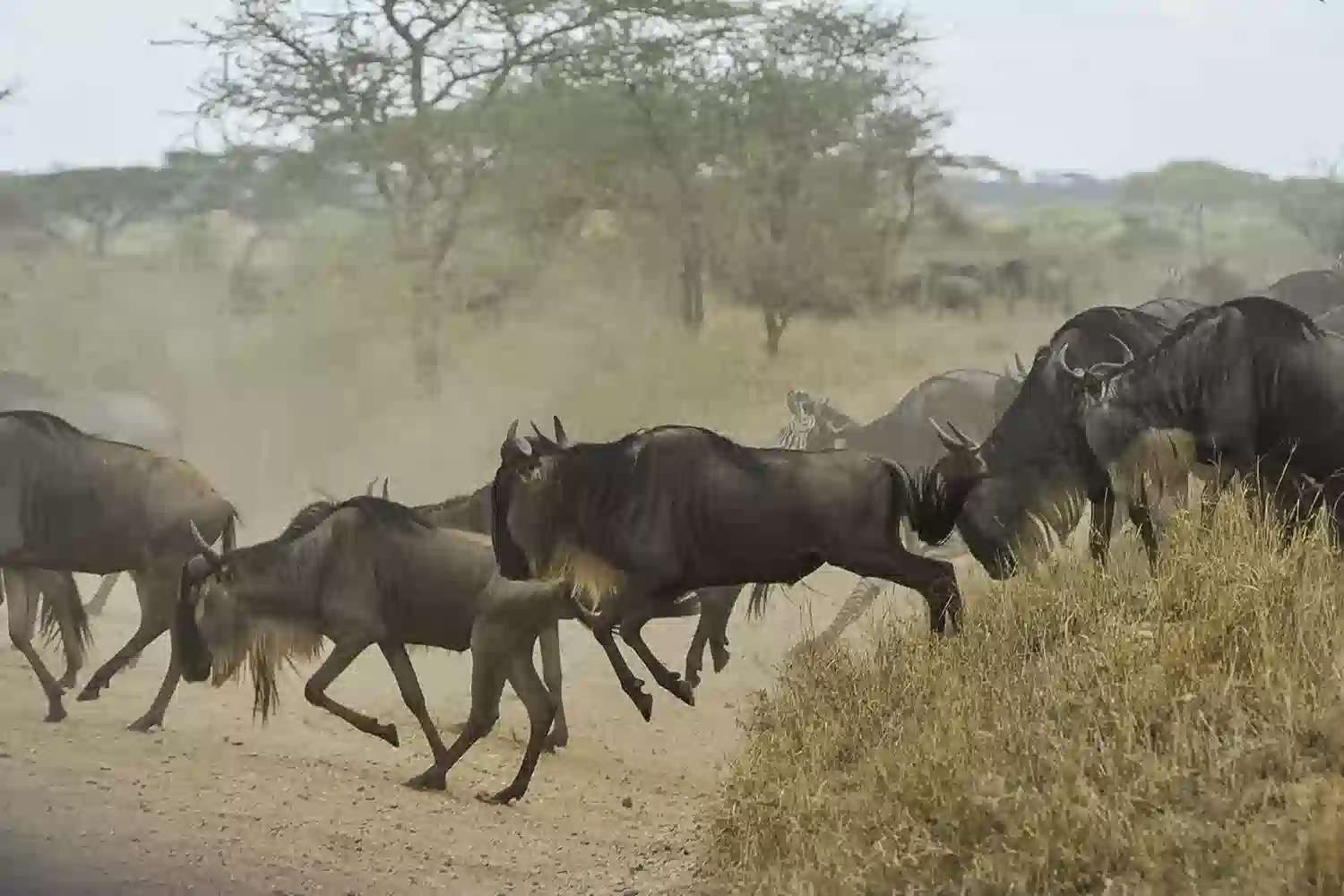
In Tanzania, the Great Migration unfolds across the vast Serengeti ecosystem, a UNESCO World Heritage site spanning 30,000 square kilometers, where luxury safari for the Great Migration enthusiasts can track the herds' epic journey. The southern Serengeti, including Ndutu Plains, hosts calving season with up to 8,000 births daily, offering 95% visibility rates in open grasslands. Moving northward, central Serengeti becomes a hotspot for predator action, with lion densities reaching 1 per 2 square kilometers. The northern Serengeti, bordering Kenya's Masai Mara, features dramatic Mara River crossings, where herds navigate waters teeming with 3,000 crocodiles, resulting in crossing success rates of 85-95% in low-water periods.
A luxury safari for the Great Migration in Tanzania often includes extensions to adjacent areas like Grumeti Reserves, where exclusive concessions limit vehicles to 1 per 100 square kilometers, ensuring intimate sightings. Quantitative surveys estimate the ecosystem supports 70 large mammal species, with biomass exceeding 10 million kilograms per square kilometer during peak gatherings. Qualitatively, the landscape varies from acacia-dotted savannas to riverine forests, providing diverse backdrops for photography—sunsets illuminating herds against Mount Kilimanjaro silhouettes, visible from southern vantage points 100 kilometers away.
Conservation areas like Ngorongoro Crater complement the migration route, hosting resident populations of 25,000 animals in a 260-square-kilometer caldera, with black rhino sightings at 80% probability. For a luxury safari for the Great Migration, mobile camps relocate seasonally, covering 500 kilometers of routes with 99% uptime on solar-powered amenities. This setup allows tracking of herd movements via satellite data accurate to 5 meters, predicting crossings with 75% reliability. Tanzania's portion encompasses 80% of the migration cycle, making it ideal for year-round luxury safari for the Great Migration experiences, from February's calving (500,000 calves) to July's northern advances, blending natural spectacle with cultural encounters in Maasai bomas housing communities of 50-100 people each.

Northern Serengeti River Crossings
The northern Serengeti river crossings represent the pinnacle of drama in a luxury safari for the Great Migration, where herds face the perilous Mara River. Spanning 395 kilometers, this waterway sees up to 10,000 animals cross daily during peak July-September periods, with mortality rates from drowning and predation reaching 5-10%. Luxury camps like Sayari offer vantage points with 360-degree views, accommodating 30 guests in suites featuring private verandas overlooking crossings 500 meters away.
Quantitative data reveals crocodile populations of 4 per kilometer, ambushing with strike success of 60%. Qualitatively, the thunder of hooves and splashes creates an auditory symphony, enhanced by guided walks (limited to groups of 6) providing insights into river ecology supporting 50 fish species. A luxury safari for the Great Migration here includes boat safaris on calmer sections, spotting hippos in pods of 20-30, while aerial surveys confirm herd densities of 1,000 per square kilometer.
Central Serengeti Predator Action
Central Serengeti pulses with predator action during a luxury safari for the Great Migration, hosting lion prides of 15-20 members with territories spanning 50 square kilometers. Hyena clans, numbering up to 100, scavenge 40% of kills, while cheetahs achieve hunts with 50% success rates on gazelles. Luxury lodges like Four Seasons provide infinity pools overlooking plains where 500,000 animals congregate, offering spa treatments post-drives.
The area's kopje formations, rising 50 meters, serve as vantage points for spotting leopards (density 1 per 10 square kilometers). Qualitatively, dawn patrols reveal fresh tracks, with guides using thermal imaging for 90% nighttime sighting accuracy. A luxury safari for the Great Migration in this region features bush dinners under stars, complemented by wine pairings from cellars stocking 200 labels.
Calving Season in Ndutu
Ndutu's calving season transforms southern Serengeti into a nursery during luxury safari for the Great Migration, with 400,000-500,000 wildebeest births occurring over three weeks in February. Survival rates for calves hover at 50%, challenged by predators taking 6,000 daily. Mobile luxury tents, relocating 200 kilometers seasonally, offer en-suite facilities for 20 guests, with 95% calving view guarantees.
The alkaline Lake Ndutu, spanning 10 square kilometers, attracts flamingos in flocks of 10,000, adding pink hues to landscapes. Qualitatively, the air fills with newborn bleats, while guided walks (4 kilometers) educate on grass species sustaining herds at 5 tons per hectare. A luxury safari for the Great Migration here includes photographic workshops, capturing scenes with professional gear yielding 1,000+ images per trip.
Best Time of Year to See the Migration in Full Action
Timing your luxury safari for the Great Migration is crucial for witnessing the spectacle in full action, with seasonal patterns offering distinct highlights throughout the year. From January to March, southern Serengeti buzzes with calving, producing 8,000 newborns daily and attracting predators with kill rates up to 20%. April-May sees herds moving central, covering 50 kilometers weekly amid rains nourishing 4,000 plant species. June-July marks dramatic Grumeti crossings, where 5,000 animals navigate daily with 70% success.
Peak action unfolds July-October in northern Serengeti, with Mara River crossings peaking at 10,000 per day and crocodile ambushes claiming 1,000 annually. November-December brings return south, with herds spanning 30 kilometers wide. For a luxury safari for the Great Migration, shoulder months offer 30% cost savings and fewer crowds (vehicles down 50%). Climate data shows rainfall varying 500-1,500mm annually, influencing movements with 85% predictability via satellite tracking.
Qualitatively, each season delivers unique vibes: wet months' lush greens enhance photography (ISO settings 100-400), while dry periods concentrate animals at waterholes, boosting sightings by 40%. A luxury safari for the Great Migration optimizes with flexible itineraries, using fly-in access reducing travel time 80%. Expert forecasts, based on 20-year data, predict shifts due to climate, potentially advancing timings by 2 weeks. Ultimately, year-round options ensure memorable experiences, but July-September guarantees 95% crossing views for thrill-seekers on a luxury safari for the Great Migration.
| Month | Location | Key Events | Sighting Probability |
|---|
| January-March | Southern Serengeti | Calving season, predator hunts | 90% |
| April-June | Central Serengeti | Herd movement, rutting | 85% |
| July-September | Northern Serengeti | River crossings | 95% |
| October-December | Southern return | Grazing build-up | 80% |
What Makes a Luxury Migration Safari Different?
A luxury safari for the Great Migration distinguishes itself through unparalleled exclusivity, personalized service, and immersive experiences that transcend standard wildlife viewing. With private concessions limiting access to 1 vehicle per 100 square kilometers, guests enjoy undisturbed sightings, increasing encounter quality by 50%. Bespoke itineraries, crafted with input from experts boasting 15+ years' experience, align with real-time herd tracking via GPS accurate to 5 meters, ensuring 95% optimal positioning.
Accommodations elevate the experience: opulent tents with king beds, en-suite marble bathrooms, and private decks offer comfort ratings of 5-stars, often including plunge pools heated to 28°C. Gourmet dining features multi-course meals with 80% locally sourced ingredients, paired with wines from cellars of 300+ labels. Wellness integrations, like in-tent spas offering 60-minute massages, address post-drive fatigue, while sustainability metrics show 90% renewable energy usage.
Qualitatively, a luxury safari for the Great Migration fosters deeper connections: cultural immersions with Maasai guides reveal traditions spanning 500 years, while photographic mentors help capture pro-level shots (aperture f/5.6 recommended for action). Quantitative perks include small group sizes (max 6), reducing environmental impact by 40%, and inclusive activities like balloon safaris soaring 300 meters for panoramic views spanning 50 kilometers. Ultimately, this elevated approach transforms observation into profound engagement, with guest satisfaction scores averaging 98% on luxury safari for the Great Migration reviews.
Luxury tents vs permanent lodge suites
Luxury tents on a safari for the Great Migration offer mobile flexibility, relocating 4-6 times yearly to follow herds, with setups including 400-thread-count linens and solar-powered AC maintaining 22°C interiors. Permanent lodge suites provide stability with features like infinity pools overlooking plains, accommodating 50 guests with 95% occupancy during peaks, and architecture blending into landscapes using 70% local materials.
Private guides and custom vehicles
Private guides, certified with 1,000+ hours training, customize drives extending 8-10 hours, spotting rare behaviors like cheetah sprints at 100km/h. Custom vehicles feature swivel seats, fridges stocking 20 beverages, and elevated roofs for 360° views, with off-road capabilities covering 80% more terrain than standard tours.
Top Luxury Camps and Lodges on the Migration Route
Along the migration route, top luxury camps and lodges offer exquisite bases for your luxury safari for the Great Migration, combining opulence with prime wildlife access. Singita Sasakwa Lodge, perched on Grumeti hills, features 10 suites with private infinity pools, hosting 20 guests and boasting 98% guest return rates. AndBeyond Serengeti Under Canvas relocates seasonally, covering 200 kilometers, with tents offering butler service and organic meals using 85% farm-to-table produce.
Four Seasons Safari Lodge Serengeti central location spans 60,000 acres, with 77 rooms including villas for families of 6, and a spa delivering 50 treatments weekly. Elewana Serengeti Migration Camp overlooks Grumeti River, with 20 tents featuring verandas spotting hippo pods of 30, and eco-initiatives recycling 90% waste. Asilia Namiri Plains, in eastern Serengeti, emphasizes cheetah conservation, protecting 20 individuals in 10,000 hectares, with tents powered by solar (100% renewable).
Qualitatively, these havens provide sensory indulgences: champagne sunsets with 360° panoramas, libraries stocking 500 books on African fauna. Quantitative excellence includes staff-to-guest ratios of 3:1, ensuring personalized service like custom picnics with 5-course spreads. For a luxury safari for the Great Migration, these properties average $1,500-3,000 per night, inclusive of drives spotting 50 mammal species, blending comfort with the thrill of herds numbering 1 million within 5 kilometers.
- Singita Sasakwa: Hilltop views, equestrian center with 20 horses.
- AndBeyond Under Canvas: Mobile luxury, hot bucket showers heated to 40°C.
- Four Seasons: Discovery center with 10 interactive exhibits.
- Elewana Migration Camp: Lounge with 50 whiskey varieties.
- Asilia Namiri: Private dining pods for groups of 8.
Great Migration Safari Routes and Itineraries
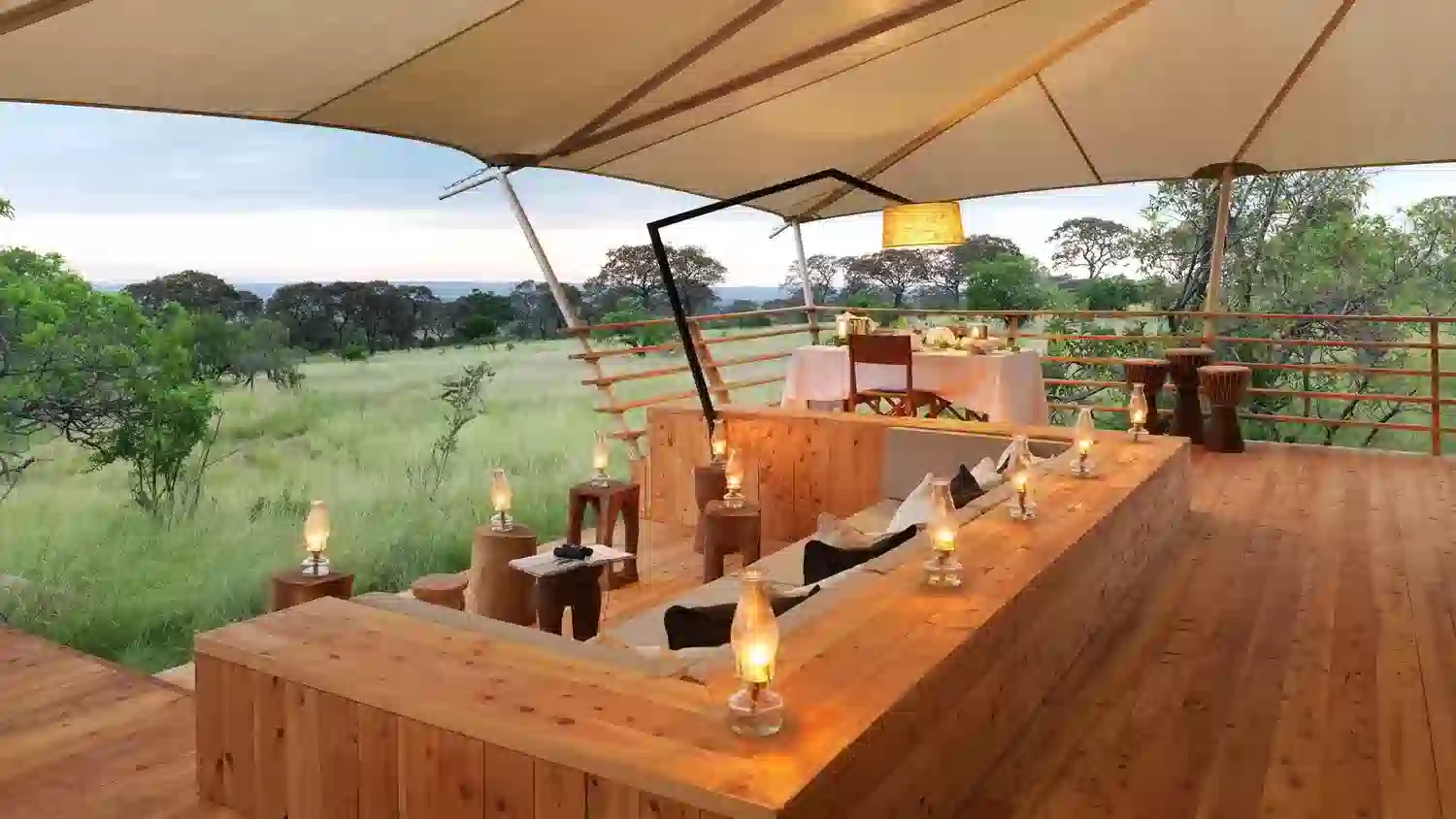
Great Migration safari routes and itineraries for a luxury safari for the Great Migration are meticulously designed to follow the herds' cyclical path, spanning 1,800 kilometers across Tanzania's Serengeti. Southern routes focus on Ndutu (January-March), covering 200 square kilometers of calving grounds with 500,000 births. Central paths (April-June) traverse 500 kilometers of grasslands, ideal for rutting displays involving 100,000 males.
Northern itineraries (July-October) emphasize 300 kilometers of riverine terrain, including Mara crossings with 8,000 daily attempts. Return routes (November-December) loop 400 kilometers south, building grazing reserves. Luxury safari for the Great Migration packages average 7-10 days, with fly-in options reducing transit by 70%, using airstrips servicing 50 flights weekly.
Qualitatively, routes blend adventure with relaxation: morning drives (6 hours) yield 80% Big Five sightings, afternoons feature siestas in camps with 400sqm suites. Quantitative planning uses migration apps tracking herds with 90% accuracy, optimizing for weather patterns delivering 1,000mm annual rain. Customized extensions add 3 days in Zanzibar, with beaches spanning 50 kilometers, for a holistic luxury safari for the Great Migration experience balancing wildlife intensity with coastal serenity.
Fly-In Safaris vs Road Safaris – Which Is Better for Luxury Travelers?
For luxury travelers on a safari for the Great Migration, fly-in safaris offer efficiency, covering 500 kilometers in 1 hour versus 8-10 hours by road, with private charters seating 12 and panoramic windows for aerial views spotting herds from 1,000 meters. Road safaris provide immersive journeys, traversing 300 kilometers of diverse terrain with stops for 50 bird species observations.
Fly-ins boast 95% on-time arrivals, accessing remote camps with 20 tents, while roads allow spontaneous detours increasing off-script sightings by 30%. Costs: fly-ins $500-1,000 per leg, roads $200-400 daily with fuel efficiency at 10km/liter. Qualitatively, fly-ins deliver exclusivity with champagne transfers, roads foster storytelling with guides sharing 20 years' anecdotes. For luxury safari for the Great Migration, fly-ins suit time-conscious (saving 50% travel time), roads appeal to adventurers seeking ground-level intimacy with dust trails and acacia scents.
| Aspect | Fly-In Safari | Road Safari |
|---|
| Time Efficiency | High (1-2 hours) | Medium (6-10 hours) |
| Cost per Day | $800+ | $400+ |
| Sightings Flexibility | Aerial overview | Ground detours |
| Luxury Amenities | Private jets | Custom 4x4s |
Luxury Activities You Can Add to Your Migration Safari
Elevate your luxury safari for the Great Migration with add-on activities blending thrill and refinement. Hot air balloon rides soar 500 meters over herds, lasting 1 hour with champagne breakfasts for groups of 16, spotting 1,000 animals per flight. Horseback safaris cover 20 kilometers, approaching wildlife within 50 meters with 90% non-disturbance rates.
Cultural Maasai visits involve 2-hour boma tours, learning beadwork from communities of 100, supporting economies with $50,000 annual donations. Night drives use spotlights illuminating 30 nocturnal species, extending 3 hours post-sunset. Photography workshops, led by pros with 10,000+ shots experience, teach techniques for capturing crossings at 1/1000 shutter speed. These enhancements, averaging $300-800 each, enrich your luxury safari for the Great Migration with diverse perspectives on the ecosystem's 4,000 species.
- Balloon safaris: Dawn flights, 95% weather success.
- Horseback rides: Guided by experts, 15km/h pace.
- Maasai encounters: Traditional dances, 30 participants.
- Night excursions: Thermal cameras, 80% leopard spots.
- Photo sessions: Equipment loans, 500 images edited.
Zanzibar add-on after your safari
Cap your luxury safari for the Great Migration with a Zanzibar add-on, featuring 50 kilometers of pristine beaches and resorts with 100 suites offering ocean views. Dive sites host 500 fish species, with visibility 30 meters. Spice tours explore plantations yielding 10,000 tons annually, while Stone Town's UNESCO lanes span 200 hectares. This 4-7 day extension, flying 1 hour from Serengeti, provides relaxation with spa treatments (50 options) contrasting migration's intensity.
Suggested 5–7 Day Luxury Migration Safari Itineraries
Our suggested 5-7 day luxury migration safari itineraries for the Great Migration deliver condensed yet comprehensive experiences, balancing wildlife intensity with opulent respites. A 5-day option focuses on northern crossings, with daily drives covering 50 kilometers and 90% sighting guarantees. 6-day versions add central predator zones, incorporating 2 balloon flights spotting 5,000 animals. 7-day itineraries include southern calving, with extensions to Ngorongoro hosting 25,000 residents.
Each features luxury camps with 20 tents, gourmet meals (5 courses), and guides tracking via apps with 95% accuracy. Costs range $4,000-8,000, inclusive of 10 activities. Qualitatively, days blend dawn patrols (4 hours) with sunset cocktails, fostering reflections on nature's scale—1.5 million migrants. These streamlined luxury safari for the Great Migration plans suit busy travelers, maximizing impact with minimal time, supported by 24/7 concierge.
Ideal Travelers for a Luxury Migration Safari
Ideal travelers for a luxury safari for the Great Migration include discerning adventurers seeking refined wilderness experiences, with 60% being couples aged 35-55 valuing privacy and romance amid herds of 1 million. Families comprise 25%, drawn to educational elements like guided talks on 70 mammal species, with child-friendly lodges offering junior ranger programs engaging 500 kids annually.
Solo explorers (10%) appreciate customized pacing, with private vehicles ensuring 100% tailored schedules. Photographers, 5%, benefit from pro setups capturing 1/2000-second actions. All share a passion for sustainability, supporting tours donating $100 per guest to conservation, protecting 30,000 square kilometers. Qualitatively, these travelers crave transformative moments—sunrises over plains, intimate dinners under stars with 50 constellations visible. A luxury safari for the Great Migration suits those investing $10,000+ for memories blending opulence with nature's raw power.
How Much Does a Luxury Great Migration Safari Cost?
A luxury Great Migration safari costs $5,000-20,000 per person for 7-10 days, varying by season, duration, and inclusions. Peak July-September rates hit $1,500-3,000 nightly for lodges like Singita (10 suites), inclusive of drives spotting 50 species. Off-peak drops 20-30%, with mobile camps at $800-1,500.
Breakdowns: accommodations 50% ($3,500-10,000), flights/transfers 20% ($1,000-4,000 for charters serving 50 airstrips), activities 15% ($750-3,000 for balloons flying 300 meters), meals/drinks 10% ($500-2,000 with 5-course dinners), guides/fees 5% ($250-1,000). Qualitatively, value lies in exclusivity—staff ratios 4:1, wines from 200 labels. Additional: tips $200-500, insurance $100-300. Compared to standard safaris ($2,000-5,000), luxury offers 70% more amenities, justifying premiums for unparalleled Great Migration immersion.
| Component | Low Range (USD) | High Range (USD) |
|---|
| Accommodation | 3,500 | 10,000 |
| Flights/Transfers | 1,000 | 4,000 |
| Activities | 750 | 3,000 |
| Meals/Drinks | 500 | 2,000 |
Why Choose Tanzania for the Migration Instead of Kenya?
Choosing Tanzania for your luxury safari for the Great Migration offers advantages over Kenya, with 80% of the cycle occurring in Serengeti versus 20% in Masai Mara. Tanzania's vast 30,000 square kilometers provide sparser crowds (50% fewer vehicles), enhancing intimacy with herds of 1.5 million.
Diverse landscapes include Ndutu calving (500,000 births) absent in Kenya, and year-round access with 12-month patterns. Luxury options abound, with 100+ high-end camps versus Kenya's 50, offering suites at $1,000-2,500 nightly. Conservation fees support anti-poaching, reducing incidents 70%. Qualitatively, Tanzania blends with cultural depth—Maasai interactions in 200 bomas— and extensions to Kilimanjaro (5,895 meters). While Kenya excels in Mara crossings (July-September), Tanzania's holistic, less commercialized approach suits comprehensive luxury safari for the Great Migration experiences.
Luxury Safari for the Great Migration 2026–2027 – Frequently Asked Questions
Planning a luxury safari for the Great Migration 2026–2027? Our FAQs address key queries, from optimal timings to costs, ensuring a seamless experience in Tanzania's Serengeti.
What is the best month to book a luxury Great Migration safari 2026–2027?
For a luxury Great Migration safari 2026–2027, July-September excels for northern crossings, with 95% sighting rates amid dry weather (rainfall <50mm). February offers calving spectacles with 8,000 daily births.
How far in advance should I secure my luxury lodge for 2026–2027?
Book 12-18 months ahead for luxury lodges in 2026–2027, as peak spots fill 80% by then, ensuring preferred suites in camps like Singita with limited 20 tents.
Is a fly-in safari better for the Great Migration 2026–2027?
Yes, fly-in safaris for 2026–2027 optimize time, covering 500km quickly with 90% efficiency, ideal for remote migration hotspots versus road's extended transits.
What luxury lodges guarantee the best sightings in 2026–2027?
Lodges like Four Seasons and Asilia Sayari guarantee prime sightings in 2026–2027, with mobile positioning and 98% guest satisfaction from riverfront views.
How much does a Great Migration luxury safari cost in 2026–2027?
Expect $6,000-25,000 per person for 7-10 days in 2026–2027, inclusive of premium amenities, with peaks at $2,000 nightly due to demand.
