
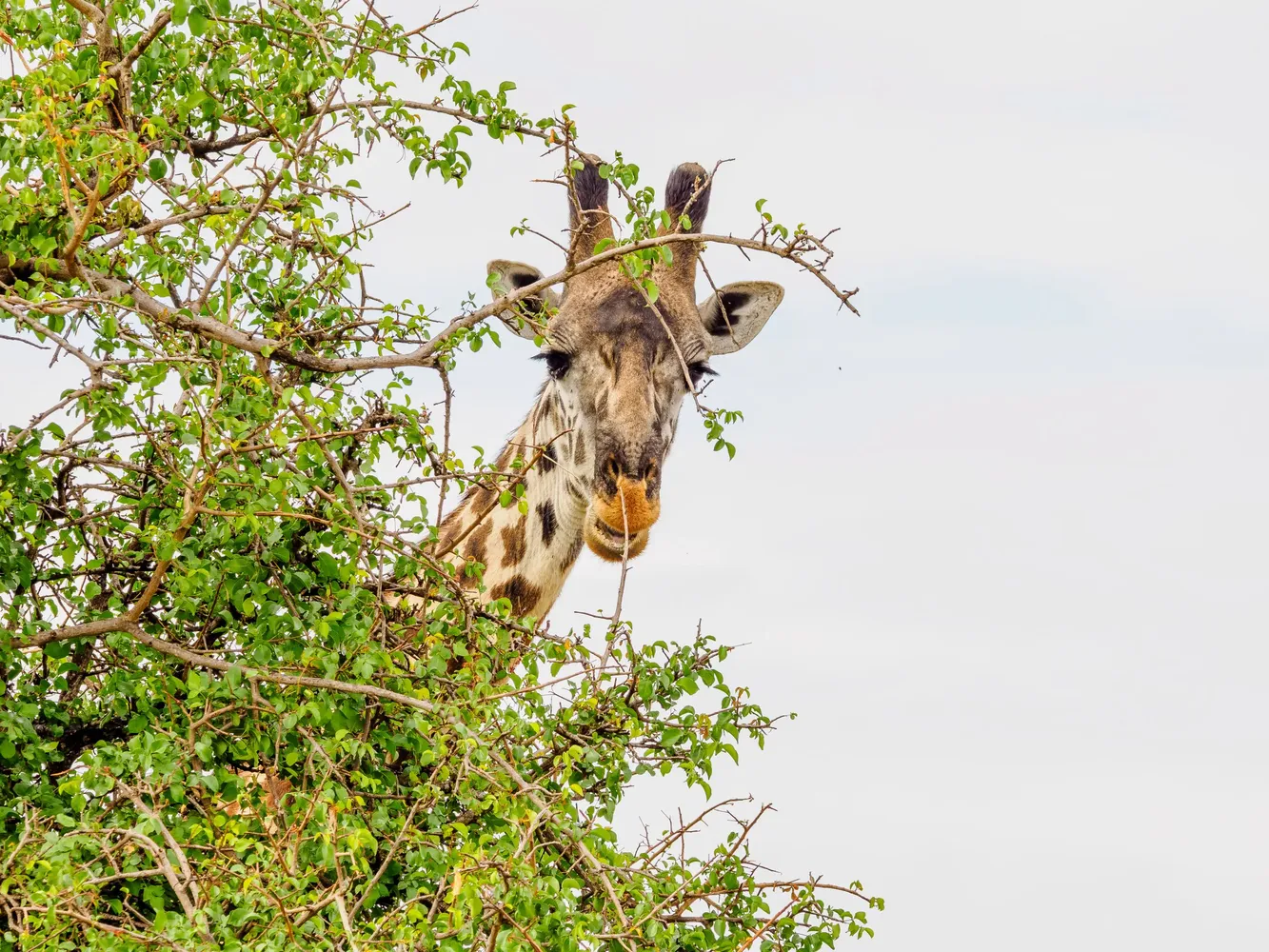
Quick answer: what makes a 6-day Tanzania safari successful?
The strongest six-day safaris combine seven things: a focused route, an experienced driver-guide, early game-drive starts, accommodation in the right location, enough Serengeti time, a seasonally appropriate wildlife plan, and a reliable 4x4 with enough viewing space. The practical goal is not to tick off the maximum number of parks; it is to maximise high-quality wildlife time while keeping transfers realistic.
For a first safari, a dependable structure is Tarangire + Serengeti + Ngorongoro, with roughly 2–3 nights connected to Serengeti and one well-timed Ngorongoro Crater descent. Lake Manyara, Lake Eyasi or a cultural stop can be added when they match a traveller's interests, but adding every possible stop usually reduces the time available for wildlife.
The 8 factors that decide whether a six-day safari feels excellent or exhausting
| Success factor | What good planning looks like | What usually goes wrong |
|---|---|---|
| Route design | 3 core wildlife areas, sequenced geographically | 4–5 parks squeezed into six days |
| Serengeti time | At least two substantial game-drive periods; ideally two or three nights tied to the Serengeti | One rushed overnight after a long transfer |
| Guide quality | Strong wildlife interpretation, positioning, communication and route judgement | A driver who simply follows other vehicles |
| Game-drive timing | Early starts, patient observation, flexible meal timing | Leaving after breakfast every day and returning before the best light |
| Lodge location | Accommodation chosen around the next day's wildlife objective | Saving on the room but losing hours to repeated transfers |
| Seasonal fit | Itinerary adapts to dry season, green season or migration position | Using the same route every month |
| Vehicle setup | Well-maintained 4x4, pop-up roof, charging, enough window/roof space | Overcrowding or mechanical unreliability |
| Expectation setting | Travellers understand wildlife is wild and sightings are never guaranteed | Building the trip around a promised species or exact migration event |
1. A focused route is more important than a long park list
Six days sounds generous until you account for the distances between Arusha, Tarangire, the Ngorongoro highlands and the Serengeti. The northern safari circuit is not a theme park where attractions sit beside each other. Road transfers are part of the experience, but they should not dominate it.
For most first-time visitors, the strongest route is a three-area plan: Tarangire, Serengeti and Ngorongoro, with Lake Manyara added only when the schedule remains sensible. Travellers who value privacy and flexibility should compare that with a private six-day Tanzania safari, while budget-conscious travellers can review how a shared six-day safari changes departure times and flexibility.
A high-performing 6-day route for first-time visitors
| Day | Suggested structure | Why it works |
|---|---|---|
| Day 1 | Arusha/Moshi to Tarangire; afternoon game drive | Starts with elephants, baobabs and a different habitat without forcing a huge first-day transfer |
| Day 2 | Drive through Ngorongoro highlands toward Serengeti; game drive en route | Turns the transfer into wildlife time as you enter the ecosystem |
| Day 3 | Full Serengeti game drive | Provides a complete day for predators, plains game and patient sightings |
| Day 4 | Serengeti morning + afternoon; adjust zone by season | Gives the guide freedom to follow current wildlife conditions instead of racing onward |
| Day 5 | Morning Serengeti drive, then transfer to Ngorongoro highlands | Preserves a final productive Serengeti morning before changing ecosystem |
| Day 6 | Early Ngorongoro Crater descent; return to Arusha/Moshi | Uses the cooler morning hours and leaves a clear finish to the safari |
This is a framework, not a rigid formula. A migration-focused trip may use a different Serengeti zone, and a traveller flying into or out of the Serengeti can redistribute road time. The six-day luxury Serengeti, Ngorongoro and Tarangire option is useful for understanding how upgraded accommodation can be combined with the same core routing logic.
2. The Serengeti needs enough time to reward patience
The Serengeti is not just another stop on a circuit. TANAPA lists Serengeti National Park at 14,763 km², and UNESCO describes the park's savannah as roughly 1.5 million hectares. At that scale, the idea that one quick afternoon drive can “cover Serengeti” is unrealistic.
UNESCO also describes the ecosystem as supporting a migration involving around two million wildebeest plus hundreds of thousands of zebras and gazelles. That does not mean every traveller will see a mass migration scene. The herds move according to rainfall, pasture and water, which is exactly why sufficient time and the correct zone matter. Travellers whose priority is the migration should compare a general safari with a dedicated six-day Serengeti wildebeest migration itinerary.
Verified background: Tanzania National Parks Serengeti information and UNESCO Serengeti National Park.
3. A strong driver-guide changes the entire safari
Safari success depends heavily on the person behind the wheel. A skilled driver-guide is simultaneously reading tracks, listening to alarm calls, watching the behaviour of other animals, interpreting radio information, judging road conditions, positioning the vehicle for light and photography, and deciding when to stay at a sighting rather than chase the next one.
The difference becomes obvious during difficult sightings. Anyone can stop beside a lion already lying next to the road. The better guide anticipates where an animal may move, avoids blocking it, gives guests a clean viewing angle and knows when patience is likely to produce better behaviour.
Questions worth asking before you book
- Will the same driver-guide stay with you through the safari?
- Is the guide experienced in the specific parks and Serengeti zones on your itinerary?
- Can the operator arrange a specialist language guide when required?
- How does the guide handle photography requests, children, older travellers or first-time safari guests?
- What happens if the assigned vehicle or guide becomes unavailable before departure?
A guide should never guarantee a leopard, rhino, crossing or kill. The professional standard is to explain probabilities honestly and then maximise your chances through timing, habitat knowledge and effort.
4. Early game-drive timing usually beats a longer checklist of activities
Wildlife viewing is not equally productive at every hour. Cooler mornings often bring more movement from predators and herbivores, while the softer light is better for photography. Late afternoon can also be excellent as temperatures fall. Midday is not “bad”—many important sightings happen then—but a safari that consistently starts late gives away some of the most valuable hours.
| Time of day | Typical advantage | Planning implication |
|---|---|---|
| Early morning | Cooler temperatures, softer light, fresh tracks, active predators | Prepare breakfast boxes or early breakfast where useful |
| Late morning | Good general game viewing; easier road visibility | Stay flexible rather than automatically returning to camp |
| Midday | Animals may rest; some predators remain around shade or water | Useful for lunch, long-distance repositioning or patient observation |
| Late afternoon | Cooling temperatures and attractive light | Avoid planning long hotel transfers that consume the whole afternoon |
The best daily schedule is therefore not always “full-day drive from 6:00 to 18:00.” It should reflect the park, season, guest energy level and wildlife information available that day.
5. Lodge location can matter more than lodge category
A beautiful lodge can still weaken a safari if it sits far from the next day's objective. On a six-day itinerary, repeated detours of 60–90 minutes each way quickly consume the hours that guests paid to spend in the field. This is why “mid-range versus luxury” is only half the accommodation question. The other half is where the property sits relative to tomorrow's game drive.
| Accommodation decision | Better for safari efficiency | Trade-off |
|---|---|---|
| Inside/near key wildlife area | Earlier starts and less dead mileage | Often higher cost and limited availability |
| Outside park/gate area | Can reduce room price and offer more lodge choice | May add gate queues or drive time |
| Mobile/migration camp | Can position guests closer to seasonal herds | Location changes and may require more planning |
| High-end lodge far from route | Strong room experience | Luxury does not compensate for lost wildlife hours if routing is poor |
For travellers comparing budget levels, the useful question is not simply “Which hotel is better?” but “Which accommodation lets us use tomorrow morning well?”
6. Seasonal planning should change the route, not just the packing list
Tanzania is a year-round safari destination, but success looks different across the calendar. Tarangire is especially noted for wildlife concentration in the dry season around the Tarangire River. TANAPA's current Tarangire information identifies the main dry periods as June to October and January to February, with long rains generally from March to May.
The park's current official page states an area of approximately 2,850 km² and highlights its elephant concentrations. Those facts matter operationally: in dry months, water dependency can concentrate wildlife, while greener months spread animals more widely and change road and photography conditions.
| Period | What often changes | What a successful itinerary does |
|---|---|---|
| Jan–Feb | Southern Serengeti/Ndutu can be important for calving-season movement; generally warmer | Consider whether migration priority justifies shifting Serengeti nights south |
| Mar–May | Long rains, greener landscapes, some road challenges, fewer peak-season crowds | Keep timing flexible and avoid overly tight transfer assumptions |
| Jun–Oct | Drier conditions, strong general game viewing, peak demand in many areas | Book accommodation early and protect morning wildlife time |
| Nov–Dec | Short rains can green the landscape and influence herd movement | Use current field information rather than a fixed “migration map” |
For month-specific planning, the sitemap also includes guides for Tanzania safari in June, July, August and September.
Verified background: TANAPA — Tarangire National Park.
7. Ngorongoro works best when the crater day is protected
Ngorongoro Crater is compact compared with the Serengeti, but it is still a major wildlife day and should not be treated as a quick stop squeezed between long transfers. The Ngorongoro Conservation Area Authority describes the crater as about 20 km across, roughly 600 metres deep and around 300 km² in area.
A well-designed six-day safari normally protects the crater descent rather than asking guests to rush through it and then complete an excessive onward drive. An early start also helps with cooler conditions and gives the guide more flexibility once on the crater floor.
Verified background: Ngorongoro Conservation Area Authority.
8. The safari vehicle should support wildlife viewing, not just transportation
The vehicle is your moving observation platform for six days. Reliability matters, but so does the experience inside it. A proper safari 4x4 should provide a pop-up viewing roof, seat belts, functional windows, enough charging capacity for phones and cameras, accessible drinking water and sensible luggage storage. On private safaris, keeping one window or roof position per guest is a strong comfort benchmark.
Vehicle details to confirm before paying a deposit
- Maximum number of safari passengers actually seated in the vehicle.
- Whether everyone has a usable window/viewing position.
- Pop-up roof condition and whether it can remain stable on rough roads.
- Charging points and whether an inverter is available.
- Backup procedure in case of mechanical problems.
- How luggage is handled when the group is large.
For families or groups of six or seven, “the vehicle can technically seat everyone” is not the same as “everyone will be comfortable for six long safari days.”
9. Private versus shared safari changes more than the price
| Decision | Private safari | Shared safari |
|---|---|---|
| Departure times | Can be adjusted to your group | Must suit the group |
| Sighting patience | You decide whether to stay longer | Compromise with other guests |
| Photography | More control over positioning and time | Less control when interests differ |
| Cost | Higher vehicle cost per person for small groups | Vehicle costs spread across more travellers |
| Children/families | Easier to pace around children | Group timetable may be less flexible |
Neither format is automatically better. Shared safaris can deliver very good wildlife experiences when the group is compatible and the itinerary is realistic. Private safari becomes especially valuable when photography, children, mobility needs, honeymoon privacy or highly specific wildlife interests are important.
10. A successful safari leaves room for the unexpected
Wildlife does not operate on a timetable. A cheetah may begin hunting just when the schedule says it is time to leave. A pride of lions may move toward a waterhole. Heavy rain may slow a road. The best itinerary therefore has structure without becoming brittle.
This is why we prefer to think in terms of protected wildlife windows rather than a minute-by-minute program. A strong guide can change the order of a drive, move lunch, delay a transfer slightly or return to a promising area when the itinerary has been designed with breathing room.
How much driving is too much on a 6-day safari?
There is no single number because road conditions, park gates, wildlife stops and lodge locations matter. As an operator-planning principle, however, repeated days where the majority of daylight is spent on point-to-point transfers are a warning sign. One long transition day can be reasonable. Three or four long transfer days inside a six-day safari usually means the route is too ambitious.
| Route style | Wildlife-time efficiency | Best for |
|---|---|---|
| Tarangire + Serengeti + Ngorongoro | High | First-time visitors, wildlife, predators, balanced landscapes |
| Tarangire + Manyara + Serengeti + Ngorongoro | Moderate to high if hotel locations are efficient | Travellers specifically interested in Manyara scenery/birding |
| Tarangire + Manyara + Serengeti + Ngorongoro + Eyasi | Lower unless cultural experiences are a top priority | Guests who deliberately trade wildlife time for cultural diversity |
| Fly-in/fly-out Serengeti combination | Can be very high | Travellers paying more to reduce road transfers |
What “success” means for different travellers
| Traveller | What matters most | How to adjust the six days |
|---|---|---|
| First-time safari couple | Balanced wildlife, scenery, comfortable pace | Keep the classic 3-area route |
| Photographer | Light, positioning, patience, lower vehicle occupancy | Private vehicle, early starts, fewer hotel changes |
| Family with children | Shorter daily sessions, pools/rest, predictable meals | Use well-located family-friendly lodges and flexible game drives |
| Migration-focused traveller | Correct Serengeti zone and current herd position | Allocate more nights to the migration area; reduce secondary parks |
| Luxury traveller | Service, lodge quality, smooth logistics | Choose location before brand prestige; consider flights where useful |
| Budget traveller | Value and wildlife time | Share vehicle costs carefully without choosing an overloaded itinerary |
Budget discipline matters: cheap routing can become expensive in lost time
A successful safari is not necessarily the most expensive one. The better value question is: what portion of your budget is buying wildlife access, guiding quality, usable time and reliable logistics? A cheaper lodge two hours from the morning objective can create a hidden cost in fuel, fatigue and missed wildlife time.
Before comparing quotes, review what is included in park fees, crater fees, accommodation, meals, airport transfers, guide service, drinking water, taxes and any domestic flights. Our separate Tanzania safari cost guide helps compare the categories behind the total rather than judging only the final number.
Health, insurance and contingency planning are part of safari quality
Insurance does not improve a lion sighting, but it can determine how well a disrupted trip is handled. Medical issues, delayed baggage, flight changes and road incidents are uncommon but possible. Travellers should confirm that their policy covers the activities and destinations in their itinerary and should carry essential medication in hand luggage.
See the Tanzania safari insurance recommendations before departure, especially if the safari is combined with Kilimanjaro, Zanzibar, ballooning or remote camps.
12 common reasons a 6-day Tanzania safari underperforms
- Too many parks: the itinerary looks impressive but spends too much time transferring.
- Only one Serengeti night: the park is too large for a rushed in-and-out visit.
- Late starts every day: valuable morning wildlife and light are repeatedly lost.
- Poor lodge placement: attractive accommodation creates long detours.
- Wrong Serengeti zone for the season: migration marketing is used without current location logic.
- Overcrowded vehicle: guests compete for viewing and photography positions.
- Rigid guide schedule: no flexibility to remain with unusual animal behaviour.
- Unrealistic promises: specific species or crossings are treated as guaranteed.
- No buffer for road conditions: a small delay damages the rest of the day.
- Price-only hotel selection: savings are erased by additional drive time.
- No pre-safari night: an international flight delay can affect Day 1 immediately.
- No clear operator communication: expectations about luggage, meals, pickup and inclusions remain unresolved.
A practical success scorecard before you book
| Check | Strong sign | Red flag |
|---|---|---|
| Serengeti allocation | 2–3 nights or equivalent meaningful game-drive time | Single overnight with long transfers on both sides |
| Park count | Usually 3 core areas | 5+ major areas in six days without flights |
| Guide | Named/qualified team and clear continuity | No explanation of guide assignment |
| Vehicle | Dedicated 4x4 details supplied | No passenger-capacity information |
| Accommodation | Locations support next day's plan | Hotels selected only by star/category label |
| Season | Route explanation changes by month | Same migration promise year-round |
| Quote | Inclusions and exclusions written clearly | Important fees described vaguely |
| Contingency | Operator explains backup procedure | No answer on breakdowns or delays |
Verified numerical context behind the itinerary
- Serengeti National Park: TANAPA gives an area of about 14,763 km².
- Serengeti migration: UNESCO describes roughly two million wildebeest plus hundreds of thousands of zebras and gazelles moving through the ecosystem.
- Ngorongoro Crater: the NCAA describes it as about 20 km across, 600 m deep and 300 km² in area.
- Tarangire: TANAPA's current park page states approximately 2,850 km² and identifies June–October and January–February as dry periods.
These figures explain a central planning point: Tanzania's wildlife areas are large. A successful safari needs time to search, observe and respond; it cannot be designed as if every major sighting sits beside the gate.
Why this structure also works for SEO and answer engines in 2026
This page is deliberately built around a direct answer, evidence, decision tables and operator-level planning logic rather than repeating generic “top safari tips.” Google's current guidance for generative AI features says conventional SEO remains foundational and places particular emphasis on useful, unique, non-commodity content created for people. It also warns against producing separate pages for every possible query variation purely to manipulate rankings.
That is why the article answers the core decision—what actually makes six days work—while linking to deeper pages only where the reader needs a different decision, such as private versus sharing, migration timing, costs or insurance. Visible FAQs are included for readers, but this page does not use FAQPage structured data because Google deprecated FAQ rich results in May 2026.
SEO reference: Google Search Central — optimizing for generative AI features.
Frequently asked questions
Is six days enough for a Tanzania safari?
Yes. Six days are enough for a strong Northern Circuit safari when the itinerary focuses on a few complementary areas rather than trying to visit every park. Tarangire, Serengeti and Ngorongoro are a particularly effective first-time combination.
How many nights should a 6-day safari spend in Serengeti?
For most first-time itineraries, two to three nights connected to the Serengeti provide a better balance than a single overnight. The exact number should depend on season, migration priorities and whether flights are being used.
Should Lake Manyara be included in six days?
It can be, especially for birding, scenery or travellers who specifically want the park. It should not be added automatically if doing so reduces meaningful Serengeti time or creates an unnecessarily rushed schedule.
What is the biggest mistake when planning six days?
The most common mistake is adding too many destinations. More park names do not automatically mean more wildlife. A focused route usually provides longer sightings, less fatigue and more flexibility.
Does a private safari make six days more successful?
It can. A private vehicle gives your group control over departure times, sighting duration and photography. Shared safaris can still be excellent, but the schedule must satisfy the whole group.
How important is the safari guide?
Very important. The guide influences route decisions, wildlife interpretation, vehicle positioning, timing and how effectively the itinerary responds to changing conditions in the field.
What time should game drives start?
Early starts are often valuable because temperatures are cooler, light is softer and many animals are active. The exact departure should still match the park, season, guest preferences and current wildlife information.
Is luxury accommodation necessary for a good safari?
No. A well-located mid-range camp can deliver a better wildlife schedule than a more luxurious property that requires long detours. Location, service reliability and sleep quality are more important than the label alone.
What month is best for a successful six-day safari?
There is no single best month for every goal. June to October is popular for drier conditions and strong general game viewing; January and February can be excellent for southern Serengeti/Ndutu migration interests; green-season months offer different landscapes, crowds and pricing.
Can a 6-day safari guarantee the Big Five?
No responsible operator can guarantee wild-animal sightings. Six days across strong wildlife areas gives good opportunities, but rhino and leopard in particular can remain difficult, and animal movement is unpredictable.
How much free time should a safari itinerary have?
Free time does not always mean a blank afternoon. The better approach is to avoid an over-rigid timetable so the guide can extend a good sighting, adjust lunch or change route without causing the rest of the trip to collapse.
What should I ask the operator before booking?
Ask for the exact route, lodge locations, vehicle capacity, private or shared status, guide arrangement, included fees, luggage rules, pickup plan, cancellation terms and contingency procedure. A written quotation should make these points clear.
Final verdict: success comes from time, judgement and route discipline
A six-day Tanzania safari succeeds when the itinerary protects the hours that matter. Focus the route, give Serengeti enough time, enter Ngorongoro with a full wildlife day available, use Tarangire when it fits the season, choose accommodation for location as well as comfort, and put an experienced guide in a reliable vehicle.
The strongest itinerary may look simpler on paper than a five-park alternative. In practice, that simplicity is what gives the safari room to become memorable: more time watching, less time rushing, and enough flexibility for the wildlife—not the timetable—to decide what happens next.