
What You Need to Know: Our 5-day Great Migration calving season safari costs from US$2,950 per person for 2 travelers at mid-range level (US$2,215 budget, US$4,535 luxury), including two nights at Ndutu, one in the central Serengeti, one in Karatu, a Ngorongoro Crater game drive, park fees, meals and a private Land Cruiser with your own driver-guide. It runs from January to March in 2027 and 2028; February is usually the peak of calving, when hundreds of thousands of calves are born within a few weeks. Sightings are never guaranteed, but the herds stay on the southern plains for weeks, which makes calving one of the most reliable migration experiences.
Who Is the Calving Season Safari For?
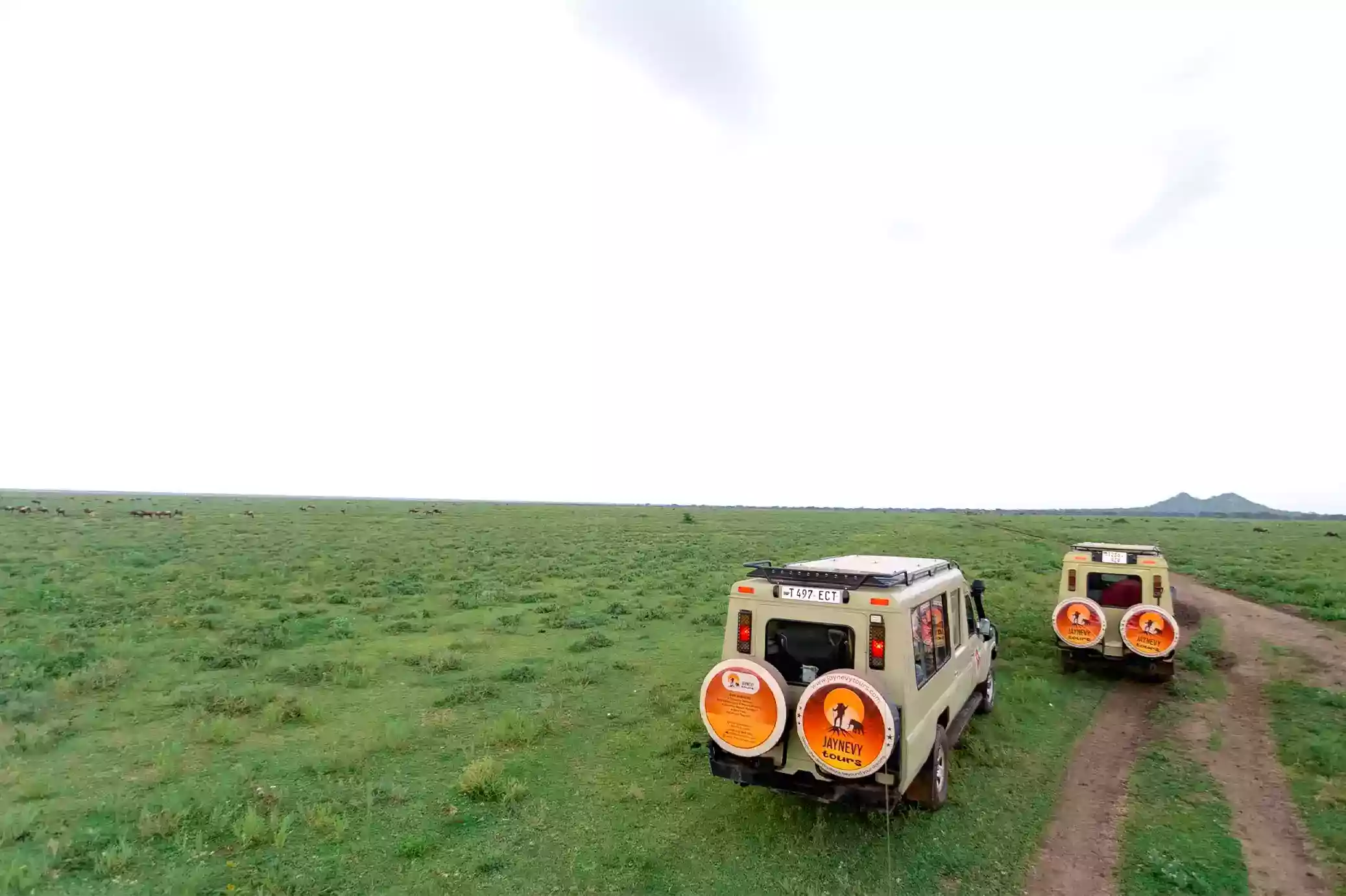
It is for travelers who want the Great Migration at its most intense for predators: newborn calves, the herds around them, and the big cats that hunt them, all within a few days' drive of Arusha. Two nights at Ndutu put you among the herds at first light, when most of the action happens, and the trip still includes the central Serengeti and the Ngorongoro Crater.
| This safari suits you if… | Consider another trip if… |
|---|---|
| You can travel between January and March | You are traveling from July to October: the 4-day river crossing fly-in for the Mara River |
| You want predators and newborns more than river crossings | You want more time with the camera: the 8-day migration photography safari runs in the crossing season |
| You'd like the Ngorongoro Crater in the same trip | You'd like a beach finish: add Zanzibar, which is hot and mostly dry in January and February |
When Is the Calving Season in 2027 and 2028?
In most years the herds arrive on the southern plains around Ndutu in December and stay until March. Calving begins in January and peaks in February, when hundreds of thousands of calves are born in a few weeks. The exact timing follows the rain, so no one can give fixed dates for 2027 or 2028; before you travel we check reports from our guides and the camps and place your nights where the herds are.
| Month | What to expect around Ndutu | Our view |
|---|---|---|
| December | Herds arriving and settling on the short grass | Good, but calving has not started |
| January | Calving begins | Very good, and quieter than February |
| February | Peak calving; predators everywhere | The best month; book earliest |
| March | Calves growing; the long rains begin | Good, with greener plains and some muddy roads |
For where the herds are in the rest of the year, read the Great Migration by month.
5-Day Calving Season Safari Itinerary, Day by Day
Camps are shown for each level and confirmed for your dates in the quotation; where one is full, we book a similar camp at the same level.
-
Day 1: Arusha to Ndutu
Your driver-guide collects you from your hotel in Arusha after breakfast and drives west through the Ngorongoro highlands, past the crater rim, and down onto the southern plains, with a lunch box on the way. Ndutu sits on the border of the Serengeti and the Ngorongoro Conservation Area, and in the calving season the herds are often all around the camp. Your first game drive starts as soon as you reach the plains.
Stay: Serengeti Classic View Ndutu (budget), Ndutu Wildland Camp (mid-range) or Malaika Ndutu Luxury Camp (luxury), or similar.
First game driveHighlands, NdutuBreakfast, lunch box, dinner -
Day 2: A full day among the calving herds
You go out at first light, when births are most often seen and the predators are hunting. Your guide follows the herds across the short-grass plains and around the Ndutu and Masek lakes, watching for newborn calves taking their first steps, and for the lions, cheetahs and hyenas that follow them. A picnic lunch in the vehicle means you can stay with a sighting as long as you like.
Stay: the same camp.
Calving and predatorsNdutuBreakfast, picnic lunch, dinner -
Day 3: Ndutu to the central Serengeti
A morning with the herds, then north across the plains towards Seronera, following the edge of the migration where it reaches. The afternoon drive in the Seronera valley looks for the resident lions, leopards and cheetahs that live there all year.
Stay: Engiterata Adventure Camp (budget), Mberesero Serengeti Central Lodge (mid-range) or Nyota Luxury Tented Camp (luxury), or similar.
Herds and big catsNdutu, central SerengetiBreakfast, lunch, dinner -
Day 4: Serengeti morning, then to Karatu
An early game drive in the central Serengeti, then back across the plains and up into the Ngorongoro highlands to Karatu, a farming town close to the crater gate. The shorter afternoon gives you time to rest before the crater.
Stay: Bougainvillea Lodge (budget), Karatu Tented Lodge (mid-range) or Gibbs' Farm (luxury), or similar.
Last Serengeti driveSerengeti, KaratuBreakfast, lunch, dinner -
Day 5: Ngorongoro Crater, back to Arusha
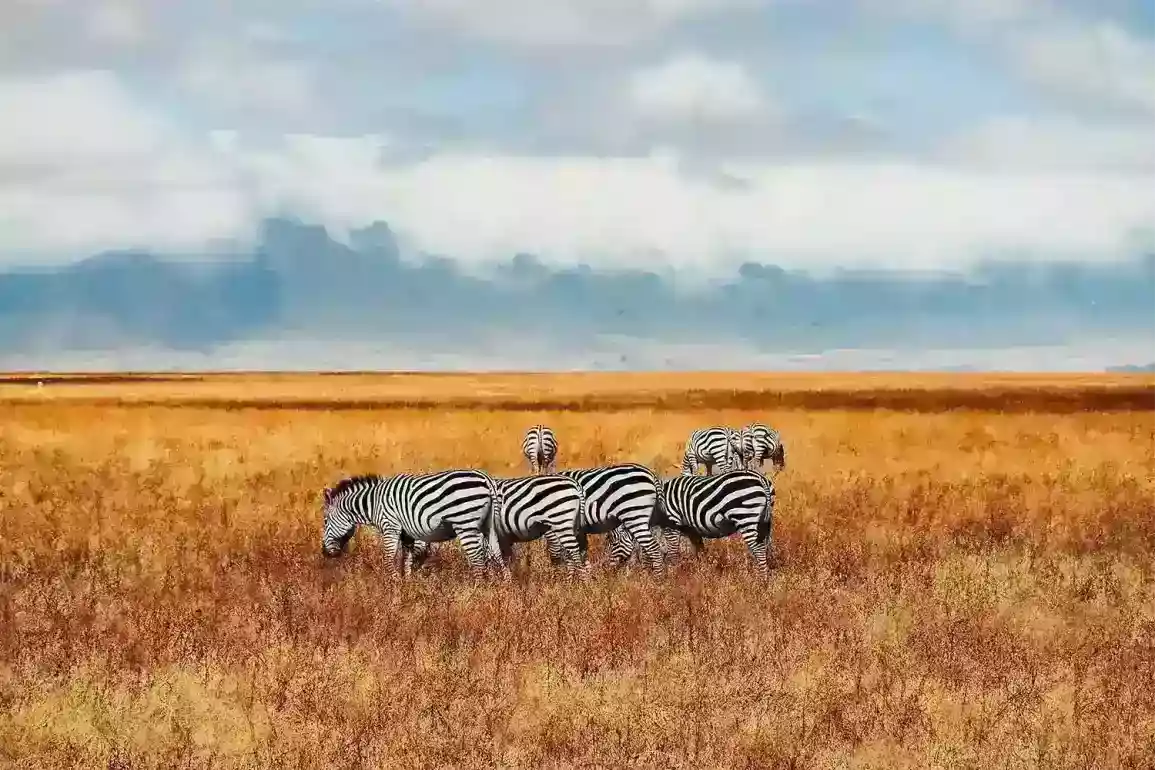
You descend 1,970 ft (600 m) to the crater floor early for a game drive among buffaloes, zebras, lions, hyenas and hippos, with the best chance in Tanzania of seeing a black rhino. After a picnic lunch you climb out of the crater and drive back to Arusha, about 4–5 hours, arriving in the evening.
 The crater floorNgorongoro, ArushaBreakfast, picnic lunch
How Much Does the 5-Day Calving Season Safari Cost?
The safari costs from US$2,950 per person for 2 travelers at mid-range level, US$2,215 at budget level and US$4,535 at luxury level, from Arusha and back. Prices are in US dollars and per person; they fall as your group grows, because the vehicle, guide and crater fee are shared.
| Travelers | Budget | Mid-range | Luxury |
|---|---|---|---|
| 1 | US$3,215 | US$4,255 | US$5,760 |
| 2 | US$2,215 | US$2,950 | US$4,535 |
| 3 | US$1,930 | US$2,600 | US$4,270 |
| 4 | US$1,800 | US$2,535 | US$4,120 |
| 5 | US$1,715 | US$2,405 | US$4,045 |
| 6 | US$1,665 | US$2,395 | US$3,980 |
Camps at Ndutu charge peak rates while the herds are there, and three nights inside the parks carry concession fees on top of the entry fees. 2027 and 2028 camp rates and park fees are confirmed in your written quotation.
Park fees on this route
| Fee | 2026 rate (incl. VAT) |
|---|---|
| Ngorongoro Conservation Area, including Ndutu | US$70.80 per person per 24 hours |
| Serengeti National Park | US$82.60 per person per 24 hours |
| Ngorongoro crater service fee | US$295 per vehicle per descent |
| Concession fee (nights inside the parks) | Per person per night, by season |
All are included in our prices. See our Tanzania park fees guide for the full list.
What the Calving Season Safari Includes
- Pickup from and drop-off at your hotel in Arusha
- Two nights at Ndutu, one in the central Serengeti and one in Karatu, at the level you choose
- Private 4x4 Toyota Land Cruiser with a pop-up roof and sliding windows, a fridge for drinks, charging points, one pair of binoculars per couple and eco-friendly trash bags
- Your own English-speaking driver-guide for the whole safari
- All park, conservation and concession fees, the Ngorongoro crater service fee and government taxes
- Meals as listed in the itinerary, and drinking water in the vehicle
Not included
- International flights
- Hotel nights in Arusha before and after, and Kilimanjaro airport transfers (US$60 per person each way; we arrange both)
- Tanzania visa (US$50 for most nationalities, US$100 for US citizens)
- Tanzania's mandatory inbound travel insurance, US$44 per adult (we can help you buy it)
- Your own travel insurance, including medical evacuation
- Tips for your guide and camp staff
- Alcoholic drinks, personal expenses and optional activities such as a Serengeti balloon flight (US$490)
What Should You Know Before a Calving Safari?
- Go early in the day: most births and hunts happen around dawn, so expect early starts.
- Expect some rain: January and February usually have a short dry spell, but showers are possible and March brings the long rains, so pack a light rain jacket.
- Bring a long lens: predators often hunt far out on the open plains; binoculars help too.
- Be ready for hard moments: the calving season is about birth and predation, and your guide will tell you what to expect at a hunt.
- Book early: camps near the herds fill early for February, so book six to twelve months ahead.
Packing advice is in our safari packing checklist.
Can You Extend the Calving Season Safari?
Yes. Each of these is quoted on request:
- Add a third night at Ndutu for another full day with the herds.
- Add Tarangire or Lake Manyara on the way out, for elephants and the Rift Valley.
- Balloon flight: a sunrise flight over the Serengeti, US$490 per person.
- Finish on the beach: fly to Zanzibar, at its hot, dry best in January and February; see our safari and Zanzibar combinations.
Calving Season or River Crossings: Which Migration Safari?
| 5-day calving safari | 4-day river crossing fly-in | 8-day photography safari | |
|---|---|---|---|
| Months | January–March | July–October | July–October |
| Highlights | Newborn calves and predators | Mara River crossings | Crossings, big cats, elephants |
| Getting there | By road from Arusha | Return flights from Arusha | By road, airport to airport |
| Price from (2, mid-range) | US$2,950 | US$3,240 | US$4,865 |
All three are on our Great Migration safaris page.
How to Book the 2027 or 2028 Calving Season Safari
Send us your travel dates, the number of travelers and the camp level through the booking form, on WhatsApp +255 678 992 599 or by email to jaynevytours@gmail.com, and our team in Moshi will reply with a written quotation. A 30% deposit confirms the safari and the balance is paid on arrival; you can pay online by card through Pesapal or by US-dollar bank transfer.
| When you cancel | Refund |
|---|---|
| 60 days or more before arrival | 100% |
| 30–59 days | 90% |
| 15–29 days | 60% |
| 10–14 days | 25% |
| Less than 10 days, or a no-show | No refund |
Common Questions About the Calving Season Safari
When is the calving season in the Serengeti?
Usually January to March on the southern plains around Ndutu, with the peak in February. The timing follows the rain, so it shifts a little each year.
How much is a 5-day calving season safari?
From US$2,950 per person for 2 at mid-range level, US$2,215 at budget level and US$4,535 at luxury level, including camps, park fees, the crater fee, meals and a private guide.
Is Ndutu in the Serengeti?
Ndutu sits on the border: most of the area and its camps are in the Ngorongoro Conservation Area, and the plains run straight into the southern Serengeti, so the herds move freely between the two.
Will I see a birth or a hunt?
Often, but it is never guaranteed. Calving and hunting happen most around dawn, which is why the safari spends two nights at Ndutu.
Does it rain in the calving season?
Sometimes. January and February usually have a short dry spell with occasional showers; the long rains begin in March.
Can I book the calving safari for 2027 or 2028 now?
Yes. Send us your dates and we confirm the camps and send a written quotation; book six to twelve months ahead for February.
Does the safari start at Kilimanjaro airport?
It starts and ends in Arusha. We add the airport transfers (US$60 per person each way) and hotel nights in Arusha to your quotation.
Can I combine it with Zanzibar?
Yes. January and February are hot and mostly dry on Zanzibar, so the beach is a good way to finish; we quote the whole trip together.
The Bottom Line
For the calving season, go to Ndutu in January to March, and ideally February: two nights among the herds and their predators, the central Serengeti and the Ngorongoro Crater in five days from Arusha, from US$2,950 per person for two at mid-range level. Book six to twelve months ahead for 2027 or 2028, and let us place your camp where the herds are.