
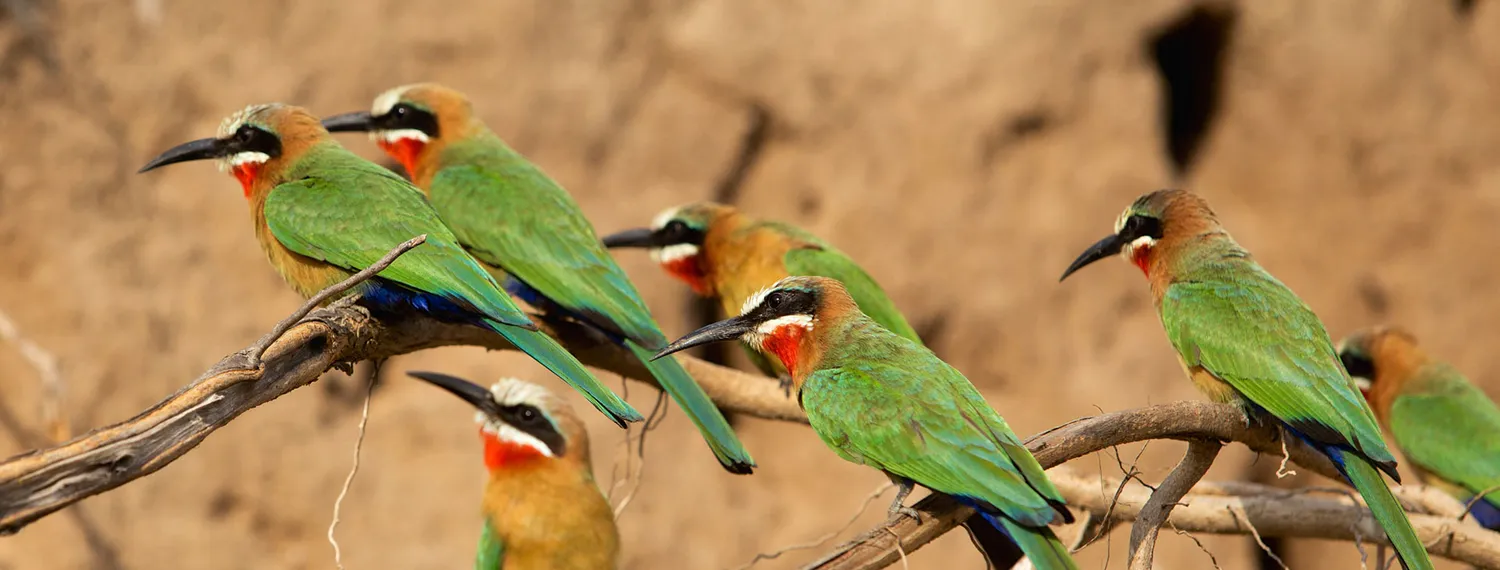
Quick Answer: What Is the Best 6-Day Bird Watching Safari Itinerary in Tanzania?
For a first six-day birding safari, use the Northern Circuit and prioritize habitat variety: Day 1 Tarangire, Day 2 Lake Manyara, Days 3–4 Serengeti, Day 5 Serengeti to Ngorongoro highlands, and Day 6 Ngorongoro Crater before returning to Arusha. This route exposes you to dry-country species, wetland and forest birds, grassland specialists, raptors and highland species without spending the entire trip on transfers.
Serious birders who need Arusha National Park’s montane forest or Tanzania’s true endemics should extend the trip beyond six days or replace one Serengeti day. A six-day safari is excellent for breadth, but it is not a complete Tanzania endemic-bird expedition.
- Tanzania checklist reference: 1,139 species in Avibase’s current Tanzania checklist.
- Endemics in that checklist: 24, dependent on taxonomy used.
- Tarangire: about 550 bird species recorded by TANAPA.
- Serengeti: 540 species in TANAPA’s Apr–Jun 2026 publication.
- Ngorongoro: 500 species in UNESCO’s World Heritage profile.
- Lake Manyara: 400+ species on TANAPA’s current wildlife page.
- Best birding rhythm: early morning, slow driving, frequent habitat stops.
- Important: bird counts are park checklists, not the number one guest will see in six days.
Why Tanzania Is Exceptional for a Short Bird-Watching Safari
Tanzania works unusually well for birders because major habitat zones sit close enough to combine with classic wildlife safari areas. The Northern Circuit moves from semi-arid savanna to riverine woodland, alkaline lakes, evergreen groundwater forest, open grasslands, crater wetlands and cool highlands in a relatively compact tourism circuit.
Avibase’s Tanzania checklist currently lists 1,139 species and 24 endemics under the taxonomy shown on its checklist. Those totals are useful national context, but bird taxonomy changes: splits, lumps and name revisions can change the national species total without any ecological change on the ground. For trip planning, habitat-specific park lists are usually more useful than one national number.
Verified Bird-Diversity Numbers for This 6-Day Route
TANAPA material records about 550 species in Tarangire. A TANAPA Tourism Splash publication from April–June 2026 describes 540 species in Serengeti. TANAPA’s current Lake Manyara wildlife page says over 400 species have been recorded, while UNESCO’s Ngorongoro World Heritage profile lists 500 bird species. These are destination checklists; they should never be added together because many species occur in more than one park.
Birding by Park: What Each Destination Adds
| Destination | Published bird diversity | Key habitats | Useful target examples |
|---|---|---|---|
| Tarangire National Park | About 550 species | Dry savanna, riverine woodland, seasonal swamps, baobab country | Yellow-collared Lovebird, Ashy Starling, Rufous-tailed Weaver, hornbills, raptors, waterbirds |
| Lake Manyara National Park | 400+ species | Soda lake, wetlands, groundwater forest, acacia woodland, floodplain | Flamingos when conditions suit, pelicans, storks, herons, African Fish Eagle, Silvery-cheeked Hornbill |
| Serengeti National Park | 540 species in current TANAPA 2026 publication | Open plains, kopjes, river systems, woodland, seasonal wetlands | Secretarybird, Kori Bustard, Fischer’s Lovebird, Grey-breasted Spurfowl, vultures and eagles |
| Ngorongoro Conservation Area | 500 species | Crater floor, soda lake, marsh, forest, montane grassland, highlands | Grey Crowned Crane, flamingos when present, Augur Buzzard, highland sunbirds, chats and waterbirds |
Day 1: Arusha to Tarangire National Park — Dry-Country Birding
Start in Tarangire because its dry savanna adds species you may not find around the wetter Manyara and highland habitats. Leave Arusha early enough to bird after entering the park, not just to arrive for lunch. Slow down around acacia woodland, baobab country, the Tarangire River corridor and seasonal wetlands.
Useful targets include Yellow-collared Lovebird, Ashy Starling and Rufous-tailed Weaver, alongside hornbills, barbets, bee-eaters, bustards, eagles and water-associated birds. TANAPA records about 550 bird species in the park—more than the trip will realistically identify in one day, but a strong indication of habitat richness.
Explore Jaynevy’s Tarangire National Park guide and the broader Tanzania Avian Diversity Safari for related birding routes.
Day 2: Tarangire to Lake Manyara — Wetlands, Forest and Waterbirds
Lake Manyara is the habitat-diversity day. The park’s alkaline lake, papyrus and marsh edges, evergreen groundwater forest, acacia woodland and open floodplain can produce very different bird communities within one game drive.
TANAPA’s current wildlife page records over 400 species. Look for fish eagles, spoonbills, storks, herons, bee-eaters, hornbills and seasonal waterbird concentrations. Flamingos are one of Manyara’s most famous images, but numbers vary with lake depth, chemistry and food conditions—never promise a pink shoreline on a fixed date.
For a deeper destination overview, see Lake Manyara National Park and Jaynevy’s Tanzania bird watching safari guide.
Day 3: Lake Manyara/Karatu to Central Serengeti — Grassland Specialists and Raptors
Use the transfer into Serengeti as a birding day rather than treating it as dead driving time. Highland edges, open plains and changing vegetation create opportunities before you even reach central Serengeti. Once inside the park, switch attention to open-country species, large terrestrial birds and raptors.
Secretarybird and Kori Bustard are flagship Serengeti targets, while Fischer’s Lovebird, Grey-breasted Spurfowl, Rufous-tailed Weaver, vultures and eagles reward patient scanning. UNESCO’s World Heritage profile says more than 500 species are perennially or seasonally present, and TANAPA’s 2026 Tourism Splash reports 540 species.
Day 4: Full-Day Serengeti Birding — Slow Down and Work Habitats
A dedicated full day is where the itinerary becomes a birding safari rather than a normal game drive with occasional bird stops. Spend time around open grassland, kopjes, watercourses, woodland edges and seasonal pools. Ask your guide to stop for small birds and mixed flocks instead of only large mammals.
TANAPA’s April–June 2026 publication highlights Serengeti’s Secretarybird population and reports more than 1,500 individuals, describing the ecosystem as a major stronghold. That is a population-level conservation statistic, not a promise that every guest will see multiple Secretarybirds in a day.
Compare this day with Jaynevy’s dedicated Serengeti Bird Watching Experience and Serengeti National Park guide.
Day 5: Serengeti to Ngorongoro Highlands — Transitional Birding
Use the morning for final Serengeti grassland targets, then let the rising altitude change the bird list. The transition toward Ngorongoro brings cooler air, highland forest and grassland, giving the day ecological value even though it is a transfer day.
Do not try to race to every possible viewpoint. For birders, a quiet stop at a forest edge or highland clearing can be more productive than covering extra kilometres. Overnight near the crater rim or Karatu depending on budget and the next morning’s entry plan.
Day 6: Ngorongoro Crater Birding and Return to Arusha
Descend early because the crater combines grassland, freshwater marsh, soda-lake edge and woodland in a compact basin. UNESCO lists 500 bird species across the wider Ngorongoro Conservation Area. Inside and around the crater, birders can combine waterbirds, raptors, cranes, chats and highland species while still seeing classic mammals.
For a specialist extension, use Jaynevy’s Ngorongoro Birding Excursion. Return to Arusha after the crater drive.
Best Time for a 6-Day Bird Watching Safari in Tanzania
Birding is year-round; the “best” time depends on whether you prioritize migrants and breeding behavior or easier roads and open visibility. Tanzania lies on the African–Eurasian migratory system, so seasonal movement adds species to already rich resident communities.
| Period | Birding strengths | Practical benefits | Main trade-off |
|---|---|---|---|
| Nov–Feb | Many migrants, active breeding in some resident species, green habitats, strong waterbird context. | Fresh landscapes and often fewer safari vehicles than peak dry-season months. | Short rains can affect local road conditions and visibility in taller vegetation. |
| Mar–May | Rich green-season birding, migrant overlap and breeding activity. | Quiet parks and excellent photography light between showers. | Long rains can make some tracks muddy or temporarily inaccessible. |
| Jun–Oct | Excellent resident birds, raptors, dry-country species and easier open-country scanning. | Drier roads and strong general wildlife viewing. | Fewer Palearctic migrants than the wetter part of the year. |
Which Bird Species Should Be on Your Target List?
Build a habitat-based target list, not an unrealistic “must see everything” checklist. Birds move, call at different times, breed seasonally and may be absent from a road-accessible patch even when the species occurs in the park.
| Birding group | Where to focus | Example targets |
|---|---|---|
| Dry-country specialties | Tarangire | Yellow-collared Lovebird, Ashy Starling, Rufous-tailed Weaver, hornbills |
| Waterbirds | Lake Manyara and Ngorongoro wetlands | Flamingos when present, pelicans, storks, herons, spoonbills |
| Grassland birds | Serengeti plains | Secretarybird, Kori Bustard, larks, pipits, coursers |
| Raptors and scavengers | Tarangire, Serengeti, Ngorongoro | Eagles, buzzards, vultures, falcons |
| Highland birds | Ngorongoro highlands | Sunbirds, chats, flycatchers and montane-edge species |
| Forest-edge birds | Lake Manyara groundwater forest | Hornbills, turacos, robin-chats and other woodland/forest species |
How Many Bird Species Can You Realistically See in Six Days?
Do not sell a fixed six-day species total. The four destination checklists contain hundreds of species, but a guest’s observed total depends on season, guide skill, hours spent birding, weather, road access, hearing ability, whether calls count, and how much time is given to mammals and photography.
Experienced birders with a specialist guide can build a substantial list in six days, but the more important quality measure is whether the route finds the right habitat for the traveler’s target species. A first-time birder may prefer fewer, longer observations; a lister may prioritize rapid identification and habitat coverage.
Do Not Add Park Checklists Together
Tarangire’s ~550, Serengeti’s 540, Ngorongoro’s 500 and Lake Manyara’s 400+ do not mean this route contains nearly 2,000 different birds. Many species overlap between parks. Each number is a separate destination checklist compiled over long periods, not a six-day trip count.
Specialist Birding Guide vs Standard Safari Guide
A specialist birding guide changes the quality of the trip more than almost any equipment upgrade. Bird identification often depends on call, subtle plumage, flight pattern, habitat and season. A standard wildlife guide may be excellent with mammals but naturally spend less time on cisticolas, larks, pipits, weavers and distant raptors.
- Ask whether the guide can identify birds by call as well as sight.
- Share your target list before arrival.
- State whether you count heard-only birds.
- Tell the guide whether photography or total species count matters more.
- Keep group size small enough that everyone can use the roof opening or windows comfortably.
- Use a private vehicle if birding is the main purpose of the safari.
Jaynevy’s Birding Adventure Tour and Wildlife & Birding Combo offer additional route ideas.
Birding Safari vs Standard Wildlife Safari: What Changes?
| Factor | Birding safari | Standard wildlife safari |
|---|---|---|
| Driving speed | Slower, with frequent short stops | More focused on reaching major mammal sightings |
| Start time | Very early for peak bird activity | Early, but often more flexible |
| Guide focus | Calls, habitat, small birds, raptors, target list | Large mammals, predators, scenery |
| Vehicle positioning | Often chosen for light, branches and viewing angle | Often chosen for mammal visibility and behavior |
| Best vehicle format | Private 4x4 strongly preferred | Private or shared can work |
What to Pack for a 6-Day Tanzania Bird Watching Safari
- 8× or 10× binoculars: the most important birding tool.
- Field guide or birding app: use a current East Africa/Tanzania reference.
- Camera with telephoto lens: 300 mm or more is useful for many birds, but not mandatory.
- Bean bag: often easier than a tripod inside a safari vehicle.
- Notebook or digital checklist: record species by habitat and day.
- Neutral clothing and layers: early highland mornings can be cool.
- Rain cover: important in green-season travel.
- Extra batteries and memory cards: long field days create heavy camera use.
- Sun protection and insect repellent: especially around wetlands.
Bird Photography Tips for the Northern Circuit
- Prioritize eye-level angles where possible. Do not ask the driver to leave permitted roads.
- Use faster shutter speeds for small birds. Even a perched bird can move quickly.
- Expose for bright plumage. White storks and pale raptors can lose detail in strong sun.
- Watch behavior before shooting continuously. Feeding, displaying and hunting create better photographs.
- Keep noise low near roosts and breeding birds. A photograph is never worth disturbing nesting behavior.
- Do not use playback irresponsibly. Repeated call playback can stress territorial birds; follow local guide ethics and park rules.
Who Is This 6-Day Birding Itinerary Best For?
This route is a strong fit for:
- first-time birders who also want elephants, lions and other classic safari wildlife;
- experienced birders with only one week in northern Tanzania;
- bird photographers who want savanna, wetland and highland habitats;
- couples or small private groups who prefer slow, observation-led safari days;
- travelers who want a birding-focused version of the classic Northern Circuit.
For a longer specialist trip, compare Jaynevy’s 6-Day Tanzania Bird Watching Holiday, Birdwatching Safari Tanzania guide, and Tanzania Northern Safari.
Frequently Asked Questions About a 6-Day Bird Watching Safari in Tanzania
Is six days enough for a bird watching safari in Tanzania?
Yes. Six days is enough for a focused Northern Circuit birding safari if the route is disciplined. A strong short itinerary combines Tarangire, Lake Manyara, Serengeti and Ngorongoro, with early starts and a bird-focused guide. It will not cover Tanzania's full endemic range, but it can deliver excellent habitat diversity.
What is the best time for bird watching in Tanzania?
Birding is good year-round. The greener months are especially attractive for Palearctic and intra-African migrants, breeding activity and colorful plumage, while the June-to-October dry season gives easier road travel and clearer viewing in open habitats. The best month depends on target species rather than one universal season.
How many bird species are recorded in Tanzania?
Avibase's Tanzania checklist currently lists 1,139 species and 24 endemics under its selected taxonomy. Bird totals change as taxonomic authorities split, lump or rename species, so national counts should always be presented with the checklist and taxonomy used.
Which Tanzania park has the most bird species on this itinerary?
Tarangire is one of the richest parks on this route, with TANAPA material recording about 550 species. A current 2026 TANAPA publication describes 540 species in Serengeti, UNESCO lists 500 species for Ngorongoro Conservation Area, and TANAPA records over 400 in Lake Manyara.
Is Tarangire good for birdwatching?
Yes. TANAPA records about 550 species in Tarangire. Dry-country specialties, raptors, water-associated birds along the river, and species such as Yellow-collared Lovebird, Rufous-tailed Weaver and Ashy Starling make it a major stop for northern Tanzania birders.
Is Lake Manyara worth visiting for birds?
Yes. TANAPA records more than 400 species across the soda lake, wetlands, groundwater forest, acacia woodland and floodplain. Flamingos are seasonal, so they should never be guaranteed, but pelicans, storks, herons, fish eagles, hornbills and many migrants add strong habitat diversity.
What birds should I look for in Serengeti?
Useful Serengeti targets include Secretarybird, Kori Bustard, Fischer's Lovebird, Grey-breasted Spurfowl, Rufous-tailed Weaver, raptors, vultures and many grassland species. TANAPA's April-June 2026 publication describes Serengeti as supporting about 540 bird species.
Do I need a specialist birding guide?
A specialist or highly experienced birding guide is strongly recommended. Birding requires identification by shape, flight, call, habitat and behavior, and a guide who understands target species can spend time differently from a standard big-game safari driver-guide.
Should I bring binoculars or a spotting scope?
Bring binoculars for every traveler who wants to bird seriously. A spotting scope is helpful for distant raptors, bustards, shorebirds and waterbirds, but it is not essential if luggage is limited. For photography, a telephoto lens and a bean bag are more practical than a tripod inside a safari vehicle.
Can a birding safari also include lions, elephants and other wildlife?
Yes. The Northern Circuit combines excellent birding with classic wildlife. Tarangire is strong for elephants, Serengeti for predators and plains game, Lake Manyara for primates and elephants, and Ngorongoro for concentrated large-mammal viewing. A bird-focused itinerary simply changes the pace and stopping priorities.
Research Notes and Trusted Sources
This itinerary separates national checklists, park checklists and likely trip observations. A park’s published bird total represents records accumulated over time. It is not a promise that a traveler will see that number in six days. Taxonomy also changes, so national totals should always be tied to the checklist authority used.
- TANAPA Investment Prospectus — about 550 recorded bird species in Tarangire.
- TANAPA Tourism Splash, Apr–Jun 2026 — 540 Serengeti species and Secretarybird conservation context.
- TANAPA Lake Manyara Wildlife & Habitats — over 400 recorded species and wetland/forest context.
- UNESCO Ngorongoro Conservation Area — 500 bird species in the World Heritage profile.
- UNESCO Serengeti National Park — more than 500 bird species and endemic-species context.
- Avibase Tanzania Checklist — 1,139 species and 24 endemics under the selected checklist taxonomy.
- BirdLife International, 2026 — African–Eurasian Flyway context for migratory birds.
Editorial note: Bird presence, breeding activity, migrant timing, water levels and road access vary with rainfall and season. Jaynevy Tours should tailor the final route to the traveler’s target list instead of promising a fixed species total.