
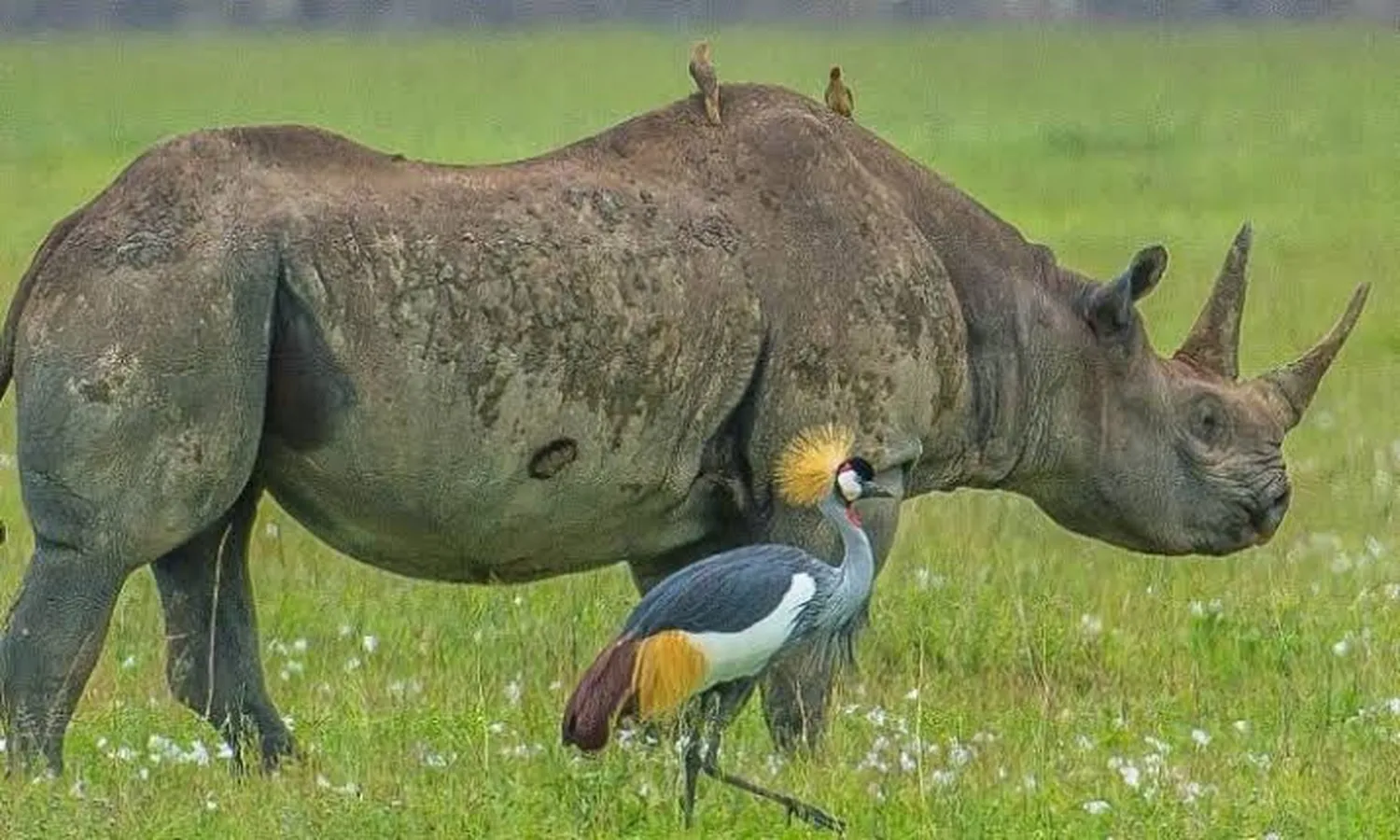
Quick Answer: How Do You Track Black Rhinos on a 6-Day Ngorongoro Safari?
Use an early, vehicle-based crater-floor search with a knowledgeable driver-guide, binoculars and enough time to scan open grassland and woodland-edge habitat. Do not book a product that implies tourists walk up to wild rhinos on the crater floor. For most visitors, “black rhino tracking” is a focused game drive in which the guide uses legal roads, current sightings and habitat knowledge to improve the search.
The best six-day structure is Tarangire on Day 1, Lake Manyara on Day 2, Serengeti on Days 3–4, Serengeti to the Ngorongoro highlands on Day 5, and an early Ngorongoro Crater descent on Day 6. This protects the rhino search from being reduced to a late, rushed stop.
- Conservation status: black rhino is Critically Endangered.
- Tanzania estimate: 228 black rhinos in IUCN's December 2023 range-state table.
- Eastern black rhino: 223 of Tanzania's 228 were listed as D. b. michaeli in that table.
- Africa estimate: 6,788 black rhinos at the end of 2024.
- Ngorongoro wildlife: NCAA currently estimates 26,000–28,000 animals in the crater overall.
- NCA area: 809,440 hectares in UNESCO's World Heritage profile.
- Visitor method: rhino-focused 4x4 viewing, not on-foot pursuit.
- Guarantee: no ethical operator can promise a rhino sighting.
What Does “Black Rhino Tracking” Mean in Ngorongoro Crater?
It means actively searching for black rhinos during a normal permitted crater game drive. The word “tracking” is widely used in safari marketing, but it can mislead travelers into imagining a guided walking approach similar to rhino-tracking products in some private conservancies elsewhere in Africa. That is not how a standard Ngorongoro Crater visit works.
Your driver-guide stays on permitted vehicle routes and scans habitat where rhinos may be visible. Current field information from other guides can help, but it does not override NCAA wildlife rules or create a guarantee. Because black rhinos can be far across the crater floor, the most successful “tracking” moment may be a careful binocular view rather than a close roadside photograph.
Do Not Sell This as On-Foot Rhino Tracking
There is no basis in the current public NCAA visitor information for advertising a standard tourist walk after black rhinos on the Ngorongoro Crater floor. Walking experiences in the wider conservation area are separate activities. For this keyword, the accurate product language is “rhino-focused crater game drive” or “vehicle-based black rhino search.”
How Many Black Rhinos Are in Ngorongoro Crater in 2026?
A precise, current crater-only black-rhino number is not published on the public NCAA and UNESCO pages used for this guide. That matters because many commercial safari pages repeat figures such as 30, 40 or 50 without showing a current official census. Jaynevy should not copy those numbers simply because they appear frequently online.
The stronger quantitative reference is IUCN’s 2025 African Rhino Conservation 2025–2035 framework. Its range-state table estimates 228 black rhinos in Tanzania as of December 2023: 223 eastern black rhinos (Diceros bicornis michaeli) and 5 south-central black rhinos (D. b. minor). This is a national figure, not the Ngorongoro Crater population.
IUCN’s August 2025 update reported 6,788 black rhinos across Africa at the end of 2024, a 5.2% increase from the previous year. Even with that improvement, the black rhino remains Critically Endangered and continues to require intensive protection.
Ngorongoro Numbers You Can Publish with Confidence
NCAA’s current wildlife page estimates the crater’s overall animal population at roughly 26,000–28,000. UNESCO’s World Heritage profile describes the wider 809,440-hectare Ngorongoro Conservation Area and cites about 25,000 large animals in the property, while specifically identifying black rhino as a globally threatened species. These figures describe the ecosystem—not a rhino sighting rate.
Why Ngorongoro Is Important for Black Rhino Conservation
Ngorongoro matters because it protects black rhinos inside one of East Africa’s most intensively managed multi-use conservation landscapes. UNESCO lists the species among the values that give the World Heritage property global biodiversity significance. The crater’s compact wildlife-viewing landscape makes rhinos more practical to search for than across enormous open ecosystems, but conservation security must come before tourism convenience.
For that reason, responsible content should avoid publishing precise live rhino locations, individual movements or security-sensitive monitoring information. Travelers do not need those details to enjoy a respectful safari.
Where Should You Look for Black Rhinos in the Crater?
Focus on visibility rather than a supposed secret “rhino zone.” Black rhinos are browsers, but in the crater they may be visible in open or semi-open habitat, especially where a distant animal can be separated from buffalo, wildebeest or dark vegetation. Woodland edges also deserve patient scanning.
| Search factor | Why it matters | Best practice |
|---|---|---|
| Open sight lines | A rhino may be hundreds of metres away and partly obscured by other herbivores. | Stop, scan slowly and use binoculars before moving on. |
| Woodland/grassland edge | Black rhinos browse and can use cover as well as open ground. | Check margins carefully without expecting the animal beside the road. |
| Current guide information | Animals move during the day. | Use legal guide-to-guide updates but avoid vehicle crowding. |
| Time available | A rushed itinerary encourages drivers to abandon a patient scan. | Sleep near the crater before the search and descend early. |
| Weather and grass height | Mist, rain and vegetation can reduce visibility. | Keep expectations flexible throughout the year. |
Best Time of Day for Black Rhino Viewing in Ngorongoro
Plan an early crater descent, but do not turn “early morning” into a fake success-rate promise. Starting early gives you more total search time, cooler conditions, softer light and fewer lost hours before the day’s route becomes busy. That is a practical advantage even when the rhinos themselves choose to remain distant or hidden.
A good guide should not race past lion, hyena, elephant or bird behavior simply because rhino is the priority. If a rhino is not immediately visible, continue reading the whole ecosystem while returning to promising viewpoints later where road rules allow.
Best Season for a 6-Day Black Rhino Safari
Ngorongoro is a year-round wildlife destination; there is no verified month with a guaranteed black-rhino success rate. The best season depends on visibility, road comfort, crowd tolerance and what you want in the other five days of the safari.
| Period | Rhino-search advantage | Trade-off | Wider six-day value |
|---|---|---|---|
| Jun–Oct | Drier conditions and generally shorter vegetation improve broad visibility. | Peak safari months bring more vehicles and dust. | Excellent Tarangire dry-season wildlife and strong Serengeti viewing. |
| Nov–Feb | Fresh scenery, good visibility between showers and strong wildlife activity. | Short rains can change road and grass conditions. | Excellent if combined with southern Serengeti/Ngorongoro migration ecology. |
| Mar–May | Fewer visitors and lush landscapes. | Taller vegetation, rain and muddy conditions can make distant scanning harder. | Good for travelers prioritizing quiet parks and photography. |
Recommended 6-Day Black Rhino Tracking Ngorongoro Crater Itinerary
The key is to finish Day 5 close to Ngorongoro so Day 6 begins at the crater—not on a long road from Serengeti. That gives the rhino search the same attention normally given to lion or migration sightings.
Day 1: Arusha to Tarangire National Park
Drive to Tarangire for elephants, baobabs, riverine habitat and predators. The park provides a contrasting dry-savanna ecosystem before the more compact crater experience. Overnight near Tarangire or Karatu.
Day 2: Lake Manyara National Park to Karatu
Explore Lake Manyara’s groundwater forest, acacia woodland, wetlands and Rift Valley scenery. Look for elephants, primates, birds and the park’s famous tree-climbing-lion behavior without treating any sighting as guaranteed. Overnight in Karatu.
Day 3: Karatu to Central Serengeti
Travel through the Ngorongoro highlands into Serengeti. Use the afternoon for lions, leopards, cheetahs and plains wildlife. This gives the safari a broad predator context before the rhino-focused final day.
Day 4: Full-Day Serengeti Game Drive
Spend a full day in Central Serengeti or the best seasonal sector for your dates. Avoid shortening this day just to add another park. A six-day safari needs enough uninterrupted Serengeti time to feel complete.
Day 5: Serengeti Morning Drive to Ngorongoro Highlands
Use the morning for final Serengeti wildlife, then travel to the Ngorongoro highlands. Overnight near the crater rim or in a location that supports an early Day 6 departure. Discuss the rhino-search plan with your guide before dinner and prepare binoculars and camera gear.
Day 6: Early Ngorongoro Crater Black Rhino Search and Return to Arusha
Descend early and make black rhino the priority while still enjoying the crater’s full wildlife community. Scan broad sight lines carefully, use binoculars for distant animals, and let the guide revisit suitable habitat where practical. After the crater safari and picnic, return to Arusha.
Rhino-Priority Upgrade: Private Vehicle + Crater-Rim Night
If seeing a black rhino is one of the most important goals of the entire trip, spend the night as close to the crater descent as your budget allows and use a private vehicle. The benefit is flexibility, not a guaranteed animal: your group can wait longer, scan more carefully and avoid negotiating priorities with unrelated passengers.
Rhino-Focused Drive vs Standard Ngorongoro Safari
| Factor | Rhino-focused crater drive | Standard crater drive |
|---|---|---|
| Departure | Early start prioritized | May be more flexible |
| Binocular scanning | Frequent and deliberate | More general wildlife viewing |
| Time at distant sightings | Longer when safe and practical | May move on sooner |
| Vehicle choice | Private strongly preferred | Private or shared |
| Main goal | Maximize legitimate viewing opportunity | See the widest variety of crater wildlife |
| Guarantee | None | None |
Private vs Group Safari for Black Rhino Viewing
A private vehicle is usually better when rhino is the trip’s priority. Group safaris can reduce cost, but every traveler shares decisions about how long to wait, which area to revisit and when to move to lunch or another animal.
- Private: better control over timing, waiting, photography and route priorities.
- Group joining: better value, but the group may prioritize lions, photography stops or a faster route.
- Either format: remains subject to NCAA roads, wildlife rules and actual animal location.
Black Rhino vs White Rhino: What Species Are You Looking For?
The iconic rhino associated with Ngorongoro is the black rhinoceros, Diceros bicornis. The species name does not describe its actual skin color. Black rhinos typically have a more pointed, prehensile upper lip suited to browsing vegetation, unlike the broader grazing lip of the white rhino.
UNESCO has separately discussed proposals concerning southern white rhino translocation into the wider property, but that should not be confused with the established black-rhino conservation value for which Ngorongoro is known.
How to Photograph a Black Rhino Responsibly
- Bring a telephoto lens. A distant rhino is a normal and valuable sighting.
- Use binoculars first. Confirm the animal before repositioning camera gear.
- Photograph the habitat. A small rhino against the crater wall often tells a stronger conservation story than a tight portrait.
- Do not request off-road pursuit. Stay within NCAA access rules.
- Avoid shouting or pressuring the guide. Crowding an animal damages the experience for everyone.
- Respect sensitive information. Avoid posting precise live locations if guides or conservation staff advise against it.
For photography-focused planning, see Jaynevy’s Ngorongoro Crater Photography Shoot.
What Else Can You See While Searching for Black Rhino?
Ngorongoro is valuable even on a day when the rhino stays hidden. NCAA currently estimates roughly 26,000–28,000 animals in the crater, and UNESCO describes the wider property as supporting around 25,000 large animals. Lions, buffalo, elephants, hippos, hyenas, wildebeest, zebra, gazelles and abundant birds create a dense, varied game drive.
Explore Jaynevy’s Ngorongoro Conservation Area guide, Ngorongoro Day Trip and Best Safari National Parks in Tanzania for broader planning.
Common Mistakes When Planning a Black Rhino Safari
- Publishing an unsupported current crater rhino count. Use official or IUCN figures and label their geographic scope and date.
- Calling the experience an on-foot rhino track. Standard visitor viewing is vehicle-based.
- Guaranteeing a sighting. Critically Endangered wildlife does not follow tour schedules.
- Arriving at the crater late after a long Serengeti transfer. Sleep nearby on Day 5.
- Leaving binoculars at the lodge. Many rhino views are distant.
- Focusing only on a close photo. A distant wild rhino remains an exceptional conservation sighting.
- Publishing sensitive live locations. Rhino protection comes before social-media detail.
Useful Jaynevy Tours Internal Links
- Ngorongoro Conservation Area
- Ngorongoro Day Trip
- Ngorongoro Crater Photography Shoot
- 6-Day Tarangire, Serengeti, Ngorongoro, Manyara & Eyasi Safari
- Ngorongoro Crater vs Lake Manyara
- Best Safari National Parks in Tanzania
- Serengeti National Park
Frequently Asked Questions About 6-Day Black Rhino Tracking in Ngorongoro Crater
Can you track black rhinos in Ngorongoro Crater?
Yes, but for ordinary visitors 'rhino tracking' in Ngorongoro Crater means a focused search from a permitted safari vehicle, not walking after rhinos on foot. Your driver-guide scans suitable crater-floor habitat and uses current field information while following NCAA road and wildlife rules.
Are black rhinos guaranteed on a Ngorongoro Crater safari?
No. Ngorongoro is one of Tanzania's most important black-rhino areas, but every rhino sighting remains a wild encounter. Weather, grass height, distance, road access and the animals' position all affect visibility.
How many black rhinos are in Ngorongoro Crater?
Current public NCAA and UNESCO pages confirm black rhinos in the Ngorongoro Conservation Area but do not publish a precise 2026 crater-only population figure. This guide therefore does not use unsupported '30', '40' or '50 rhino' claims. At national level, IUCN's 2025 African Rhino Conservation Framework estimated 228 black rhinos in Tanzania as of December 2023.
What is the best time of day to look for black rhinos in Ngorongoro?
An early crater descent is the best practical strategy because it gives you more usable game-drive time, cooler conditions and better morning light. It is not a guarantee that rhinos are always visible at a particular hour.
What is the best season for black rhino viewing in Ngorongoro?
The crater can be visited year-round. June to October often gives drier roads and shorter vegetation, while November to May offers greener scenery and generally fewer peak-season crowds outside holiday periods. Rhino sightings remain unpredictable in every season.
Is black rhino tracking done on foot in the crater?
No standard tourist rhino-tracking experience on the crater floor should be sold as an on-foot activity. Visitors search from permitted vehicles. Walking activities in the wider Ngorongoro Conservation Area are separate products and must follow the applicable NCAA route and ranger rules.
Is a private safari better for rhino viewing?
Usually yes when black rhino is your main objective. A private vehicle gives your group more control over departure time, how long you scan a promising area and whether you wait for a distant animal to move into a clearer view.
What binoculars are useful for black rhino viewing?
Bring 8x or 10x binoculars. Black rhinos can be far across the crater floor, so binoculars are often more useful than expecting a close roadside encounter. A telephoto lens is also valuable for photography.
Can I see the Big Five while searching for black rhino?
Ngorongoro supports lion, elephant, buffalo, leopard and black rhino, but all five are never guaranteed in one day. Leopard is especially elusive, and rhinos may be distant. The crater is still one of Tanzania's strongest destinations for a concentrated multi-species game drive.
Is six days enough for a rhino-focused Tanzania safari?
Yes. Six days is enough if you spend the final night close to the Ngorongoro Crater and descend early on Day 6. A balanced route can also include Tarangire, Lake Manyara and Serengeti without reducing the crater to a rushed afternoon visit.
Research Notes and Trusted Sources
This page deliberately distinguishes crater facts from national rhino population data. NCAA and UNESCO confirm black rhino presence in Ngorongoro but the public pages used here do not provide a current 2026 crater-only count. IUCN figures are therefore used only at the Tanzania-wide and Africa-wide levels.
- Ngorongoro Conservation Area Authority: Wild Animals — current NCAA estimate of 26,000–28,000 animals in the crater and confirmation of black rhino presence.
- UNESCO World Heritage Centre: Ngorongoro Conservation Area — 809,440-hectare property, black-rhino conservation significance and wider wildlife context.
- IUCN African Rhino Conservation 2025–2035 — December 2023 range-state estimate of 228 black rhinos in Tanzania.
- IUCN 2025 African Rhino Update — 6,788 black rhinos across Africa at the end of 2024.
- Google Search Central: Helpful, Reliable, People-First Content — original research/analysis, comprehensive coverage, clear authorship and trust.
- Google Search Central: Generative AI Search Optimization — foundational SEO, unique non-commodity content and useful structure for AI Overviews and AI Mode.
SEO/AEO implementation note: Google’s current guidance says AI-search optimization remains SEO and prioritizes useful, unique, expert-led, non-commodity content. Visible FAQs are included because they answer real traveler questions, but this tourism page does not rely on FAQ rich-result eligibility, which Google limits to well-known authoritative government and health sites.