
Ngorongoro Crater vs Lake Manyara | Best Tanzanian Safari Destinations
After an exhilarating climb up Mount Kilimanjaro, a safari in Tanzania’s northern circuit is a fantastic way to continue your adventure. Ngorongoro Crater and Lake Manyara National Park, both iconic destinations, offer distinct safari experiences tailored to different traveler preferences. This article compares the two based on the nature of the park, wildlife, price, accommodation options, attractions, experiences and activities, accessibility, best time to visit, and crowd levels to help you choose the perfect post-Kilimanjaro safari.
Ngorongoro Crater vs Lake Manyara: Which is Right for You?
Ngorongoro Crater and Lake Manyara National Park are standout destinations in Tanzania’s northern safari circuit, each offering unique landscapes and wildlife experiences. Whether you’re seeking a high-density wildlife spectacle in a volcanic caldera or a compact park with tree-climbing lions and vibrant birdlife, this guide breaks down the key differences to help you choose the ideal safari destination.
Nature of the Park
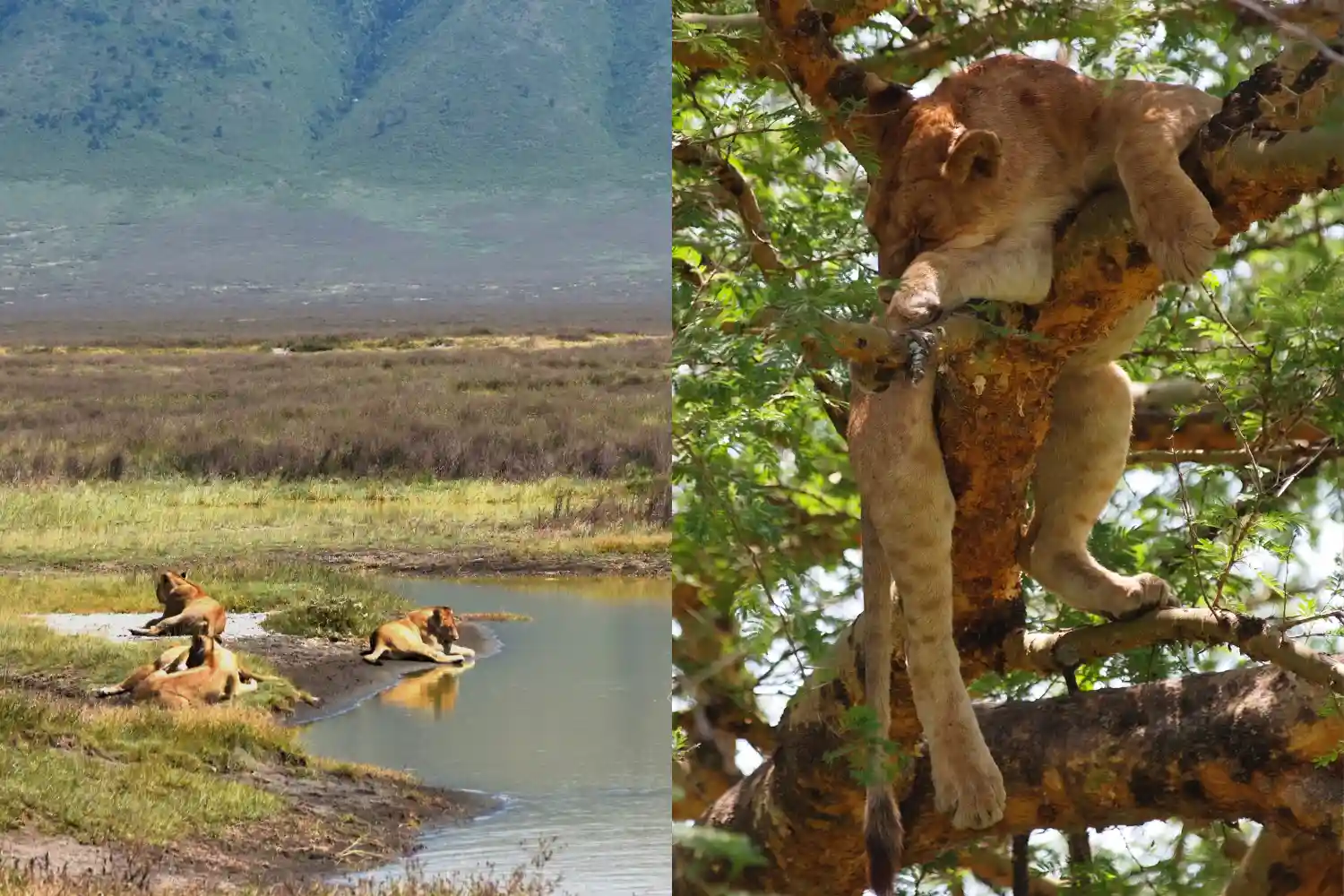
Ngorongoro Crater is a UNESCO World Heritage Site and one of the world’s largest intact volcanic calderas, spanning about 260 square kilometers. Known as the “Garden of Eden,” it features a lush crater floor surrounded by steep walls, creating a self-contained ecosystem with grasslands, swamps, forests, and a soda lake, offering a compact yet breathtaking safari experience.
Lake Manyara National Park, covering approximately 330 square kilometers, is a smaller park dominated by the alkaline Lake Manyara, which occupies about two-thirds of its area. The park boasts diverse ecosystems, including groundwater forests, acacia woodlands, and grassy floodplains, all set against the dramatic Great Rift Valley escarpment, providing a condensed yet varied safari experience.
Wildlife
Ngorongoro Crater is renowned for its high wildlife density, hosting over 25,000 animals within its confined area. It’s one of the best places to spot the Big Five (Lions, Leopards, Elephants, Buffaloes, and Rhino). The crater is home to large populations of lions, hyenas, zebras, wildebeests, and the critically endangered black rhinoceros. Flamingos and other birds frequent the soda lake, supported by the crater’s unique ecosystem.
Lake Manyara National Park is famous for its tree-climbing lions, a rare behavior that attracts many visitors. The park hosts elephants, hippos, giraffes, zebras, and large buffalo herds. The lake draws thousands of flamingos during the wet season, creating a vibrant pink spectacle, alongside over 400 bird species, including pelicans and storks. While leopards and rhinos are present, they are harder to spot, making the full Big Five less likely.
Price
Ngorongoro Crater is a premium safari destination with higher costs due to conservation fees in the Ngorongoro Conservation Area. Entry fees are approximately $70-$80 per person per day, plus a vehicle fee and a crater service fee of around $200-$300 per vehicle. Safari costs, including guides and transport, typically range from $250-$500 per person per day, depending on the tour operator and group size.
Lake Manyara National Park is more budget-friendly, with entry fees around $45-$55 per person per day. Safari costs, including game drives and guides, range from $120-$300 per person per day, making it an affordable option, especially for day trips due to its proximity to Arusha.
Accommodation Options
Ngorongoro Crater offers accommodations primarily along the crater rim, maximizing scenic views. Luxury lodges like Ngorongoro Serena Safari Lodge and andBeyond Ngorongoro Crater Lodge provide high-end amenities and stunning vistas, costing $300-$800 per night. Mid-range options, such as Ngorongoro Sopa Lodge, range from $150-$300 per night. Budget travelers can stay at public campsites like Simba Campsite, starting at $30-$50 per person per night.
Lake Manyara National Park has fewer lodging options due to its smaller size, but offers a solid range. Luxury lodges like Lake Manyara Serena Safari Lodge and andBeyond Lake Manyara Tree Lodge cost $300-$700 per night. Mid-range options, such as Migunga Tented Camp, range from $80-$200 per night. Budget campsites, like Panorama Campsite, start at $20-$40 per person per night, often conveniently located near the park entrance.
Attractions
Ngorongoro Crater is a singular attraction, with the crater itself as the main draw. Highlights include the Lerai Forest, a lush acacia woodland teeming with wildlife; Lake Magadi, a soda lake frequented by flamingos; and the Gorigor Swamp, a hotspot for hippos and birds. The crater’s compact size ensures frequent, close-up wildlife sightings.
Lake Manyara National Park centers around the scenic Lake Manyara, which attracts flamingos and other waterbirds. The groundwater forest near the park entrance is ideal for spotting monkeys and elephants, while the hot springs at Maji Moto and the Rift Valley escarpment provide stunning backdrops. The park’s compact layout ensures quick access to its key attractions.
Experiences and Activities
Ngorongoro Crater offers classic game drives within the crater, typically lasting 4-6 hours due to conservation regulations limiting time on the crater floor. Guided walking safaris are available in the broader Ngorongoro Conservation Area, and cultural visits to Maasai villages offer insight into local traditions. Hot-air balloon safaris, costing around $500-$600 per person, provide a unique aerial perspective of the crater.
Lake Manyara National Park excels in short game drives, ideal for half-day or full-day safaris due to its small size. Unique activities include canopy walkway tours through the groundwater forest for a treetop view and cycling tours along designated trails. Cultural visits to nearby Mto wa Mbu village provide a cultural connection, and birdwatching is a highlight, especially during the wet season.
Accessibility
Ngorongoro Crater is located about 180 kilometers from Arusha, a 3-4 hour drive on mostly paved roads, making it relatively accessible. It’s part of the northern safari circuit, but access to the crater floor requires 4x4 vehicles and permits, adding logistical complexity.
Lake Manyara National Park is highly accessible, just 80 kilometers from Arusha, about a 1.5-hour drive on good roads. Its proximity and small size make it perfect for quick visits, with easy access via standard 4x4 vehicles and minimal permit restrictions.
Best Time to Visit
Ngorongoro Crater is a year-round destination due to its consistent wildlife presence. The dry season (June to October) is ideal for game viewing as animals congregate around water sources. The wet season (November to May) offers lush greenery and fewer crowds, though some roads may be muddy.
Lake Manyara National Park is excellent year-round, with the wet season (November to May) being best for flamingos and migratory birds, complemented by lush scenery. The dry season (June to October) provides better road conditions and more visible mammals, though the lake may shrink.
Crowds
Ngorongoro Crater is one of Tanzania’s most popular safari destinations, attracting significant crowds, especially during the peak dry season (June to September). Its small size can lead to concentrated vehicle traffic, which may reduce the sense of wilderness for some travelers.
Lake Manyara National Park sees moderate crowds, particularly during peak season, due to its popularity for day trips. Its smaller size can make vehicles feel more concentrated, but it’s generally less busy than Ngorongoro, offering a relatively peaceful experience.
FAQs About Ngorongoro Crater vs Lake Manyara National Park
Which park is better for seeing the Big Five?
Ngorongoro Crater is the better choice for spotting all of the Big Five, including the rare black rhinoceros, due to its high wildlife density. Lake Manyara offers tree-climbing lions and other wildlife but is less likely to provide sightings of rhinos or leopards.
Is Ngorongoro or Lake Manyara more budget-friendly?
Lake Manyara is more budget-friendly due to lower entry fees and its suitability for day trips. Ngorongoro’s higher fees and premium accommodations make it more expensive.
Which park is better for a short visit?
Lake Manyara is ideal for short visits due to its proximity to Arusha and compact size, perfect for a half-day or full-day safari. Ngorongoro requires more time due to travel and permit requirements.
Can I combine both parks in one safari?
Yes, both parks are part of Tanzania’s northern safari circuit and can be easily combined in a multi-day itinerary, often alongside Serengeti or Tarangire.
Final Thoughts
Choosing between Ngorongoro Crater and Lake Manyara National Park depends on your safari priorities. Ngorongoro Crater is ideal for travelers seeking a compact, high-density wildlife experience with a strong chance of spotting the Big Five in a stunning caldera setting, despite higher costs and crowds. Lake Manyara National Park is perfect for those wanting a budget-friendly, quick safari with unique attractions like tree-climbing lions, flamingos, and canopy walks in a compact, accessible park. Both are part of Tanzania’s northern circuit, making them easy to combine for a comprehensive safari adventure. Whether you choose the iconic crater or the vibrant ecosystems of Manyara, both promise unforgettable post-Kilimanjaro experiences.