
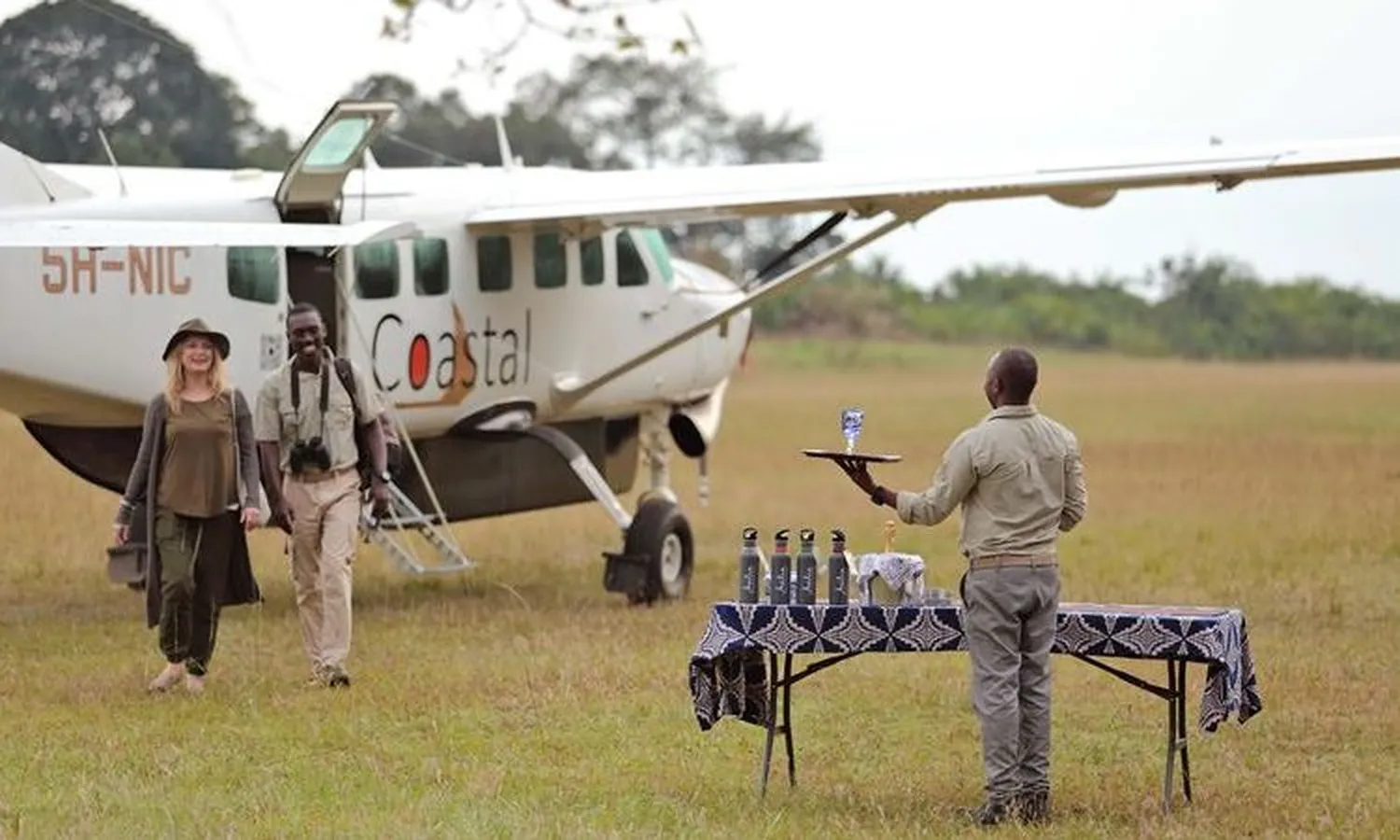
Quick Answer: Is a 6-Day Fly-In Serengeti and Ngorongoro Safari Worth It?
Yes, especially when your priority is more safari time and less transfer fatigue. Flying into the Serengeti can turn a long approach day into an arrival game drive, while keeping Ngorongoro as the high-impact finale. A well-designed six-day trip can give you three Serengeti nights, multiple full or partial game drives, a transfer through the Ngorongoro Conservation Area, and a dedicated crater-floor day without feeling rushed.
| Question | Practical answer |
|---|---|
| Best for | Travellers who value time, comfort, photography and fewer long approach drives |
| Ideal Serengeti stay | At least 3 nights in a well-positioned camp |
| Ngorongoro time | 1 full crater descent day, plus nearby overnight positioning |
| Typical travel style | Scheduled bush flight + private 4x4 game drives + road connection to Ngorongoro |
| Published Jaynevy luxury benchmark | From USD 4,850 pp sharing |
| Biggest planning mistake | Assuming every sector is flown or every airstrip has the same schedule |
What “Fly-In Safari” Actually Means
A fly-in safari normally means that one or more of the longest transfers are replaced with a scheduled bush flight or charter. It does not automatically mean that you fly between every park, nor does it mean the aircraft lands beside your lodge. In the Serengeti, you normally land at an airstrip matched to your camp and season, then continue by safari vehicle. Ngorongoro Crater itself is explored by road vehicle after descending from the rim.
That distinction is important because the best itinerary often uses a hybrid route: fly into Serengeti, spend meaningful time game driving, then travel overland toward Ngorongoro so the transfer itself passes through wildlife country and the conservation area rather than creating unnecessary extra flight connections.
Recommended 6-Day Fly-In Safari Itinerary
| Day | Route | Main experience | Why it works |
|---|---|---|---|
| 1 | Arusha/JRO/Zanzibar → Serengeti | Scheduled bush flight + arrival game drive | Converts transfer time into safari time |
| 2 | Central or seasonally chosen Serengeti | Full-day game viewing | Predators, plains game, photography |
| 3 | Serengeti | Second deep game-drive day | Allows flexibility instead of rushing sightings |
| 4 | Serengeti → Ngorongoro highlands | Morning game drive + scenic transfer | Retains wildlife time while repositioning |
| 5 | Ngorongoro Crater floor | Dedicated crater game drive | High wildlife density in a compact landscape |
| 6 | Ngorongoro/Karatu → Arusha/JRO or onward connection | Departure transfer | Creates a clean finish with flight buffer |
Day 1: Fly Into the Serengeti and Start Game Viewing
After pickup from your pre-safari hotel or airport, connect to the scheduled bush flight assigned to your itinerary. If you are staying in Central Serengeti, Seronera is a common airstrip; migration-focused or northern camps may use a different airstrip. Your guide should meet the flight and convert the transfer to camp into your first game drive wherever practical.
Avoid booking an international arrival and a tight bush-flight connection with no recovery time. If your inbound flight lands late or has a history of delays, a pre-night near Arusha, Moshi or the airport is usually the safer operational choice.
Day 2: Full-Day Serengeti Game Drive
Use the first full day to settle into the Serengeti rather than chasing a checklist. Central Serengeti is particularly useful for year-round general game viewing because permanent water and varied habitat support resident herbivores and predators. A private vehicle gives more freedom to start early, remain longer at a productive sighting and change direction when guides receive fresh wildlife information.
Day 3: Second Serengeti Day for Depth, Not Repetition
The value of a third Serengeti night is that the second full game-drive day can be different from the first. Depending on season and camp location, your guide may target kopjes, riverine habitat, open plains, cheetah country, lion territories or a seasonal migration zone. The 6-day Serengeti safari guide is useful if you are deciding whether to spend even more of the trip inside Serengeti.
Day 4: Serengeti to Ngorongoro Highlands
Start with a final Serengeti game drive, then reposition toward the Ngorongoro Conservation Area. In many itineraries the overland route is the most logical choice because it avoids unnecessary airport transfers while still passing through exceptional landscapes. Some premium programs may use a flight connection where schedules and camp locations make it worthwhile, but that should be confirmed rather than assumed.
Overnight location matters. Staying near the crater rim can improve early access but may cost substantially more. Karatu can offer better value and a broader lodge selection, although it adds morning driving. The correct choice depends on budget, sunrise priorities and whether you prefer views or price efficiency.
Day 5: Ngorongoro Crater Floor Safari
Descend early for a focused crater-floor game drive. The Ngorongoro Conservation Area Authority reports more than 25,000 large animals in the area, including wildebeest, zebra, buffalo, gazelles, elephants and black rhino, alongside a dense predator population. Those are area-level reference figures, not a promise that one game drive will see every species.
Use the crater day for patient observation. Lions, hyenas, buffalo, wildebeest, zebra, hippos and many waterbirds are among the realistic targets. Black rhino remains a highly valued but never guaranteed sighting. For more detail, compare the Ngorongoro Crater first-time safari guide.
Day 6: Return to Arusha, JRO or Your Next Destination
After breakfast, transfer toward Arusha or Kilimanjaro International Airport, or connect to the onward flight stated in your final itinerary. If you are returning to Zanzibar, the exact combination of road transfer and domestic flight should be confirmed for your date. Do not build a tight international connection after a bush-aircraft itinerary; weather, loading, airstrip conditions and operational changes can affect timings.
Serengeti Wildlife: Research-Based Context
UNESCO describes Serengeti National Park as roughly 1.5 million hectares of savannah and highlights the annual movement of about two million wildebeest plus hundreds of thousands of gazelles and zebras. The park also supports globally threatened species including black rhinoceros, elephant, wild dog and cheetah. These are ecosystem-scale facts; they should not be converted into promises about what you will see on a particular morning.
| Wildlife focus | Serengeti value | Important reality |
|---|---|---|
| Lions | Strong resident predator viewing in suitable sectors | No individual sighting is guaranteed |
| Leopards | Search riverine woodland and suitable trees | Often requires patience and guide knowledge |
| Cheetahs | Open plains can be productive | Region and prey availability matter |
| Migration herds | Exceptional when your route matches herd location | Rainfall shifts timing and concentration |
| Elephants | Present in parts of the park | Not the only reason to choose Serengeti |
Fly-In vs Road Safari: Which Gives Better Value?
| Factor | Fly-in safari | Road safari |
|---|---|---|
| Approach time | Much shorter on the longest sector | Longer but shows more countryside |
| Game-drive time | Can begin on arrival day | More of Day 1 may be transfer |
| Cost | Higher because of bush flights | Usually lower |
| Luggage flexibility | More restricted | Easier with a private safari vehicle |
| Comfort | Reduces long approach-drive fatigue | Better for travellers who dislike small aircraft |
| Best for | Shorter premium trips, Zanzibar combinations, photographers | Budget-conscious travellers and classic overland touring |
If you are still comparing formats, browse Jaynevy's Tanzania safari packages with flights and the 6-day Serengeti–Ngorongoro luxury safari.
Light-Aircraft Baggage Rules: Do Not Assume One Universal Limit
This is one of the most important practical differences between road and fly-in safaris. Small aircraft have weight and loading constraints, and baggage policies vary by airline.
| Airline example | Current published allowance | Planning note |
|---|---|---|
| Coastal Aviation | 15 kg / 33 lb per person including carry-on | Soft bags strongly recommended |
| Auric Air | 20 kg / 44 lb total including hand baggage | Soft-sided bags recommended; excess options may be available |
Use your actual ticket as the final rule. Aircraft type, route and operational load can affect what is accepted. Do not publish or tell guests that 15 kg is a universal Tanzania bush-flight law. It is an airline-specific policy.
How Much Does a 6-Day Fly-In Serengeti & Ngorongoro Safari Cost?
Fly-in safaris cost more than equivalent road programs because the quotation includes scheduled or charter flight sectors in addition to safari vehicles, guiding, accommodation and conservation fees. Luxury camp location can also materially change the total.
| Current Jaynevy published reference | Starting figure | What it tells you |
|---|---|---|
| 6-day Luxury Serengeti Fly-In Safari | USD 4,850 pp sharing | Luxury Serengeti-focused benchmark with internal flights |
| 6-day Luxury Zanzibar Fly-In: Serengeti & Ngorongoro | USD 4,850 pp sharing | Luxury beach-to-safari benchmark including flight-based routing |
| Final tailored quote | Varies | Depends on exact dates, flights, camp level, region and party size |
Do not compare two fly-in quotes using the headline total alone. Check whether both include the same flight sectors, baggage assumptions, airport transfers, private vehicle, crater fee, camp location, full-board meals and taxes. For broader planning, use the Tanzania safari cost guide.
What Should Be Included in the Written Quote?
- Exact domestic flight sectors and whether they are scheduled or charter.
- Named departure and arrival airports or bush airstrips.
- Baggage allowance for the actual airline booked.
- All airport and airstrip transfers.
- Private or shared 4x4 safari vehicle after landing.
- Professional driver-guide and requested language.
- Five nights of named accommodation or a clearly defined category.
- Meal plan for every safari day.
- Serengeti park/concession charges and Ngorongoro conservation/crater charges where applicable.
- Drinking water and clearly listed included beverages.
- Final Day 6 transfer and onward-flight responsibility.
- Cancellation/change conditions for both safari services and flight tickets.
Best Time for a Fly-In Serengeti & Ngorongoro Safari
The fly-in format works year-round; what changes is the Serengeti sector you should prioritize. Ngorongoro remains a strong wildlife destination through the year, while migration-focused Serengeti routing should follow seasonal conditions rather than one fixed camp.
| Period | Serengeti planning | Fly-in consideration |
|---|---|---|
| Jan–Feb | Southern ecosystem can be important for calving season | Match airstrip to seasonal camp |
| Mar–May | Green season, changing herd movement, possible rain | Allow operational flexibility for weather |
| Jun–Jul | Herds generally move through western/northern sectors over time | Airstrip selection becomes especially important |
| Aug–Oct | Northern Serengeti can be a migration focus | High-demand flights and camps should be booked early |
| Nov–Dec | Short rains can shift herds southward | Keep routing responsive to current conditions |
If migration is the primary purpose of the trip, compare the 6-day Serengeti wildebeest migration safari rather than forcing a fixed Central Serengeti itinerary into every month.
Which Serengeti Airstrip Should Your Safari Use?
There is no single airstrip that is best for every six-day safari. The right choice depends on where you are sleeping and what wildlife objective matters in your travel month. For a Central Serengeti program, an airstrip serving the Seronera area is often practical. A northern migration itinerary may use a northern airstrip, while southern or seasonal camps can require a different arrival point. This is why a good quotation should name the airstrip, camp and transfer arrangement together.
A low airfare can be poor value if it lands far from the camp and creates a long vehicle transfer after arrival. Conversely, a slightly more expensive flight into a better-positioned airstrip can protect an afternoon game drive. When comparing two quotations, ask: How long is the transfer from the landing strip to the lodge, and is that transfer already treated as a game drive?
For background on the park's geography and wildlife zones, use the Serengeti National Park guide. If your dates are specifically migration-driven, camp and airstrip choice should be based on the likely herd region rather than a generic “Serengeti” label.
Arusha, Kilimanjaro Airport or Zanzibar: Which Starting Point Is Best?
| Starting point | Best for | Main planning issue |
|---|---|---|
| Arusha | Classic Northern Circuit travellers | Coordinate hotel pickup with the correct domestic airport/airstrip departure |
| Kilimanjaro International Airport | Travellers arriving directly from abroad | A pre-night is safer when arrival and bush-flight times do not connect comfortably |
| Zanzibar | Beach + safari combinations | Confirm direct/connecting flight pattern, baggage limit and return timing |
Starting point changes the value of the fly-in format. From Zanzibar, the time saving can be particularly meaningful because a flight connects the coast with the safari circuit far more efficiently than an overland journey. From Arusha, a road safari remains a legitimate alternative if you want Tarangire or Lake Manyara on the way. From JRO, the most important question is whether your international arrival safely connects with the domestic departure.
Do You Need a Pre-Night or Post-Night?
A pre-night is not an unnecessary extra when it protects a valuable bush flight. It becomes especially useful when your international arrival is in the afternoon or evening, your luggage needs repacking into soft bags, or your safari flight leaves early the next morning. It also gives the guide or operations team time to reconfirm the flight and transfer details before you enter the bush.
A post-night can be equally sensible when Day 6 finishes with a long road transfer from Ngorongoro or a domestic flight that does not leave enough margin for an international departure. Buying six premium safari days and then risking the final international flight to save one hotel night is often poor trip design. Build buffers according to the ticket rules and your tolerance for risk.
Flight Reliability, Weather and Operational Changes
Bush flights operate differently from large international services. Aircraft may make multiple airstrip stops, departure times can be adjusted, and weather or operational requirements can affect the day. Coastal Aviation's conditions of carriage state that services remain subject to aircraft availability, operational requirements, weather conditions, airport restrictions and regulatory approvals. This is normal bush-aviation planning, not a reason to avoid flying.
The practical response is simple: keep the first and last safari days realistic, avoid unnecessarily tight onward connections, reconfirm departure details before travel, and make sure the operator has the correct passenger weights and baggage information when requested. A quality itinerary gives you a route that still works if a flight shifts modestly rather than depending on a minute-perfect sequence.
Who Benefits Most From the Fly-In Format?
- Zanzibar travellers: a flight avoids wasting valuable holiday time getting from the coast to the Northern Circuit by surface transport.
- Photographers: an arrival flight can preserve an extra afternoon or morning for game viewing.
- Honeymooners and special-occasion travellers: less transfer fatigue creates a more relaxed trip.
- Older travellers: reducing one of the longest approach drives can improve comfort, provided small-aircraft travel is suitable for them.
- Time-limited travellers: six days can feel much deeper when the longest positioning sector is flown.
When a Road Safari May Be Better
A fly-in safari is not automatically the best choice. Choose a road safari when price is the main constraint, you want to include Tarangire and Lake Manyara naturally, you carry more luggage, you dislike small aircraft, or you enjoy seeing the changing landscapes between Arusha, the Rift Valley, Ngorongoro and Serengeti. A road journey can be part of the safari rather than wasted time if the itinerary is paced well.
Common Fly-In Safari Mistakes to Avoid
- Booking the international arrival too close to the bush flight. One delay can remove the first safari day.
- Assuming “Serengeti airstrip” is one place. Camp location and season determine the useful airstrip.
- Ignoring baggage rules until the airport. Bush-aircraft restrictions can be stricter than international flights.
- Paying for a flight that does not save meaningful time. Every flight should improve the route, not just make it sound premium.
- Using a cheap camp far from the intended wildlife zone. You may lose the time you paid to save by flying.
- Expecting migration or rhino guarantees. Good planning improves probability; it does not control wildlife.
- Leaving no buffer on Day 6. Bush aviation and road transfers require realistic connection margins.
How to Compare Two Fly-In Safari Quotes
| Compare | Why it matters |
|---|---|
| Exact flight sectors | One quote may include more flights than another |
| Serengeti airstrip | Affects transfer time to camp and wildlife zone |
| Camp location | Can save or waste hours of daily driving |
| Private vs shared vehicle | Changes flexibility and photography time |
| Ngorongoro crater fee | Can materially affect total package cost |
| Room basis | Single supplement or upgraded rooms alter price |
| Cancellation conditions | Flight tickets may have separate amendment rules |
Research Notes and Source Context
This guide uses current published information from Jaynevy Tours for price references, UNESCO for Serengeti scale and migration context, the Ngorongoro Conservation Area Authority for large-animal reference figures, and current airline baggage policies from Coastal Aviation and Auric Air. Operational schedules, airstrips, fares and baggage rules can change, so the final booking documents always override a planning article.
- UNESCO World Heritage Centre — Serengeti National Park
- Ngorongoro Conservation Area Authority — Craters & Wildlife
- Coastal Aviation — Luggage Policy
- Auric Air — Baggage Policy
Frequently Asked Questions
Is six days enough for a fly-in Serengeti and Ngorongoro safari?
Yes. Six days is a strong duration when the itinerary protects at least three nights in the Serengeti and one dedicated Ngorongoro Crater day. Flying into the Serengeti reduces the amount of time spent on the longest approach transfer, so more of the trip can be used for game drives and a less rushed pace.
Where do fly-in safaris land in the Serengeti?
The airstrip depends on the season, camp location and airline schedule. Seronera is a common option for Central Serengeti, while northern or seasonal camps may use other airstrips. The final ticket and camp transfer plan should name the exact airstrip rather than simply saying “Serengeti airport.”
Do I fly directly into Ngorongoro Crater?
Normally, no. The crater floor is explored by safari vehicle. Depending on the itinerary, travellers usually transfer overland from the Serengeti toward the Ngorongoro highlands, or use a regional flight connection followed by a road transfer. The exact arrangement should be confirmed in the written itinerary.
How much luggage can I take on a fly-in safari?
Baggage allowance depends on the airline and aircraft. Coastal Aviation currently publishes 15 kg per person including carry-on, while Auric Air publishes 20 kg total including hand baggage. Soft-sided bags are recommended because small aircraft have limited baggage compartments. Always follow the allowance on your actual ticket.
How much does a 6-day Serengeti and Ngorongoro fly-in safari cost?
The final price depends on the flight sectors, travel month, number of travellers, camp standard, Serengeti region, private vehicle arrangements and airport transfers. Jaynevy Tours currently publishes a 6-day luxury Serengeti fly-in safari and a 6-day Zanzibar fly-in Serengeti–Ngorongoro package from USD 4,850 per person based on two people sharing. That is a luxury benchmark, not a universal fly-in price.
Is fly-in worth the extra cost compared with a road safari?
It is often worth considering when time and comfort matter more than minimizing price. Flying can remove a long approach drive and preserve energy for game viewing. A road safari can still be excellent and usually costs less, so the better option depends on your budget, starting point and how much you value time inside the parks.
Can I fly from Zanzibar to Serengeti and include Ngorongoro?
Yes. Jaynevy Tours currently publishes a six-day luxury fly-in safari from Zanzibar that combines Serengeti and Ngorongoro. The exact airline, airstrip, departure time and return routing should be reconfirmed for your travel dates because scheduled bush flights are operationally dependent.
Can I see the Great Migration on this itinerary?
Possibly. The migration moves through different parts of the wider Serengeti ecosystem during the year, influenced by rainfall and grazing. A six-day fly-in safari can be positioned toward seasonal migration areas, but no responsible operator should guarantee a river crossing or a specific herd location on a fixed date.
Should I book a pre-safari night before the flight?
A pre-safari night is often sensible if your international flight arrives late, your bush flight departs early, or the connection leaves little margin for delays. Starting rested also reduces the risk of losing the first safari day because of a missed domestic connection.
Bottom Line
A six-day fly-in Serengeti and Ngorongoro safari is most valuable when the flight genuinely buys you more wildlife time. Protect at least three Serengeti nights, choose the airstrip around the camp and season, give Ngorongoro a dedicated crater day, and treat baggage, domestic-flight timings and Day 6 connection buffers as core itinerary decisions rather than small details. Compare the current Tanzania safari packages with flights and request a written quotation that lists every flight sector, lodge, fee and transfer before paying a deposit.