
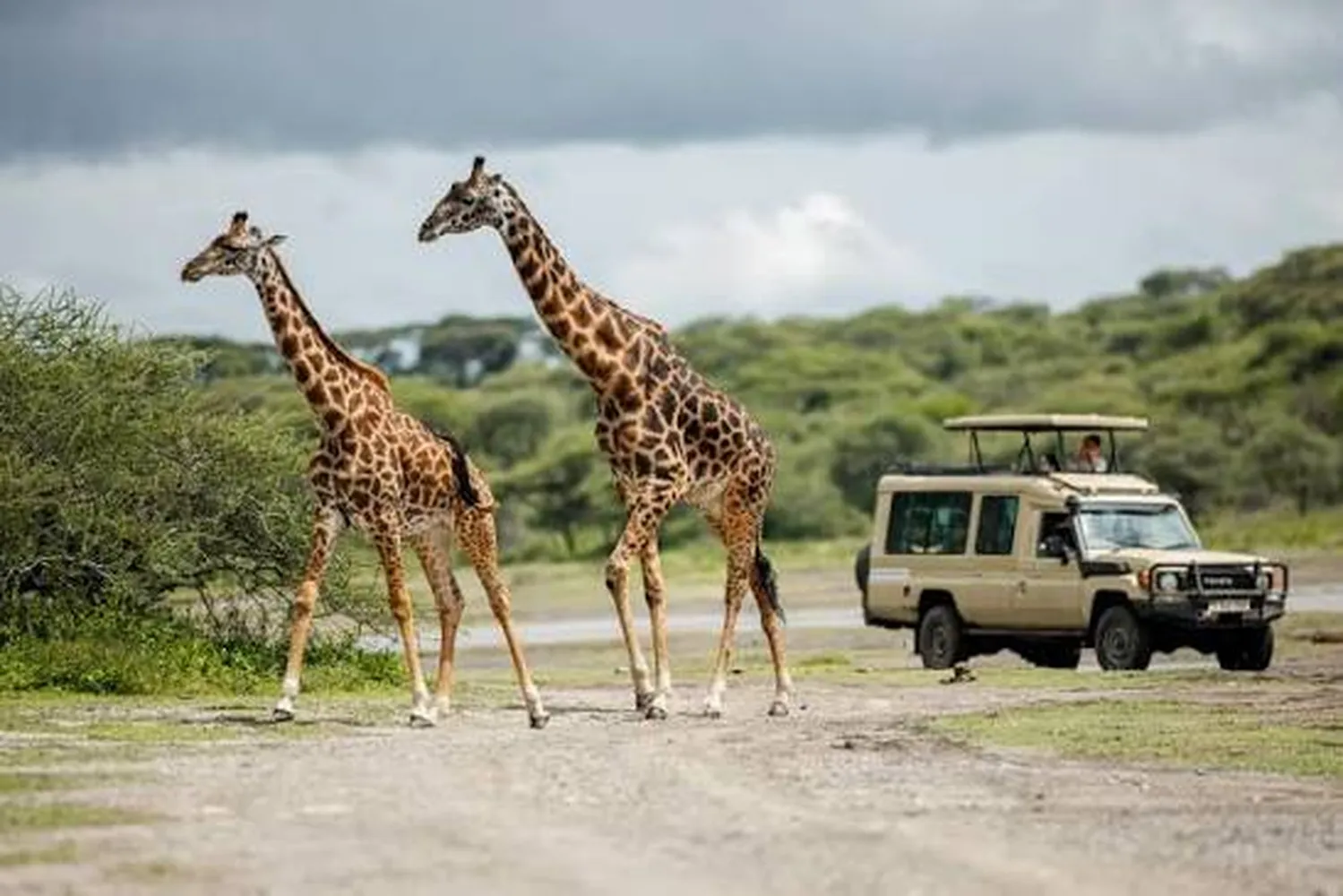
Quick Answer: What Is the Best 6-Day Tarangire Serengeti Game Drive Plan?
The most wildlife-efficient six-day plan is usually Tarangire → Serengeti → Ngorongoro → Arusha, with Serengeti receiving the most nights. For travellers who value game viewing over park-count, a practical structure is one Tarangire day, three Serengeti nights, one transfer night near Ngorongoro and a final crater game drive. If you prefer maximum habitat variety, Lake Manyara can be added, but that normally reduces Serengeti depth.
| Day | Main area | Game-drive focus | Why it matters |
|---|---|---|---|
| 1 | Tarangire | Elephants, baobabs, riverine wildlife | Contrasting ecosystem and strong first wildlife day |
| 2 | Tarangire → Serengeti | Transfer becomes game drive after park entry | First Serengeti predator and plains-game window |
| 3 | Central/seasonal Serengeti | Full-day game viewing | Core predator-search day |
| 4 | Serengeti | Second deep wildlife day | Time for behaviour, photography and changing sightings |
| 5 | Serengeti → Ngorongoro | Morning game drive then transfer | Protects one more Serengeti viewing window |
| 6 | Ngorongoro / return | Crater game drive if included | High-density final ecosystem before Arusha |
If you want the four-park version instead, compare Jaynevy's 6-day Tarangire, Manyara, Serengeti and Ngorongoro safari from Arusha. If you want more Serengeti depth, compare the dedicated 6-day Serengeti safari.
Why Tarangire and Serengeti Work So Well Together
These two parks reward different styles of game viewing. Tarangire feels more intimate: riverine woodland, seasonal swamps, baobabs and wildlife concentrated around reliable water in drier periods. Serengeti is about scale. The road opens onto grasslands, kopjes, rivers and woodland where predator-prey relationships unfold over a much larger landscape.
The combination also reduces repetition. A full Tarangire game drive can focus on elephants and mixed herbivore herds in broken woodland. Serengeti then shifts your attention toward lions, cheetahs, leopards, spotted hyenas, plains game and—when the season is right—large migratory herds. For travellers who want to understand Tanzania's Northern Circuit rather than simply tick species, that contrast is one of the strongest reasons to combine the parks.
Jaynevy's Tarangire National Park guide is useful before choosing how much time to allocate there, while the Serengeti National Park guide gives wider context for the park's regions.
Verified Wildlife Numbers: What the Official Sources Actually Say
Safari marketing often uses large numbers without explaining what they refer to. The figures below are park-wide or ecosystem-wide statistics—not guaranteed daily sightings and not counts for one game-drive route.
| Figure | What it means | Source context |
|---|---|---|
| About 2,850 km² | Tarangire National Park area | TANAPA figure cited on current Northern Circuit planning pages |
| 14,763 km² | Serengeti National Park area | TANAPA park-area figure |
| 1.5 million hectares | UNESCO World Heritage property description for Serengeti | Equivalent to roughly 15,000 km² in UNESCO's site description |
| 2 million wildebeest | UNESCO's wider Serengeti ecosystem migration figure | Migration is seasonal and moves through multiple regions |
| 900,000 Thomson's gazelles | Major herbivore population cited in UNESCO's ecosystem synthesis | Ecosystem-scale figure |
| 300,000 zebras | Dominant migrating/associated herd figure cited by UNESCO | Ecosystem-scale figure |
| 4,000 lions | UNESCO synthesis for the wider Serengeti ecosystem | Not a Seronera-only count |
| 500+ bird species | Species seasonally or permanently present in Serengeti | UNESCO biodiversity figure |
UNESCO describes Serengeti as supporting one of the world's largest and most diverse large predator-prey systems. That is why a full game-drive day matters. A park this large cannot be understood from a single transit line between gate and lodge.
Day-by-Day 6-Day Tarangire Serengeti Safari Itinerary
Day 1: Arusha to Tarangire — Build the Safari Around a Real Game Drive
Leave Arusha after breakfast and drive toward Tarangire. The mistake on many compressed itineraries is arriving late and treating the park as a short photo stop. For this route, Tarangire deserves several meaningful hours inside the park. Once through the gate, the game drive should follow current water, vegetation and animal movement rather than a rigid loop.
Elephants are a defining part of Tarangire's appeal, but the landscape also supports giraffes, buffaloes, zebras, wildebeest, impalas, waterbuck, warthogs and predators. In drier months, the Tarangire River becomes particularly important because wildlife is drawn toward reliable water. In greener months, animals can disperse more widely and the scenery becomes lush.
Photography is often excellent around baobabs and open river corridors, but do not chase a single famous tree. The strongest game drive balances landscape, behaviour and species diversity. Overnight near Tarangire, in the park when budget allows, or toward Karatu depending on the next day's timing.
Day 2: Tarangire or Karatu to Serengeti — Turn the Transfer Into Wildlife Time
After breakfast, continue toward the Ngorongoro highlands and onward to Serengeti. This is a genuine transfer day, and pretending otherwise leads to unrealistic schedules. From the Karatu area to Central Serengeti, a practical planning range is roughly 4.5–6 hours before extended wildlife stops, with road condition, gate procedures and lodge location affecting the total.
The key is to avoid treating the final part of the drive as dead mileage. After entering Serengeti, the route should become a game drive. Depending on where you are staying, you may search open plains for cheetah, scan kopjes for lions, watch elephant family groups or explore riverine areas where leopard is possible. Arrive at camp with enough daylight left to enjoy the first evening rather than reaching after dark.
Day 3: Full-Day Serengeti Predator and Plains-Game Drive
Start early, especially if lions, cheetahs or leopards are a priority. Cooler temperatures often mean more predator movement, and the low light is better for photography. Your guide should read fresh information: tracks, alarm calls, scavenger activity, herbivore behaviour and reports from other guides.
A full day gives flexibility that short itineraries do not. If you find a lion pride at sunrise, you can stay long enough to observe behaviour instead of leaving immediately to chase another species. If a leopard is resting in a tree at midday, patience may produce a better sighting later. If large grazing herds are present, predators may reposition around them. That is why the value of a Serengeti day comes from time and decision-making, not kilometre count.
Travellers especially interested in cats should also read Jaynevy's guide to seeing big cats in Serengeti National Park.
Day 4: Second Full Serengeti Day — Follow Conditions, Not Yesterday's Route
The second full day should not repeat Day 3 automatically. If the previous day was dominated by lions, you may choose more open cheetah country, riverine leopard habitat, elephant areas or seasonal migration zones. If the Great Migration is the main reason for travelling, the guide may extend farther toward the most relevant region—but only when the drive time makes sense for your camp location.
This extra day also improves photography. Strong wildlife photography often requires returning to productive areas at different light, waiting for interaction, or giving an animal space until the scene changes naturally. Families benefit too because the day can be paced more sensibly rather than forcing every sighting into one exhausting marathon.
Day 5: Morning Serengeti Game Drive, Then Toward Ngorongoro
Use the morning for one final Serengeti drive. If you had a promising leopard area, cheetah family, lion pride or elephant group, this is the opportunity to revisit it. Later, work east toward the Ngorongoro highlands. The route still offers wildlife viewing, but Day 5 has to balance Serengeti time with positioning for the final day.
If you are not including Ngorongoro, this day can instead become another Serengeti-focused night or a staged return toward Arusha. For most first-time visitors, however, Ngorongoro provides a natural and highly rewarding conclusion without requiring a major detour.
Day 6: Ngorongoro Crater Game Drive and Return to Arusha
Descend early if Ngorongoro is part of the plan. The crater contrasts sharply with Tarangire and Serengeti because game viewing happens in a compact caldera rather than across a huge open ecosystem. Lions, buffaloes, zebras, wildebeest, gazelles, hyenas and hippos are realistic search targets, while black rhino is one of the most valued but never guaranteed sightings.
After the game drive, ascend and return to Arusha. Keep a generous buffer before any same-evening international flight. Wildlife stops, gate queues, road conditions and traffic can change the return time.
How Much Game-Drive Time Do You Actually Get?
A six-day road safari includes both wildlife viewing and transfers. This distinction matters. The best itinerary does not pretend that every hour behind the wheel is a game drive, but it also uses transfer corridors efficiently.
| Sector | Typical planning range | Game-viewing reality |
|---|---|---|
| Arusha → Tarangire | About 2–2.5 hours | Main game drive begins after park entry |
| Tarangire/Karatu → Central Serengeti | About 4.5–6 hours before long stops | Later sector becomes a Serengeti game drive |
| Full Serengeti day | Flexible full day | Highest-value wildlife window |
| Serengeti → Ngorongoro highlands | About 3–5 hours depending on start point | Morning viewing can be retained before transfer |
| Ngorongoro/Karatu → Arusha | Roughly 3–4.5 hours | Mostly transfer after the crater |
Camp location changes these figures materially. A cheaper lodge that adds an hour each morning and evening may reduce wildlife time enough to be poor value. Compare location, not only room price.
Tarangire vs Serengeti: What Each Park Is Best For
| Wildlife interest | Tarangire | Serengeti |
|---|---|---|
| Elephants | One of the route's strongest reasons to visit | Present, but usually not the main reason to choose the park |
| Lions | Regularly possible | Major predator focus across suitable regions |
| Leopard | Possible in wooded/riverine habitat | Strong target around suitable riverine areas and trees |
| Cheetah | Possible in open areas | Stronger target in suitable open plains |
| Great Migration | Not the main Serengeti migration event | Core ecosystem; exact region changes seasonally |
| Scenery | Baobabs, river, woodland, seasonal swamps | Plains, kopjes, river systems and huge horizons |
| Best game-drive style | Focused habitat loops around water and woodland | Longer adaptive drives responding to predator and herd movement |
Best Time for a Tarangire Serengeti Game Drive Safari
There is no single month when every part of both parks is automatically at its best. Season changes what you see, where animals concentrate, how roads feel and what accommodation costs.
| Period | Tarangire | Serengeti | Planning advice |
|---|---|---|---|
| Jan–Feb | Green season; wildlife more dispersed | Southern ecosystem calving season can be important | Consider seasonal Serengeti positioning if migration is priority |
| Mar–May | Greener landscapes, birding, possible rain | Green season and changing herd movements | Allow road flexibility and compare shoulder-season rates |
| Jun–Oct | Dryer conditions can concentrate wildlife near water | Strong general game viewing; migration region changes west/north | Book popular camps early |
| Nov–Dec | Short rains refresh vegetation | Herds shift with rainfall; resident predators remain | Keep Serengeti camp location flexible |
If migration is your overriding objective, use the 6-day Serengeti wildebeest migration safari as a comparison. A responsible itinerary follows likely seasonal herd regions; it does not guarantee a river crossing on a fixed date.
2026/2027 Price Planning: What Should You Expect?
There is no single honest price for every six-day Tarangire–Serengeti safari. The largest variables are accommodation category, number of travellers sharing the private vehicle, season, Serengeti camp location, park and concession charges, and whether Ngorongoro or another park is included.
| Reference | Published planning figure | How to use it |
|---|---|---|
| Comparable 6-day private Northern Circuit, mid-range, 4–6 travellers | From USD 1,850 pp | Useful current Jaynevy benchmark |
| Comparable 6-day private Northern Circuit, mid-range, 2–3 travellers | From USD 2,150 pp | Shows effect of sharing fixed vehicle cost |
| Comparable 6-day private Northern Circuit, luxury, 4–6 travellers | From USD 2,150 pp | Published reference, not universal luxury rate |
| Comparable 6-day private Northern Circuit, luxury, 2–3 travellers | From USD 2,450 pp | Published reference before date-specific quotation |
| Wider Tanzania mid-range planning guide | About USD 350–550 pp/day | Broad benchmark, not a package quote |
These figures are planning references, not a promise that every Tarangire–Serengeti route will cost the same. For broader context, read Jaynevy's Tanzania safari cost guide. Your written quotation should specify the exact camps, room basis, private or shared vehicle, fees, meals, transfers and optional activities.
What Should Be Included in a Good 6-Day Quote?
- Private or clearly defined sharing safari vehicle with pop-up roof.
- Professional driver-guide and requested language.
- Five nights of named accommodation or clearly defined category.
- Full-board meals during safari days according to the confirmed lodge plan.
- Tarangire and Serengeti park fees listed as included where applicable.
- Ngorongoro conservation and crater charges if that day is part of the itinerary.
- Drinking water during game-drive days.
- Arusha or Moshi pickup and the exact final drop-off point.
- Taxes and any concession or camping fees relevant to the chosen camps.
International flights, visas, travel insurance, gratuities, alcoholic drinks, personal expenses, balloon safaris and other optional activities are normally separate unless the quotation explicitly includes them.
Private vs Sharing Safari: Which Is Better for This Route?
| Factor | Private safari | Sharing safari |
|---|---|---|
| Departure time | Your party decides with the guide | Fixed around the group |
| Photography stops | High flexibility | Shared decision |
| Predator search | Can revisit areas and wait longer | Usually follows agreed route |
| Cost for solo traveller | Usually higher | Can be substantially lower |
| Family pacing | Excellent | Less control |
| Luggage | More room depending party size | Often stricter limits |
For a direct format comparison, see Jaynevy's 6-day Tanzania private safari and 6-day Tanzania sharing safari.
How to Get Better Game Viewing Without Adding More Days
- Sleep in the right place. A well-positioned Serengeti camp can save substantial driving each morning and evening.
- Start early when predators matter. Cooler hours often improve activity and light.
- Do not leave every sighting too quickly. Behaviour can be more rewarding than species counting.
- Use guide knowledge, not a rigid checklist. Fresh tracks and current wildlife information should shape the route.
- Limit park count. Every extra park creates another gate, transfer and accommodation change.
- Match Serengeti region to season. Especially important for migration-focused trips.
- Keep the vehicle comfortable. Overfilling a safari vehicle can reduce photography angles and comfort on long days.
Common Planning Mistakes
- Calling every road hour a game drive. Transfers and wildlife drives are not the same.
- Choosing the cheapest lodge without checking location. Distance from the wildlife area can erase the saving.
- Expecting the Great Migration in one fixed Serengeti region all year. The herds move.
- Guaranteeing the Big Five. Wildlife remains free-ranging.
- Rushing Tarangire to reach Serengeti sooner. That removes the main reason to include Tarangire.
- Scheduling a tight international departure after Day 6. Leave margin for road and wildlife delays.
Who This 6-Day Game Drive Safari Is Best For
This route is particularly strong for first-time visitors who want two of Tanzania's most distinct wildlife parks, photographers who value several Serengeti game-drive windows, couples and friends who want a private road safari, and travellers combining safari with Kilimanjaro or Zanzibar. It is also a good compromise for guests who want elephants and baobabs in Tarangire without sacrificing the predator depth of Serengeti.
It is less suitable for travellers who dislike long road transfers, want a very slow lodge-focused holiday, or are travelling only for a specific migration event. Those guests may be better served by a fly-in safari, a longer itinerary, or a migration-specific route.
Research Notes and Source Quality
This guide separates official ecosystem data from operator planning estimates. Serengeti migration, predator and bird figures are based on UNESCO World Heritage information; Tarangire descriptions are cross-checked against Tanzania National Parks. Price figures are current Jaynevy Tours published benchmarks and should not be treated as universal market rates. Drive times are practical planning ranges that can change with traffic, weather, wildlife stops, road conditions, gate procedures and exact lodge location.
- Tanzania National Parks — Tarangire National Park
- Tanzania National Parks — Serengeti National Park
- UNESCO World Heritage Centre — Serengeti National Park
Frequently Asked Questions
Is six days enough for Tarangire and Serengeti?
Yes. Six days is enough for a strong Tarangire and Serengeti-focused safari when the route is designed around wildlife time rather than adding too many extra parks. A practical version gives Tarangire one substantial game-drive day, two to three nights in Serengeti, and uses Ngorongoro as a logical final wildlife stop if desired.
How many days should I spend in Serengeti on this itinerary?
For a wildlife-focused six-day safari, three Serengeti nights is a strong target. That normally provides an arrival game drive, two meaningful game-drive windows or full days, and additional viewing while moving toward Ngorongoro. Two nights can work, but it gives less flexibility for predators, photography and seasonal herd movements.
Why include Tarangire before Serengeti?
Tarangire gives a very different ecosystem before the open Serengeti plains. It is especially known for elephants, baobab-dominated scenery, riverine habitat and seasonal wildlife concentrations. Starting there creates more habitat variety without requiring a major detour from the Northern Circuit route.
Can I see the Great Migration on a Tarangire and Serengeti safari?
Possibly, but only if your Serengeti region matches seasonal herd movements. The migration is not fixed in Central Serengeti all year. Rainfall and grazing influence where the herds concentrate, so migration-focused travellers should match camp location to the month rather than assume one route works year-round.
What animals can I realistically see?
Tarangire is a strong area for elephants, giraffes, buffaloes, zebras, wildebeest and many antelope species, while Serengeti is especially important for lions, cheetahs, leopards, hyenas and huge numbers of plains game. Wildlife is free-ranging, so no responsible operator should guarantee a particular species or the complete Big Five.
How much does a 6-day Tarangire Serengeti safari cost?
A comparable current Jaynevy Tours six-day Northern Circuit private safari publishes mid-range prices from USD 1,850 per person sharing for 4–6 travellers and USD 2,150 for 2–3 travellers. A Tarangire-and-Serengeti-focused quote can differ because lodge location, Serengeti nights, season, vehicle occupancy and whether Ngorongoro is included all change the total.
Is a private safari better than a group safari for game drives?
Private travel gives more control over early starts, photography stops, how long you remain at a sighting and whether you change route based on fresh wildlife information. Group joining can reduce the per-person price but works best when all guests accept the same timing, route and luggage arrangement.
What is the best time of day for game drives?
Early mornings and late afternoons are often strongest for predator activity, cooler temperatures and softer photography light. Midday can still be useful for elephants, birds, herbivores and resting cats. The best safari uses the whole day intelligently rather than treating only sunrise as worthwhile.
Can this six-day safari start from Moshi?
Yes. A Moshi start is practical, especially for travellers combining the safari with Kilimanjaro, but it adds road time compared with Arusha. The final route should account for where you are staying before and after the safari rather than pretending both starting points have identical logistics.