
Quick Answer: How Much Is a 6 Day Tanzania Camping Safari?
For 2026/2027 planning, a 6-day Tanzania camping safari can start around USD 1,180 per person on Jaynevy Tours' published classic wildlife-camping route. A more Serengeti-focused six-day camping package currently starts from USD 1,500 per person. As a wider market-planning reference on Jaynevy's current safari-cost guide, budget joining or camping safaris are commonly budgeted at about USD 250–350 per person per day, or roughly USD 1,500–2,100 for six days. The apparent difference is why travelers should compare the exact route and inclusions rather than multiplying a generic daily average.
- Lowest current Jaynevy 6-day camping reference: around USD 1,180 per person.
- Serengeti-focused 6-day camping reference: from USD 1,500 per person.
- General budget camping benchmark: about USD 250–350 per person per day.
- Typical duration: 6 days / 5 camping nights.
- Classic Northern Circuit: Tarangire, Lake Manyara, Serengeti and Ngorongoro.
- Final price: always use the written quotation for your dates and group.
6 Day Tanzania Camping Safari Price List for 2026/2027
The most useful price list separates a real published package price from a general planning range. A named itinerary tells you what is actually being sold; a daily range helps you test whether a quotation is broadly realistic. The table below uses current Jaynevy price references checked on 18 August 2026.
| 6-day camping option | Current price reference | What the price represents | Best for |
|---|---|---|---|
| Classic 4-area wildlife camping safari | From around USD 1,180 pp | Published starting price for a six-day public-camping Northern Circuit route | Travelers prioritizing value and destination variety |
| Serengeti-focused 6-day camping safari | From USD 1,500 pp | Published starting price with more Serengeti emphasis | Travelers wanting extra Serengeti time |
| General budget joining/camping planning benchmark | USD 250–350 pp/day | Broad 2026/2027 planning range, not a fixed six-day product | Early-stage budget comparison |
| Six-day total derived from that broad benchmark | USD 1,500–2,100 pp | 6 × USD 250–350; useful only as a planning check | Comparing quotes with different routes or service levels |
Why can the published USD 1,180 starting price sit below a generic USD 1,500–2,100 six-day benchmark? Because a benchmark is not a tariff. Per-person cost changes with vehicle occupancy, route design, campsite choice, season, supplier contracts and which charges are bundled into a particular departure. Treat the specific package page and your written quotation as the commercial reference.
What Do You Get for Around USD 1,180–1,500+?
You are mainly paying for wildlife access and safari logistics, not a hotel room. On a well-structured camping safari, the vehicle, guide, fuel, protected-area fees, campsite operation, food and route management account for most of the value. Public camping keeps accommodation simpler while preserving access to the same national parks and game-drive roads used by lodge guests.
Where Does the Camping Safari Money Go?
A camping safari is cheaper than many lodge safaris because the overnight setup is simpler, but the expensive operating pieces remain. Jaynevy's current Tanzania safari cost guide estimates that accommodation and meals can represent about 25–55% of a package, park and conservation charges often 15–30% on budget and mid-range trips, and vehicle/fuel/guide costs roughly USD 250–400 per vehicle per day before sharing.
| Cost component | Current planning reference | Why it matters on a 6-day camping safari |
|---|---|---|
| Park and conservation charges | Often 15–30% of budget/mid-range package | More park days, overnight locations and crater access can increase statutory cost. |
| Vehicle, fuel and driver-guide | About USD 250–400 per vehicle/day before sharing | The same 4x4 costs far more per person for a solo traveler than for 4–6 people sharing. |
| Camping, meals and camp logistics | Part of the accommodation/meal share | Tents, bedding, campsite charges, cook/crew support and food must move with the itinerary. |
| Operator support and taxes | Varies by itinerary | Reservations, permits, communications, emergency support and payment costs remain even on budget trips. |
Current Park-Fee Planning Baselines
Protected-area charges are a major reason a Tanzania safari cannot be priced like an ordinary camping road trip. The latest publicly displayed planning figures summarized in Jaynevy's 2026/2027 cost guide include the amounts below. TANAPA's online tariff page is still labelled for an older financial year, and NCAA warns that tariffs can change, so these figures are best used as planning baselines rather than guaranteed 2027 invoices.
| Protected area | Published planning baseline | Important note |
|---|---|---|
| Serengeti National Park | USD 70.80 per non-resident adult | Overnight camping or concession-related charges can be additional. |
| Tarangire National Park | USD 53.10 per non-resident adult | Vehicle and activity charges are separate from the adult conservation fee. |
| Lake Manyara National Park | USD 53.10 per non-resident adult | Camping, activities and vehicle charges may be separate. |
| Ngorongoro Conservation Area | Plan around USD 70.80 pp + about USD 295 per vehicle for a crater descent | NCAA entry, crater service, vehicle and accommodation-related fees are separate line items. |
Fee note: official protected-area tariffs can change without notice. Ask for a quote that states whether park, camping, vehicle, concession and Ngorongoro crater fees are included. Reconfirm statutory fees before the final payment.
Classic 6-Day Tanzania Camping Safari Route
The classic value route is Arusha → Tarangire → Lake Manyara → Serengeti → Ngorongoro → Arusha. It works because the parks form a logical Northern Circuit progression and give six days enough contrast without adding domestic flights. Jaynevy's published wildlife-camping itinerary estimates roughly 800–1,000 km for the full loop.
Day 1: Arusha to Tarangire National Park
Start with a game drive in Tarangire, then camp in the Tarangire or nearby area. The park is known for baobab landscapes, the Tarangire River and strong elephant viewing. Your actual departure time, campsite and meal arrangement should be confirmed in the written programme.
Day 2: Tarangire to Lake Manyara Area
The second day adds Rift Valley scenery and a different habitat mix. Lake Manyara's groundwater forest, lake edge and escarpment create a useful contrast with Tarangire. Wildlife sightings vary naturally, so the itinerary should describe game-drive time rather than promise a particular species.
Day 3: Lake Manyara Area to Serengeti National Park
Travel through the highlands toward Serengeti and use the afternoon for wildlife viewing where timing allows. Serengeti is the longest-distance part of the road itinerary, which is why a six-day plan is more practical than trying to force the same parks into two or three days.
Day 4: Full-Day Serengeti Game Drive
A full Serengeti day is the route's main wildlife-investment day. Your guide can spend more time following productive habitats rather than rushing to another park. Migration location changes with rainfall and grazing, so a river crossing or exact herd location should never be guaranteed.
Day 5: Serengeti to Ngorongoro Conservation Area
Use the morning for Serengeti viewing, then continue toward Ngorongoro for the overnight setup. This transition takes you from open plains toward cooler highlands. Ngorongoro nights can feel significantly colder than lower-elevation camps, so warm layers matter.
Day 6: Ngorongoro Crater to Arusha
Descend into Ngorongoro Crater for the final major game drive, then return to Arusha. UNESCO describes Ngorongoro Crater as the world's largest unbroken caldera, and the wider conservation area forms part of the Serengeti ecosystem. The crater's concentrated habitats make it a strong final stop before the road journey back.
What Is a Public Camping Safari Actually Like?
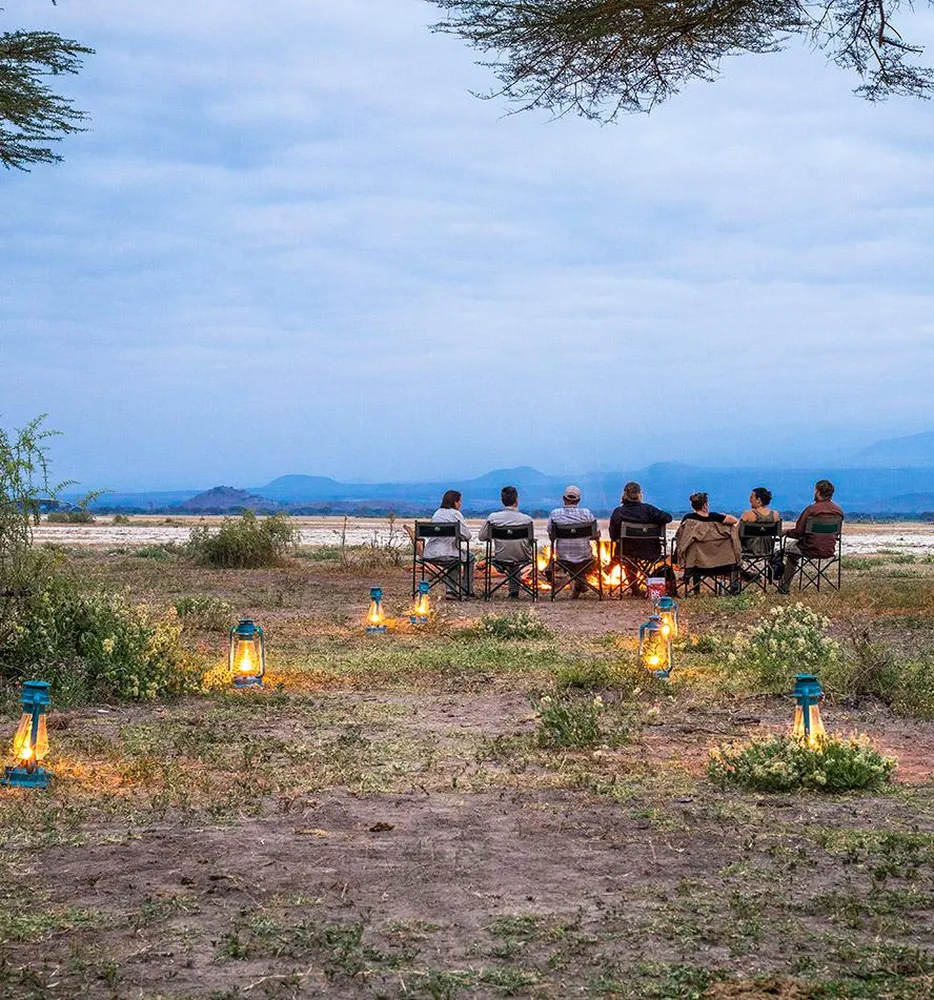
Public camping is simple, outdoors and close to the safari environment; it should not be sold as a lodge experience. On Jaynevy's published classic six-day camping page, the setup is described as dome tents with mattresses, pillows and bedding, while shared campsite facilities provide basic toilets and showers. Electricity, hot water, charging access and bathroom condition can vary by campsite, so confirm what applies to your exact departure.
- Sleeping: tent, mattress and bedding should be listed in the quotation.
- Bathrooms: generally shared at public campsites rather than private ensuite facilities.
- Meals: usually prepared as part of the camp operation; dietary needs should be provided before departure.
- Power: do not assume continuous charging at every campsite; carry a suitable power bank.
- Night movement: always follow guide and campsite instructions because wildlife can be present around unfenced camping areas.
- Weather: pack layers; Ngorongoro highlands can be cool while lowland parks are much warmer.
What Is Included in a 6 Day Tanzania Camping Safari Price?
A properly itemised quote should show the core safari services clearly rather than hide them behind “all-inclusive” wording. Jaynevy's current six-day camping material lists the main operational items below, but your written quotation is still the final reference for your booking.
| Usually included when written in the quote | Usually excluded unless specifically added |
|---|---|
| Five nights of camping accommodation | International and domestic flights |
| Meals during the safari programme | Tanzania visa costs |
| Professional safari driver-guide | Travel and medical insurance |
| 4x4 safari transport and fuel | Tips and gratuities |
| Game drives in the confirmed itinerary | Alcohol, souvenirs and personal purchases |
| Park/conservation fees stated in the quotation | Optional balloon safari or cultural visits |
| Drinking water during game drives | Extra pre- or post-safari accommodation unless listed |
| Hotel/airport pickup or drop-off when confirmed | Any service not written into the final invoice/itinerary |
Private vs Group Camping: Which Gives Better Value?
Group sharing usually wins on price; private camping wins on control and flexibility. The biggest reason is the safari vehicle. If an illustrative vehicle/guide/fuel cost is USD 300 per day, one traveler carries the full USD 300, two travelers split it to USD 150 each, four to USD 75 each and six to USD 50 each before accommodation and statutory fees are added.
| Feature | Group / joining camping | Private camping |
|---|---|---|
| Per-person transport cost | Usually lower because more guests share fixed vehicle costs | Higher for 1–2 people; becomes better value as the party grows |
| Departure times | Set around the group | More flexible within park rules and itinerary |
| Photography stops | Must balance several travelers' interests | Easier to stay longer at selected sightings |
| Luggage space | More restricted | Usually easier to manage for your own party |
| Best for | Solo travelers, couples and price-sensitive guests | Families, friends, photographers and groups of 3–6 |
Compare the structure with our 6-day Tanzania sharing safari and broader Tanzania budget safari guidance before deciding.
When Is a 6 Day Camping Safari Cheapest?
Green and shoulder periods can reduce some accommodation and demand-related costs, while peak migration periods usually command stronger demand. Jaynevy's current safari-cost guide identifies April–May as generally the lowest-priced period for many northern-circuit products, with March and November often providing good shoulder-season value. July–October and late December–February commonly price higher.
| Travel period | Typical price pressure | What to consider |
|---|---|---|
| July–October | High to peak | Dry-season demand and migration-focused travel are strong. |
| Late December–February | High | Festive demand and southern Serengeti/Ndutu interest can lift prices. |
| June, March and November | Shoulder | Often a balance between cost, weather and wildlife opportunities. |
| April–May | Often lowest | Rain can affect roads and some seasonal operations; check the practical route. |
How to Compare Two 6-Day Camping Safari Quotes
Do not compare only the bottom-line total. A USD 1,180 quote can be better or worse value than a USD 1,600 quote depending on what each one includes. Put both quotes side by side and check the operational details that actually determine your trip.
- Route: Are Tarangire, Manyara, Serengeti and Ngorongoro all included, or does one quote spend more time in only two areas?
- Private or shared: Is the 4x4 exclusively yours, or are seats sold to other travelers?
- Maximum vehicle occupancy: How many passengers share window and photography space?
- Campsites: Are exact campsites or at least operating areas named?
- Camping equipment: Are tent, mattress, sleeping bag/bedding and camp chairs included?
- Meals and water: Which meals are included, and is drinking water supplied daily?
- Protected-area charges: Are park, camping, vehicle and Ngorongoro crater charges included?
- Transfers: Does the package include your Arusha/Moshi hotel or airport pickup and final drop-off?
- Taxes: Are government taxes already inside the price?
- Future statutory increases: What happens if government fees change before a 2027 departure?
How Much Cash Should You Keep for Extras?
Keep a separate personal budget because the headline safari price rarely covers every discretionary expense. Current Jaynevy planning guidance lists guide tips around USD 20–30 per vehicle per day, cultural visits around USD 20–80 per person and balloon safaris around USD 550–650 per person. These are planning references, not mandatory charges, and your confirmed optional activity price should be supplied in writing.
Is a 6-Day Camping Safari Long Enough for Serengeti and Ngorongoro?
Yes—six days is a practical road-safari length for a classic Northern Circuit route, especially when Serengeti gets at least two itinerary days. Shorter trips can physically reach the same parks, but they often trade wildlife-viewing time for transfers. Six days lets you include Tarangire and Manyara while still giving Serengeti meaningful time and ending with Ngorongoro Crater.
The wider Ngorongoro Conservation Area covers about 809,440 hectares, and UNESCO describes Ngorongoro Crater as the world's largest unbroken caldera. UNESCO also reports that well over one million wildebeest pass through the wider property as part of the annual Serengeti ecosystem migration. Those figures help explain why this northern route carries such strong wildlife interest, but no operator can guarantee the exact location of the migration or a particular sighting on your travel date.
Who Should Choose a Camping Safari Instead of a Lodge Safari?
Choose camping when wildlife time and price matter more than private bathrooms, permanent beds and hotel-style services. Camping is especially suitable for travelers who enjoy outdoor environments, can handle shared facilities and are comfortable following wilderness-camp rules after dark.
| Camping is a strong fit if… | Consider a lodge safari if… |
|---|---|
| You want to reduce accommodation cost while keeping major parks. | You need an ensuite bathroom every night. |
| You enjoy a simple bush setting and can use shared facilities. | You need guaranteed electricity, Wi-Fi or hotel-style amenities. |
| You would rather spend on game-drive days than room upgrades. | Sleep comfort and permanent beds are a priority. |
| You are flexible about campsite conditions. | You have medical or mobility needs requiring specific facilities. |
Related Tanzania Camping Safari Prices and Durations
Use shorter and longer packages to test whether six days gives the right balance of price and park time. These Jaynevy pages are useful internal comparisons:
- 2 Days Tanzania Camping Safari — a short introduction to northern Tanzania camping.
- 3 Days Camping Safari Tanzania — useful for travelers with limited time.
- 4 Days Popular Camping Safari — a middle ground between speed and coverage.
- 6 Days Wildlife Camping Safari — the current classic route with a published starting reference around USD 1,180 pp.
- 6 Days Serengeti Camping Safari — a Serengeti-focused option starting from USD 1,500 pp.
- Tanzania Camping Safari Guide — compare budget, mid-range and luxury mobile camping styles.
- Tanzania Safari Cost 2026/2027 — wider daily cost ranges and budget structure.
- Tanzania Safari Packages — compare camping with lodge and other safari formats.
Frequently Asked Questions About 6 Day Tanzania Camping Safari Prices
How much does a 6 day Tanzania camping safari cost in 2026/2027?
Jaynevy currently publishes a classic six-day wildlife camping safari from around USD 1,180 per person and a Serengeti-focused six-day camping safari from USD 1,500 per person. Your final rate depends on the confirmed route, group size, private/shared setup, season, campsites, statutory fees and optional services.
Is USD 1,180 a guaranteed fixed price?
No. It is a published starting reference. A written quotation should confirm the exact price for your date, number of travelers, pickup point, campsites and included government charges.
Why do some six-day camping safaris cost more than USD 2,000?
Higher prices can come from private operation for only one or two guests, more expensive seasonal periods, additional Serengeti mileage, upgraded tents, extra staff, premium campsites, optional activities or statutory fee changes. “Camping” covers more than one service level, so compare the actual setup.
Are park fees included in camping safari prices?
They should be clearly listed in the quotation. Do not assume every online starting price includes every park, camping, vehicle, concession or crater-related charge. Ask for an itemised inclusion list before payment.
Does a camping safari include a sleeping bag?
Do not assume it automatically. Jaynevy's current classic camping page confirms tents, mattresses, pillows and bedding, but equipment details can vary by package. Your booking documents should state whether a sleeping bag or other bedding is supplied or needs to be rented/carried.
Is a group camping safari cheaper than private camping?
Usually yes. Sharing spreads the vehicle, fuel and guide cost across more travelers. Private safari rates can become much more competitive when three to six people travel together.
Can I see the Great Migration on a 6-day camping safari?
You may, if the herds are in an area that fits your route and travel dates, but migration location and river crossings cannot be guaranteed. Tell the operator that migration is a priority before the route is quoted so the Serengeti sector can be planned appropriately.
Is public camping safe in Serengeti and Ngorongoro?
It is a genuine wilderness setting and must be treated seriously. Follow your guide, park and campsite instructions, especially after dark. Do not approach wildlife, keep food and waste as instructed, and disclose medical or mobility requirements before booking.
What is the best group size for price?
Four to six travelers often divide private vehicle costs efficiently while keeping the trip within one normal safari 4x4. The best practical number still depends on luggage, seat layout and whether everyone wants ample photography space.
Should I book the cheapest 6-day camping safari I find?
Not before comparing the route and inclusions. A lower headline price can exclude crater charges, campsite fees, transfers, taxes or equipment. The best-value quote is the one that clearly states what you will receive and leaves the fewest expensive surprises.
Research Notes and Price Sources
This page uses dated, checkable planning references instead of presenting estimates as fixed facts. Price research was checked on 18 August 2026. Government charges and supplier rates can change, so the final written quotation always overrides planning examples.
- Jaynevy Tours — 6 Days Wildlife Camping Safari (published starting reference around USD 1,180 pp; classic route; camping setup).
- Jaynevy Tours — 6 Days Serengeti Camping Safari (published starting reference from USD 1,500 pp).
- Jaynevy Tours — Tanzania Safari Cost 2026/2027 (daily planning ranges, cost components and current publicly displayed fee baselines).
- Tanzania National Parks (TANAPA) — official tariff page.
- Ngorongoro Conservation Area Authority (NCAA) — official tariffs.
- UNESCO World Heritage Centre — Ngorongoro Conservation Area (area, caldera and migration context).
Get an Exact 6 Day Tanzania Camping Safari Quote
Send your travel dates, number of adults and children, preferred start city, and whether you want private or group sharing. Jaynevy Tours can then confirm the practical route, exact campsites, equipment, government fees, inclusions and 2026/2027 price in writing. If your main goal is the lowest possible cost, say so; if Serengeti time or migration positioning matters more, say that too so the quotation is built around the right priority.