
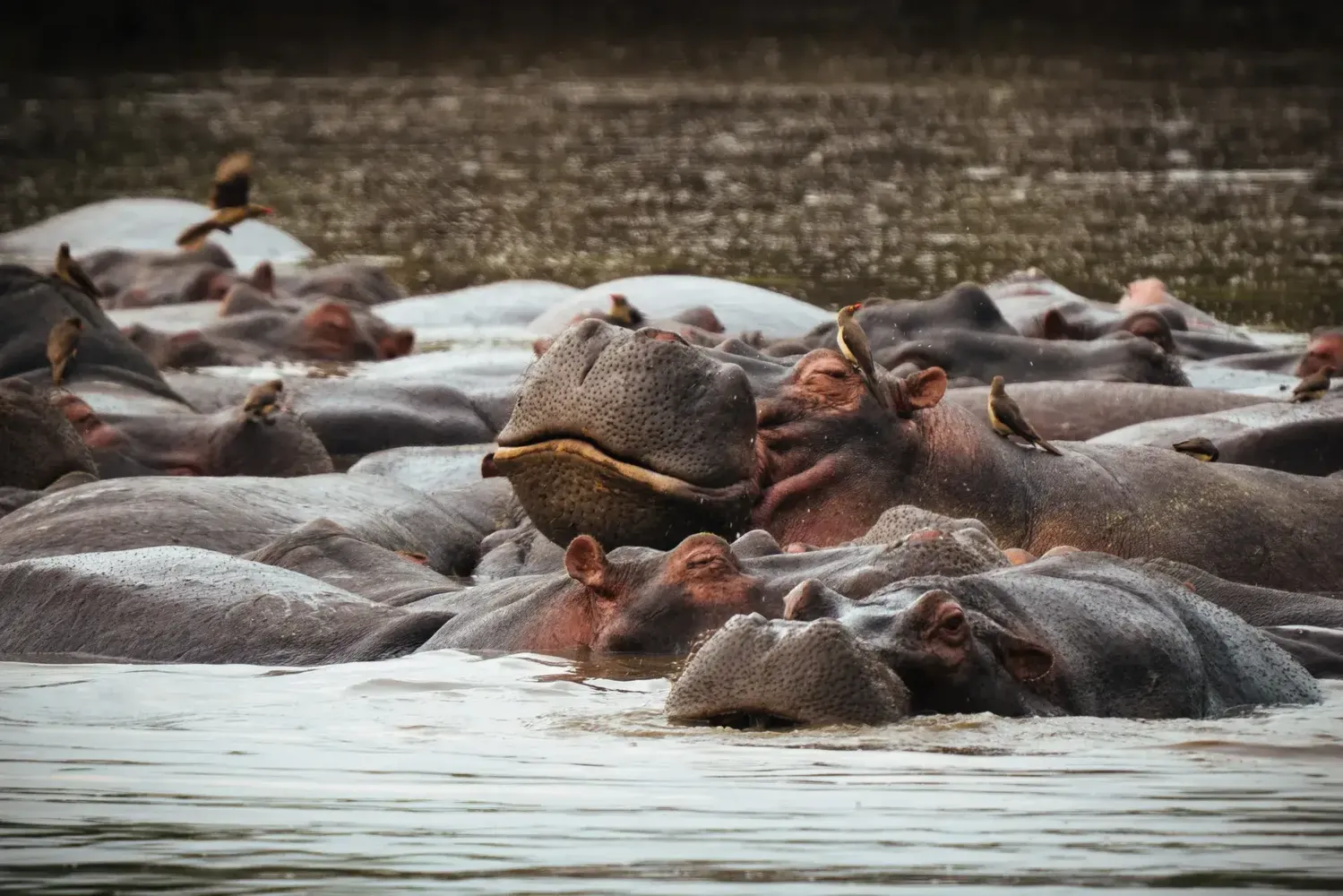
Quick Answer: Is a 6-Day Wet Season Safari in Tanzania a Good Idea?
Yes—when your priorities are green scenery, birding, fewer vehicles and seasonal migration or calving activity. November to December usually brings the short rains; January and February are often green with lighter breaks in rainfall; March to May is the main long-rain period. The biggest drawback is not that wildlife disappears—it does not—but that animals can spread out and road conditions can become slower or less predictable.
For most first-time visitors who are comfortable with some rain, December to February gives the best balance of green-season advantages and manageable logistics. April and May suit flexible travellers who value solitude and landscapes more than predictable roads.
Wet Season Safari Tanzania: Benefits and Drawbacks at a Glance
The wet season changes how you find wildlife rather than removing the wildlife. Use this table to decide whether its advantages match your travel style.
| Factor | Wet-season benefit | Wet-season drawback | What it means on a 6-day safari |
|---|---|---|---|
| Landscape | Lush grass, fuller watercourses, dramatic clouds | Vegetation can be taller | Excellent scenery and photography, but small animals may be harder to spot |
| Wildlife distribution | Fresh forage supports active herds across wider areas | Animals are less concentrated around permanent water | A skilled guide and flexible routing matter more |
| Great Migration | Southern Serengeti/Ndutu becomes especially important in the green months | Herd location still changes with rain and grazing | Camp location must follow the season; no fixed-calendar guarantee |
| Birding | Migrants and wetland birds add variety | Rain can interrupt long photography sessions | Strong choice for birders and mixed wildlife interests |
| Crowds | Many areas are quieter than peak dry-season months | Popular calving sectors can still become busy | More private-feeling drives are possible outside hotspots |
| Roads | Less dust | Mud, puddles and slippery tracks can slow travel | Use a capable 4x4 and avoid overloading the itinerary |
| Accommodation | Some lodges offer better green-season value | Some seasonal camps close during the heaviest rains | Confirm exact camp operation dates before payment |
What Months Are the Wet Season in Northern Tanzania?
Northern Tanzania normally has two rainy periods rather than one continuous wet season. Short rains typically arrive around November–December, while the long rains are mainly March–May. January and February often remain green and can include showers, but they are frequently less persistently wet than April and May. Tanzania Tourism describes November–March as the quieter green season and notes that April–May can bring heavier disruption.
Rain is also highly variable across the Serengeti. A recent peer-reviewed ecological study describes a strong rainfall gradient from about 500 mm a year in the southeast to more than 1,200 mm in the northwest, with short rains in November–December and long rains in March–May. That difference is one reason a single “wet season weather” statement is too simplistic for the whole park.
| Month | Typical northern-circuit pattern | Main benefit | Main drawback | Best use of 6 days |
|---|---|---|---|---|
| November | Short rains begin; green-up starts | Fresh scenery, migratory birds, fewer peak-season crowds | Rain timing is unpredictable | Tarangire + Manyara + central Serengeti + Ngorongoro |
| December | Short rains/green season | Herds often move toward southern plains | Holiday dates can raise demand | Shift Serengeti nights south when current movement supports it |
| January | Green, warm, often mixed sun and showers | Southern Serengeti/Ndutu wildlife activity | Popular migration camps may be busy | Prioritize Ndutu/southern Serengeti + Ngorongoro |
| February | Green-season calving period | Young animals and predator-prey interactions | High demand in the best-positioned southern camps | Spend at least two game-drive days around Ndutu/south |
| March | Rainfall usually builds | Green landscapes and quieter roads than peak season | Track conditions become less predictable | Keep transfers realistic and retain route flexibility |
| April | Core long-rain month | Low crowd pressure, saturated green scenery | Mud, delays, some camp closures | Favor established routes and fewer long transfers |
| May | Long rains, often easing later in the month | Quiet parks and excellent landscape photography | Remote roads can remain difficult | Central Serengeti + Ngorongoro with conservative routing |
7 Main Benefits of a 6-Day Wet Season Safari in Tanzania
1. The Landscapes Are Green, Layered and Photogenic
Wet-season Tanzania replaces dry dust and pale grass with vivid green plains, fresh leaves and fuller wetlands. That can produce stronger landscape photography, reflections, cloud texture and colour contrast. The trade-off is that tall grass can hide smaller mammals, so the green view is visually richer but not always easier for spotting every species.
2. The Great Migration Is Still Happening
The Great Migration is a year-round ecological cycle, not a July-only event. UNESCO describes the Serengeti as a 1.5-million-hectare savannah supporting one of the world's great animal migrations and cites about 2 million wildebeest, 900,000 Thomson's gazelles and 300,000 zebras in its Outstanding Universal Value statement. During the green months, the southern Serengeti and adjoining Ngorongoro plains can become central to the migration cycle.
If migration is your priority, read our 6-day Great Migration safari and Serengeti National Park guide. Treat all calendar maps as planning tools, not guarantees; rainfall controls grazing and herd position.
3. Calving-Season Wildlife Can Be a Major Advantage
From roughly December through March, southern Serengeti and the Ngorongoro short-grass plains become especially important for migration and calving. UNESCO states that well over one million wildebeest pass through the Ngorongoro property as part of the annual migration and calve on the short-grass plains straddling the Ngorongoro–Serengeti boundary. Newborn prey also attracts predators, creating complex behaviour rather than simply larger animal concentrations.
4. Many Game-Drive Areas Feel Less Crowded
Outside holiday periods and famous calving hotspots, the green season can offer fewer safari vehicles than the June–October peak. Tanzania Tourism specifically describes November–March as much quieter. This matters at sightings: fewer vehicles can mean a calmer viewing position, more time with a subject and less pressure to leave a sighting quickly.
5. Wet-Season Birding Is Excellent
Birders gain one of the clearest wet-season advantages. TANAPA records more than 400 bird species at Lake Manyara. A TANAPA publication records about 550 species in Tarangire. During the green season, migrants, breeding activity and productive wetlands increase the variety of subjects beyond the traditional Big Five focus.
That makes Lake Manyara National Park particularly useful as part of a mixed mammal-and-bird itinerary.
6. Less Dust Can Improve Comfort and Photography
Rain suppresses the fine dust common on dry safari roads. That can improve comfort for travellers sensitive to dust and reduce dust contamination on camera equipment. The exchange is mud: a wet road may be cleaner in the air but slower under the tyres.
7. Green-Season Value Can Be Better
Some lodges and camps use lower or shoulder-season rates during quieter wet months. The exact saving is property-specific, so a responsible article should not promise one universal percentage. Ask for the same six-day route quoted for two different months and compare accommodation, park/conservation fees, vehicle, guide, meals, taxes and any seasonal supplements line by line.
7 Drawbacks You Should Understand Before Booking
1. Mud Can Slow Game Drives and Transfers
Road condition is the most important operational drawback. Heavy rain can soften black-cotton soils, create deep ruts and make side tracks slippery. A drive that is straightforward in August may take longer in April. For that reason, wet-season itineraries should have less aggressive transfer schedules and should use a properly prepared 4x4 safari vehicle.
2. Wildlife Can Be More Dispersed
When water and fresh forage are widely available, animals do not need to crowd around the few remaining rivers and waterholes. This can make general wildlife viewing less predictable than the late dry season. It does not mean the park is empty; it means your guide relies more on habitat knowledge, tracks, calls, fresh signs and current information.
3. Taller Vegetation Can Hide Smaller Animals
Green grass and leafy shrubs can reduce visibility at ground level. Leopards, servals, jackals, young cats and smaller antelope can disappear behind vegetation more easily. Large mammals such as elephants, giraffes and buffalo remain much easier to see.
4. Rain Can Interrupt Photography
Rain showers can force you to lower a pop-up roof temporarily and protect cameras. The compensation is excellent cloud texture, saturated colour and soft post-rain light. Carry a camera rain cover, lens cloths and a dry bag rather than assuming every day will be fully dry.
5. Some Seasonal Camps Close in the Long Rains
April and May can reduce accommodation choices in remote sectors. Camp operation dates vary each year, so check the actual property before confirming. A closed seasonal camp can change both price and driving time if the replacement is farther from the wildlife area you wanted.
6. Insects and Humidity Can Increase
Standing water and warmer humid conditions can increase insects in some locations. Pack repellent, long sleeves for evenings and keep tent or room screens closed. Health precautions are personal, so travellers should follow current professional travel-health advice rather than relying on safari marketing.
7. A Fixed Itinerary Is More Vulnerable to Weather
The wet season rewards flexibility. If a road is poor or migration movement shifts, insisting on the original route can waste driving time. A private safari is often easier to adapt than a tightly timed shared departure. Review our first-time Tanzania safari guide and safari booking guide before locking in a route.
Wet Season vs Dry Season: Which Is Better for a 6-Day Tanzania Safari?
Neither season is universally better; they optimize different goals. Dry season usually wins for predictable roads and concentrated general wildlife. Wet season wins for green scenery, birding, quieter areas and southern Serengeti calving-season experiences.
| Priority | Wet season | Dry season | Better choice |
|---|---|---|---|
| Easy roads | Variable | Usually stronger | Dry |
| Green landscapes | Excellent | Brown/gold later in season | Wet |
| General animal concentration | More dispersed | Often concentrated near water | Dry |
| Calving/southern migration | Strong in the right months | Not the main dry-season event | Wet/green |
| Birding | Excellent | Good | Wet |
| Low crowd pressure | Often better | Peak months busier | Wet |
| Predictability for first safari | Requires flexibility | Usually easier | Dry |
True Numerical Data That Helps Put the Wet Season in Context
Useful safari numbers should come with context, not marketing guarantees. These figures describe ecosystem scale and biodiversity; they do not promise what one traveller will see in six days.
- Serengeti size: TANAPA describes Serengeti National Park as covering 14,763 km².
- Serengeti rainfall gradient: peer-reviewed research reports mean annual rainfall from roughly 500 mm in the southeast to more than 1,200 mm in the northwest.
- Serengeti migration: UNESCO's Outstanding Universal Value statement cites roughly 2 million wildebeest, 900,000 Thomson's gazelles and 300,000 zebras as dominant herds supported by the ecosystem.
- Ngorongoro: UNESCO lists the Conservation Area at 809,440 hectares and cites about 25,000 large animals, mostly ungulates, plus about 500 bird species.
- Lake Manyara birding: TANAPA records over 400 bird species.
- Tarangire birding: a TANAPA investment prospectus records about 550 bird species.
Data note: ecosystem population figures in World Heritage statements are conservation reference figures, not a promise of current sightings. Wildlife moves, counts change and a safari cannot guarantee a specific species or number.
Best 6-Day Wet Season Safari Route by Travel Period
The route should change with the month. Using the same fixed Serengeti camp for November, February and May ignores the reason wet-season wildlife moves in the first place.
Option A: November–December
- Day 1: Arusha to Tarangire for elephants, baobabs and birdlife.
- Day 2: Lake Manyara for forest, wetland and Rift Valley habitats.
- Day 3: Drive through Ngorongoro highlands to central or southern Serengeti based on current migration reports.
- Day 4: Full Serengeti game-drive day.
- Day 5: Serengeti to Ngorongoro area with game viewing en route.
- Day 6: Ngorongoro Crater game drive, then return to Arusha.
Option B: January–March
Give more weight to Ndutu and the southern Serengeti. A practical version is Tarangire on day 1, Ngorongoro highlands/Ndutu on day 2, two full southern Serengeti/Ndutu game-drive days, then Ngorongoro Crater and return. This minimizes unnecessary driving away from the likely green-season migration focus.
Option C: April–May
Simplify the route. Central Serengeti and Ngorongoro are generally easier choices than stacking multiple remote sectors into six days. Add Lake Manyara or Tarangire only when current road conditions and lodge logistics support it. Build buffer time rather than scheduling a critical flight immediately after a long park transfer.
For a ready northern-circuit framework, compare our 6-day Tarangire, Manyara, Serengeti and Ngorongoro safari from Arusha. The wet-season version should then be adjusted to your exact month.
Who Should Choose a Wet Season Safari?
Choose the wet season if most of these points sound like you:
- You prefer green landscapes over dry-season gold and dust.
- You enjoy birding as much as large mammals.
- You want the southern Serengeti/Ndutu migration cycle in December–March.
- You are comfortable changing a route when rain affects a track.
- You value quieter game-drive areas.
- You are willing to protect cameras and carry a light rain layer.
- You understand that wildlife sightings are never guaranteed.
Who Should Avoid the Wettest Months?
April and May are a weaker fit if you need maximum logistical predictability. Consider another month if you have rigid same-day flight connections, dislike mud, require every remote lodge to be open, or would be disappointed if rain temporarily interrupts a game drive. Families with very young children and travellers with limited mobility may also prefer a drier period unless the itinerary is deliberately simplified.
Wet Season Packing List for a 6-Day Tanzania Safari
- Light waterproof shell or packable rain jacket.
- Neutral quick-drying shirts and trousers.
- Closed shoes with good grip plus spare socks.
- Warm layer for Ngorongoro and early mornings.
- Wide-brim hat, sunglasses and sunscreen for bright intervals.
- Insect repellent and long sleeves for evenings.
- Binoculars—especially valuable for wet-season birding.
- Camera rain cover, dry bag and microfiber lens cloths.
- Power bank and spare camera batteries.
- Soft-sided luggage that is easier to fit into a safari vehicle.
How to Reduce the Drawbacks Before You Book
- Ask where you will sleep each night. “Serengeti” is too broad; camp location determines driving time.
- Confirm the camp is open for your dates. Seasonal closures matter most in April–May.
- Use a 4x4 with recovery equipment. Wet-season conditions make vehicle preparation more important.
- Do not overpack six days. Four parks plus remote Serengeti sectors may create too much road time.
- Keep the final day realistic. Avoid a tight international-flight connection after a long wet-season road transfer.
- Request route flexibility in writing. The guide should be allowed to change tracks or sectors when weather or wildlife movement justifies it.
Final Verdict: Is the Wet Season Worth It for Six Days?
Yes—especially from November to February, when many travellers can gain the green-season advantages without taking on the full operational risk of the heaviest long rains. A six-day safari is long enough to combine several northern-circuit habitats, but short enough that route efficiency matters. Choose the month first, then place the Serengeti nights where the wildlife and roads make sense for that month.
If your priority is the easiest possible general wildlife viewing and dry roads, choose June–October instead. If your priority is green scenery, birding, calving-season behaviour and a quieter safari atmosphere, the wet season can be the better experience.
Frequently Asked Questions
Is a 6-day wet season safari in Tanzania worth it?
Yes, if you value green landscapes, birding, fewer safari vehicles and seasonal wildlife such as the southern Serengeti calving period. The trade-off is less predictable road and weather conditions, especially during the long rains of March to May.
What months count as the wet season in northern Tanzania?
Northern Tanzania usually has short rains around November and December and long rains from March to May. January and February are often greener months with an interval of lighter rainfall, so conditions vary by year and location.
What is the biggest benefit of a wet season Tanzania safari?
The strongest benefits are lush scenery, migratory birdlife, fewer vehicles in many areas and, from roughly December to March, access to the southern Serengeti and Ndutu migration and calving ecosystem.
What is the biggest drawback of a wet season safari?
The biggest operational drawback is rain affecting roads. Mud, standing water and slippery tracks can slow transfers, restrict some side roads and occasionally require itinerary changes.
Is April or May too rainy for a Tanzania safari?
Not necessarily, but April and May are usually the highest-risk months for weather-related disruption in the northern circuit. Some seasonal camps close and remote tracks can be difficult, so the itinerary should be conservative and flexible.
Can I see the Great Migration during the wet season?
Yes. The migration is a year-round ecological movement rather than a single event. During the green months the herds are often in the southern Serengeti and Ngorongoro plains before moving north as the season progresses, but exact positions depend on rainfall and grazing.
Is wildlife harder to see in the wet season?
Sometimes. Fresh water and forage are more widely available, so animals can disperse rather than concentrating at a few water sources. Taller green vegetation can also hide smaller animals, although resident predators and large mammals remain present.
Is the wet season good for birdwatching in Tanzania?
Yes. The green season is one of the strongest periods for birding because migratory species are present and wetland habitats are productive. TANAPA records more than 400 bird species in Lake Manyara, while a TANAPA publication records about 550 in Tarangire.
What vehicle is best for a wet season safari?
A well-maintained 4x4 safari Land Cruiser with good tyres, high ground clearance, recovery equipment and an experienced driver-guide is the practical choice for muddy or uneven wet-season tracks.
Which parks fit a 6-day wet season northern Tanzania safari?
A practical six-day route can combine Tarangire, Lake Manyara, the Serengeti or Ndutu sector, and Ngorongoro. The exact Serengeti sector should change with the month, rainfall and migration position rather than using one fixed route all year.
Research Notes and Trusted Sources
This guide separates established ecosystem data from safari expectations. Rainfall varies by year, wildlife moves continuously, and road conditions can change after a single storm. Reconfirm conditions for your exact travel dates.
- Tanzania Tourism: When to Travel — seasonal overview, green season and long-rain disruption.
- UNESCO: Serengeti National Park — park scale, migration and ecosystem population reference figures.
- UNESCO: Ngorongoro Conservation Area — area, wildlife density, migration and biodiversity reference data.
- TANAPA: Lake Manyara Wildlife & Habitats — over 400 recorded bird species.
- TANAPA: Serengeti National Park publication — 14,763 km² park area.
- TANAPA Investment Prospectus — Tarangire birdlife reference.
- Ecological Monographs: Serengeti herbivore resource partitioning — rainfall seasonality and roughly 500–1,200+ mm annual rainfall gradient.
Continue Planning Your Tanzania Safari
Explore our Tanzania safari packages, compare the Serengeti and Ngorongoro Conservation Area, or review the safari vehicles used for Tanzania game drives. For six days, the best itinerary is the one that matches your exact month rather than forcing every season into the same route.