
Tanzania Safari for First-Time Visitors
A first Tanzania safari is easiest to plan when you make four decisions in the correct order: choose the safari region, decide how many days you can travel, select the season that matches your wildlife interests, and then choose accommodation that fits your budget. For most first-time visitors, a six-to-eight-day Northern Circuit safari starting in Arusha is the most balanced introduction. It can combine Tarangire National Park, Ngorongoro Crater and Serengeti National Park without trying to cover the whole country in one trip.
Tanzania is not a single safari destination. It is a large country with distinct wildlife regions, long road distances and very different experiences. TANAPA states that it manages 21 national parks covering approximately 99,306 square kilometres. Serengeti National Park alone covers 14,763 square kilometres, while the floor of Ngorongoro Crater covers about 260 square kilometres. These numbers explain why realistic planning matters: wildlife areas are immense, and travel time should be treated as part of the safari rather than an inconvenience.
First Tanzania safari: the direct answer
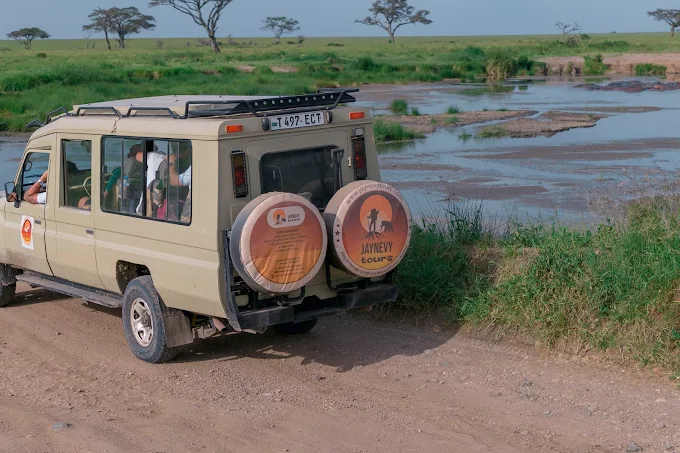
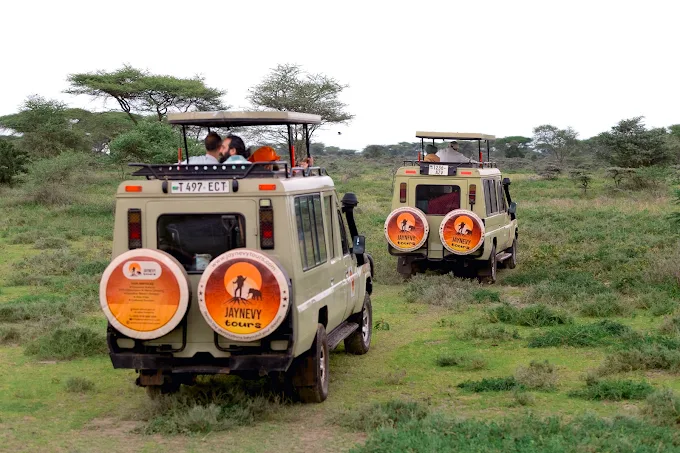
For a first visit, fly into Kilimanjaro International Airport, spend the arrival night in Arusha, and allow at least six full safari days. A classic route is Tarangire, Ngorongoro and Serengeti. Travel between June and October for generally dry conditions, or in January and February if your main interest is the southern Serengeti calving season. Use a purpose-built 4x4 vehicle, avoid changing camps every night, and keep at least two or three nights for the Serengeti.
| First-Time Planning Question | Practical Starting Point |
|---|---|
| Best circuit for a first visit | Northern Circuit: Tarangire, Ngorongoro and Serengeti |
| Recommended safari length | 6–8 full safari days, excluding international arrival and departure days |
| Main international gateway | Kilimanjaro International Airport for Arusha and the Northern Circuit |
| Best general wildlife months | June–October; January–February for southern Serengeti calving |
| Vehicle | Purpose-built 4x4 with opening windows or pop-up roof |
| Useful trip structure | Arrival night + 6–8 safari days + optional Zanzibar extension |
| Published daily cost averages | About US$250 budget, US$375 mid-range and US$600+ luxury per person |
How many days should a first Tanzania safari be?
Six to eight safari days is the most useful range for a first visit. It is long enough to reach the Serengeti, spend meaningful time there and visit Ngorongoro without turning every day into a transfer. International travel days should normally be added separately. A flight that lands in the evening is not a safari day, and an early departure flight should not be counted as one either.
| Safari Length | What It Can Realistically Cover | Who It Suits |
|---|---|---|
| 3–4 days | Two nearby parks, or a fast Serengeti and Ngorongoro itinerary with long drives | Travelers with limited time who accept a busy schedule |
| 5–6 days | Tarangire, Ngorongoro and central Serengeti | First-time visitors seeking the main Northern Circuit highlights |
| 7–8 days | Three or four parks with two to three nights in the Serengeti | The best all-round first safari for wildlife, comfort and pacing |
| 9–12 days | A slower Northern Circuit, migration-focused routing, or a second safari region | Photographers, families and travelers who dislike rushing |
| 12+ days | In-depth safari plus Zanzibar, or a remote southern or western extension | Travelers treating Tanzania as a major once-in-a-lifetime journey |
Choose the right Tanzania safari circuit
The circuit determines your gateway airport, road distances, parks, activities and budget. The Northern Circuit is the most straightforward first choice, but it is not automatically the best choice for every traveler.
| Safari Circuit | Main Destinations | Best For | First-Time Consideration |
|---|---|---|---|
| Northern | Serengeti, Ngorongoro, Tarangire, Lake Manyara, Arusha | Big-game viewing, migration trips and classic road safaris | The easiest circuit for a first visit, but popular areas can be busy in peak season |
| Southern | Nyerere, Ruaha, Mikumi and Udzungwa | Remote landscapes, boat safaris, walking and lower vehicle density | Excellent for repeat visitors or first-timers who value wilderness over famous names |
| Western | Katavi, Mahale Mountains and Gombe | Chimpanzees, remote parks and specialist expeditions | Logistically demanding and often dependent on scheduled or charter flights |
The best parks for a first-time Tanzania safari
Serengeti National Park
Serengeti is the foundation of many first Tanzania safaris. The park covers 14,763 square kilometres and forms part of the wider Serengeti-Mara ecosystem. Its appeal is not limited to the Great Migration. Resident lion, leopard, cheetah, elephant, giraffe, buffalo, hyena and many antelope species can be seen throughout the year, although sightings always depend on location, weather and luck.
A first-time visitor should normally spend at least two nights in Serengeti; three nights provide a better balance. One night often means arriving late, completing one game drive and leaving the next morning. The central Serengeti around Seronera is productive through much of the year, while migration-focused trips may use the southern, western or northern areas according to the season.
Ngorongoro Crater and Conservation Area
Ngorongoro Crater is approximately 20 kilometres across, about 610 metres deep and has a floor of roughly 260 square kilometres. The contained geography concentrates wildlife and makes the crater one of the most reliable places for a varied single-day game drive. It is also one of the stronger places to look for black rhinoceros, although no individual animal sighting can be guaranteed.
Crater-rim accommodation provides dramatic views but can be expensive and cold at night. Lodges around Karatu are often better value and can also serve Lake Manyara, the Ngorongoro highlands and routes toward Serengeti.
Tarangire National Park
Tarangire lies about 120 kilometres southwest of Arusha. It is known for baobab landscapes, elephants and the Tarangire River, which becomes especially important during the dry season. It is a natural first or final park on a road safari because it can be reached from Arusha without committing to the longer drive toward Serengeti.
Lake Manyara National Park
Lake Manyara adds groundwater forest, Rift Valley scenery, wetland habitat and a contrasting landscape to a Northern Circuit trip. It is smaller than Serengeti and usually works as a half-day or full-day stop. Wildlife distribution changes with water levels and season, so it should not be sold only around one famous animal claim.
Best time for a first Tanzania safari
Tanzania is a year-round destination, but the experience changes by month. “Best time” should refer to a specific goal: dry roads, lower prices, green scenery, birding, calving or a likely migration region. The migration is a moving natural system, not a scheduled performance, and rainfall can alter its timing.
| Period | Typical Conditions | Main Advantages | Possible Trade-Offs |
|---|---|---|---|
| January–February | Warm; generally drier interval in the north | Southern Serengeti calving season, young animals and predator activity | Popular migration camps can be expensive and busy |
| March–May | Main rainy period in much of northern Tanzania | Green scenery, birding, fewer vehicles and possible low-season value | Heavy rain can slow roads; some remote camps close |
| June–October | Dry season with cool mornings and evenings | Reliable general game viewing and easier road conditions | Peak demand, dust, higher rates and more vehicles at famous sightings |
| November–December | Short rains are possible, often in showers | Fresh landscapes, migrant birds and fewer visitors than peak months | Rainfall timing varies and migration location is less predictable |
A realistic seven-day first Tanzania safari itinerary
This example prioritizes time in wildlife areas rather than collecting park names. It should be adjusted for flight times, migration season, accommodation availability and the travel pace of the group.
| Day | Route | Purpose |
|---|---|---|
| Arrival | Kilimanjaro Airport to Arusha | Airport transfer, rest and safari briefing; do not count this as a full safari day |
| 1 | Arusha to Tarangire | First game drive among baobabs, elephants and river habitats |
| 2 | Tarangire to Karatu or Ngorongoro highlands | Morning game viewing followed by a manageable transfer |
| 3 | Ngorongoro Crater | Crater descent and full wildlife experience across the crater floor |
| 4 | Ngorongoro area to Serengeti | Scenic transfer with game viewing after entering Serengeti |
| 5 | Serengeti | Full day focused on wildlife rather than changing accommodation |
| 6 | Serengeti | Second full day or migration-area exploration according to season |
| 7 | Serengeti to Arusha | Fly to Arusha for less driving, or add an overland return night if the budget requires it |
How much should a first Tanzania safari cost?
There is no reliable single price because safari costs combine park and conservation fees, a 4x4 vehicle, fuel, guide, accommodation, meals, taxes and logistics. Published industry averages commonly place a Tanzania safari near US$250 per person per day for budget travel, US$375 for mid-range and US$600 or more for luxury. These are planning averages, not official government tariffs or a Jaynevy Tours quotation.
A private mid-range safari for two people usually costs more per person than the same itinerary for four or five people because the vehicle and guide cost is divided among fewer travelers. Fly-in itineraries, migration camps, crater-rim lodges and peak-season dates can increase the price substantially.
What changes the final safari price?
- Group size: vehicle and guide costs are shared among passengers.
- Private or joining safari: joining departures reduce cost but limit flexibility.
- Season: July to October and festive periods often carry higher accommodation rates.
- Accommodation: public camping, budget lodges, tented camps and luxury lodges have very different rates.
- Route: a Serengeti safari normally costs more than a short trip using parks close to Arusha.
- Flights: bush flights save time but add ticket and transfer costs.
- Single supplements: solo travelers may pay extra for private rooms or tents.
- Included services: airport transfers, drinks, laundry and gratuities may or may not be included.
Questions to ask before paying a deposit
- Is the safari private or shared, and what is the maximum number of passengers?
- Are all park, conservation, concession and crater-related fees included?
- Which exact lodges or camps are confirmed, not merely described as “similar”?
- Does the price include airport transfers, domestic flights and drinking water?
- What is the cancellation and refund policy?
- Who handles emergencies outside normal office hours?
- Does the operator carry the required tourism business licences and insurance?
Private safari or group-joining safari?
Choose a private safari when:
- You want control over game-drive times and photography stops.
- You are traveling as a couple, family or group of friends.
- You have children, mobility considerations or dietary requirements.
- You want a migration-focused itinerary that may change by season.
Choose a joining safari when:
- Your priority is reducing the per-person cost.
- You are comfortable following a fixed itinerary.
- You are a solo traveler who enjoys meeting other travelers.
- You understand that luggage space and window-seat arrangements may be shared.
What a normal safari day looks like
Wildlife is often active in the cooler hours, so many safari days begin early. A common pattern is a game drive from around sunrise, breakfast at camp or a picnic breakfast, a midday rest, then another drive in the afternoon. A full-day drive may use a picnic lunch so the vehicle can remain in the park. Exact times depend on park rules, travel distance, weather and the group's preferences.
- Early morning: cooler air, softer light and active predators.
- Late morning: continued wildlife viewing or transfer between habitats.
- Midday: picnic lunch or lodge break during the hottest period.
- Afternoon: second game drive as temperatures begin to fall.
- Evening: dinner, charging equipment and discussing the next day's plan.
Game drives are not zoo visits. A quiet hour without a major sighting is normal. Guides use tracks, alarm calls, animal behavior, radio communication and local knowledge, but nature remains unpredictable.

Entry requirements and arrival planning
Tanzania Immigration states that visa applicants should have a passport valid for at least six months and at least one unused visa page. Visitors may also be required to show a return or onward ticket. Visa eligibility and fees depend on nationality, so travelers should use the official Tanzania Immigration website and check the rules again shortly before departure.
Arrival checklist
- Passport with the required validity and blank page.
- Approved visa or confirmation that your nationality qualifies for another entry arrangement.
- Return or onward ticket.
- Safari operator's contact number and first-night accommodation details.
- Travel insurance documents and emergency assistance number.
- Any health certificates required by your route of travel.
Kilimanjaro International Airport is the main gateway for Arusha and the Northern Circuit. Arusha Airport mainly serves domestic and safari flights. Julius Nyerere International Airport in Dar es Salaam is more useful for southern parks and connections to Zanzibar. Because international flights can arrive late, a first night in Arusha or near the airport is usually more comfortable than beginning a long road transfer immediately.
Health preparation for a Tanzania safari
Travel health advice must be personalized. A travel-health clinician should review your route, medical history and current official guidance before travel. The CDC identifies malaria transmission risk in Tanzanian areas below 1,800 metres and advises travelers to discuss preventive medicine with a doctor. The correct medicine and timing depend on the individual.
Yellow-fever certificate rules depend on where you arrive from and, in some cases, the length and location of airport transit. Tanzania itself is not generally treated as a yellow-fever-risk destination for routine vaccination, but proof may be required for travelers arriving from a risk country. Check the latest official requirements instead of relying on an old blog or social-media post.
Practical health habits on safari
- Use insect repellent and wear long sleeves in the evening.
- Drink sealed, treated or operator-provided safe water.
- Carry prescribed medicines in hand luggage with copies of prescriptions.
- Use high-factor sunscreen, a hat and sunglasses.
- Tell the guide promptly if you feel unwell rather than waiting until the condition worsens.
- Choose travel insurance that includes emergency medical evacuation from remote areas.
What to pack for a first Tanzania safari
Pack for dust, sun, cool mornings and changing temperatures rather than for a fashion photograph. Neutral colors such as khaki, brown, olive and grey are practical. Bright blue and black can attract tsetse flies in some areas, while camouflage-patterned clothing may be restricted or culturally inappropriate in some countries.
Essential clothing
- Two or three lightweight long-sleeved shirts.
- Comfortable trousers and one pair of shorts where appropriate.
- A fleece, sweater or light insulated jacket for early drives.
- A light rain jacket, especially in wetter months.
- Closed walking shoes and comfortable camp footwear.
- Wide-brimmed hat, sunglasses and sleepwear.
Useful equipment
- Binoculars; one pair per traveler is ideal.
- Camera, spare batteries, memory cards and dust protection.
- Power bank and suitable plug adapter.
- Small day bag for items needed inside the vehicle.
- Reusable water bottle if the operator provides safe refill water.
- Personal medicines, insect repellent and sunscreen.
- Soft-sided luggage when using light aircraft, because strict baggage limits may apply.
Wildlife viewing and safari safety
Safari safety depends on following the guide's instructions. Wild animals are not tame, even when they appear relaxed near a vehicle. Never leave the vehicle unless the guide confirms that the location is designated and safe. Do not call animals, feed them, block their path or ask a driver to leave an authorized track.
- Keep arms and equipment inside the vehicle when close to wildlife.
- Remain seated when the guide asks, especially near elephants and predators.
- Do not walk alone around unfenced camps after dark.
- Use the lodge escort service when one is provided.
- Keep food out of tents and rooms where camp rules prohibit it.
- Never use a drone without the required permits and approvals.
- Respect viewing distance and allow animals a clear escape route.
Photography advice for first-time visitors
A long lens is useful, but patience and vehicle position matter more than buying the most expensive camera. Ask the guide before changing position and explain your priorities at the morning briefing. Photographers should consider a private vehicle because non-photographers may not want to wait beside one subject for an hour.
- Use a shutter speed high enough for moving animals and vehicle vibration.
- Keep a second battery and memory card accessible, not buried in luggage.
- Protect cameras from dust with a simple cover or bag.
- Do not change lenses when the vehicle is surrounded by heavy dust.
- Ask permission before photographing local people.
- Put the camera down sometimes; not every experience needs to be recorded.
Common first-time Tanzania safari mistakes
- Trying to visit too many parks: more destinations can mean less wildlife time.
- Counting arrival day as a full safari day: flight delays and immigration make this risky.
- Booking only one Serengeti night: the travel time can exceed the useful game-viewing time.
- Choosing a migration location without checking the month: the ecosystem changes seasonally.
- Comparing quotes only by total price: accommodation, vehicle type and included fees may differ.
- Ignoring road distances: Tanzania is large, and some transfers occupy much of the day.
- Overpacking: safari vehicles and bush aircraft have limited luggage space.
- Expecting guaranteed sightings: wildlife moves freely and cannot be scheduled.
- Skipping insurance: remote-area medical transport can be expensive.
- Planning every minute: weather, wildlife and road conditions require flexibility.
Is a Tanzania safari suitable for children and older travelers?
Yes, but the itinerary should be designed around the travelers rather than forcing everyone into a standard program. Families benefit from private vehicles, shorter transfers, swimming pools, family rooms and flexible meal times. Some walking safaris and specialist activities have minimum ages. Parents should also consider how children handle early starts and several hours in a vehicle.
Older travelers can enjoy Tanzania comfortably when accommodation access, bathroom arrangements, vehicle steps and medical needs are discussed before booking. Some tented camps have long walking distances, uneven paths or no elevators. A truthful operator should explain these details instead of simply calling every property “suitable.”
Combining a first safari with Zanzibar
A safari-and-Zanzibar trip works well because the two experiences are different: early game drives and road travel are followed by beach time and cultural exploration. A common structure is six to eight safari days followed by four to six nights in Zanzibar. Flights connect Arusha, Kilimanjaro, Serengeti airstrips and Zanzibar, but schedules and baggage limits must be checked for the specific date.
Zanzibar should not be treated as a single beach. Stone Town, the north coast, east coast and southeast coast differ in tides, swimming conditions, atmosphere and access to activities. Plan the island according to your interests rather than choosing a hotel only from photographs.
Responsible safari choices
A well-run safari supports conservation employment, park management, guides, hospitality staff and communities. Responsible travel also requires visitor behavior. Avoid operators that promise off-road access where it is prohibited, close approaches to animals or staged interactions with wildlife.
- Use refillable water systems where safe and available.
- Do not buy products made from protected wildlife.
- Choose ethical community visits with clear local participation.
- Respect cultural and photographic boundaries.
- Follow park rules even when another vehicle does not.
- Report serious guide or operator misconduct through appropriate channels.
First Tanzania safari booking checklist
- Choose the circuit and main wildlife priorities.
- Set the number of full safari days, excluding arrival and departure.
- Match the route to the season and likely migration region.
- Confirm exact accommodation names and room types.
- Check whether the vehicle is private or shared.
- Request a written list of inclusions and exclusions.
- Check visa requirements through Tanzania Immigration.
- Arrange travel-health advice and comprehensive insurance.
- Confirm light-aircraft baggage limits where applicable.
- Keep copies of payment records and emergency contacts.
Frequently asked questions about a first Tanzania safari
1. How many days are enough for a first Tanzania safari?
Six to eight full safari days are ideal for most first-time visitors. This allows Tarangire, Ngorongoro and Serengeti to be combined without moving every night. Add separate arrival and departure days.
2. Which circuit is best for first-time visitors?
The Northern Circuit is the easiest introduction because Serengeti, Ngorongoro, Tarangire and Lake Manyara can be combined from Arusha. The Southern Circuit is better for visitors who prioritize remoteness and lower vehicle density.
3. What is the best month for a first Tanzania safari?
There is no universal best month. June to October is generally dry and strong for wildlife viewing. January and February are important for calving in the southern Serengeti. Green-season months can offer fewer vehicles and better value.
4. How much does a Tanzania safari cost?
Published averages are approximately US$250 per person per day for budget safaris, US$375 for mid-range and US$600 or more for luxury. A quotation should specify the season, number of travelers, accommodation and included fees.
5. Can I see the Big Five?
Tanzania has lion, leopard, elephant, buffalo and black rhinoceros. A Serengeti-and-Ngorongoro itinerary gives a strong opportunity to see several of them, but no ethical operator should guarantee all five.
6. Is a private safari worth the cost?
It is valuable when flexibility matters. You control departure times, stops and photography pace. Joining safaris are better for travelers whose main priority is sharing vehicle costs.
7. Which airport should I use?
Use Kilimanjaro International Airport for Arusha and the Northern Circuit. Arusha Airport is mainly used for domestic flights, while Dar es Salaam is a common gateway for southern parks and Zanzibar connections.
8. Do I need a visa?
Requirements depend on nationality. Tanzania Immigration provides the official visa guidance and application system. Check passport validity, blank-page and return-ticket requirements before travel.
9. What vaccinations do I need?
Health requirements depend on your route and personal medical history. Consult a travel-health professional. Yellow-fever certificate rules can depend on the country from which you arrive or transit, and malaria prevention should be discussed for risk areas.
10. What should I wear?
Wear lightweight neutral clothing and carry a warm layer for early game drives. Closed shoes, a sun hat and a light rain jacket are practical. Avoid packing only shorts because mornings can be cold.
11. Is the Great Migration guaranteed?
No. The herds move through the ecosystem according to rainfall, grazing and water. Planning should use seasonal patterns, but exact locations and river crossings cannot be guaranteed.
12. Can I combine safari with Zanzibar?
Yes. A common first trip includes six to eight safari days followed by four to six nights in Zanzibar. Domestic flights reduce the transfer time between the safari circuit and the island.
Data notes and trusted planning sources
Numerical facts in this guide were checked against official or established sources available in June 2026. Fees, visa rules, health requirements, flight schedules and accommodation rates can change, so they should be reconfirmed for the travel date.
- Tanzania National Parks: protected-area and national-park statistics
- TANAPA Serengeti National Park information
- Ngorongoro Conservation Area Authority: crater dimensions
- Tanzania Immigration: official eVisa guidelines
- CDC Tanzania traveler health information
- SafariBookings: published Tanzania safari cost averages
To plan a Tanzania safari that matches your dates, budget and preferred travel pace, contact Jaynevy Tours by email at jaynevytours@gmail.com or WhatsApp at +255 678 992 599.