
7-Day Lemosho Climb with Chinese-Speaking Guide at a Glance
Quick answer: this is a seven-mountain-day Lemosho camping climb for travelers who want route briefings, pacing discussions and key safety communication with a Chinese-speaking mountain guide. The route approaches Kilimanjaro from the west, crosses the Shira Plateau, uses Lava Tower as a higher daytime acclimatization point and reaches Uhuru Peak at 5,895 m only when conditions and the guide's safety assessment allow.
| Quick Fact | Package Detail |
|---|---|
| Route | Lemosho Route, western approach |
| Mountain days | 7 trekking days |
| Highest point | Uhuru Peak, 5,895 m |
| Accommodation | Tent camping on the mountain |
| Guide language | Chinese-speaking guide, subject to confirmation for your dates |
| Starting price | From USD 1,600 per person |
| Pre-climb night | Recommended before Day 1 and confirmed separately in the quotation |
Why Choose the Lemosho Route with a Chinese-Speaking Guide?
The Lemosho Route combines a western approach, Shira Plateau scenery and a multi-day ascent with Chinese-language support from the mountain guide. For Chinese-speaking travelers, the main advantage is clearer communication about the daily plan, pace, clothing, hydration, altitude symptoms and summit-night decisions.
Chinese-language support does not make the climb physically easier or remove altitude risk, but it can reduce misunderstandings when instructions matter. Because guide assignments depend on availability, we confirm the Chinese-speaking guide for your exact departure dates in writing before payment.
How Much Does the 7-Day Kilimanjaro Lemosho Chinese-Guide Package Cost?
The price of this 7-Day Kilimanjaro Lemosho Route package starts from USD 1,600 per person. The current page uses group-size pricing: USD 1,800 for one climber, USD 1,700 per person for groups of 2–4, and USD 1,600 per person for groups of 5 or more.
| Group Size | Published Price Per Person | What to Confirm |
|---|---|---|
| 1 climber | USD 1,800 | Private-service details and hotel/transfer arrangements |
| 2–4 climbers | USD 1,700 | Service setup, tent arrangements and confirmed guide allocation |
| 5+ climbers | USD 1,600 | Final group size, guide allocation and included logistics |
Before payment, request a written quotation showing the exact park and camping arrangements, hotel nights, airport transfers, personal equipment rental, private-toilet requests and any other optional services. The written quotation is the final reference for what your booking includes.
7-Day Kilimanjaro Lemosho Route Itinerary
The seven days below are mountain trekking days. The current package structure moves from Mti Mkubwa to Shira 2, Barranco via Lava Tower, Karanga, Barafu, the Uhuru Peak summit attempt and Mweka Camp before the final descent to Mweka Gate on Day 7. Exact walking times can vary with pace, weather, trail conditions and guide decisions.
Day 1 – Moshi to Londorossi Gate, then Mti Mkubwa Camp
After the pre-climb briefing and gear check in Moshi, we transfer you toward Londorossi Gate on Kilimanjaro's western side for registration and crew organization. The trek begins through montane forest toward Mti Mkubwa, also known as Big Tree Camp. Your Chinese-speaking guide sets the walking pace and explains the next day's move toward the Shira Plateau.
Day 2 – Mti Mkubwa Camp to Shira 2 Camp
You leave the forest for heath and moorland, climbing onto the Shira side of Kilimanjaro and continuing toward Shira 2. This is one of the longer stages in the seven-day version, so the goal is steady progress rather than speed. When conditions are clear, the plateau can open broad views toward Kibo.
Day 3 – Shira 2 to Barranco Camp via Lava Tower
The route climbs toward Lava Tower at about 4,600 m before descending to Barranco Camp at a lower sleeping elevation. This higher daytime exposure followed by descent is an important acclimatization feature of the itinerary. Tell your guide promptly about headache, nausea, dizziness, unusual fatigue or breathing difficulty rather than hiding symptoms.
Day 4 – Barranco Camp to Karanga Camp
The day starts with the Barranco Wall, a steep standard section where hands are used for balance in places. It is generally treated as a scramble rather than a technical rock climb. After the wall, the trail crosses valleys and ridges toward Karanga Camp.
Day 5 – Karanga Camp to Barafu Camp
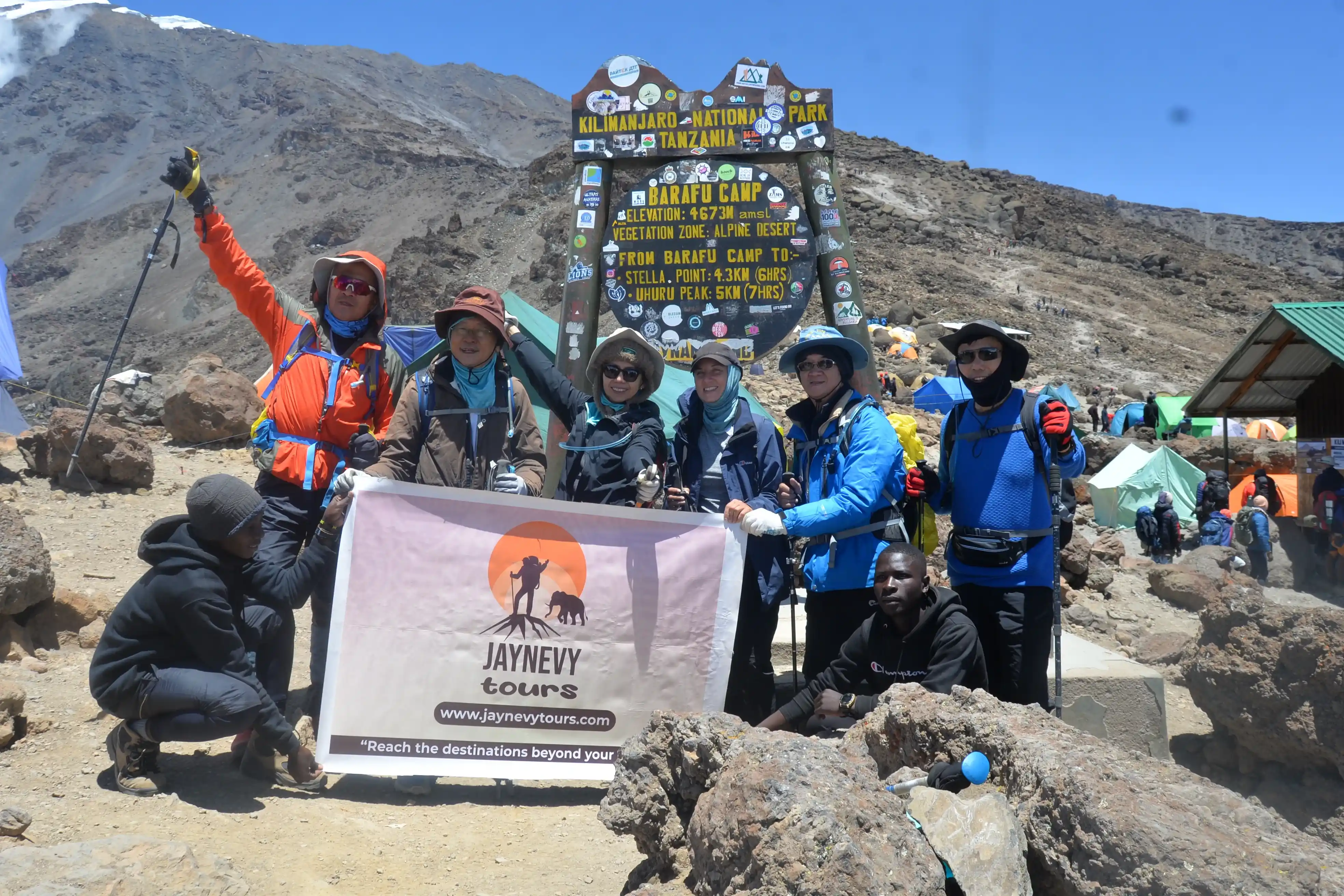
You continue through high alpine terrain to Barafu, the final camp before the summit attempt. After arrival, the main priorities are eating, drinking, preparing warm clothing and summit equipment, and resting before the night ascent.
Your Chinese-speaking guide gives the summit briefing, checks clothing and headlamps, and explains pacing and turnaround decisions.
Day 6 – Barafu Camp to Uhuru Peak, then Mweka Camp
The summit attempt normally begins around midnight. The trail climbs toward Stella Point and then follows the crater rim toward Uhuru Peak at 5,895 m when your health, weather and the guide's safety assessment permit. After the summit attempt, you descend to Barafu for a short rest and continue much lower to Mweka Camp.
Important: reaching the summit cannot be guaranteed. The guide may turn a climber around if altitude symptoms, exhaustion, weather or another safety concern makes continuing unsafe.
Day 7 – Mweka Camp to Mweka Gate, then Moshi
The final day descends through the forest to Mweka Gate, where park exit formalities are completed and the transfer vehicle meets the team for the return toward Moshi. This descent is part of the seven mountain days. Any post-climb hotel night or onward airport transfer should be listed separately in your quotation if included.
What's Included in the 7-Day Chinese-Guide Lemosho Package?
The package is built around the core services needed to operate a seven-day Lemosho camping climb, with the Chinese-speaking guide as the defining language service. Your final written quotation is the controlling document for the exact inclusion list.
- Chinese-speaking mountain guide confirmed for the booked dates
- Mountain support crew, including porters and cook according to group size
- Park, camping and applicable rescue-fee arrangements stated in the quotation
- Mountain tents, sleeping mats and dining setup specified for the departure
- Meals and drinking water during the mountain itinerary
- Transport between Moshi and the mountain gates when listed in the confirmed package
- Standard expedition first-aid and emergency equipment described in the final trip documents
What's Excluded or Confirmed Separately?
- International and domestic flights
- Tanzania visa and personal travel documents
- Travel insurance that covers high-altitude trekking and evacuation
- Personal clothing and equipment such as boots, sleeping bag and trekking poles
- Crew gratuities
- Airport transfers and pre/post-climb hotel nights unless explicitly included
- Personal expenses, laundry and optional upgrades
Accommodation and Camping on the Lemosho Route
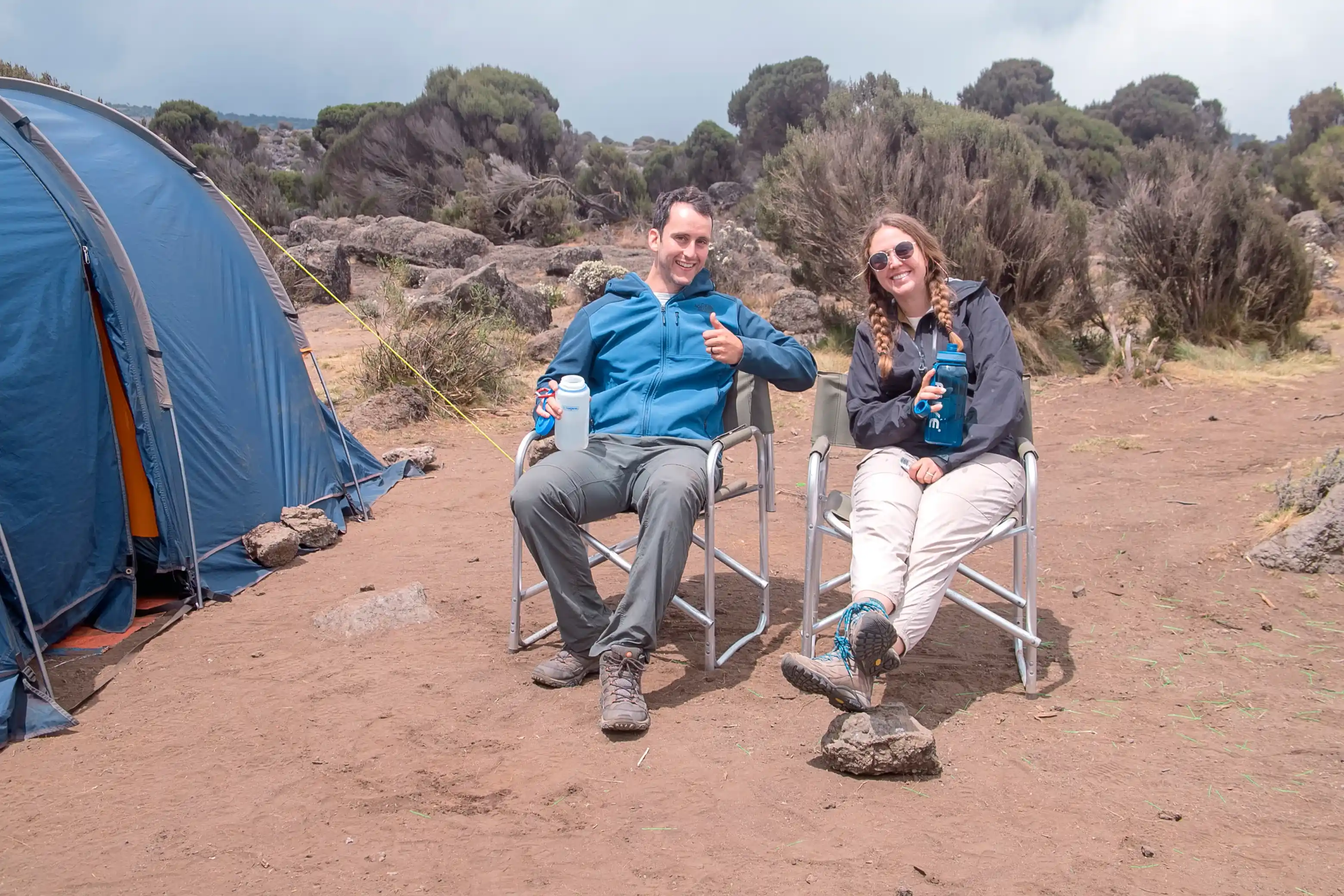
Lemosho is a camping route, so mountain nights are spent in tents at designated camps rather than in huts. This seven-day structure uses Mti Mkubwa, Shira 2, Barranco, Karanga, Barafu and Mweka. The support team carries and sets up the mountain camp equipment stated in your package while meals are prepared at camp.
Altitude, Acclimatization and Safety on the 7-Day Lemosho Route
Uhuru Peak is 5,895 m, so altitude illness is one of the main health risks on this climb. The route includes a multi-day ascent and the Lava Tower high point before sleeping lower at Barranco, but no itinerary or fitness level can guarantee successful acclimatization.
Tell the guide about symptoms early and follow conservative pacing and descent decisions. The page's existing CDC high-altitude guidance reference is retained for additional altitude information.
Best Time to Climb Kilimanjaro via Lemosho
The current page identifies January to early March and June to October as commonly selected because conditions are often drier. April and May are usually wetter, while November and December can be more variable. Kilimanjaro weather can still change quickly in any month.
| Period | General Pattern | Planning Note |
|---|---|---|
| January–early March | Often drier | Common climbing window; summit weather still varies |
| April–May | Typically wetter | Expect more rain and muddier lower trails |
| June–October | Often drier | Common season with cold nights at altitude |
| November–December | Variable | Rainfall and cloud patterns can change quickly |
Fitness and Preparation for a 7-Day Lemosho Climb
You do not normally need technical climbing skills for the standard Lemosho trail, but you do need endurance for repeated hiking days, steep sections, cold conditions and a long summit day. Useful preparation includes regular walking or hiking, aerobic conditioning, leg endurance and practice carrying the daypack you plan to use.
7-Day Lemosho Route Packing Priorities
- Waterproof shell jacket and trousers
- Warm base layers, insulating mid-layer and down or synthetic jacket
- Broken-in trekking boots and spare socks
- Warm gloves, hat, sun hat and neck protection
- Headlamp with spare batteries for summit night
- UV-protective sunglasses and sunscreen
- Daypack, reusable water-carrying system and personal medication
- Sleeping bag suitable for cold mountain nights if it is not included or rented
Who Should Choose This Chinese-Guide Lemosho Package?
This package suits Chinese-speaking travelers who value direct communication with the mountain guide and want the Lemosho western approach in a seven-day camping format. It can work for fit first-time Kilimanjaro climbers as well as experienced hikers, provided they are comfortable with mountain camping and understand that altitude is usually a more important limiting factor than technical climbing.
If you prefer one more mountain day, compare the 8-day Lemosho Chinese-guide climb. If you prefer the southern Machame approach, review the 7-day Machame climb with a Chinese-speaking guide.
Arrival and Booking Logistics in Moshi
Plan to arrive in Moshi before the first mountain day so there is time for the briefing, equipment check and final preparations. Because all seven days are trekking days, international arrival on the morning of Day 1 is not a reliable plan.
Send us your arrival details, number of climbers, preferred dates and rental-gear needs. We then confirm the Chinese-speaking guide, departure setup and one written quotation covering the services arranged for your trip.
Related Kilimanjaro and Tanzania Options
- 7-Day Kilimanjaro Lemosho Route package
- Lemosho Route guide and route overview
- Kilimanjaro climbing packages
- Mount Meru trekking packages
- Tanzania Northern Circuit safaris
- Zanzibar beach holidays
Frequently Asked Questions About the 7-Day Lemosho Chinese-Guide Climb
How much does the 7-Day Kilimanjaro Lemosho climb with a Chinese-speaking guide cost?
The package starts from USD 1,600 per person for groups of 5 or more. The current page lists USD 1,800 for one climber and USD 1,700 per person for groups of 2–4. The final quotation confirms the exact total, Chinese-speaking guide availability and inclusions for your dates.
Does the seven-day itinerary include the arrival night in Moshi?
No. The seven days refer to mountain trekking days. A pre-climb night in Moshi is recommended for the briefing, equipment check and rest before departure, and hotel or airport-transfer arrangements should be confirmed in your written quotation.
Is a Chinese-speaking guide guaranteed on every departure?
Chinese-speaking guide service is the defining feature of this package, but the guide must be confirmed for your exact dates before booking. We state the confirmed language arrangement in your written itinerary or quotation.
What is the seven-day Lemosho itinerary?
The trekking sequence is Mti Mkubwa, Shira 2, Barranco via Lava Tower, Karanga, Barafu, Uhuru Peak and Mweka Camp, followed by the final descent from Mweka Camp to Mweka Gate on Day 7.
Is the 7-Day Lemosho Route suitable for first-time Kilimanjaro climbers?
It can suit fit first-time climbers who prepare for consecutive trekking days, camping, cold conditions and high altitude. Technical climbing skills are not normally required on the standard trail, but physical preparation and conservative altitude decisions remain important.
What is included in this Kilimanjaro package?
The package is designed around a Chinese-speaking mountain guide, mountain crew, tent camping, mountain meals and drinking water, and the park, camping, transport and safety arrangements stated in the final quotation.
When is a good time to climb Kilimanjaro via Lemosho?
January to early March and June to October are commonly chosen because conditions are often drier. April and May are usually wetter, while November and December can be variable. Mountain weather can change in any month.
How does Jaynevy Tours handle altitude safety on this climb?
The itinerary uses a gradual multi-day ascent with a Lava Tower acclimatization day. Climbers should report symptoms early and follow the guide's pacing and descent decisions. Travel insurance covering high-altitude trekking and appropriate pre-trip medical advice are strongly recommended.